
TENCAN / Equipment series
Mini Planetary Ball Mill XQM-0.4A
Compact 0.4 L laboratory planetary ball mill for mixing, wet and dry fine grinding, and small-batch sample preparation. Supports two or four grinding jars.
| Total nominal jar capacity | 0.4 L |
|---|---|
| Jar size | 25–100 mL |
| Jar stations | 4 |
| Jar rotation speed | 0–870 rpm |
These specifications describe the series. Confirm the selected model, power supply and configuration before ordering.
Request a quotationOverview
Laboratory sample preparation
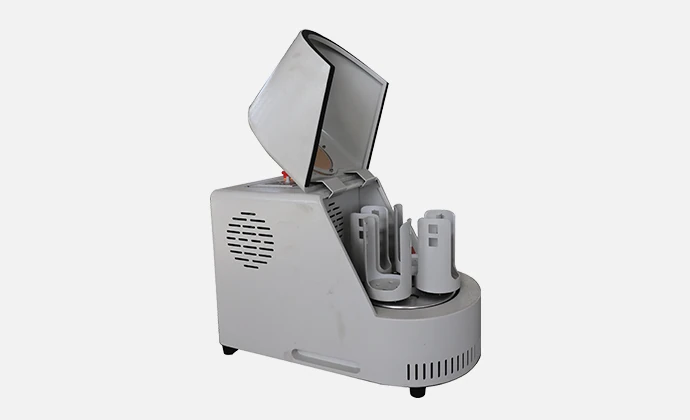
The XQM-0.4A is a compact vertical planetary ball mill for mixing and grinding small powder batches. It can run two or four jars, allowing laboratories to prepare several samples under the same milling conditions. It supports wet and dry grinding and can process air-sensitive samples with optional 50 mL vacuum jars.
Operating principle
How planetary milling works
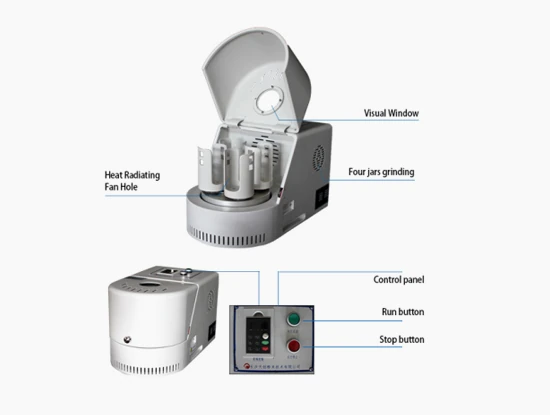
The grinding jars orbit the central axis as the carrier turns. Each jar also rotates about its own axis. Impact and friction between the grinding balls and the sample break down the feed and mix the powder. The operator can adjust speed, run time and reversal intervals for the sample.
Features
Controls and construction
- Variable-frequency speed control with timed shutdown and programmable forward and reverse operation.
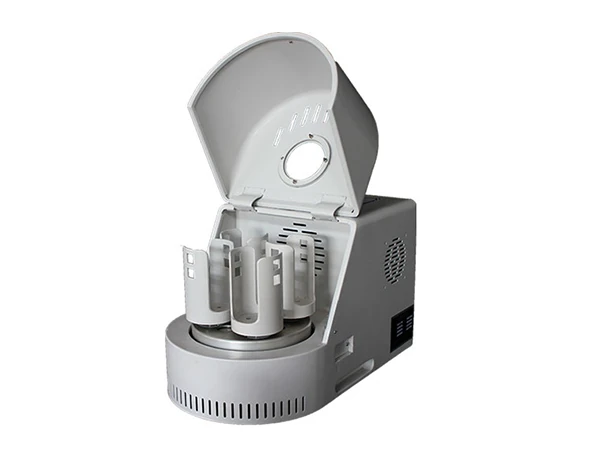
- Compact steel housing and a low centre of gravity for bench-top use.
- The lid safety switch helps prevent operation when the cover is open.
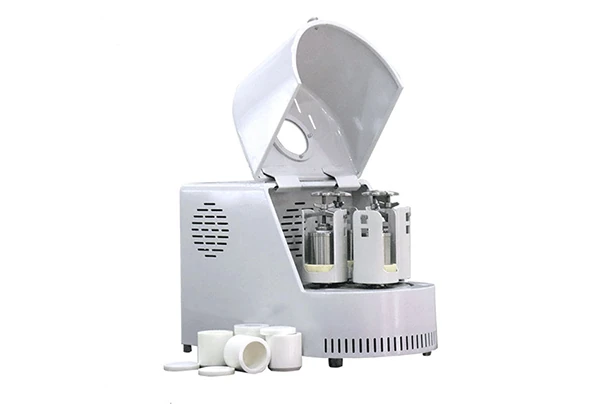
- Select jar and ball materials to suit the sample hardness and contamination limits.
Applications
Applications and accessories
Use the mill for formulation screening, research samples and small-batch powder preparation. Jar and media choices depend on the sample and downstream process.
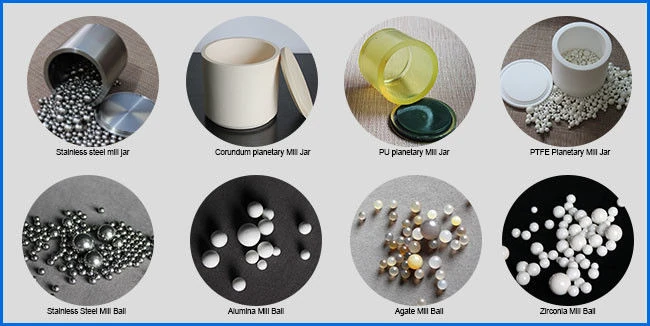
| Jar material | Typical selection considerations |
|---|---|
| Agate | Soil and mineral samples where metal contamination is a concern |
| Zirconia | Wear-resistant grinding for many metal and non-metal powders |
| Tungsten carbide | Very hard samples |
| 304 or 316L stainless steel | General milling where metal wear is acceptable |
| Alumina or corundum | Ceramic powders and glazes |
| PTFE, nylon or polyurethane | Selected formulations where a polymer jar suits the sample and conditions |
| Vacuum jar | Air-sensitive samples that need an isolated atmosphere |
Configuration
XQM-0.4A technical specifications
| Parameter | XQM-0.4A |
|---|---|
| Total nominal jar capacity | 0.4 L (4 × 100 mL) |
| Jar size and operating positions | 25–100 mL, two or four jars per run |
| Maximum sample fill | Less than one-third of each jar volume |
| Hard-material feed size | ≤ 3 mm |
| Achievable particle size | Down to 0.1 μm under suitable milling conditions |
| Power supply | 220 V, 50 Hz, single phase |
| Motor power | 0.25 kW |
| Speed control | Variable-frequency drive |
| Carrier speed | 0–435 rpm |
| Jar rotation speed | 0–870 rpm |
| Carrier-to-jar speed ratio | 1:2 |
| Total timer range | 1–9,999 min |
| Forward/reverse interval | 1–999 min |
| Noise level | 58 ± 5 dB |
| Dimensions | 500 × 300 × 340 mm |
| Machine weight | 29 kg |
Final particle size depends on the sample, grinding media and operating conditions. Confirm jar compatibility and the duty cycle for long runs with TENCAN.
Before operation, review the selected model’s instructions and the material requirements.