
TENCAN / Equipment series
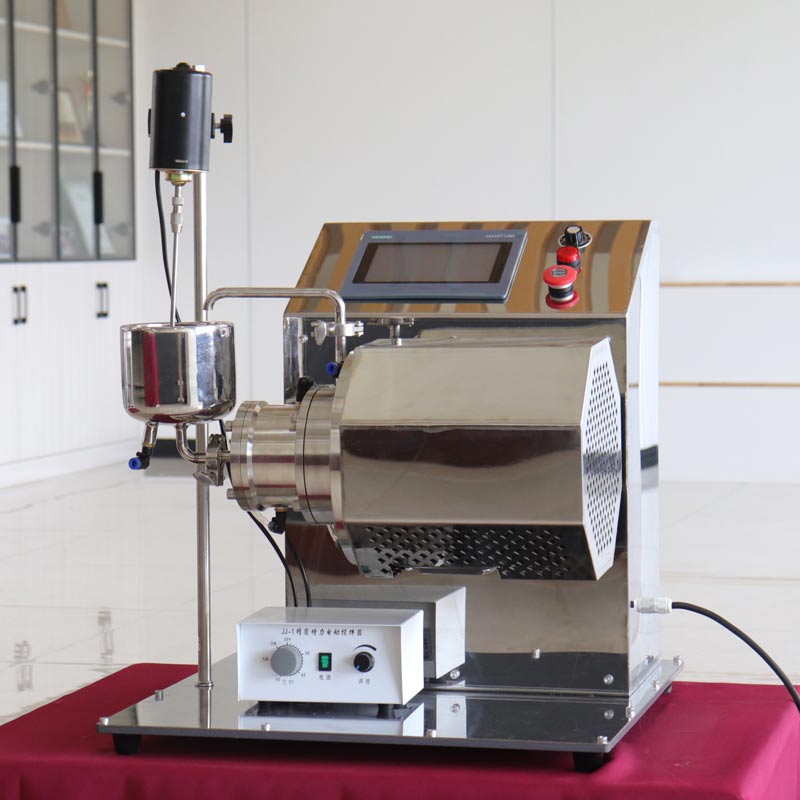
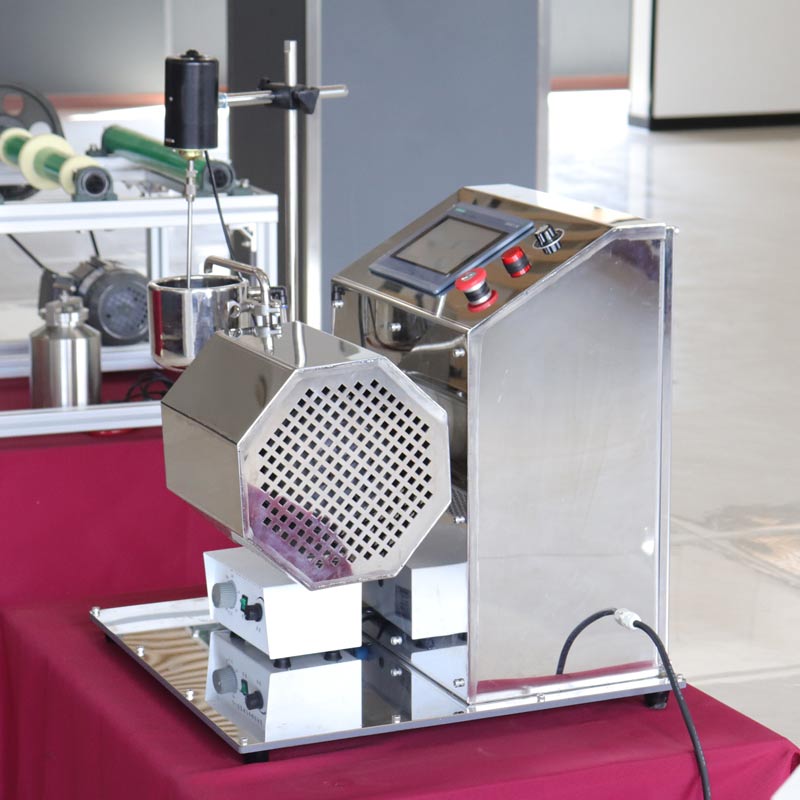
Laboratory horizontal pin-type bead mill
TC-FT0.3 lab horizontal bar pin nano sand mill achieves continuous ultrafine dispersion for solid-liquid mixtures. Uses high-speed rotation of grinding media to refine particle size down to nano scale, ideal for advanced materials and nanotechnology R&D.
| Net grinding chamber volume | 0.3L |
| Batch size | 0.25-0.7L |
| Processing capacity | 200nm-2μm |
These specifications describe the series. Confirm the selected model, power supply and configuration before ordering.
Request a quotationThe horizontal sand mill is a horizontal continuous production ultrafine particle disperser. Its working process is to use a pump (pneumatic diaphragm pump, screw pump, gear pump, rotor pump, etc.) to input the pre-dispersed and moistened solid-liquid mixture material into the grinding chamber of the host machine. The grinding chamber is filled with an appropriate amount of grinding media, and the dispersing blades rotate at high speed to give the grinding medium sufficient kinetic energy. The material and the grinding medium make irregular relative motions in the grinding chamber. The material is mainly deformed by impact, friction, and shear under the action of centrifugal force and the pressure between the media to produce a stress field. When the stress is greater than the yield stress or fracture limit of the material, the particles will undergo plastic deformation or rupture, achieving the purpose of grinding the material and dispersing aggregates. Then through a special separation device, the ground and dispersed materials are separated from the medium and discharged from the discharge port.
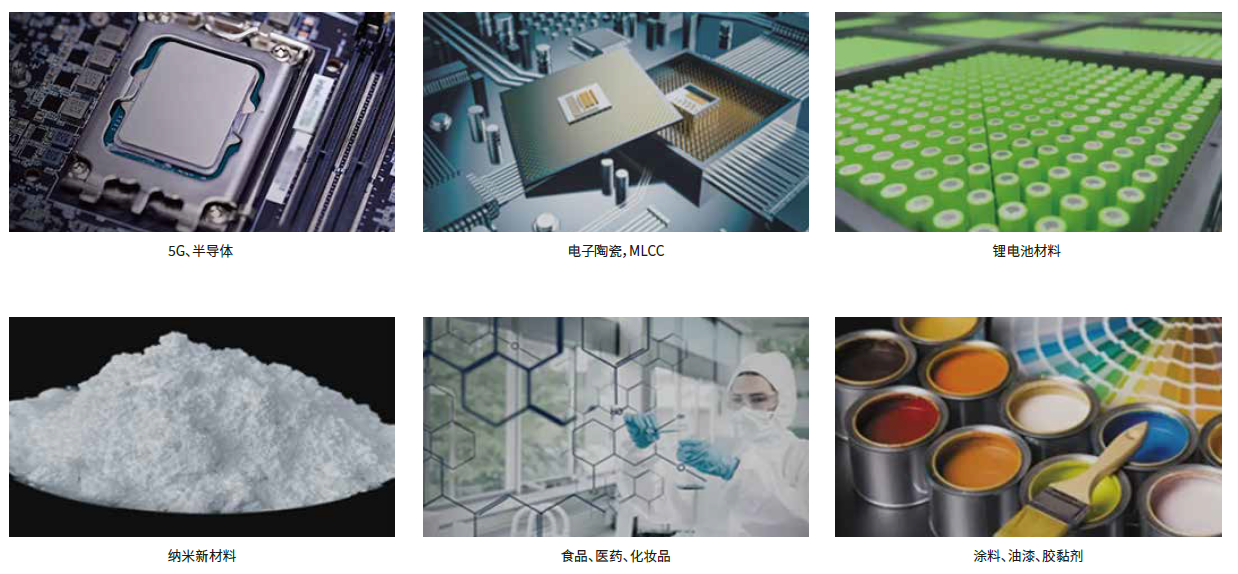
-
New energy materials : Such as lithium battery positive and negative electrode materials (lithium iron phosphate, ternary materials), graphene conductive slurry, carbon nanotubes, etc.
-
Chemicals and Coatings : Nano color paste, ceramic ink, ultrafine catalyst, dispersion of paint and ink.
-
biomedicine : Nanonization of drugs to improve absorption rate, preparation of ultrafine powder of Chinese medicinal materials.
-
electronic materials : MLCC (multilayer ceramic capacitor), electronic slurry, magnetic material grinding.
-
Special materials : Stealth materials, wear-resistant ceramics, nano-oxides, etc.
Experimental nanosand mills have become important tools in the fields of materials science, chemical industry and biomedicine due to their high precision, flexibility and wide applicability. When selecting a model, it is necessary to consider the fineness target, material characteristics and experimental scale, and give priority to models with modular design, easy maintenance and support for parameter amplification.
Technical parameters
Electric mixer: Power 120W, speed 3000r/min, timing 0-120min/normally open, disperse the slurry to prevent agglomeration and precipitation.
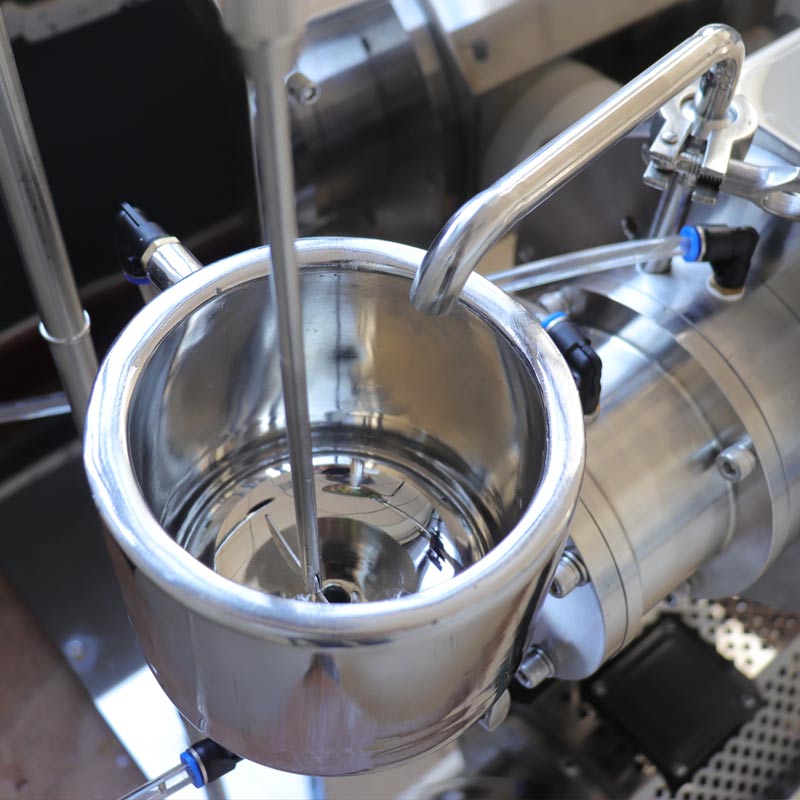
Material tank: The volume is 1L, made entirely of 304 stainless steel, with an interlayer, and can be cooled by coolant circulation.
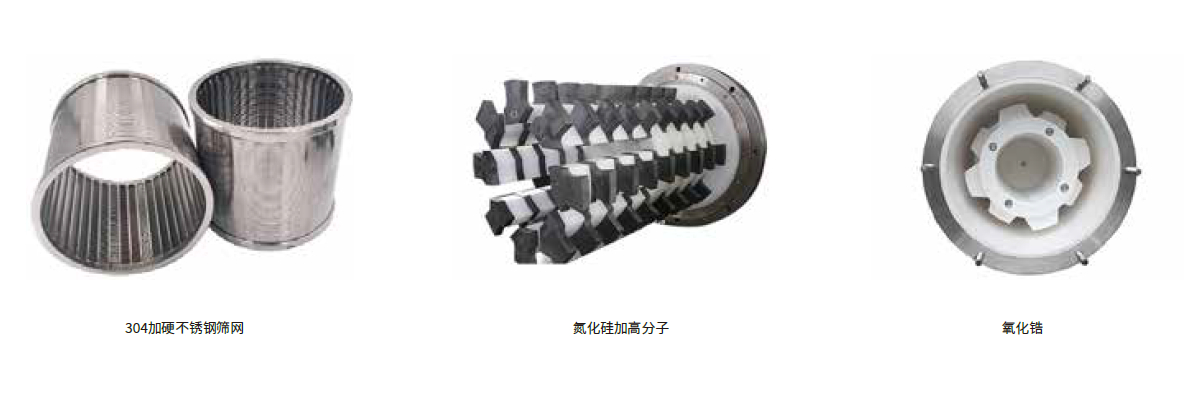
Grinding chamber: The grinding working part of the equipment, the rotor and the grinding inner cylinder can be replaced with corresponding materials according to the customer's material characteristics. Alumina, zirconia, silicon carbide, silicon nitride, polyurethane, etc. can be selected. They are interlayered and can be cooled by coolant circulation.
Motor: The power is 1.1KW and the rotation speed is 2875r/min. It is the main power of the grinding equipment.
touchscreen: The Siemens 7-inch touch screen, together with the PLC, provides integrated control of the equipment and enables targeted process parameter settings for materials.
| serial number | project | parameter |
| 1 | model | TC-FT0.3 |
| 2 | Scope of use | Wet Nanogrinding |
| 3 | convey power | Pumpless self-priming |
| 4 | seal | lip seal |
| 5 | separated form | dynamic gap separation |
| 6 | Cooling method | Sandwich cooling |
| 7 | Overall dimensions (mm) | 580*580*775 |
| 8 | Grinding net volume (L) | 0.3 |
| 9 | Motor power (KW) | 1.1 |
| 10 | Speed (r/min) | 2875 |
| 11 | Linear speed (m/s) | 10.6 |
| 12 | Processing batch size (L) | 0.25-0.7 |
| 13 | Media size (mm) | 0.3-1.4 |
| 14 | processing power | 200nm-2μm |
| 15 | Weight (kg) | 90 |
| 16 | power supply | 220V |
-
Choose according to fineness requirements :
-
Target fineness ≤50nm: Give priority to models with high rotation speed (≥2000rpm) and small medium (0.05-0.2mm).
-
Fineness 100-200nm: conventional models are sufficient.
-
-
Select according to material characteristics :
-
Prevent metal pollution: Use ceramic or polyurethane grinding chamber and separator.
-
High viscosity materials: choose large flow circulation design or horizontal sand mill.
-
-
Adapt according to production scale :
-
Laboratory research and development: small machine with a volume of 0.3-1L.
-
Pilot scale-up: Select a model with parameters close to those of mass production equipment to ensure that the experimental results can be replicated.
-
-
Additional functionality considerations :
-
Temperature control requirements: Optional jacket cooling/heating system;
-
Automation requirements: models that support intelligent control or data recording.
-
This series of products is widely used and is suitable for ceramic ink, thermal transfer inkjet, nanopigments, magnetic materials, lithium iron phosphate, medicine, electronic paste, alumina materials, zirconium silicate materials, non-metallic mineral powders, cosmetics, and other new nanomaterials.
Grinding mechanism of experimental horizontal rod pin nano sand mill
1. The grinding media is accelerated by the rotation of the rotor to the inner wall of the grinding barrel. The grinding media moving toward the barrel wall will collide with the grinding media or grinding materials close to the inner wall of the grinding barrel. The resulting collision can be used to disperse and crush the materials.
2. Under the action of centrifugal force, the grinding material is close to the inner wall of the grinding barrel and receives the pressure and shearing force of the adjacent medium to disperse and break.
3. Due to the different distances between the grinding media and the axis, the obtained speeds are different, resulting in speed differences. Collisions will occur during the movement to break the materials.
4. In the early stage of grinding, the particle size is large, and impact crushing plays the main role. As the grinding time increases, the ground material gradually becomes finer, and at this time, friction, shearing and crushing mainly occur in the grinding barrel.
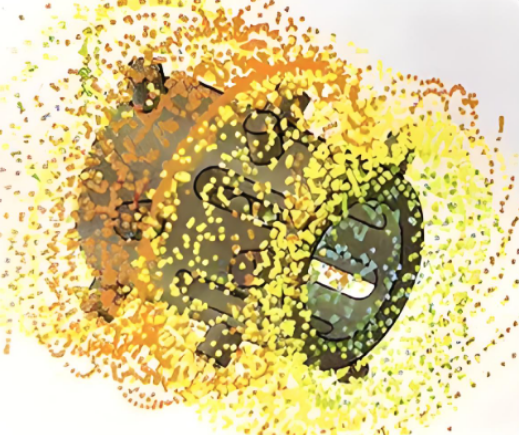
Schematic diagram of experimental horizontal rod-pin nano sand mill
1. It has a simple structure and low failure rate. It is specially designed for research and development equipment and is suitable for formulation technology verification and difficult academic research in colleges and universities, scientific research institutions and corporate laboratories.
2. The performance and production capacity can be scaled up year-on-year, and industrialization can be accurately scaled up from small trials to large-scale production.
3. It can represent the advanced level of material wet grinding technology experiments.
4. Compatible with experimental requirements for process performance of new materials with various solvent formulations.
5. The grinding cylinder material can be replaced flexibly, and core structural parts of different materials can be selected according to different materials (no pollution, low wear). Optional materials include tungsten carbide/polyurethane/zirconia/silicon carbide/silicon nitride, etc.
6. Grinding media materials include zirconia, alumina, silicon nitride, stainless steel balls, etc.
Before operation, review the selected model’s instructions and the material requirements.