
Zirconium dioxide grinding balls are ceramic grinding media for ball mills that transfer energy of motion to the sample and promote its grinding or deagglomeration (breakdown of aggregates without necessarily reducing the primary particles). In a grinding system, they occupy a place between the drive, grinding bowl or drum and the powder itself: rotation or vibration of the housing causes the balls to collide, roll and abrade the material. Such an environment is considered when it is necessary to limit the transfer of metal from steel balls, increase resistance to abrasive wear, or select ceramics for a specific sample. Below is how such balls work, what their parameters mean, where the limits of applicability lie, and what questions should be answered before purchasing.
What are zirconia grinding balls?
In the card Zirconium dioxide grinding balls TENCAN We are talking specifically about ceramic balls, and not about the lining, grinding bowl or mill as a whole. The ball is a consumable element that is in direct contact with the powder. Its task is to repeatedly transfer local shocks and shear loads to the sample, maintaining its shape for as long as possible in the selected mode. Therefore, the properties of the product are determined not only by the word “zirconium” in the name, but also by the composition of the ceramics, sintering technology, geometry, surface condition and diameter tolerances.
Zirconium dioxide is a ceramic material with high hardness and high mass compared to some other types of ceramics. In industrial grades, the composition and stabilizing additives may vary, so specific values for density, hardness and permissible wear should be taken from the batch passport, and not from the general description of the category. For a laboratory problem, what is important is not the abstract “strength”, but the behavior of the ball in the pair “sample - glass material - medium”. Even balls that are similar in name can differ in sintering and surface cleanliness.
For the reader, the practical meaning is simple: such a ball is not a universal replacement for any grinding medium, but a specific structural material that is selected for the sample, the permissible level of impurities and the energy regime of the mill. If the description does not contain the required parameter, it is clarified with the supplier or checked on a test load, rather than being filled in with a guess.
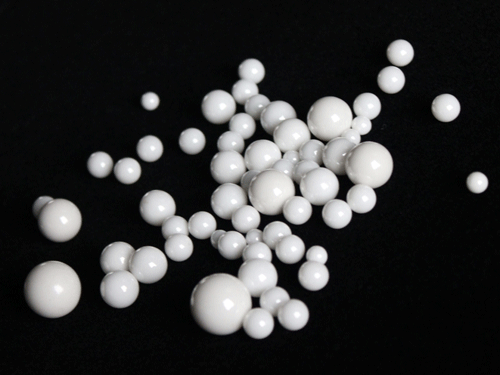
How the ceramic medium transfers grinding energy
In a ball mill, ceramic balls operate in two main modes. During collisions, energy is transferred locally and contributes to the destruction of fragile particles; When rolling and friction, shear occurs, which abrades the material and destroys agglomerates. The impact to abrasion ratio depends on the drum or bowl diameter, speed, fill level, ball size and powder properties. Therefore, the same set of balls in different settings gives different results.
A large ball carries more mass and, all other things being equal, creates a stronger impulse, but it takes up more volume and can leave fewer active contacts in a small glass. A small ball increases the number of contacts and often works better for abrasion, but its impact energy is lower. The density of the ball material also affects energy transfer: denser ceramics with the same diameter have greater inertia. This does not mean that the heaviest and largest ball is always better; For a brittle sample, excess energy can increase heating, wear, and undesirable structural changes.
A distinction is made between grinding and mixing. Balls can help distribute components evenly, but loading alone does not guarantee either the desired size or uniformity. The final result depends on the initial particle distribution, time, environment, temperature and measurement method. The catalog minimum size, if specified, applies to specific conditions and does not automatically apply to any material.
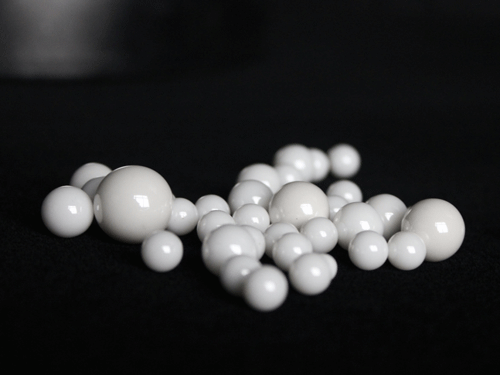
Size, density and other characteristics: how to read them
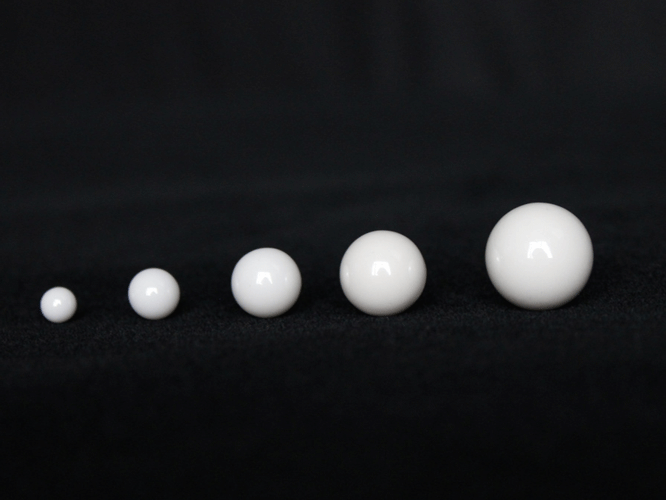
The nominal diameter is the first parameter that is seen when choosing. However, geometry does not end at face value: tolerance, batch variation, deviation from sphericity and surface condition are important. Too much variation makes reproducibility difficult, and surface imperfections can act as stress concentrators and accelerate wear. For a critical task, it is useful to know how the diameter was measured and whether it is indicated as average, nominal or maximum.
Density shows the mass per unit volume of a material. In load calculations it helps to estimate the mass of the balls, but does not replace checking the permissible load of the mill. High density increases the energy transferred upon impact and can be beneficial for harder-to-grind materials; At the same time, the load on the drive, glass and fastening increases. You cannot select a material based only on the highest density, without taking into account the chamber volume and mode.
Hardness is often perceived as the main indicator of quality. In practice, wear resistance in a specific friction pair is more important: it depends on the abrasiveness of the sample, the presence of liquid, speed, temperature and quality of the ball surface. Hard but brittle material may chip; a softer one will wear out and introduce more material into the sample. Therefore, comparison of brands is correct only under comparable test conditions.
The sphericity and cleanliness of the surface affect the movement of the balls and the transfer of matter. Scratches, blemishes and traces of previous processing are not a cosmetic detail, but a potential source of contamination. For samples where trace contaminants are monitored, storage history, packaging, and cleanup procedures are especially important. The values given for one batch or one brand should not be extended to the entire range.
Materials, Applications and Limitations
Zirconium dioxide is considered for applications where a ceramic material with high wear resistance and a relatively high specific gravity is needed. In laboratory practice, such balls can be used for the preparation of brittle mineral and ceramic powders, pigments, oxide materials and other samples where noticeable transfer of iron from the steel environment is undesirable. This is a general guideline of selection and is not a guarantee of results for any material listed.
For dry grinding, dust, sticking and complete discharge are important. Ceramic balls do not automatically eliminate these problems: fine powder can aggregate and some material remains on the balls and walls. Wet grinding introduces a liquid that changes the rheology of the suspension, heating and sedimentation; At the same time, interaction of the medium with the sample and more complex purification are possible. The choice of dry or wet route is determined by the material and sample requirements, not just the type of grinding media.
Limitations are related to the abrasiveness of the sample, the acidity or alkalinity of the environment, operating heating and the permissible level of impurities. Ceramics does not mean “zero contamination”: any material wears out, the only question is speed and whether the resulting mark interferes with analysis. Very hard abrasives, viscous materials or unusual chemical conditions require separate testing. The properties of zirconium dioxide should not be transferred to agate, steel or tungsten carbide - these are different materials with different behavior.
Compatible with mill, beaker and sample
Compatibility starts with the mill's passport, not with the category name. It is necessary to check the type of grinding, the volume of the grinding bowl or drum, the permissible total load, the dimensions and material of the lining, as well as the range of modes. The balls must move freely in the chamber, not jam or create a load for which the installation is not designed. For a planetary mill, balancing and symmetry of the loading of glasses is also important.
The material of the glass and balls forms a friction pair. If the glass is ceramic and the balls are metal, material transfer can go in both directions; If both elements are ceramic, this reduces the risk of metal contamination, but does not eliminate wear on the ceramic. The hardness of the sample relative to the materials of the chamber and balls determines which assembly will wear out faster. You cannot assign a mode based only on the diameter of the balls: the number of balls, sample weight, filling and speed are important.
Stainless steel vibrating crusher featured in corresponding card, refers to a different processing step. It does not automatically become compatible with ceramic balls and does not replace a ball mill: these devices differ in the operating principle, chamber and purpose. The crusher can prepare the feed material, but the specific sequence of operations is checked according to the documentation of both pieces of equipment.
Compatibility with the sample is no less important than compatibility with the device. For sensitive powders, the material of the balls, possible transfer of impurities, heating and contact with the atmosphere are taken into account. For toxic, flammable or other hazardous substances, discussion of selection does not replace instructions for safe operation; in such cases, special measures and equipment are needed, rather than universal advice from a review.
Wear, cleaning and selection criteria
How wear of grinding balls manifests itself
Wear manifests itself in different ways: the diameter decreases, the shape changes, matte areas, chips or inclusions appear. For control, it is useful to record the initial mass and inspect the batch before and after work. A slight darkening does not always mean destruction, but requires inspection. If a material appears in the sample that was not there, first exclude contamination of the glass, instrument and environment, then evaluate the wear of the balls. We cannot promise complete absence of pollution; the realistic goal is to know the source and keep it within acceptable limits.
How to organize cleaning
Cleaning depends on the material and manufacturer's instructions. Generally, abrasives that scratch the surface and arbitrary chemicals that can alter the ceramic are not acceptable. For different classes of samples, it is better to allocate separate sets or at least separate purification stages. After washing, complete removal of residues and drying are important, since moisture and dust will change the load. Do not apply the same procedure to ceramic, steel and agate without checking compatibility.
What to check before buying
It is convenient to build the selection order from task to device, and not vice versa. First, the material, initial size, target result and acceptable impurities are recorded. Then they check what type of mill and glass is available, what load it can withstand and what sizes of balls will generally fit into the chamber. After this, the diameter and quantity are selected, dry or wet mode, speed and time are evaluated. The first experiment is best done on a representative but small sample to assess heating, wear and cleanliness of the discharge. IN catalog TENCAN It is useful to compare the grinding media card with the documentation of a specific mill, and not just with the series name.
- passport or batch specification with material and tolerances;
- diameter, spread and surface condition;
- permissible total load of the mill and glass;
- lining material and risk of contaminant transfer;
- cleaning procedures and storage conditions;
- trial grinding plan and method for monitoring the result.
Can these balls be used in any ball mill?
No. It is necessary to check the chamber volume, permissible load, lining material, speed and balancing. Compatibility does not follow from the fact that the product belongs to the category of grinding media.
How is zirconium dioxide different from steel balls?
It's ceramic, not metal: it transfers energy differently, has less to do with iron transfer, but requires attention to fragility, cleaning and environmental conditions. Replacing steel with ceramics does not always improve the result.
Is wet grinding necessary?
Depends on the sample and task. Liquid can reduce dusting and heating, but changes suspension, discharge and cleaning. The decision is made based on the material and acceptable conditions, and not on a universal rule.
Is it enough to choose the diameter from the catalog?
No. Diameter is only one parameter. We need information about the brand of ceramics, tolerance, quantity, load, glass and mode. Otherwise, the result is difficult to reproduce.
How often should you change the grinding balls?
There is no fixed deadline. They focus on wear, shape changes, sample contamination and repeatability of the result. Periodic inspection is more reliable than calendar replacement.