
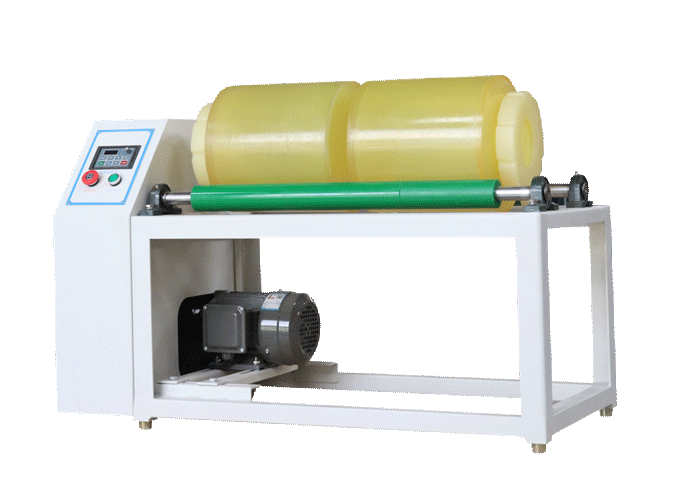
A two-position roller mill is equipment for the preparation of samples and small batches of powder materials, in which grinding occurs in removable drums rotating on support rollers. Such a machine occupies an intermediate position between sample division operations and analytical instruments: it does not crush large pieces, but brings the material to a state suitable for sieve analysis, spectroscopy, chemical determination or further synthesis. The main feature is two working positions, that is, two places for installing grinding drums. In the card TENCAN presented two station roller mill; Specific dimensions, drum volumes, speeds and load capacities for the selected design are verified from the card and manual and are not transferred from another type of equipment.
Design and working principle
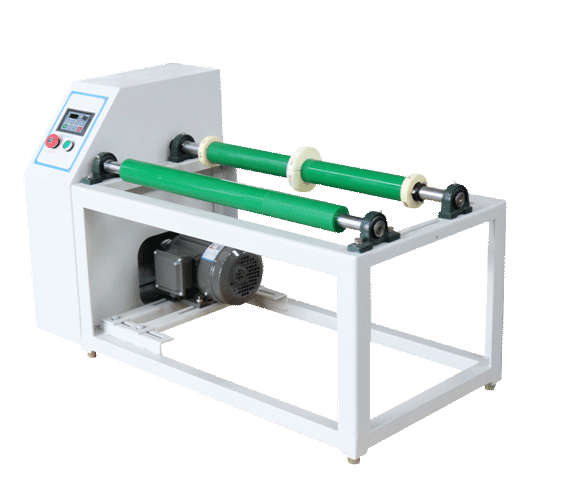
In a roller mill, the drum is not fixed to a central shaft, like many planetary or bead mills. It rests on support rollers and rotates due to friction. The drive rotates the rollers, which transmit torque to the drum. This scheme is mechanically simple, but requires attention to the mass of the drum, the condition of the surface of the rollers, balancing and correct installation. If the drum is not stable enough, vibration, slippage and uneven wear will occur.
Inside the drum there are grinding media and material. When rotating, they rise along the wall, then roll down or fall down. Depending on the speed and load, different mechanisms predominate: abrasion and shear during soft rolling, impact during more intense movement. For brittle materials, impact and splitting are more important; for ductile or fibrous materials, shear and abrasion are more important. Therefore, the same mill can give different results on different samples.
The concept of critical speed refers to the general principles of drum grinding: if the rotation speed is too high, the grinding media are pressed against the wall and stop making useful impacts. The specific operating value depends on the drum diameter, the size and weight of the grinding media, the degree of filling and the properties of the material. For a certain model, it is taken from the manual, and is not calculated by analogy with another drum.
Two positions and grinding mode: what is important to check
Two working positions are needed not only for the “second sample”. They allow parallel sample preparation, comparison of materials under similar conditions, or separation of operations over time. However, the design may be different: in some roller mills, both positions are connected to a common drive, while in others, independent drives or separate controls are possible. This determines whether it is possible to set different speeds, times and modes for two reels.
There are a few practical issues to consider before making your choice.:
- whether two positions work simultaneously and whether each is independently controlled;
- what is the maximum weight allowed for one position and for the entire installation;
- how the drum is fixed and whether protection is provided against displacement during rotation;
- whether the indicated speeds refer to the rollers or the drum;
- is there a timer, soft start, emergency stop and imbalance protection;
- What are the floor, ventilation and noise level requirements for the design?
Two positions does not automatically mean double productivity. If drums have different geometries, weights or loads, grinding conditions may vary. To correctly compare samples, it is better to use the same drums, the same mass of grinding media and a confirmed mode. If there is a significant difference in loading, an imbalance is possible, so the permissible combinations must be determined by the manufacturer.
Drums, grinding media and protection against impurities
The grinding drum is a container that contains the sample and grinding media. Its material must be compatible with the sample, solvent, temperature, and purity requirements. Stainless steel is mechanically convenient, but can introduce iron and chromium; ceramics and zirconium dioxide reduce the risk of metal contamination, but have their own wear; Polymer drums are suitable for soft materials and some chemical applications, but are limited in load and temperature. Tungsten carbide is characterized by high hardness and density, but its use is not justified in all cases and requires an assessment of contamination by the target elements.
There is no universal material without shortcomings. Even a solid lining wears out, and wear products end up in the sample. Therefore, the expression “zero pollution” is technically incorrect. Instead, it should be assessed which elements are critical for subsequent analysis, what the acceptable proportion of impurities is, and whether a blank or control sample can be performed. For trace analysis, not only the material of the drum is important, but also the material of the grinding media, cleanliness before loading and the cleaning procedure between samples.
The compatibility of the drum with the mill requires special attention. Planetary grinding bowl and roller mill drum are not interchangeable products by default. Even an externally suitable glass cannot be placed on rollers without confirmation from the manufacturer: they check the seating dimensions, method of fixation, permissible weight, speed, heating and stability. A random coincidence of diameter does not prove compatibility. Unless explicitly stated in the documentation, it is safer to ask for confirmation than to test an unsuitable container at operating speed.
Parameters, dry and wet grinding, difference from other equipment
How to read parameters
When describing a roller mill, it is important to distinguish several quantities. The volume of one drum is a geometric capacity; the total volume of the two positions is not equal to the payload mass. The workload includes grinding media and sample, and the maximum sample weight may be less than the overall limit. Sample weight, drum volume and hourly productivity are different indicators and cannot be replaced with each other. If the volume is indicated on the card, this does not mean that the same volume of material can be loaded in one cycle.
The rotation speed should be read in relation to the element: roller revolutions and drum revolutions differ due to the gear ratio and diameters. The drive power characterizes the energy capabilities, but does not guarantee a certain size. The final particle size depends on the initial particle size, hardness, fragility, humidity, material of the grinding media, the ratio of material to grinding media, time and method of measurement. A typical catalog minimum cannot be promised for any sample.
Dry and wet grinding
Dry grinding is convenient when the material is free-flowing, not prone to intense sticking and does not require subsequent drying. It is more often suited for sample preparation for sieve analysis or for liquid-sensitive powders. Limitations include dust, oxidation, agglomeration and wall adhesion. Wet grinding introduces a liquid medium that can improve dispersion and reduce dust generation, but adds liquid separation, drying, and contamination control operations. Reactive, toxic or flammable liquids require special safety measures, not just a household hood.
Grinding and mixing are not the same thing. In grinding, the goal is to reduce particle size and open up aggregates; When mixing, it is important to distribute the components evenly, without necessarily crushing them. A roller mill can do both tasks depending on the mode, but a gentler spin and a different feed are often sufficient for mixing. You cannot judge the quality of the mixture only by operating time: the initial state of the components and the absence of segregation during unloading are important.
How is it different from planetary, vibration and bead mill?
A roller mill is a type of drum ball mill, where the rotation of the drum is ensured by support rollers. In a planetary mill, the glasses rotate around a common axis and at the same time around their own axes; the trajectory and energy of impact are different there, usually higher, but the volumes of the glasses are smaller. The vibrating mill imparts vibration to the drum, rather than simple rotation. A bead mill uses agitation of the grinding medium in a chamber, often with a rotor; this is a different class of equipment and different requirements for the suspension.
A roller mill should not be confused with a roller crusher. In a crusher, the material is destroyed between rotating rolls, and in a roller mill, the rolls are supports and transmit rotation to the drum. These are fundamentally different machines, although in everyday life the words “roller” and “roller” are sometimes confused. For large pieces you need a crusher; for fine grinding and homogenization of the sample - a mill with a drum and grinding media.
How to choose and what not to expect
The choice begins with the task, not with the name of the equipment. It is necessary to determine whether size reduction, disagglomeration, mixing or preparation for analysis is required; what is the mass of the sample; how hard, brittle, ductile, or sensitive the sample is to contamination; is the dry process acceptable and what drum material is safe for further measurements. For a two-position mill, it is additionally important whether the samples will be processed at the same time and whether the same conditions are acceptable.
Practical selection criteria look like this:
- the volume and working load of the drum correspond to the sample mass and bulk density;
- the material of the drum and grinding media does not interfere with the analysis and withstands the process conditions;
- two positions are actually needed and not an unused option;
- speed and time are adjustable in the required range, and the control method is clear to the operator;
- provides fixation, protection and convenient cleaning without transfer of dust between samples;
- The documentation specifies restrictions on weight, speed, materials and drum compatibility.
You should not expect a roller mill to replace a planetary ultra-fine laboratory grinding mill, a continuous industrial mill, or a cryogenic unit. Conventional air cooling cannot be called cryogenic: these are different things, and the temperature of the working space is not equal to the temperature of the sample. A laboratory-scale batch machine is not mechanically scaled up to production: energy, geometry, environment and heat transfer influence the outcome. Finally, data from one model cannot be transferred to the entire range - each drum, bowl and grinding media are checked for compatibility with a specific machine.
Check the current nomenclature and positioning of equipment TENCAN possible at main page of the site. Before ordering, it is useful to check not only the name, but also the exact design: configuration, dimensions, drum material and loading restrictions.
Questions and answers
Is it possible to place drums of different sizes in two positions? Only if this is expressly permitted by the manual and the permissible load is maintained. Different masses can increase vibration and make grinding conditions inconsistent.
Is this mill suitable for cryogenic grinding? A regular roller mill does not become cryogenic due to the air in the room. For 低温 mode, a separate liquid nitrogen system or a proven cryogenic design is required, and not just case cooling.
Can a planetary beaker be used on a roller mill? Without written confirmation of compatibility - no. Check the fit dimensions, fixation, weight, speed, heating and stability; Merely matching the diameter is not enough.
How does a two-position mill differ from a planetary mill? In planetary glasses, they undergo complex rotation and usually provide higher energy to a small volume. The roller drum rotates on supports, and the design is simpler and more convenient for two parallel positions.
Does the mill guarantee the specified size? No. The fineness depends on the material, initial size, grinding media, time, medium and measurement method. The mode is selected experimentally and checked with the manual.
Short summary
The two-position roller mill is a practical tool for parallel sample preparation, where simple mechanics, removable drums and the ability to work with different materials are important. But its advantages are revealed only with the correct selection of the drum, grinding media and load. Before choosing, you should check the actual characteristics of a particular design, tooling compatibility and process limitations, rather than relying on general promises of “fine grinding without contamination.”