
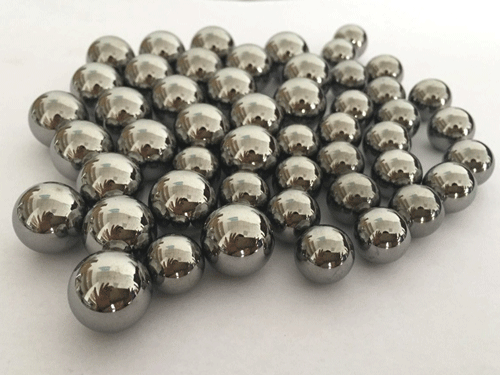
Tungsten carbide grinding balls are grinding media that are loaded into a grinding bowl or drum along with the sample. Their task is to transfer the energy of movement of the mill to the powder: during impacts, friction and shear, the particles are destroyed, deagglomerated and mixed. In the technological chain, such balls occupy a place between equipment and material. The mill sets the trajectory and speed, and the headset and grinding media determine what fraction of the energy reaches the sample, how many impurities can get into the sample and how reproducible the result will be. In stock TENCAN There is tungsten carbide grinding balls; Specific designs, sizes and delivery conditions should be checked against the current product card.
What are tungsten carbide grinding balls?
The balls are not an independent grinding device. This is a consumable element of the headset, working in tandem with a mill and a grinding glass. In a planetary ball mill, the glass rotates along a complex trajectory, and the balls, under the influence of centrifugal forces, are pressed against the walls, collide with each other and wear out the material. In a drum mill the picture is different: the lifting of the load, its rolling and falling are important. Therefore, the same ball can behave differently in different types of equipment, and it is impossible to transfer the mode from one machine to another without checking.
In the technical sense, “tungsten carbide” in grinding media usually does not mean a chemically pure monocrystalline material, but a carbide based on tungsten carbide, where the carbide grains are bound by a metal phase. The composition of the binder, its proportion, grain size and sintering technology affect the hardness, impact strength, wear resistance and the nature of the possible transfer of impurities. If the documentation indicates the composition and binder, this helps to evaluate not only the life of the ball, but also compatibility with a specific sample. The name of a material alone does not guarantee “zero pollution.”
A grinding ball can be divided into several significant elements: material and bond, geometry and diameter tolerance, surface condition, batch weight and traceability. For a laboratory task, not only hardness and density are important, but also batch reproducibility, ease of cleaning, resistance to chipping and behavior in the chosen environment - dry or wet.
How does ball loading work and why is the material of the grinding media important?
Grinding in a ball mill occurs primarily through two mechanisms. The first is impact: the ball transfers momentum to a particle or agglomerate, and cracks appear in the material. The second is abrasion and shear: the material is caught between moving surfaces and the particles gradually become smaller. In a real process, both mechanisms act simultaneously, but their ratio depends on the type of mill, speed, diameter of the balls, filling of the glass, properties of the sample and the medium. Therefore, the choice of grinding media cannot be reduced only to the characteristics of “hard” or “wear-resistant”.
Tungsten carbide interests researchers primarily because of its combination of high density and hardness. All other things being equal, a denser ball of the same size has more mass and is able to transfer more energy upon impact. This can be useful for hard and brittle materials where intense breaking is required. However, high impact energy is not always an advantage: it can increase wear on the headset, heat, cracking of brittle particles and unwanted phase changes. In addition, tungsten carbide, as a hard alloy, is sensitive to impact loads and surface defects, so operating conditions and the condition of the balls are no less important than the starting material.
Dry and wet grinding give a different picture. In a dry process it is easier to maintain chemical purity, but dusting, sticking, heating and uneven distribution of particles can occur. In wet grinding, liquid can improve dispersion and reduce dusting, but adds factors of corrosion, sedimentation, interaction with the material and subsequent cleaning. Grinding and mixing are also not the same thing: vigorous mixing does not necessarily mean effective particle size reduction, and good grinding does not guarantee a homogeneous mixture. To control the result, you need to analyze the particle size distribution and understand what exactly you want to achieve - destruction of primary particles or deagglomeration.
Design, geometry and characteristics: how to read the data
When choosing balls, it is useful to separate the passport parameters, test conditions and the intended task. The diameter of the ball is a geometric parameter, and not a promise of a certain grind size. Large balls give more energetic blows, small ones give more contacts and better fine abrasion performance, but the final result depends on the material, initial size, load, speed and time. The mass of the batch and the mass of one ball are different quantities; they must not be mixed with sample weight or mill capacity. The number of balls also affects the filling and movement pattern of the load.
Material hardness is useful as a guide, but is not a substitute for assessing wear in a specific environment. In one problem, abrasive wear will be decisive, in another - impact chipping, in the third - chemical interaction with a liquid or sample. Surface defects, cracks, chips and discoloration after work may indicate the need to replace the batch. If the card contains tolerances, surface grades or cleaning recommendations, they should be read in conjunction with the application conditions and not separately.
| Parameter | What does it mean | What to check before use |
|---|---|---|
| Material and bond | Carbide base and metal phase | Acceptable transfer of elements into the sample, resistance to the environment |
| Ball diameter | Grinding body geometry | Cup compatibility, grinding task, filling |
| Surface condition | Presence of defects, roughness, signs of wear | Risk of chipping and contamination, cleaning rules |
| Batch weight | Quantity of material supplied | Loading weight per glass, number of balls, reproducibility |
| Batch traceability | Possibility to link balls with documentation | Saving experimental conditions when repurchasing |
Materials, Applications and Limitations
Tungsten carbide balls are considered for applications where high grinding energy and abrasion resistance are needed: in the preparation of hard minerals, ceramic powders, glass, slags and some metal materials. They may be appropriate in studies where intensive grinding of a small sample is required and contact with the headset material is acceptable. However, suitability is determined not only by the hardness of the sample. If the analysis is sensitive to tungsten, cobalt or other bond components, even minor wear may be significant. In such cases, it is important to assess in advance the acceptable level of impurities and provide control experiments.
Limitations are associated with the fragility of the carbide, possible wear of the nozzle, cost and difficulty of cleaning. Tungsten carbide should not be considered a universal material for any chemically active media: resistance depends on the specific composition, temperature and contact time. You cannot promise a complete absence of contamination - any grinding set wears out. For samples that are soft, sensitive to metals, or prone to sticking, other materials are sometimes more suitable, but the decision is made on a combination of requirements rather than on a single parameter. Detailed regimes for hazardous or poorly understood substances should be taken from the specific installation manual and not from a general article.
Compatible with mill, beaker and sample
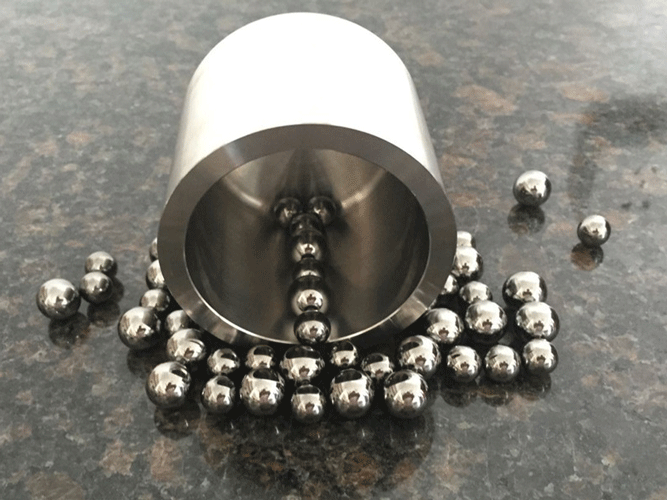
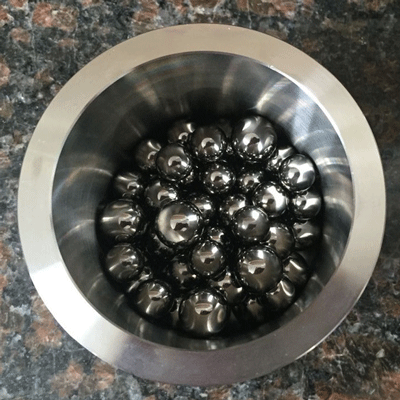
Compatibility is not confirmed by the fact that both products are ball grinding. It is necessary to check the internal dimensions of the cup, permissible load, maximum speed, headset material, requirements for tightness and working environment. Balls that are too large or heavy can create unwanted stress; too small - do not provide the necessary energy. Hard balls in a soft glass can accelerate the wear of the latter, and wear products will end up in the sample. Therefore, the “ball-glass” pair is evaluated as a system, and not as two independent objects.
Equipment from the catalog TENCAN has its own characteristics and limitations. For example, in a card vertical planetary square ball mill The parameters of a specific model are given, but they do not mean automatic compatibility with any balls and glasses. Before work, you should check the size of the headset, the permissible load volume and the mode with the documentation. If there is insufficient data, it is better not to transfer the dubious value into the protocol, but to check with the manufacturer.
For a sample, the initial size, hardness, tendency to agglomerate, moisture and chemical reactivity are important. The same mode can give different results for the powder and for the compact piece. The final particle size depends on the material, medium, time, ball-to-sample mass ratio, and measurement method. The typical catalog minimum cannot be considered guaranteed for any sample. If the task involves disagglomeration rather than destruction of primary particles, this also changes the loading and processing time requirements.
Wear, cleaning and contamination control
The wear of balls manifests itself in different ways: uniform abrasion, micro-chipping, chips, changes in geometry and color. It is important for the laboratory not only to replace the worn-out batch, but also to understand where the wear products went. Some may remain on the ball, some may end up in the sample, and some may settle on the walls of the glass. Therefore, after work, it is useful to inspect the headset, keep records of batches and, if necessary, perform control grinding without a sample or analyze a blank sample. This does not prove the absence of contamination, but it helps to estimate its level.
Cleaning must be consistent with the material of the balls, beaker and the requirements of the analysis. Do not use aggressive acids, strong oxidizing agents or abrasive powders without checking: they can damage the surface and increase the transfer of impurities. After wet grinding, it is important to remove any remaining liquid, dry the headset according to the recommended procedure, and store it in such a way as to prevent dust and contact with foreign materials. It is reasonable to use separate kits or at least separate purification controls for different sample classes. If a specific procedure is provided in the documentation, it takes precedence over general recommendations.
Selection criteria and frequently asked questions
Before ordering, it is useful to formulate the task in measurable terms: what material is being crushed, what the initial and target sizes are, whether heating is acceptable, whether the process will be dry or wet, what elements cannot be added to the sample, what beaker is used and what loading is allowed. Then they check the compatibility according to the documentation, evaluate the available diameter and number of balls, the need for a separate batch and the cleaning procedure. You should not choose grinding media only by the name of the material: for one laboratory wear resistance is more important, for another - minimal transfer of a specific element, for a third - resistance to shock loads.
- Check the material of the balls and glass with the requirements for sample purity.
- Check the permissible diameter, feed weight and speed for the specific mill.
- Determine whether a dry or wet process is needed and how cleaning will be organized.
- Provide a control experiment and inspection of the batch after wear.
- Do not transfer the parameters of one model to the entire range without confirmation.
Are tungsten carbide balls suitable for wet grinding?
This depends on the liquid, sample material, duration of contact and cleanliness requirements. Wet grinding is only possible after checking chemical compatibility and cleaning procedures; The material of the ball itself does not guarantee suitability for any environment.
Can such balls be used in any planetary mill?
No. You need to check the cup dimensions, load capacity, speed and design limitations of the specific model. Compatibility is confirmed by documentation, not by the external similarity of the headset.
Does tungsten carbide mean zero contaminants?
No. Any grinding set wears out, and the bond and bowl material can introduce trace amounts of elements. The risk is assessed by composition, grinding conditions and control tests.
How to choose the diameter of the balls?
They focus on the internal size of the glass, the hardness and initial size of the sample, the target task and the permissible impact energy. Typically, trial grinding and analysis of particle size distribution are required; There is no universal diameter for all materials.
Get acquainted with other areas of equipment and headsets TENCAN possible at official website. The choice of tungsten carbide grinding balls should be based on the actual properties of the sample, the parameters of the specific mill and the acceptable level of impurities, and not on the promise of a universal result.