
A stainless steel dust-free crusher is equipment for preliminary crushing of lump, granular or bulk material, the design of which is aimed at limiting dust emission in the working area. In the technological chain, such a machine usually stands before fine grinding, sifting, mixing or pressing and helps to obtain a mass that is more uniform in size. Specific designs, dimensions, performance and equipment can be found in Stainless dustless crusher card.
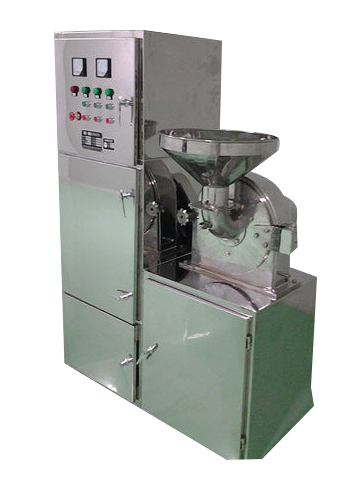
Crusher in the sample preparation chain
The crusher solves the problem of preliminary particle size reduction. If the material comes in the form of lumps, granules or cohesive aggregates, it must first be brought to a condition suitable for loading into a mill, sample divider, screen or mixer. At this stage, not only the output particle size is important, but also feed stability, material loss and dust load on the laboratory.
Dust-free design is especially important when working with powders that are easily sprayed, with expensive or scarce samples, as well as in rooms with increased requirements for cleanliness. However, the word “dust-free” in the name does not mean the absolute absence of dust under all conditions. This is a stated design solution that must be compared with the actual conditions: material humidity, feed rate, seal condition, unloading method and the presence of aspiration.
The crusher does not replace an analytical mill and does not guarantee a given particle size distribution. She prepares the material for the next operation. Therefore, when choosing, first determine the maximum initial piece, permissible size after crushing, batch weight and cleaning requirements between samples, and only then compare equipment designs.
Design and principle of operation
The operation of the crusher is based on the mechanical destruction of material in a closed chamber. The material enters through the loading unit, enters the working area, where it is crushed due to impact, compression, shearing or a combination of these effects - the specific principle is determined by the design of the model. After reaching the desired size, the material is unloaded through the discharge opening or tray.
Loading unit and grinding chamber
The loading unit sets the uniformity of the feed. Loading too quickly may overload the camera, cause jamming, or increase dust emissions; too slow reduces performance. The equipment card should specify the permissible piece size, the volume of the loading hopper, the adjustment method and the presence of overload protection. The volume of the hopper is not equal to the useful mass of the sample: part of the space is always occupied by the working body, and the actual loading depends on the bulk density and size.
The grinding chamber determines how evenly the destruction will occur. For brittle materials, the clearance and speed of the working element are important; For plastic or fibrous materials, the result may be less predictable and the risk of sticking may be higher. Therefore, it is impossible to transfer the characteristics of one model to the entire range of crushers: different versions are designed for different materials and modes.
Dust limitation
In dust-free crushers, dust is retained due to a closed housing, seals, thoughtful discharge geometry and, if provided for by the design, connection to an aspiration or filtration system. The presence of a casing in itself does not make the machine airtight. It is necessary to clarify which components are sealed, where the air is directed during unloading, whether a dust collector is provided, and how the filter is maintained.
Separately, a distinction is made between reducing dust emissions and protecting against hazardous factors. A dust-free crusher does not automatically become an explosion-proof, containment box or toxic-handling unit. If the material is flammable, toxic or requires an inert atmosphere, crusher design alone is not enough: proven operating conditions and additional safety systems are required.
Stainless steel finish and cleaning
The stainless steel in the name refers to a design that can make it easier to clean and improve corrosion resistance, but does not mean “zero pollution.” It is necessary to clarify which parts actually come into contact with the material, what grade of steel is used, whether there are removable elements and whether they are accessible for disassembly. The abrasive material gradually wears out the working surfaces; wear products can theoretically enter the sample.
For laboratory practice, not only corrosion resistance is important, but also reproducibility of cleaning. If particles remain in stagnant zones between samples, contaminant transfer may occur. Therefore, when choosing, they evaluate the smoothness of the surfaces, the number of connectors, ease of access to the camera and the possibility of dry or wet cleaning in accordance with the manufacturer’s instructions.
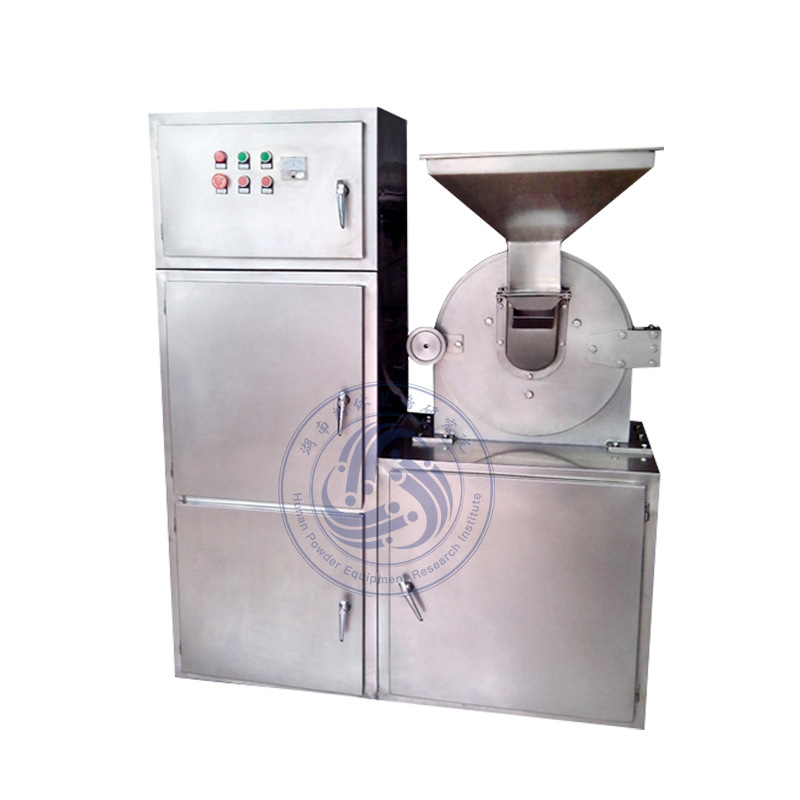
What do the characteristics on the card mean?
Specifications should be read as conditions and not as promises of results for any material. Especially often they mix productivity, one-time loading and output size. Below are the parameters that are worth checking before selection.
- The maximum size of the loaded piece. Exceeding this value may result in jamming and increased wear.
- Size after crushing. Usually depends on the material, humidity, clearance, speed and method of unloading; one number on a card does not guarantee the same result for another sample.
- Performance. May be specified in kg/h or as a single load. These are different quantities; For the laboratory, the permissible weight of one batch and losses during unloading are more important.
- Power and voltage. They affect the load on the network and heating, but do not themselves determine the quality of crushing.
- Material of contact parts. You need to know not only “stainless steel”, but also which surfaces are in contact with the sample.
- Dust proof. Check the presence of seals, a discharge unit, a filter or aspiration connection point.
- Dimensions, weight and noise level. Important for placement on a laboratory bench, in a fume hood or in a separate area.
- Equipment. Replacement elements, containers, tools and cleaning products may or may not be included in the delivery; this should not be speculated.
Separately check whether the work is continuous or batch. For sample preparation, batch mode is often more important: it allows you to control the sample weight and clean the chamber between batches. If the card indicates productivity, you need to understand at what size, humidity and density of the material it was obtained.
Suitable materials and restrictions
Such a crusher is suitable for the preliminary crushing of many dry, brittle and granular materials: mineral raw materials, ceramic granules, some salts, pigments, fillers and similar samples. Stainless steel may be preferred for applications where corrosion resistance and ease of cleaning are important. However, suitability is not determined by the name of the equipment, but by a combination of material strength, acceptable contamination and required fineness.
Limitations begin where the material does not behave like a brittle solid. Plastic, oily and sticky samples can stick to the working parts and impair unloading. Fibrous materials are sometimes crushed rather than crushed. Abrasive powders accelerate wear. Heat-sensitive substances may become hot in the work area. Each of these cases requires a separate analysis, and not a universal recommendation.
Dust-free design does not replace personal protective equipment and local ventilation if the properties of the powder require it. A closed enclosure should not be assumed to completely eliminate operator contact with material during loading, unloading and cleaning. It is also impossible to use the crusher for wet grinding, cryogenic preparation or operation in an inert environment without confirmation: these are different modes, and their possibility is checked according to the documentation of the specific model.
How to choose a crusher for the task
It is convenient to make the choice based on the sample, and not on the appearance of the machine. First, the maximum size of the original pieces, bulk density, moisture content, fragility and tendency to stick are recorded. Then they determine what fraction is needed at the output and what will happen next: a ball mill, a sieve, a mixer or a press. After this, it is checked whether the expected load falls within the permissible range of the specific execution.
- Compare the size of the original piece with the allowable load size.
- Clarify the expected size after crushing and how to control it.
- Determine the mass of one batch and the required number of repetitions.
- Check for cleanability between samples and risk of particle transfer.
- Assess dust emissions, ventilation and filter maintenance requirements.
- Check dimensions, weight, power supply and noise level with the installation location.
- Request information about contact materials, wearing parts and operating restrictions.
If the material is to be used for quantitative analysis, visual assessment after crushing cannot be relied upon alone. It is necessary to decide in advance how particle size is controlled, how a representative sample is taken, and how losses are accounted for. For expensive or small samples, minimal losses and the ability to thoroughly clean are important; for large batches - stability of supply and ease of unloading.
General list of equipment areas TENCAN given on main page of the site. When selecting, it is useful to compare not only crushers with each other, but also the entire sample preparation route: sometimes the required task is solved by changing the sequence of operations, rather than replacing one unit.
Crusher, mill and grinding media: not to be confused
The crusher is designed for preliminary particle size reduction. A ball mill provides finer grinding due to the movement of grinding media inside the grinding drum or bowl. Grinding media are a consumable element of the mill, and not an accessory to the crusher. Even if both products are made of stainless steel, this does not prove their compatibility: you need to look at the specific mill design, chamber size, material and grinding task.
Therefore, when choosing, you cannot replace one equipment with another only based on the external similarity of names. The crusher will not produce a fine powder comparable to a planetary mill, and the mill is not designed to accept large pieces. Separating operations helps you more accurately formulate requirements and avoid purchasing equipment that does not solve the problem.
Brief answers to frequently asked questions
Is the dustless grinder suitable for fine grinding?
No, this is pre-shredding equipment. It prepares the material for the subsequent operation, but does not replace the mill to obtain a fine powder. The required size and the method of measuring it must be determined separately.
Does “dust-free” mean completely sealed?
No. The name refers to a dust-reducing design, but the degree of sealing depends on components, seals and operating conditions. The presence of a filter or aspiration should be clarified by the card and documentation.
What to check for stainless steel?
Steel grade, list of contact parts, wear and cleaning capabilities. The stainless steel design reduces the risk of corrosion, but does not eliminate the transfer of impurities and does not make the equipment universal for any environment.
Can wet or sticky material be crushed?
This depends on the specific model and sample properties. Wet and sticky material can clog the chamber and impair unloading. The possibility of such a mode cannot be assumed without confirmation from the manufacturer.