
A soil mill and sieve is a laboratory equipment designed to prepare soil samples for chemical, physical, or environmental analysis. It combines two operations: grinding the sample to the required size and sifting through a sieve, which separates the prepared fraction and makes the sample homogeneous. In the catalog TENCAN such a machine is classified as grinding equipment; its task is to make the sample representative and suitable for subsequent measurements, and not to replace the analytical instrument. You can view the product card by following this link: Mill and soil sieve.
Soil preparation is a critical stage, because the result of the analysis depends on how well the sample retains the properties of the original horizon, is not contaminated by the equipment material, and has a reproducible size. The mill and sieve solve precisely these problems: they reduce the size of aggregates and particles, homogenize the sample and cut off the fraction that does not correspond to the method.
What is a soil mill and sieve
A soil mill and sieve is a laboratory device that combines a grinding mechanism and a sieve unit. The specific layout is determined by execution; Grinding and screening operations can be combined or performed sequentially. When choosing, it is important to clarify which units are included in the delivery.
Such equipment is not an analytical instrument. It does not measure elemental content, pH, organic carbon or particle size distribution. Its function is to prepare the sample for analysis: to bring the soil to a state in which it can be weighed, divided, extracted or measured. Therefore, the correctness of preparation directly affects the representativeness of the result.
Unlike a universal ball mill, a soil mill with a sieve is focused on samples of soil, soil, sediment and similar materials. It must cope with aggregates, roots, small stones and organic inclusions - within the limits that the design allows. If the sample contains large solid inclusions, preliminary crushing or removal of such inclusions is required, otherwise the grinding unit and sieve may not work effectively.
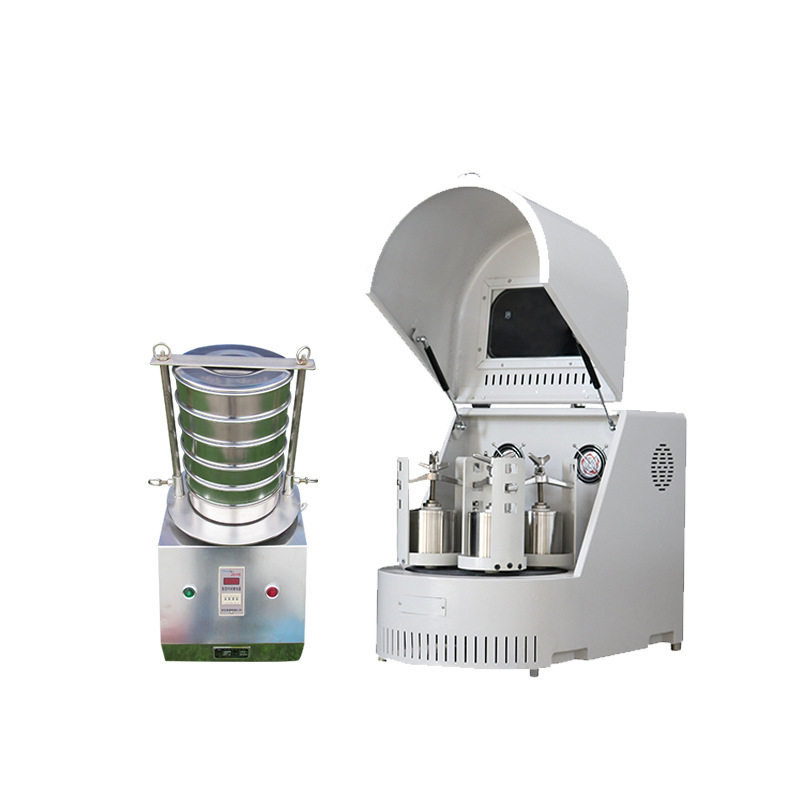
How soil crushing and sifting equipment works
The workflow can be divided into three stages: sample preparation, grinding and sieving. In each specific implementation, the sequence and degree of automation may differ, but the physical meaning remains common: first, soil aggregates are destroyed, then the material is separated by size.
Sample preparation before grinding
The soil sample is usually heterogeneous. It may contain roots, plant remains, stones, and inclusions of anthropogenic origin. Before loading into the mill, the sample is usually brought to an air-dry state, if this is provided for by the analysis method. Wet soil is prone to sticking to work surfaces, clogging the sieve and forming lumps, so the drying regime and permissible moisture content must comply with the approved procedure.
Large inclusions that should not end up in the analyzed fraction are removed manually or separated on a preliminary sieve. It is important to understand: removing stones and roots is not a loss of sample, but a regulated operation if the technique requires analyzing only fine earth. If the task is to determine the composition of the entire mass, including large fractions, the equipment and procedure are chosen differently.
Grinding and disagglomeration
In soil preparation, it is important to distinguish between the grinding of particles and the destruction of aggregates. Soil aggregates are natural formations consisting of mineral grains, organic matter and pore spaces. In soft mode, the equipment can destroy aggregates without significantly changing the mineral grains themselves. With more intense exposure, true particle crushing begins, which is accompanied by an increase in specific surface area, heat generation and a potential change in some properties of the sample.
For analytical purposes, deagglomeration and obtaining a homogeneous fraction are often sufficient rather than ultrafine grinding. The stronger the grinding, the higher the risk of introducing impurities from working parts and changing organic matter. Therefore, the mode should be justified by the methodology, and not selected for maximum subtlety.
Sieving and fractionation
The sieve performs two functions: it cuts off fractions larger than a given size and ensures the uniformity of the passed material. The mesh size of a sieve is not the same as the final size of all particles. Particles can pass through the cell if their shape and orientation allow it; At the same time, smaller particles and particles close to the cell size remain in the sample. Therefore, the result of sifting depends on time, amplitude, humidity and material properties.
After sifting, two fractions are usually obtained: those that passed through the sieve and the residue on the sieve. For analysis, use the fraction specified in the method. The residue should not be randomly added to the sample unless specified by the procedure, otherwise the representativeness will be impaired.
Main elements and options
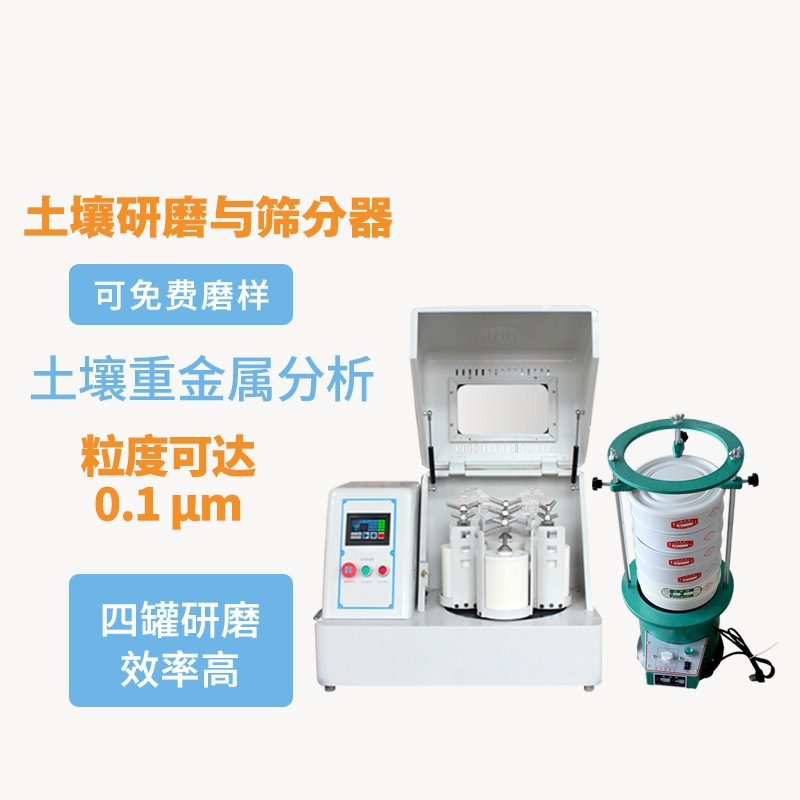
In the card TENCAN The product is presented as a mill and soil sieve. This points to two key functional blocks. Depending on the design, they can be combined in one housing or supplied as a coordinated set. Listed below are the nodes that are important to check when choosing, without assigning specific values that are not in the materials provided.
Grinding unit
The grinding unit determines exactly how aggregates and particles are destroyed: by impact, abrasion, compression, or a combination of these effects. For soil, mild or moderate regimes are often preferred so as not to overheat the sample and introduce excessive contamination. The material of the working parts is an important characteristic: stainless steel, ceramics, tungsten carbide, zirconium dioxide and other materials have different effects on wear and possible transfer of impurities.
It is necessary to distinguish between the declared hardness of the material and the actual resistance in a particular sample. Abrasive soils high in quartz will accelerate the wear of any material. Therefore, when choosing, you need to take into account not only the composition of the sample, but also the service life of the working parts, the cost of maintenance and the permissible level of contamination for the target analysis.
Sieve unit
A sieve assembly may include one or more sieve inserts. The cell size is selected according to the analysis method: for example, for some soil studies a fraction of less than 2 mm is normalized, for others - less than 1 mm or 0.5 mm. However, specific requirements are always taken from the approved procedure and not from the general description of the equipment.
The material of the screen also matters. Metal sieves are durable, but can corrode when handling wet or acidic samples. Polymer and nylon screens reduce the risk of metal transfer, but are inferior in rigidity and wear resistance. The choice depends on the analyte and the acceptable level of cross-contamination.
Unloading and cleaning system
After grinding and sifting, the sample must be unloaded without loss and without mixing with the previous sample. The design of the discharge, the presence of removable parts and accessibility for cleaning are practical criteria that often take precedence over secondary parameters. If equipment is difficult to clean, the risk of cross-contamination increases, especially when handling trace contaminants.
Issues of dust collection and connection to the exhaust system should be specified in the package. When working with dry, dusty soils, these solutions help reduce losses and protect the operator, but they are not a universal feature of any design.
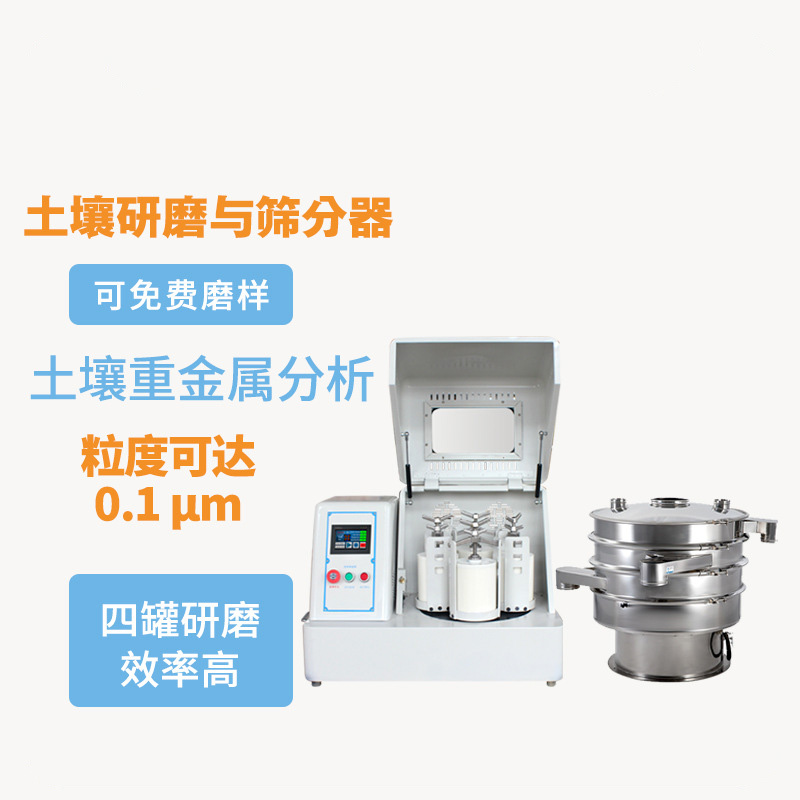
What characteristics are important to read correctly?
Equipment specifications cannot be interpreted in isolation from the task. The same value may be useful for one technique but insufficient for another. Below are the parameters that most often require clarification.
Coarseness and sieve size
The declared mesh size of the sieve is a geometric parameter of the sieve, and not a guaranteed size of each particle in the sample. The actual particle size distribution depends on the feed material, humidity, screening time, loading and screen condition. If a technique requires a certain granulometric composition, it is confirmed by measurement, and not just by the nominal size of the sieve.
It is also important to distinguish between the maximum size of material that can be loaded and the typical size after processing. The manufacturer may indicate the acceptable size of pieces for loading, but this does not mean that the output will be a powder of the specified fineness.
Sample volume and throughput
Load volume, sample weight and productivity over time are different parameters. The volume of one cycle shows how much material can be processed in one load. The weight of the sample depends on the density of the soil. The output per hour depends on the grinding and screening time and how many cycles the operator performs without stopping for cleaning. Volume should not be converted into mass without taking into account the bulk density of a particular sample.
In addition, laboratory throughput should not be confused with industrial throughput. The soil mill and sieve are equipment for sample preparation and not for processing large volumes of soil. If processing hundreds of kilograms is required, other classes of equipment are considered.
Materials and addition of impurities
During grinding and abrasion, the working surfaces come into contact with the sample. This creates a risk of introducing impurities: iron, chromium, nickel, zirconium, aluminum or other elements depending on the material. The zero pollution claim is incorrect for any mechanical equipment. We can only talk about reducing the contribution to a level acceptable for a specific analysis.
For trace analyses, the material of the contact parts is selected especially carefully. Sometimes a blank experiment is carried out first: an inert sample or an empty chamber is treated and the contribution of the equipment is assessed. This approach allows us to understand whether the material of the nodes affects the result under given conditions.
terms of Use
Dust, humidity, temperature and power availability affect equipment performance. Soil samples can be dry and dusty, so compaction, discharge, and the ability to connect to an exhaust hood are important. If the equipment is used in an unheated area, the operating conditions specified in the manual must be taken into account. Conditions not supported by documentation should not be assumed.
Suitable materials, limitations and selection criteria
The soil mill and sieve are designed primarily for soils, soils, sediments, composts and similar loose or loosely bound materials. Such samples usually contain mineral grains, organic matter, aggregates and inclusions. The equipment helps obtain a representative fraction for chemical or physical analysis.
Restrictions
Limitations are associated with hardness, moisture and heterogeneity of the sample. Large stones, gravel, metal objects and solid particles can damage the grinding unit or screen. Very wet clay soils are prone to sticking and require preliminary preparation. Fibrous materials such as peat or plant debris may become wrapped around the implements if the design is not designed to accommodate such patterns.
It is also important to remember that mechanical preparation can change some properties of the sample. Grinding increases the specific surface area, can partially destroy organic aggregates and increase the temperature. For most methods, these effects are controlled by regulations, but when studying volatile compounds, microbiological indicators or heat-labile substances, a separate test of suitability is required.
The equipment does not replace an analytical device and does not determine the composition of the soil. It only prepares a sample. Therefore, when choosing, you should first formulate the analytical problem, then determine the requirements for size, weight, material and cleanliness, and only then select the design.
From the analysis technique
The method specifies the required fraction, sample weight, acceptable grinding and purity requirements. If a fraction of less than 2 mm is needed for analysis, there is no point in choosing equipment aimed at ultra-fine grinding. If trace elements are being analyzed, contact materials and cleaning procedures are critical. If speed is important, check how long one cycle takes along with cleaning.
Sample Compatibility
The sample must correspond to the capabilities of the equipment in terms of hardness, moisture and size. You cannot automatically transfer the characteristics of one model to the entire range. Even if the equipment is called a soil mill and screen, different designs may have different loading and material limits. Compatibility is confirmed by documentation or testing on a real sample.
Cleaning and cross-contamination
The easier the equipment is to disassemble and clean, the lower the risk of carrying over particles from a previous sample. Removable screens, accessible chambers and smooth surfaces make cleaning easy. Trace analyzes may require a separate set of sieves or consumables to eliminate cross-interference.
Specification of equipment
The package may include various sieves, receiving containers, cleaning tools and spare parts. The option does not automatically become a standard. Therefore, when ordering, it is important to check which sieves and accessories are included in the basic delivery and which are purchased separately. On the website TENCAN you can clarify the general direction of the equipment and available solutions: www.tencanballmills.com.
Questions and answers
How is a soil mill and sieve different from a planetary ball mill?
These are different classes of equipment. The planetary ball mill is designed for fine and ultrafine grinding with grinding media and is often used for minerals, ceramics, alloys and other materials. The soil mill and sieve is designed for the preparation of soil samples, where gentle breakdown of aggregates, homogenization and fractionation is more important than extreme fineness. It is impossible to replace one equipment with another without checking the methodology.
Can wet soil be cultivated?
Possibility depends on design and procedure. Wet soil can stick to work surfaces and clog the sieve, so many methods involve pre-drying. If wet conditions are acceptable, this should be stated in the manual or confirmed by testing. It should not be assumed that equipment can handle any humidity without limitation.
Does the sieve guarantee the specified size?
The sieve sets the mesh size, but does not guarantee that all sample particles will be smaller than this value. Actual distribution depends on material, humidity, sieving time and screen condition. For critical measurements, the size is confirmed by additional analysis, and not just by the sieve rating.
What material of contact parts should I choose?
The material is selected according to the analytical task and the abrasiveness of the sample. For routine analyses, stainless steel is often sufficient. Trace elements may require ceramic, zirconia, or other material with low impurity contribution. At the same time, any material wears out, so monitoring the idle experience and timely replacement of worn parts is important. There is no universal material that is suitable for all samples and all analyses.
Is it necessary to use grinding media?
Not for every equipment and not for every task. If the mill design includes grinding media, their material and size are selected separately, taking into account compatibility with the machine and the sample. For soil preparation, a grinding unit and a sieve are often sufficient. Using grinding media without proven compatibility may result in wear, contamination or ineffective processing.
A soil mill and screen is a soil sample preparation equipment that reduces the size of aggregates, homogenizes the material, and extracts a predetermined size fraction. When choosing, it is important to consider the analysis technique, sample properties, purity requirements and available equipment. The stated characteristics should be read in context: the sieve size is not equal to the size of all particles, the loading volume is not equal to productivity, and the materials of the contact parts do not provide absolute protection against impurities. Correct sample preparation is a necessary condition for reliable analysis, but it does not replace the analysis itself and does not eliminate the limitations of specific equipment.