
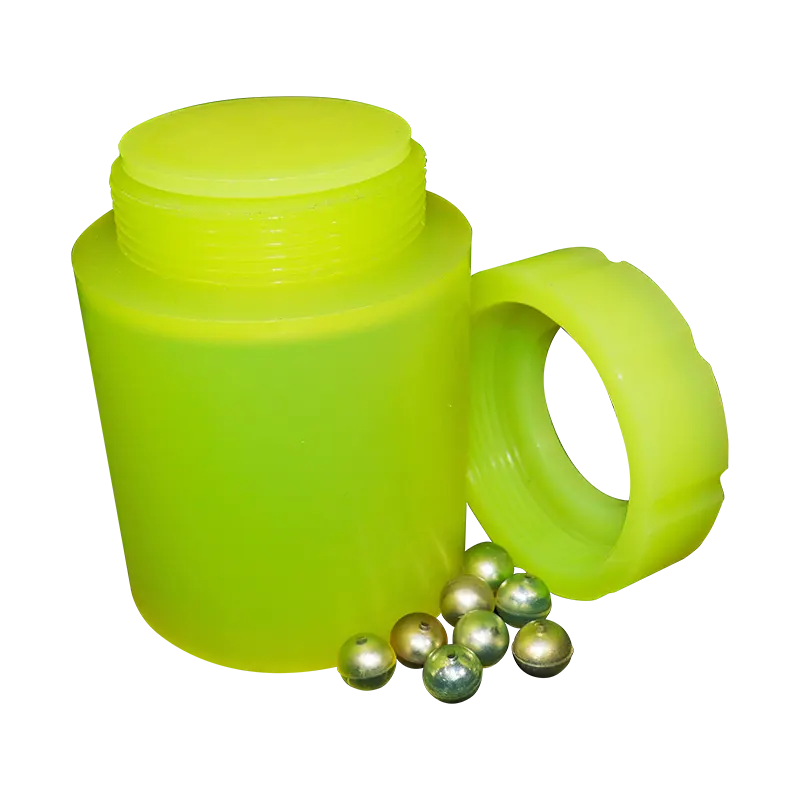
The polyurethane grinding drum is a replaceable cylindrical container for a roller ball mill that contains the sample and grinding media. The drum is not an independent grinder: it is installed on drive rollers, it rotates along with the load and creates conditions for impact and abrasion of particles. Its place in the technological chain is between sample preparation and analysis; The cleanliness of the sample, wear and reproducibility of grinding depend on the condition of the internal surface, the tightness of the lid and correct loading. Product card TENCAN available at link.
Place of the drum during the grinding process
In a roller ball mill, the drum is mounted on support rollers. The drive rotates the rollers, and the drum moves due to friction; Inside, the grinding bodies rise and fall, crushing the sample by impact and abrasion. The polyurethane drum in this scheme performs three functions: it holds the load, separates it from the environment, and forms an internal surface that is in contact with the material. Therefore, it cannot be assessed only by the word “polyurethane”: geometry, wall rigidity, quality of the lid and seal, as well as how the drum fits into a particular mill are important.
The roller mill is not planetary or bead mill. In a planetary mill, the glass is fixed in the rotor and experiences centrifugal loads; in a bead mill, grinding occurs in a liquid medium with a fine grinding load; The roll crusher crushes the material between the rolls. The polyurethane drum belongs to the equipment of the roller mill and cannot be automatically transferred to another machine.
The grinding mode is set not only by the drum. The result is influenced by the rotation speed of the rollers, the degree of filling, the size and density of the grinding media, the properties of the sample and the processing time. When dry grinding, it is important not to overload the drum so that the powder does not cake or create dust when opening. When wet grinding, a liquid medium is added, but its quantity and compatibility with polyurethane are checked separately: the viscous suspension moves inside differently and loads the lid differently.
Construction and properties of polyurethane
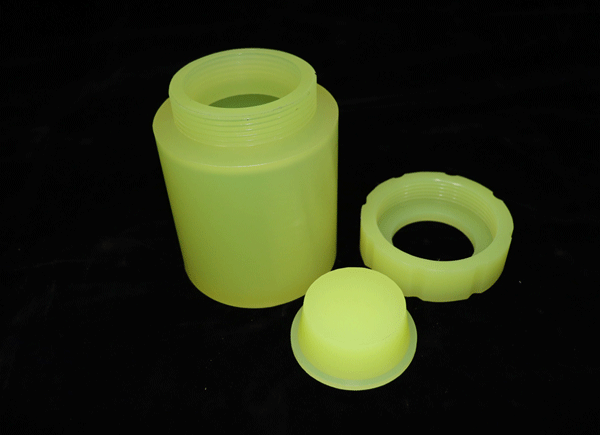
A typical drum includes a shell, bottom, cover and seal; In a specific design, elements for fixing the lid and carrying it may be provided. The shell must retain its shape when rotated, the lid must not allow powder and liquid to pass through, and the inner surface must not collapse faster than is acceptable for the task.
Polyurethane is a group of elastomers, not one universal formulation. Its properties depend on its composition, hardness, thickness and processing method. In grinding drums, polyurethane is valued for its elasticity, resistance to abrasion in mild conditions, ability to absorb noise and shock loads, and the ability to create a one-piece elastic container. For some samples, this provides an advantage: there is less risk of chipping and impact damage to the equipment, and it is easier to handle the drum.
The restrictions are also significant. Polyurethane is a polymer, so it is not universal in temperature and chemical resistance. Aggressive solvents, strong oxidizing agents and prolonged heating can cause swelling, softening or accelerated aging. Abrasive powders and large, heavy grinding media increase wall wear. Products from polymer wear may be introduced into the sample, so a separate test is required for analysis for traces of organic substances or for particularly pure materials. The statement “polyurethane does not pollute” is incorrect: it only affects the sample differently than metal or ceramics.
You should not choose polyurethane just because it is softer than metal. In some tasks, the elastic wall reduces impact loads and noise, in others it wears out faster and is less easy to clean. The decision is made based on the sample, acceptable contamination and cleaning conditions, and not on one word in the name of the material.
How to Read Drum Specifications
In describing the drum, it is important to distinguish between several quantities that are often confused in everyday life.
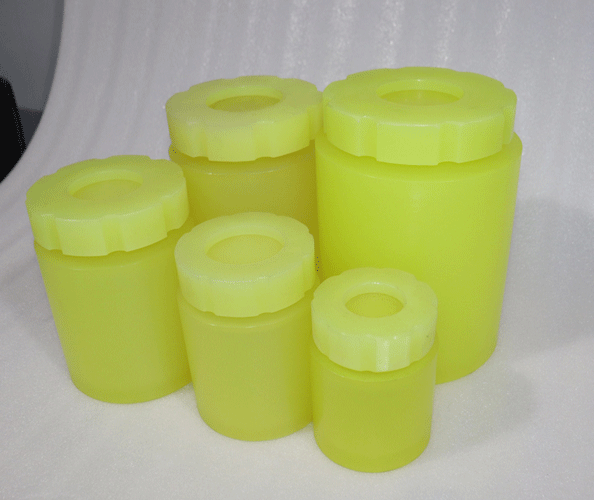
- Geometric volume — inner drum capacity. This is not the same as the mass of sample that can be loaded.
- Workload — volume or mass of material together with grinding media, permissible for a specific mode. It is always less than the geometric volume, but the exact limit depends on the density of the sample, the size of the balls and the manufacturer's instructions.
- Internal and external dimensions — diameter, length, wall thickness, neck diameter. The external dimensions determine the fit on the rollers, the internal dimensions determine the useful volume and loading movement.
- Drum weight — Both empty and loaded are important: a heavy container otherwise loads the drive and can slip.
- Polyurethane hardness — if specified, it cannot be directly translated into wear resistance. Wear is influenced by composition, wall thickness, abrasiveness of the sample and grinding media.
- Cover and seal — Tightness during dry grinding and liquid retention during wet grinding depend on them. The seal material may be sensitive to solvents.
- Temperature and chemical range — In the absence of data, resistance to heat or aggressive environments cannot be assumed.
Volume, sometimes called “drum volume,” is a geometric capacity, not the amount of sample that can be loaded. Part of the volume is occupied by grinding media, part is needed for loading movement. If the description does not indicate the permissible mass and fill factor, they cannot be invented: they are clarified with the supplier or in the manual for the mill.
Rotation speed is also not a property of a single drum. It is set by the mill, and the permissible mode depends on the diameter of the drum, the mass of the load and the type of grinding media. Therefore, you should not transfer a number from another device or from another task without checking.
Compatible with mill, sample and grinding media
Mechanical compatibility
The drum must match the roller mill in terms of outer diameter, length, weight and method of fixation. A drum that is too large may not fit on the rollers, a drum that is too heavy may overload the drive, or a drum that is too smooth or deformed may slip. The cover must not touch the rollers or frame. If the mill is designed for a certain size range, going beyond it is not compensated by reducing the load.
Separately, check the tightness: after installing the drum on the mill, the lid should not loosen due to rotation and vibration. This is especially important for wet grinding because leakage changes the solid-liquid ratio and contaminates the work area.
Polyurethane drum for roller mill does not become compatible with planetary mill just because of its cylindrical shape. The planetary mill has different fastenings, accelerations and cover requirements; such transfer is only permissible with direct confirmation from the manufacturer.
Sample, grinding media and process chemistry
Polyurethane is considered for tests where the elasticity of the equipment and moderate impact load are important, but the decision is made on a specific material. For very hard abrasive powders, wear on the polyurethane wall may be noticeable. For samples sensitive to organic contaminants, polymer instrumentation requires particularly careful evaluation. You cannot promise “zero pollution” for polyurethane, ceramics or metal.
The grinding media must be compatible not only with the sample, but also with the drum. The higher the hardness and larger the ball, the greater the wear of the polyurethane wall. Tungsten carbide, ceramic or zirconium dioxide does not mean there is no transfer of impurities: the grinding media, drum and cover can wear out. If the analysis is sensitive to iron, tungsten or oxides, this is taken into account when choosing a “drum - grinding media” pair.
When wet grinding, check the compatibility of the liquid with the polyurethane and the seal. Water, alcohols, oils and other media act differently, and the general label "chemically resistant" is not sufficient. If the card does not contain information about a specific environment, a trial contact or consultation with the manufacturer is required.
Wear, cleaning and selection criteria
Signs of wear and care
On the inner surface, pay attention to darkening, stickiness, swelling, a network of cracks, deep scratches, loss of geometry and damage to the edge. Wall wear is not cosmetic: it changes volume, increases material transfer and can lead to jamming of the lid. The lid and seal are checked after each wet grinding and after working with abrasive powders. Store the drum without load, protecting it from deformation and prolonged heating.
Cleaning
First, remove the residue using a dry method, then use a soft brush and warm water with a neutral detergent. Aggressive solvents, abrasive powders, wire brushes and high drying temperatures can damage polyurethane. After washing, the drum is thoroughly dried so that no moisture remains in the closed container. It is better to have separate drums for different materials, or at least separate lids and seals: after incomplete cleaning, it cannot be guaranteed that there will be no transfer of impurities.
Selection order
- Formulate the problem: what material, initial size, target result, dry or wet grinding, how important is the absence of organic contaminants.
- Check the mill: model, roller dimensions, permissible drum weight, fixing method and speed range.
- Check the volume: geometric capacity, payload, mass of grinding media and mass of sample; do not substitute each other.
- Assess the drum material: polyurethane is not suitable for all chemistry, temperature and abrasiveness; If in doubt, a trial test is needed.
- Select grinding media according to size, density and permissible contamination, without exceeding a reasonable load on the wall.
- Conduct a small test grind and only then increase the load or duration.
After trial grinding, not only the coarseness is assessed, but also the condition of the drum, lid and seal. To clarify the available versions, use catalog TENCAN, and the compatibility of a specific drum with a specific mill is checked using the card and manual.
Frequently asked questions
Is polyurethane drum suitable for planetary mill?
Not automatically. A planetary mill requires equipment designed to be mounted in the rotor and the corresponding loads. The cylindrical shape alone does not confirm compatibility.
Is it possible to grind hard abrasive powders in it?
Sometimes, but with reservations: the polyurethane will wear out, and wear products may get into the sample. Test grinding, monitoring the condition of the wall and assessing acceptable contamination are needed.
How to clean the drum?
Start with a soft brush and neutral detergent. The solvent is used only after checking compatibility with the polyurethane and seal; abrasive cleaning is not advisable.
Does the hardness of polyurethane affect the grinding result?
Indirectly. It is related to elasticity and wear, but the result also depends on the geometry of the drum, grinding media, sample and mill operating conditions. The size cannot be predicted from one hardness number.
Can steel grinding balls be used?
Only if the size and weight of the load matches the specific drum and mill. Steel increases the stress on the wall and can introduce iron impurities, which is important for sensitive analyses.