
Double Rotor Planetary Ball Mill — laboratory equipment for fine and ultrafine grinding, mixing and mechanical activation of powder samples. It lies between sample pre-preparation and analytical or process operations where homogeneity and controlled particle size distribution are important. Unlike a drum ball mill, where the grinding drum rotates around one axis, in a planetary mill the grinding bowls rotate together with the rotor and at the same time around their own axis. The double rotor model belongs to this family, but has design features that affect the selection of glasses, balancing and grinding mode. On the page Double Rotor Planetary Ball Mill product card presented TENCAN.
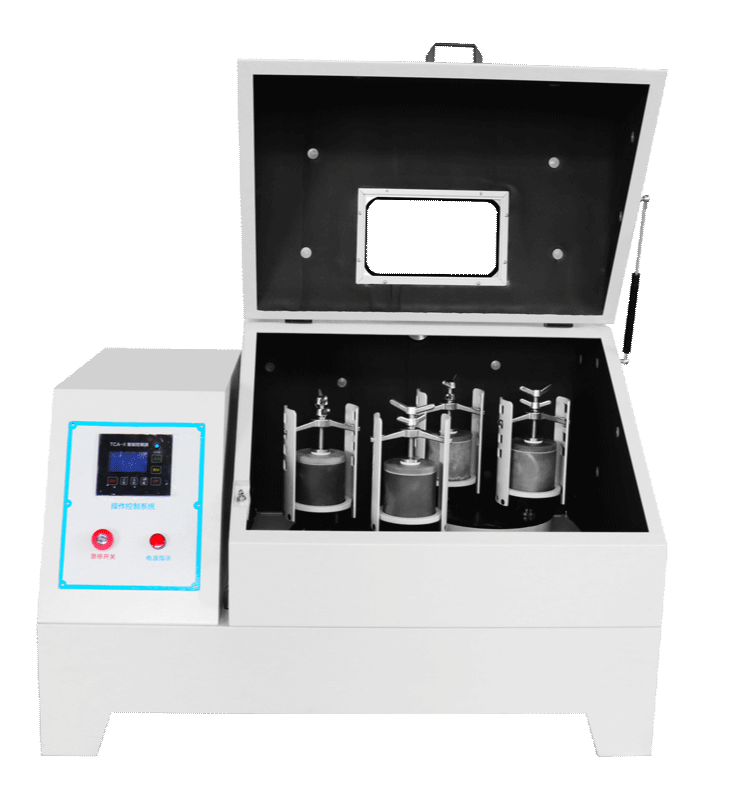
What is Double Rotor Planetary Ball Mill
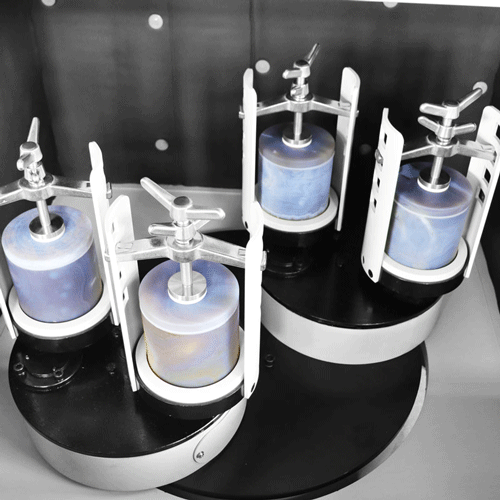
A double rotor planetary ball mill is a machine in which grinding is created not by a single rotating drum, but by the complex movement of grinding bowls. Each glass is fixed to the rotor and receives two movements: together with the rotor around a common axis and around its own axis. Because of this, the grinding bodies inside the glass experience centrifugal forces, impacts and friction against the walls. This principle makes it possible to achieve a fine grind faster than in a conventional drum mill, but at the same time increases the requirements for the strength of the glasses, balancing accuracy and heat control.
The double rotor is a design feature and not a separate type of grinding. The name of the model reflects the design in which the working units are organized in a special way. Therefore, when choosing, you need to check with the manufacturer about the number of seats, acceptable standard sizes of cups, maximum loading weight and symmetrical installation diagram. It is impossible to transfer the parameters of one planetary mill to the entire line: the model, bowl volume, speed and material of the grinding media are selected for a specific task.
TENCAN (Changsha Tianchuang Powder Technology Co., Ltd.) presents equipment for the preparation and processing of powder materials, including planetary mills and accessories. For a laboratory, it is important not only to buy a mill, but also to correctly assemble the grinding unit: glass, lid, seal, grinding media and adapters. An error in one element can lead to sample loss, increased wear, or an unreliable result.
Design and working principle
Planetary movement of glasses
In a planetary mill, the glass is fixed in the carrier or on the rotor. When the rotor rotates, the glass bypasses the common axis, and due to pulleys, belts or other transmission, it rotates around its own axis. The directions of movements can be consistent or opposite. As a result, a field of centrifugal forces appears inside the glass, which forces the grinding bodies to press against the walls, rise and then fall down. The material fails through a combination of impact, abrasion and shear.
The efficiency of grinding depends on the diameter of the glass, the mass and size of the grinding media, the rotation speed, the ratio of the mass of the balls and the sample, as well as on the properties of the material. The planetary principle does not automatically produce nanoparticles: the final size is determined by the initial size, hardness, fragility, tendency to agglomerate and measurement conditions. For ductile or fibrous materials the result may be very different from brittle minerals.
Double rotor and balancing
The double rotor requires special attention to balancing. If the glasses have different masses, different numbers of grinding media or asymmetrical loading, vibration occurs. It accelerates bearing wear, reduces repeatability and can be hazardous to the operator. Before starting, check that symmetrical positions are loaded equally, lids are closed, seals are installed correctly, and cups are securely fixed.
The exact kinematics of the double rotor, gear ratio and permissible modes are indicated in the manual of the specific model. You should not select the speed “by eye” or transfer modes from another mill: even installations similar in name may have different mechanics. If the documentation does not contain the required parameter, it is better to check with the supplier rather than think about it.
Grinding bowls and grinding media
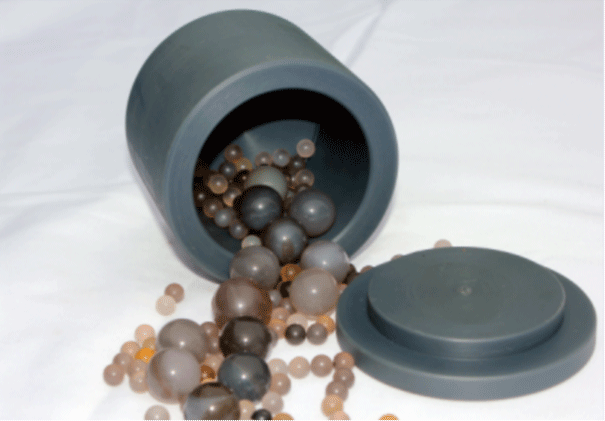
The grinding bowl is a working chamber in which the sample and grinding media are located. Its material affects wear, cleaning and the possible introduction of impurities. Grinding bodies can be balls of different diameters and materials. The ratio of the sizes of the balls determines which processes predominate: large balls give a stronger blow, small ones - more abrasion and contact. A mixture of balls of different diameters sometimes helps to obtain a homogeneous powder faster, but the exact selection depends on the material.
What problems does the model solve in the laboratory?
The double rotor planetary ball mill is used where small samples need to be prepared quickly and reproducibly. Typical directions:
- fine grinding of minerals, ores, glass, ceramics and other fragile materials;
- mechanical alloying and mechanical activation of powder mixtures;
- mixing components that differ in density and particle size;
- obtaining suspensions for wet grinding and subsequent analysis;
- deagglomeration of powders after synthesis or drying;
- preparation of samples for X-ray phase analysis, spectroscopy, granulometry and other methods.
However, a planetary mill does not replace a crusher if the sample has large pieces. First, the material is usually crushed and reduced to a suitable size and then loaded into a beaker. Very soft, viscous or heat-sensitive substances require a separate check: such material may stick, melt or change structure during intensive grinding.
How to read specifications correctly
Beaker volume, loading and sample weight
It is necessary to distinguish between the total volume of the glass, the total volume of all glasses, the working load and the mass of the sample. Do not fill the glass to the top: the grinding media need space to move. Typically the workload is a fraction of the volume, but the exact percentage depends on the model and task. If the volume of one glass is indicated, this does not mean that the same amount can be loaded with powder. Also, do not confuse the mass of the sample with the mass of the grinding media.
Rotation speed and grinding time
Rotation speed affects impact energy and heat. Higher speed is not always better: excessive energy can cause agglomeration, material degradation, increased cup wear, or overheating. The grinding time is selected experimentally, starting with short intervals. Intermittent operation with pauses helps reduce the temperature, but does not replace full cooling, if necessary.
Final size
The final particle size depends on the material, initial size, medium, grinding media, mode and method of measurement. The typical catalog minimum is not guaranteed for any sample. For example, ductile metal may be flattened rather than crushed; ceramics can produce fragments, which then agglomerate. For a correct comparison, it is important to indicate by what method the particle size distribution was measured.
Materials of bowls and grinding media
The material of the grinding bowl and grinding media is selected according to the hardness of the sample, acceptable contamination and cleaning conditions. Stainless steel is strong, but can introduce iron and chromium. Zirconia, corundum, agate, tungsten carbide and polymers have different trade-offs in wear, brittleness and cost. Tungsten carbide, ceramic or zirconia do not mean “zero contamination”: any abrasion adds media material to the sample, it is just a matter of how much it is and whether it is acceptable for analysis.
Cooling and temperature
Air cooling removes heat from the body and work area, but is not equal to the measured sample temperature. Liquid or cryogenic cooling are separate solutions that must be confirmed for a specific model. Conventional air cooling cannot be called a cryogenic process without documented evidence. If the material is sensitive to heat, it is better to provide pauses, a smaller load, or a special mill design.
Dry and wet grinding: what to choose
Dry grinding is convenient when you need powder without liquid and subsequent drying. It is suitable for many fragile materials, but may be subject to dusting, sticking and agglomeration. Wet grinding uses a liquid that improves dispersion, reduces dusting and helps dissipate heat. However, the liquid must be compatible with the sample and beaker material and not react with it or interfere with subsequent analysis. After wet grinding, drying may be required, which itself affects the condition of the powder.
Particle disruption and disagglomeration are not the same thing. In the first case, the size of the primary particles decreases, in the second, loose aggregates are destroyed. A planetary mill can perform both tasks, but the mode is selected differently. For deagglomeration, a gentle action is sometimes sufficient, while true comminution requires higher energy and time.
Reinforced nylon grinding bowl: when is it appropriate?
Among the accessories TENCAN There is grinding bowl made of reinforced nylon. Nylon is a polymeric material that can be useful where heavy metal contamination is unacceptable or where gentler contact with the sample is required. It is lighter than many ceramic and metal cups, which is important for balancing and load on the drive. But it has limitations: polymers have lower hardness and heat resistance than steel, corundum or tungsten carbide, so for hard abrasive materials they can wear out quickly.
A nylon glass should not be considered as a universal replacement for all other materials. Its suitability depends on the hardness of the sample, wear tolerance, process temperature and the fluid used. Before use, make sure that the size and design of the bowl are compatible with the specific planetary mill, including the method of fixation and the lid. If the documentation does not provide proof of compatibility, you should request one from the supplier. It is also important to remember that the polymer cup requires careful cleaning and does not like abrasive processing, which can damage the surface.
Selection criteria and compatibility check
When selecting a double rotor planetary ball mill, it is helpful to look at the application rather than the maximum speed or the largest volume. Main criteria:
- How much sample should be processed per cycle and how often. The number of glasses and their volume depends on this.
- What is the hardness, brittleness and tendency of the material to agglomerate. For soft and viscous samples the mode will be different.
- Is it permissible to introduce impurities? If the analysis is sensitive to metals, select a suitable material for the bowl and grinding media, but wear cannot be completely eliminated.
- Whether dry or wet grinding is required, and whether cooling is required.
- Are the selected bowls, lids and grinding media compatible with the seats and fixation system of a particular model?
- Is there access to supplies and a clear cleaning procedure between samples?
To get acquainted with the line of equipment, you can use the website TENCAN. However, the final choice is made based on the product card and manual, where the acceptable parameters are indicated. If the meaning contradicts other data, the units are unclear, or the translation is questionable, it is better to omit the controversial parameter and clarify the condition rather than correct the specification with a guess.
Frequently asked questions
Can one glass be used for different materials?
Physically it is possible if the glass material is compatible with both samples and cleaning is reliable. But residuals from a previous sample may affect the next analysis. For trace amounts, it is better to have separate glasses or at least separate grinding media. Polymer cups require especially thorough cleaning without abrasives.
How is a planetary mill different from a drum ball mill?
In a drum mill, the drum rotates around a single axis, and the grinding energy is mainly due to the rise and fall of the grinding media. In a planetary mill, the glasses receive a complex movement, due to which the centrifugal forces and the intensity of the impact are higher. This allows smaller samples to be crushed faster, but places greater demands on balancing and cooling.
Does Planetary Mill Guarantee Nano Size?
No. A planetary mill can achieve very small particle sizes for suitable materials, but the result depends on the feedstock, mode, environment, grinding media and time. For plastic materials or mixtures, agglomeration may occur. The stated minimum size is not a guarantee for any sample.
Is cooling necessary during grinding?
If the material is heat sensitive, cooling or intermittent operation may be necessary. However, conventional air cooling is not the same as cryogenic cooling. For cryogenic conditions, special design and manufacturer confirmation are required. The body temperature also does not directly indicate the temperature of the sample inside the beaker.
Is nylon cup suitable for hard materials?
For hard abrasive materials, nylon shroud is generally less suitable than steel, corundum or tungsten carbide due to wear and possible deformation. Its advantages are lower weight and reduced risk of metal contamination. The decision is made based on the specific sample, acceptable wear and compatibility with the mill.