
Multifunction crusher TENCAN — This is equipment for preliminary grinding of materials and preparation of samples for analysis, further grinding or processing. In the process chain it comes down to fine grinding: pieces, granules or agglomerates are transformed into a more homogeneous mass, which is then sent to a ball mill, sifting, mixing or taking a representative sample. Specific performance parameters are indicated in multifunctional crusher card TENCAN; Below are principles that will help you read this information correctly and choose a machine for the task.
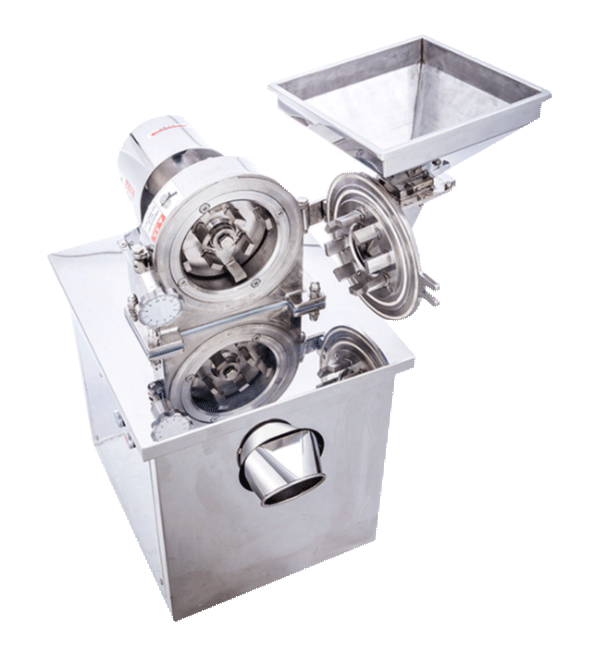
Place of the crusher in the material preparation chain
Crushing and fine grinding solve different problems. The crusher reduces the size of the pieces and reduces the material to a form convenient for loading into the following equipment. The mill works with the already prepared rash and brings the particles to a finer state. Therefore, you should not expect that the crusher itself will replace a ball or planetary mill: they have different mechanisms for influencing the material, different working chambers and different loading restrictions.
In laboratory practice, a crusher is often needed before a planetary mill when the original sample is too large for the grinding bowl. In the production chain, it can act as the first grinding stage before sieving or mixing. However, the specific sequence is determined not by the name of the equipment, but by the size of the starting material, the permissible size after crushing, the weight of the sample and the requirements for homogeneity. If the next machine is designed for a certain particle size, this condition must be checked before purchase.
The word "multifunctional" does not mean universality for all materials. It indicates that the design can be designed for different tasks, but the suitability of a particular machine is assessed by its passport, type of working body, material of contact parts and operating conditions. The same equipment cannot crush brittle mineral, fibrous material and sticky wet material equally well. Therefore, the choice begins with a description of the sample, and not with the general name of the category.
Design and principle of operation
A multifunctional crusher usually has a loading unit, a working chamber, crushing elements, a drive, a discharge pipe or receiving container, and safety elements. The specific kinematics depends on the design: the card may indicate one or another type of working element, the presence of adjustment, replaceable parts or a receiving hopper. The characteristics of one model should not be transferred to the entire assortment: the description of one design does not prove that another has the same components.
The general principle is that the material enters the working chamber and is destroyed under the influence of mechanical loads - impact, shear, compression, or a combination of these. The size of the product depends on the design of the working element, settings, material properties and unloading method. If there is a gap adjustment or a replaceable grille, these elements can influence the result. However, without confirmed data, it cannot be stated that the machine provides the specified size for any sample.
It is important to distinguish between feed size and post-crushing size. The first shows which piece can be fed into the machine, the second shows what the output will be under certain conditions. Productivity is also not a constant value: it depends on the initial size, density, humidity, flowability, tendency to stick and the permissible degree of chamber filling. Therefore, comparing two cars using the same catalog number without the same test conditions can be misleading.
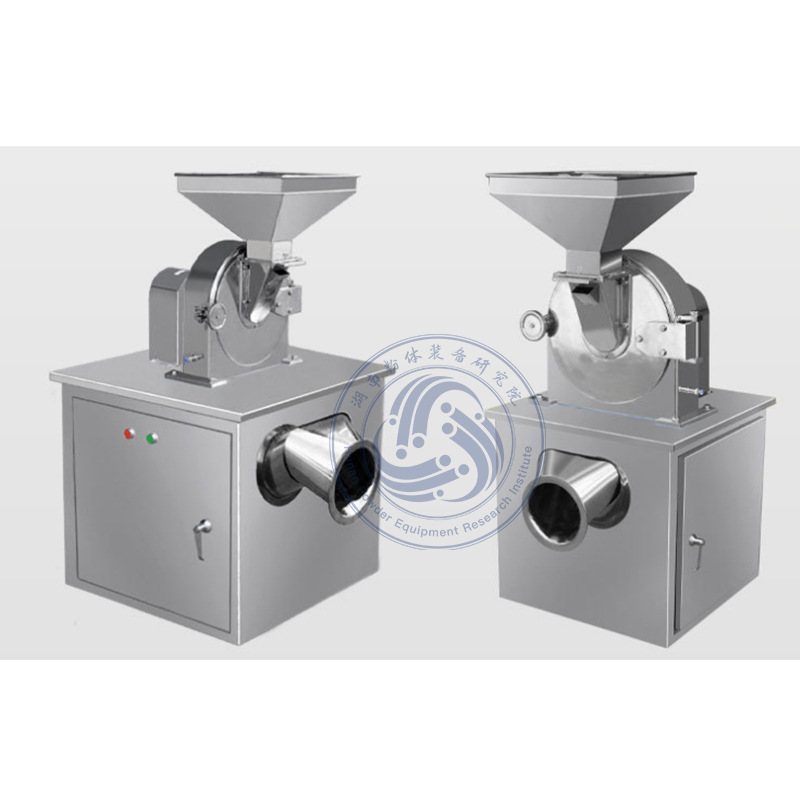
What do the characteristics on the card mean?
When reading a card, it is useful to separate the parameters according to their meaning. The maximum loading size answers the question of which pieces can be fed into the crusher. Output size describes the typical or achievable result, but usually requires specification of material and settings. Productivity shows how much material can be processed per unit of time under specific conditions, rather than an absolute value. The drive power characterizes the machine's power supply, but in itself does not indicate the quality of crushing or throughput.
Separately, you should look at the material of the contact parts, the volume of the receiving container, dimensions, weight, noise level and requirements for dust removal. Ease of cleaning between samples and the ability to collect all material without loss are important to the laboratory. For the production floor, withstands continuous operation, has access to wear parts and is compatible with existing loading and unloading systems. If the description does not contain a value that is critical for the task, it needs to be clarified, and not substituted by analogy with another model.
Do not mix the passport parameters with the results of a single test. Even the confirmed size after crushing refers to a specific material, humidity and mode. For another sample, the result may be different. This is normal for sample preparation equipment: the material is part of the experimental conditions. Therefore, it is better to indicate in the technical specifications the range of initial particle size, the required range after crushing, the permissible sample weight and contamination restrictions.
Materials and limitations
A multi-functional crusher can only be considered for brittle, hard, soft or fibrous materials after checking the performance. Brittle materials tend to crush more predictably than ductile materials: the latter may warp, stick, or clog the discharge. Fibrous samples require special attention to the working element and the unloading method. Wet and sticky masses often become a problem not because of the drive power, but because of the chamber sticking and loss of sample representativeness.
For abrasive materials, wear of the contact parts becomes key. The higher the abrasiveness, the faster the geometry of the working elements changes and the higher the risk of introducing impurities into the sample. Stainless steel, wear-resistant steel or other materials do not mean "zero contamination": any contact with the sample may produce traces. If the assay is sensitive to iron, tungsten or other elements, the material of the working parts and the duration of contact must be discussed separately.
Temperature-sensitive samples require heat control. Crushing is accompanied by the release of energy, and prolonged operation without pauses can increase the temperature in the chamber. This is not the same as cryogenic refrigeration: a conventional crusher does not become a cryogenic plant just because the material is heat sensitive. If necessary, apply pauses, smaller loads or other measures provided for by the management. You cannot invent a regime for dangerous or unstudied substances: such work must be based on official instructions and risk assessment.
Foreign inclusions should also be taken into account. Large metal objects, stones of unacceptable size and hard agglomerates can damage the working element. If the material contains such inclusions, preliminary sorting or protection provided by the design is required. The crusher is not a machine for any waste and does not replace specialized equipment for hazardous, explosive or highly contaminated materials.
Selection, operation and maintenance
Selection criteria
First, the problem is formulated: what is the initial size, what is the mass of the sample, what result is needed and what will happen next. Then they check whether the design is suitable for the maximum loading size, the type of working element, the material of the contact parts and the unloading method. Small batches, fast cleanup, and reproducibility are important to the laboratory; for the site - load resistance and ease of maintenance. You cannot choose only by power or only by price: these parameters do not describe suitability for a particular sample.
It is helpful to match the crusher to the next step. If planetary grinding is planned after crushing, you need to make sure that the product size and load weight meet the requirements of the mill and grinding bowl. If sieving is planned, check that too much dust is generated and that material is not clogging the sieve. If the material is to be stored, the tightness of the receiving container and minimal losses are important. Current equipment directions TENCAN are given on main page of the site; The specific package is always checked against the product card and documentation.
Operation
Before starting, check that the machine is assembled in accordance with the manual, the working chamber is clean, the fastenings are tightened, and the protective elements are in place. Loading is carried out within acceptable limits: overfilling the chamber does not make the work faster, but increases the risk of jamming and uneven results. If the material is prone to dust, dust removal and personal protective equipment are provided. It is unacceptable to open the working chamber under load, even if the design seems safe.
After work, the material is completely unloaded, and the chamber is cleaned in a manner permitted by the manual. Blowing with compressed air is not suitable for all components: it can spread dust and contaminate adjacent samples. To change samples, not only the cleanliness of the walls is important, but also the condition of the unloading unit, receiving container and removable elements. If particularly strict transfer protection is required between samples, use separate accessories or additional cleaning, if provided.
Service
Regularly inspect working parts for wear, check fastenings and condition of seals. Abnormal noise, vibration, or changes in product grain size may be a sign of wear or improper assembly. Lubrication and replacement of elements is carried out according to the manual, and not according to random recommendations. It is useful to record operating hours, materials processed and replacements in a maintenance log: this helps explain changes in results and plan repairs.
Questions and answers
How is a multifunctional crusher different from a ball mill?
The crusher is designed for preliminary reduction of pieces, and the ball mill is for fine grinding and mixing. They have different working chambers, grinding media and limitations. The crusher is usually installed before the mill, but the specific size after crushing must meet the requirements of the next apparatus.
Is it possible to obtain a fine powder immediately after crushing?
Usually not. Crushing produces an intermediate size, and a fine powder is obtained by milling. If a card specifies a specific output size, it is specific to the specific conditions and material. For another sample, the result must be checked and not transferred by analogy.
Is the crusher suitable for wet and sticky materials?
This depends on the design and properties of the sample. Wet masses can clog the chamber and discharge, so the ability to handle must be confirmed. Humidity affects performance and uniformity; Sometimes the material requires advance preparation, but specific measures must be authorized by management.
How can we reduce the transfer of impurities between samples?
Complete unloading, cleaning of contact surfaces and, if necessary, separate accessories are required. The material of the working parts is also important: even wear-resistant alloys do not guarantee the absence of marks. If the analysis is sensitive to certain elements, the risk is assessed before work, and not after obtaining a questionable result.
Multifunction crusher TENCAN — This is not a universal replacement for the entire sample preparation area, but a specific tool for the first stage of particle size reduction. Its usefulness is determined by how well it is matched to the material, required fineness, subsequent grinding and cleaning conditions. This approach gives a more predictable result than choosing based on one advertising characteristic.