
Multichannel tissue homogenizer TENCAN — This is laboratory equipment for simultaneous preparation of several samples of biological tissue for analysis. In the sample preparation process, it takes place between the selection and storage of material and the analytical stages: extraction, isolation of nucleic acids, biochemical, immunological or histological studies. The purpose of the device is to mechanically destroy the tissue and obtain a more homogeneous suspension or lysate under controlled conditions. The specific design, kit composition and available modes are described in multichannel tissue homogenizer card TENCAN; these details should be checked before making your selection.
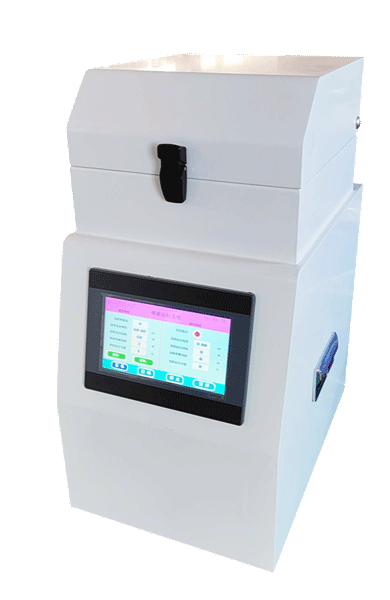
What does multichannel mean in tissue preparation?
Multichannel in the name of the device means that in one cycle it can work not with one, but with several independent sample positions. This is not a single chamber where samples are mixed, but several workstations, each of which must be isolated from the neighboring one. The number of such positions depends on the specific execution; it cannot be inferred from the category name or photograph. If the description specifies the number of channels, it should be read as the number of samples processed simultaneously per cycle, and not as the total throughput per shift: multiple consecutive cycles are performed if necessary.
The practical point of multi-channel fulfillment is to reduce the share of repetitive manual operations. When multiple samples are processed in one instrument, the operator experiences fewer sample transfers, is less susceptible to fatigue, and experiences closer time and temperature conditions. This is especially important in serial studies where control and several experimental groups need to be compared. However, simultaneous processing does not guarantee the same result: tissue is heterogeneous, and differences in the initial state of the sample may be greater than the differences between channels. Therefore, comparability is confirmed by control samples and method validation, and not just by the number of channels.
For the laboratory, the multichannel format is also convenient because it allows you to plan the entire cycle. First, the number of samples is determined, then how many cycles will be required, how long each sample will take to prepare, and how cleaning will be organized between them. If this step is skipped, the benefit of parallel operation may be lost due to wash queues, consumable waits, or manual labeling. Multichannel tissue homogenizer TENCAN in this sense, it should be considered as part of the workflow, and not as a separate installation outside the context of sample preparation.
How a multichannel tissue homogenizer works and works
A multichannel tissue homogenizer can have several functional units: a drive, a sample mounting unit, working elements or adapters for consumable vessels, a control system and safety elements. The specific design depends on the model: in one design, the sample is destroyed in a closed consumable vessel, in another, a different working element is used. Therefore, it is impossible to transfer the characteristics of one homogenizer to the entire range. In the card TENCAN you need to clarify which consumables are provided, how they are fixed and what modes are available.
The workflow is usually built around mechanical action on the fabric. To obtain a suspension or lysate, the tissue is minced, mixed with buffer and stabilized according to the protocol. The homogenizer does not replace sampling, weighing, adding reagents and subsequent cleaning; it performs only one, but critical stage. If the sample is too large or contains dense inclusions, pre-grinding or other preparation may be necessary. This limitation is determined by protocol and design, not by a promise of universality.
For multi-channel operation, not only the drive power is important, but also the geometry of the mounting unit. A poorly fixed vessel creates uneven load, noise, vibration and dispersion between channels. Removable adapters make loading easier, but add installation and cleanup steps. Closed supply vessels reduce the risk of aerosols but require buffer compatibility and temperature checks. Therefore, when choosing, they look not at a single number, but at the entire chain: sample - vessel - adapter - mode - cleaning - next sample.
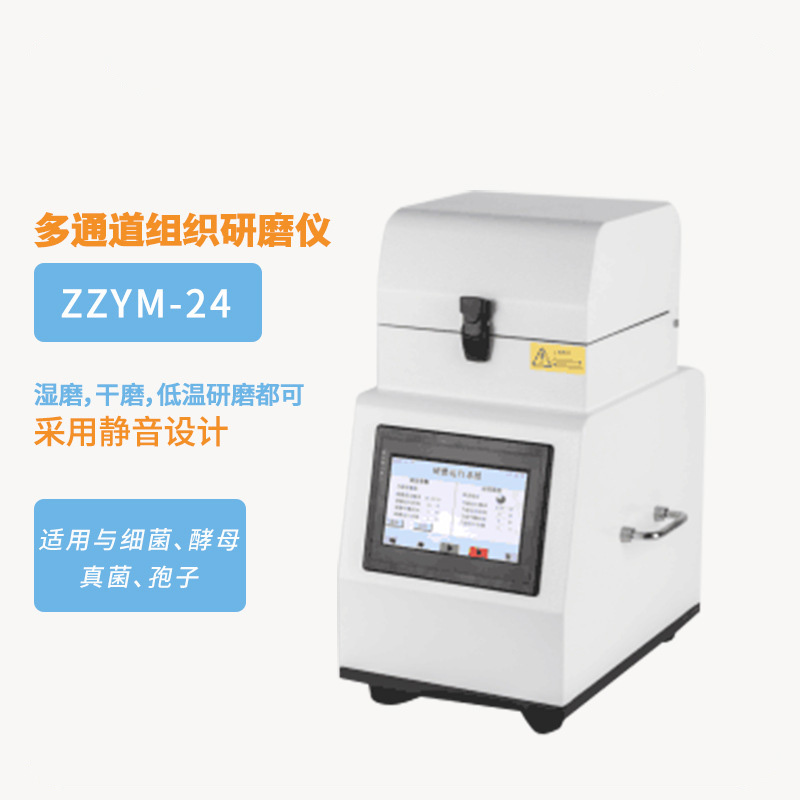
What characteristics to read and how not to make mistakes with numbers
In the description of a multichannel tissue homogenizer, key parameters should be read literally and with reservations. Below are not the values of a specific model, but a verification method that helps to compare different proposals and not attribute unnecessary properties to the device.
| Parameter | What does it mean | What to clarify |
|---|---|---|
| Number of channels | Number of independent positions per cycle | How many samples are actually processed without mixing and what is the cycle time? |
| Volume | Nominal capacity of one position or vessel | Working volume, minimum load and filling requirements |
| Speed | Drive set point | Range, pitch and stability; comparison by speed is only permissible with the same geometry |
| Time | Duration of active processing | Recommended intervals and the need for pauses |
| Cooling | Heat removal method | Air or other cooling; the temperature of the working area is not equal to the temperature of the sample |
| Materials | Contact surfaces and consumables | Buffer compatibility, wear, cleaning and risk of contaminant carryover |
The number of channels is often thought of as performance, but it is not the same thing. If the device has several positions, the full cycle still includes loading, processing, unloading and cleaning. With a large number of samples, what is more important is not the maximum number in the name, but the time of one cycle and the ease of working with consumables. You should also distinguish between the volume of one vessel and the total volume of all positions: the first parameter relates to an individual sample, the second to the total load of the device, and mixing these values leads to errors in planning.
Speed in revolutions per minute is a convenient setting, but not a universal measure of intensity. The result is influenced by the geometry of the working body, the diameter of the vessel, the volume of liquid, the properties of the tissue and the processing time. Two devices with the same inscription on the regulator may produce different load profiles. Therefore, when comparing models, they ask not only for the speed range, but also for the conditions under which this range is confirmed. If the product description contains recommendations for a specific fabric, they cannot be automatically transferred to another sample.
Temperature conditions require special attention. Heat can occur due to friction and drive operation, not just the external environment. Air cooling of the working area does not mean that the sample is cooled to a given temperature; It is the sample temperature or the conditions specified in the method that need to be measured and discussed. If the protocol requires cryogenic conditions, you should ensure that the selected design actually provides cryogenic conditions and is not simply vented or enclosed. Confusing the concepts of “device cooling” and “cryogenic sample processing” is unacceptable.
For what samples and tasks is this homogenizer suitable?
Primarily, a multichannel tissue homogenizer is considered for soft tissues, biopsies and small samples that need to be quickly homogenized. This problem occurs when isolating DNA and RNA, analyzing proteins, enzymatic studies, and preparing material for subsequent microscopy. Suitability for a particular type of fabric is checked by a trial cycle: the result is influenced by the initial mass, degree of grinding, buffer, temperature and time. Promising “for all fabrics” without testing is not a technical specification.
For serial studies, multichannel execution can be useful when it is necessary to process several samples of the same series under similar conditions. But it is not always reasonable to process different tissues with different densities and connective tissue contents in one cycle: some samples may require a more intense regime, others a gentler one. If the methodology differs, it is better to separate the runs, even if the device allows you to load more positions. This is a question of data quality, not just convenience.
The fabric homogenizer is not a replacement for planetary ball mill, crusher or dry powder grinding equipment. Its task is to prepare biological tissue in a liquid medium or in a specialized consumable vessel, and not to finely grind mineral raw materials. The similar terminology “grinding” does not mean interchangeability: different devices have different working parts, impact energy, materials and cleaning requirements. If the task involves dry powder, look for other equipment rather than blindly adapting a tissue homogenizer.
Restrictions, cleaning and cross-contamination control
The main limitation of multichannel preparation is the risk of cross-contamination. Even when using separate vessels, tissue debris can become trapped on adapters, seals, and external surfaces. Therefore, the procedure should describe what is replaced once, what is washed, and how cleanliness is checked between batches. The device cannot be described as a “zero contamination” system: any contact material wears out, and the quality of cleaning depends on the procedure.
Biological samples can generate aerosols, so handling them requires risk assessment and compliance with laboratory procedures. Specific safety precautions are determined by the sample type and local regulations, not just the design of the homogenizer. For hazardous or potentially infectious materials, an approved protocol must be followed; The article on choosing equipment does not replace the instruction manual.
Wear of working elements and consumables also affects the result. Over time, clearances, tightness and mixing efficiency may change. Regularly checking and replacing wear parts is more important than trying to compensate for wear by increasing speed. In addition, the material of the contact surfaces must be compatible with the buffer and subsequent analysis. If traces of metals or polymers are critical for the technique, this is checked separately and not assumed by the name of the material.
How to select a configuration and check compatibility
The choice begins with a description of the task: type of fabric, number of samples, volume of one sample, required degree of homogenization, subsequent analysis, permissible temperature and cleaning rules. They then check which positions and adapters are available for the selected design, how long a complete cycle takes, and whether the work can be done without mixing samples. It is useful to decide in advance whether disposables or reusable vessels will be used, as this will affect cost, preparation and risk of contamination.
You should not select a multi-channel tissue homogenizer based solely on maximum speed or number of channels. More important are reproducibility, ease of loading, availability of consumables and a clear cleaning procedure. IN description of a multichannel tissue homogenizer TENCAN you should check exactly the configuration that is proposed for the task, and not transfer data from a neighboring model. If the card does not contain the required parameter, it must be clarified with the supplier before purchase.
Compatibility of consumables is confirmed by the documentation and contents of the kit. A vessel or adapter should not be assumed to be suitable just because it looks similar. Also, you should not transfer the characteristics of one material to another: heat resistance, chemical resistance and wear vary between materials. For the laboratory, the practical criterion is simple: can the technique be reproduced on the selected configuration without adding unaccounted for operations or creating an unacceptable risk of contamination.
Brief answers to frequently asked questions
How does a multi-channel homogenizer differ from a single-channel homogenizer?
It allows you to process multiple independent samples in one run. This reduces the number of repetitive steps, but does not eliminate the control of loading, cleanup and reproducibility.
Can different fabrics be processed in one cycle?
Technically this is not always possible. Different fabrics require different intensities and times; If the methods differ, it is better to separate the samples so as not to degrade the quality of the data.
Is cooling necessary?
Depends on the protocol and heating during operation. It is important to clarify the cooling method and not confuse the temperature of the working area with the temperature of the sample itself.
Does such a device replace a planetary ball mill?
No. The tissue homogenizer is intended for biological sample preparation, and the planetary mill is intended for grinding powders and other tasks with a different operating principle.
How to check the compatibility of consumables?
According to the card of a specific configuration, the composition of the kit and confirmation of the supplier. External similarity of a vessel or adapter does not prove compatibility.