
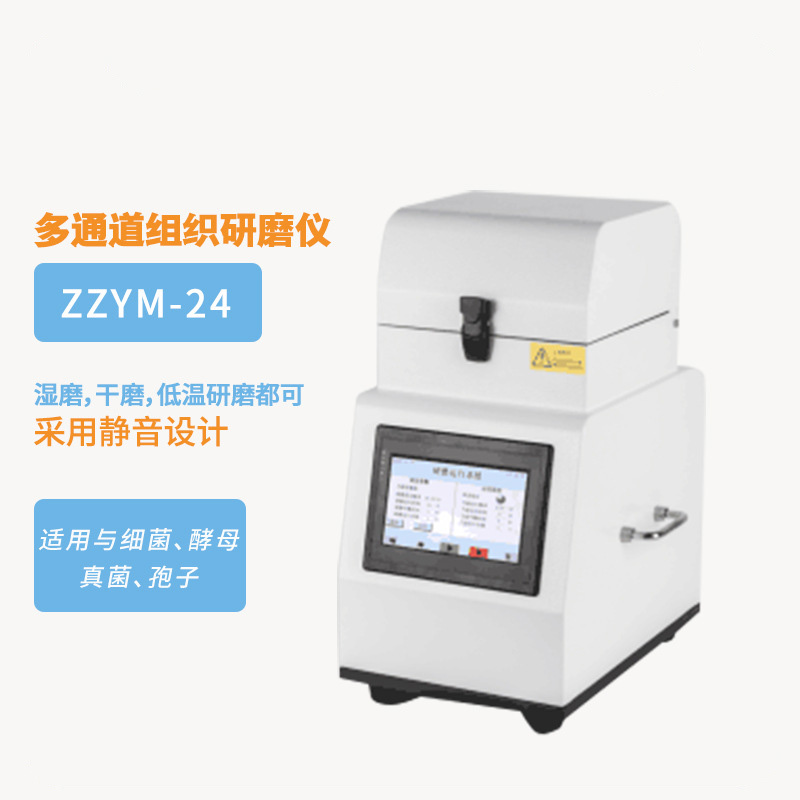
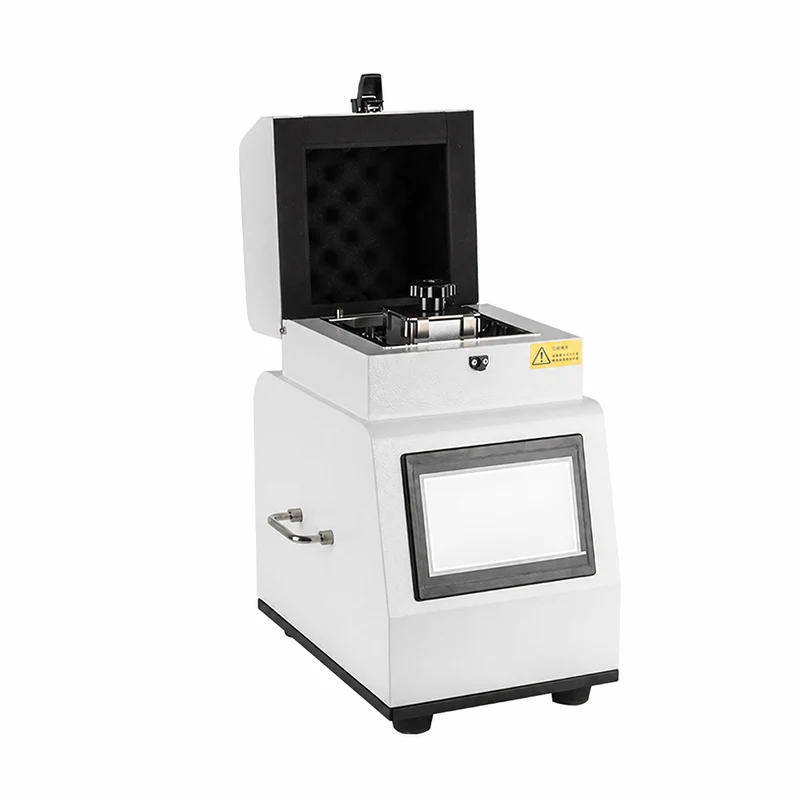
Multichannel tissue homogenizer — a benchtop laboratory instrument that destroys multiple samples of biological tissue in a single operating cycle, processing each sample in a separate closed tube. Its place in the process is between collection and storage of material and analytical measurement: dense tissue must be converted into a homogenate or stable suspension suitable for the isolation of nucleic acids and proteins, for enzymatic studies, determination of metabolites or extraction. The key word in the name is “multi-channel”: the device is designed not for a single sample, but for a series, and its main advantage is not the extreme fineness of grinding, but the same processing conditions for all samples in the series. One of the representatives of such equipment in the catalog TENCAN — multi-channel tissue homogenizer. TENCAN — бренд компании Changsha Tianchuang Powder Technology Co., Ltd.
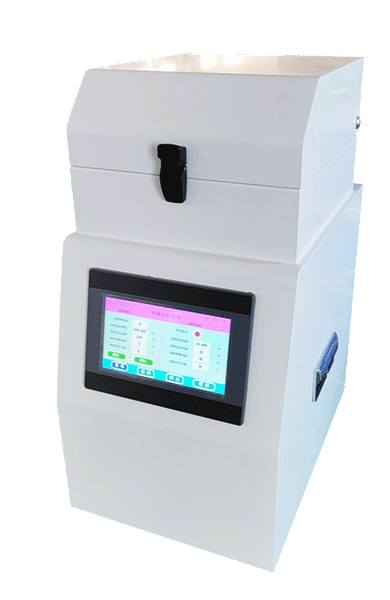
Design and working principle
The operating logic of devices of this class is the same: the sample is placed in a closed test tube along with a working fluid or liquid medium, the test tube is fixed in a holder, and the drive imparts movement to it. Mechanical energy is concentrated inside a small volume, and the tissue is destroyed into a suspension. The differences between the models are determined by how the four main components are arranged.
Drive and movement pattern
The drive sets the trajectory and frequency of movement of the holders. In different designs, this can be reciprocating, that is, vibration, movement of the platform, rotation along a complex trajectory, or a combination of movements in which the test tube receives shock and shear loads. Not only the absolute speed values are important for the result, but also the stability of the mode: if the holders move with different amplitudes, the series of samples ceases to be comparable. The frequency of movement determines the energy of impact on the material and at the same time the amount of heat that is released in the test tube, so high values in themselves do not mean a better result.
Channels and tube holders
The number of channels shows how many samples are processed simultaneously. The holder determines what type and size of tubes can be used: diameter, height, cap design, material. Compatibility of consumables is the first thing to check before choosing a device: a non-standard test tube is not fixed reliably, the processing mode is disrupted, and the risk of leakage and aerosol formation increases. For biological samples, this is important, since the work is done with closed test tubes precisely for the sake of isolating the material.
Grinding media and working environment
Most multichannel devices implement the impact principle of destruction: inside each test tube there are grinding media - balls made of stainless steel, zirconium dioxide, glass or other materials. As the holder moves, the balls repeatedly hit the sample and destroy it. The material, density and diameter of the grinding body are selected for the fabric: dense and fibrous samples require heavier bodies, soft ones require lighter ones, so as not to overheat the sample. A liquid medium, such as a buffer or saline solution, stabilizes the suspension, reduces heating, and reduces oxidation; When dry processing, on the contrary, it is more important to prevent the material from sticking together. The specific set of grinding media and the volume of media for each task are determined according to the methodology, and not according to general recommendations.
Temperature and cooling
Grinding is always accompanied by heat, and nucleic acids, proteins and many metabolites are temperature sensitive. Practical techniques that are used in laboratories: short cycles with pauses, pre-cooling of test tubes, holders and grinding media, working in a refrigerator. It is important to distinguish between the temperature of the working area of the device and the actual temperature of the sample: the first is not equal to the second, since heat is generated directly in the test tube. If the model description only mentions air cooling, it is not cryogenic mode; Treatment with liquid nitrogen is a separate function that requires confirmation in the documentation.
Device designs and differences from other grinding principles
Within the class of multichannel devices, differences are determined by the number of channels, type of drive, set of holders and degree of automation. In practice, three groups can be distinguished: portable, that is, hand-held, instruments for single samples, desktop multi-channel homogenizers for serial work, and high-performance systems with an extended range of modes. The choice of group depends on how many samples the laboratory processes per day and how strictly the conditions must be maintained.
It is useful to distinguish tissue homogenization from other operations. A knife homogenizer of the “rotor-stator” type destroys the tissue with a rotating knife; in this case, the sample is usually transferred into a separate vessel, and the working body is in contact with several samples in turn. The multichannel instrument processes each sample in an individual tube, reducing the risk of cross-contamination and simplifying batch handling. The planetary ball mill is high-energy equipment of a different class: it is designed for grinding bowls and relatively large weighed powders and solves the problems of fine grinding and mechanochemistry, rather than the serial preparation of microsamples of biological material. A bead mill works with suspensions in a flow mode, a roller mill, that is, a roller mill, a ball mill - with drums that rotate on support rollers, a three-roll mill is designed for pastes. These are different devices with different tasks, and it is impossible to transfer the characteristics of one type to another.
It is worth distinguishing between the processing results themselves. Homogenization means breaking down tissue and cellular structures into a homogeneous mass. Disagglomeration is the separation of aggregates into primary particles without their destruction. Mixing only evens out the composition without changing the particle size. A device designed for one of these actions does not automatically become a tool for the other.
How to read the characteristics of a multi-channel homogenizer
The technical data of the device answers specific questions if you read them separately, and not as a single list “the more the merrier.”
- Number of channels. This is the number of samples processed in one cycle. It does not determine the volume of the test tube, the mass of the sample, or the productivity per hour: these values are set separately.
- Type and volume of test tube. The nominal volume of a tube is not the workload. Part of the volume is occupied by grinding media and free space necessary for movement.
- Sample weight. It is limited by the volume of the test tube, the size of the holder and the type of tissue. For each task, it is selected experimentally and recorded in the methodology.
- Frequency and speed of movement. The impact energy is determined. Increasing the frequency reduces processing time, but increases heating and wear of consumables.
- Time and number of cycles. Often they indicate not one value, but a range; for thermolabile samples, several short cycles with pauses are used.
- Final size. This indicator depends on the type of fabric, the initial state of the sample, the medium, grinding media, mode and method of measurement. The minimum catalog value is a guideline for typical conditions and is not a guarantee for any material.
Separately, it is worth assessing reproducibility: it is this that serves as the main argument in favor of the multi-channel format. If all tubes are processed simultaneously and equally, the variation between parallel samples is reduced and the time spent per batch is reduced. However, this advantage is realized only with correct loading: different masses of the sample or different numbers of grinding media in the test tubes reduce it to zero.
Materials, Applications and Limitations
Multichannel homogenizers are used where it is necessary to quickly prepare a series of homogeneous samples: in biological, medical, agrochemical and food laboratories, when working with soft animal tissues, plant material, seeds, microorganisms and algae. The actual range of tasks depends on the design of the device and available accessories, therefore the list of suitable samples should be checked against the documentation of the specific model.
The material of the consumables directly affects the purity of the sample. Steel grinding media are hard and efficient, but can introduce iron when used for long periods of time; Zirconia ceramics, agate and polymer materials reduce this risk, but no material is completely zero contamination. Grinding tubes, balls and seals are consumable items: they wear out, require monitoring and cleaning, and sometimes replacement between runs, especially when working with different types of samples.
Limits are also important. A device of this class does not replace large grinding equipment: it is not intended for large samples, for the destruction of dense bone structures, or for the continuous processing of bulk suspensions. When working with infectious, toxic or radioactive material, special biosafety measures are required, and processing regimes are taken from the approved protocol and instrument manual, and not from general considerations. Discussion of equipment selection does not replace operating instructions.
Selection criteria and compatibility
It is convenient to lead the choice from the task to the device, and not vice versa:
- Determine sample type and target analyte: soft tissue, plant material, microorganisms; How critical is the heating?
- Estimate batch size: how many samples need to be processed at one time to maintain comparability of results.
- Set the volume of the test tube and the mass of the sample, taking into account the grinding media and medium.
- Check the compatibility of consumables: the holders must match the selected test tubes, and the grinding media must match the sample material.
- Assess the temperature regime: are short cycles and pre-cooling sufficient or are other solutions required.
- Consider cleaning and preventing cross-contamination between batches.
- Consider the availability of consumables and the repeatability of results in the long term.
General line of laboratory and grinding equipment TENCAN, including instruments for sample preparation, can be viewed on the website www.tencanballmills.com; The parameters of a specific model are clarified by its card and accompanying documentation.
Frequently asked questions
How is a multi-channel homogenizer different from a regular one?
The number of samples processed in one cycle without material transfer. Single-channel devices operate sequentially, and each subsequent sample is processed at a different time and under a different condition of the consumables. The multichannel format equalizes the conditions, which is important for comparing samples within a series.
Can samples be processed without liquid media?
Depending on the design of the device and the type of fabric, both options are possible. Dry processing is not suitable for all materials: without a medium, the sample heats up more, and finely divided material is prone to sticking together. The decision is made according to a specific method.
How to choose grinding media material?
The starting point is the hardness and mass of the sample, as well as the purity requirements. Steel gives high impact energy, but can introduce iron; Zirconium dioxide and agate are more inert, but more expensive and softer. For each task, the material is confirmed experimentally.
Does such a device replace a planetary mill?
No. A planetary ball mill is designed for fine grinding of powders in grinding bowls and for mechanochemical tasks, while a multichannel homogenizer solves the problem of serial preparation of biological microsamples. These are different classes of equipment with different modes and consumables.
The practical conclusion is simple: a multichannel tissue homogenizer is selected not according to the maximum speed in the passport, but according to the series of samples, type of tubes and temperature requirements. The consistency of these three conditions gives what the device was created for - a comparable homogenate for the entire series of samples.