
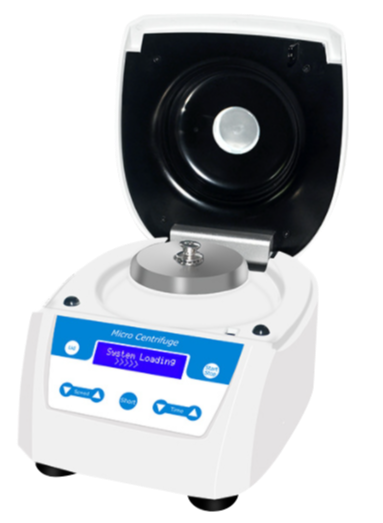
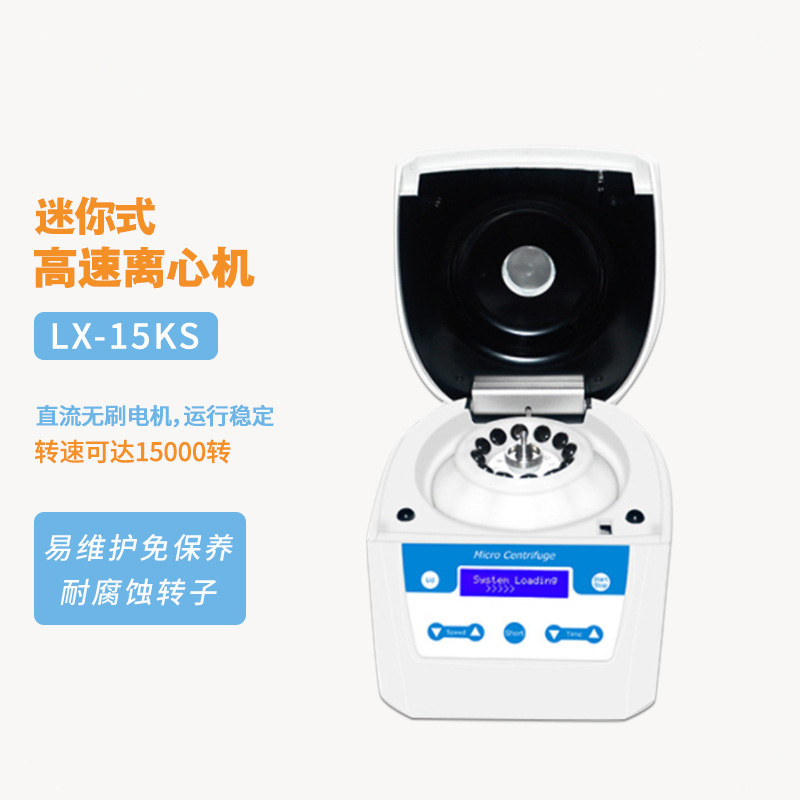
A mini-high-speed centrifuge is a benchtop laboratory device that separates a liquid or suspension into fractions in a field of centrifugal forces. In the sample preparation chain, it works after dispersion, grinding, dissolution or extraction and takes on those tasks for which gravitational settling is not sufficient in time: sedimentation of the solid phase, clarification of the supernatant, separation of immiscible liquids, concentration of the fine fraction before measurement. Model from the line TENCAN (Changsha Tianchuang Powder Technology Co., Ltd.) is presented in the research equipment section, its card — Mini High Speed Centrifuge.
Purpose and place in the sample preparation chain
The centrifuge does not crush material and does not replace grinding equipment. Its function is the separation of an already existing heterogeneous system: solid particles in a liquid, two immiscible liquids, coarse and fine fractions of one powder in suspension. Therefore, in the sample preparation route, the device is placed after the material has been brought into the desired state - ground, dispersed, dissolved or treated with a reagent.
Typical laboratory centrifugation tasks look like this. After wet grinding, the suspension must be clarified to obtain a supernatant for optical or spectral measurements. Before laser diffraction, large residues that interfere with the measurement and clog the cuvette are separated. The precipitate is concentrated to reduce the volume of the sample or transfer it to another medium. The liquid phase is separated from the gel and paste, the emulsions are separated, the precipitate is washed by repeated dispersion and repeated centrifugation, removing the remaining mother liquor.
The physical basis of separation is the sedimentation of particles in the field of centrifugal acceleration. The deposition rate increases with the square of the particle diameter and with the difference in the densities of the particle and the medium, and decreases with increasing viscosity of the liquid. Hence the practical limits of applicability: centrifugation works well where the particles are noticeably larger than colloidal ones, and the densities of the phases differ sufficiently. In suspensions with close densities, in highly viscous media and for nanometer-sized particles, deposition is slow, and simply increasing the speed does not always give results - sometimes it is necessary to change the environmental conditions if the technique allows it.
It is also worth remembering that centrifugation fractionates the sample. If the supernatant is then used to determine the particle size distribution, the separation mode becomes part of the technique: it cuts off part of the coarse fraction, and the measured result no longer describes the original powder. Therefore, the protocol records not only the fact of separation, but also the duration, temperature and centrifugal force at which it was performed.
Operating principle and main components
The rotor with installed test tubes rotates around a vertical axis. Particles whose density is higher than the density of the liquid move from the axis of rotation and concentrate at the bottom or wall of the test tube; particles and drops with lower density, on the contrary, are displaced towards the axis. Both the sedimentation of the solid phase and the separation of emulsions are based on this difference, where it is important not to precipitate, but to stratify the system.
Correct loading of the rotor is not a formality. Opposite positions are filled symmetrically with test tubes of the same weight and type with the same volume of liquid; Unsymmetrical loading causes vibration, accelerates wear of supports and bearings and poses a real danger at high speeds. Imbalance is also possible with formally equal volumes if the density of the liquids filling the test tubes differs.
Rotor and seats
Precipitation rotors differ in geometry. In an angular rotor, the tubes are inclined to the axis of rotation: the sedimentation path is shorter, so the sediment forms faster, but it lies on the wall and is more difficult to remove. In a swinging rotor, the test tubes occupy a vertical position, the sediment collects at the bottom, and the separation occurs more “softly”; Such rotors are typical for low-speed applications. The rotor type, number of positions and range of adapters for a particular model are checked according to the product documentation, and not transferred from a similar machine.
Test tubes are a consumable part of the system, and they are the ones that most often limit the regime. The material (polypropylene, polycarbonate, polyamide, glass), wall thickness, sealing method and permissible centrifugal force are different for different tubes. Reusable tubes lose their strength after cycles of aging and autoclaving. The test tube is filled not to the edge, but to the working mark; For aggressive solvents and for aerosol-forming samples, chemically resistant and hermetically sealed options are used.
Drive, control and safety
The modern tabletop device includes an electronically controlled drive, a timer, smooth acceleration and automatic braking, a lid lock during rotation and imbalance control. Upon acceptance, they check not only the declared speed, but also the behavior of the machine: the absence of vibration in operating modes, the accuracy of the setting, the operation of the lock, the absence of extraneous sounds during acceleration and braking.
The operating rules are simple and mandatory: do not open the lid until the rotor has completely stopped, do not brake the rotor with your hands, do not use test tubes with cracks or deformations, do not exceed the maximum speed allowed for a given combination of rotor, adapter and test tube. The constraint always sets the weakest element of the system. A separate distinction is made between the temperature of the working chamber and the temperature of the sample: during a long, high-speed process, the air and rotor heat up, and the sample may not have time to give off heat. If the description indicates cooling, clarify what exactly it refers to.
Characteristics and their correct reading
Rotation speed and relative centrifugal force
The rotation speed is expressed in revolutions per minute, but the separation is not determined by it, but by centrifugal acceleration. Relative centrifugal force (RCF) is related to the speed and radius of rotation by the approximate relation RCF = 1.118 × 10⁻⁵ × r × n², where r is the radius of rotation in centimeters and n is the speed in revolutions per minute. Two cars with the same speed but different rotors produce different accelerations; It is correct to compare separation modes by RCF, and not by rpm.
Inside the test tube, the acceleration is also unequal: at the end farthest from the axis it is greater, at the end closer to it it is less, and this is taken into account in the protocol. The maximum speed of a specific instrument applies to a specific rotor and specific tubes and does not transfer to other combinations. You cannot recalculate the mode from one car to another “by revolutions” - this is a common and unsafe mistake.
Tube volume, time and temperature
A distinction is made between the volume of one tube, the total volume of all positions and the actual workload. The nominal volume of a test tube is not the same as the sample volume: the operating mark is set by the instructions, and filling to the brim leads to spillage and loss of the sample. If tubes are intended for optical measurements, consider the optical path length and material wavelength compatibility.
The duration of the separation does not increase the result linearly. As sedimentation proceeds, the concentration of particles in the supernatant drops, and the increase becomes less and less; It makes more sense to check several shutter speeds and record the minimum sufficient one. The temperature regime affects the viscosity of the medium, and therefore the deposition rate, so it is indicated together with the speed and time. Temperature-sensitive samples are preferably separated in short cycles or with a pre-cooled rotor, if this is provided by the design.
Materials, Applications and Limitations
Typical objects of laboratory centrifugation are suspensions of inorganic powders: oxides, carbides, ceramics, minerals, as well as cutting and polishing sludge, homogenates, extracts of soil and plant material, emulsions and polymer dispersions. In the preparation of powder samples, the device usually completes the chain: grinding or dispersing - separation - measurement.
It is convenient to list the limits of applicability directly. A centrifuge does not replace filtration: the filter retains particles based on pore size, the centrifuge separates based on mass and density, and the sediment after it contains more liquid. It does not replace classification and sieving and does not perform wet grinding. In its mini version, it is a batch device for small volumes, rather than a flow-through unit for production flows. Finally, stable colloidal systems and highly viscous pastes may not separate at all - in this case, the issue is solved by changing the conditions, and not by increasing the speed.
Centrifuge is only one branch in the nomenclature TENCAN. Nearby are grinding, sifting, mixing, pressing, heat treatment and glove boxes; For an overview of directions, see the main page TENCAN. The centrifuge occupies a narrow but precise place in this line: it prepares the liquid phase for analysis or separation and does not replace either grinding or drying equipment.
Selection criteria and compatibility
Test tubes, adapters and chemical resistance
The choice begins not with the device, but with the sample: volume and number of parallel samples, type of vessel, solvent, temperature, sensitivity to aerosol, purity requirements. Then the materials of the test tubes and adapters are selected. Chemical resistance is more important than external convenience: a test tube that becomes cloudy or cracks in a solvent is unusable, even if it formally fits in size. Adapters must match the diameter and length of the tube, and the permissible centrifugal force must not exceed the rating for this type of tube. Rotor and tube compatibility is verified, not assumed.
Separation tasks and connection with adjacent stage
It is useful to determine in advance the type of separation (precipitate and supernatant or two liquids), the required degree of clarification, sample volume and mode of operation - single samples or batch. A simple test at a lower speed shows how a particular suspension behaves and how quickly sedimentation slows down, and helps to choose a reasonable mode instead of an obviously excessive one.
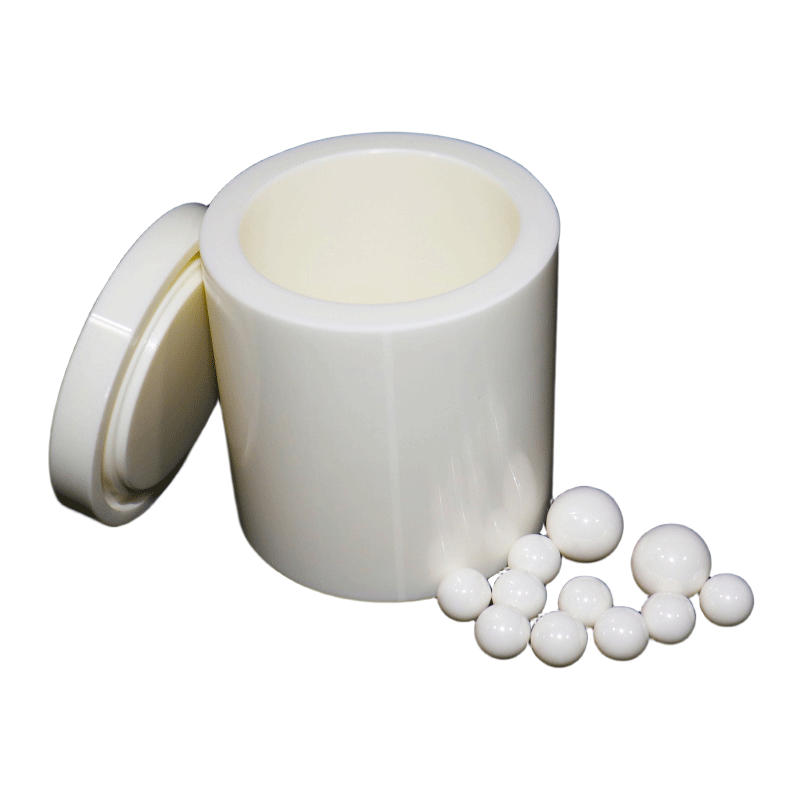
The properties of the sample are also affected by the previous stage. For example, zirconium dioxide grinding bowl for planetary mill — belonging to a planetary ball mill, not a centrifuge. It determines the contact material, wear rate and possible transfer of impurities during the grinding stage, but does not say anything about compatibility with the centrifuge rotor. The material of the glass and grinding media, as well as the choice of dry or wet grinding, influence what kind of suspension will be sent for separation; in this case, the selection of a grinding bowl and the selection of a rotor are independent decisions.
It is also worth separating devices that are similar in name, but different in purpose: a bead mill, a drum on rollers and a roller crusher solve the problem of grinding, not separating, liquid systems, and cannot be considered an alternative to a centrifuge.
Frequently asked questions
Does a centrifuge replace filtration?
No, these are different principles. The filter traps particles whose size is larger than the pores; the centrifuge separates the phases by mass and density. Often these operations complement each other: first a rough division, then a refined one.
Is it possible to precipitate nanoparticles?
Partially and slowly. The smaller the particle and the smaller the difference in phase densities, the longer the deposition, and a stable colloidal system may not separate at all. For submicron fractions, the mode is selected experimentally and recorded in the protocol.
How to choose the volume of test tubes?
They are based on the sample volume and the number of parallel samples. The test tube is filled to the working mark, and not to the edge, and the rotor positions are loaded symmetrically and equally in weight.
Why is imbalance dangerous?
Vibration, noise, accelerated wear of bearings and the risk of rotor destruction at high speed. The reason is not always different volumes - different densities of liquids in opposite test tubes give the same effect.
The practical conclusion is simple: a mini-high-speed centrifuge solves a specific separation problem, and it should be selected together with tubes, adapters and a mode tested on a real sample. The exact values of speed, volume and permissible combinations of rotor and cookware for a specific model are clarified according to its documentation, and are not transferred from general practice.