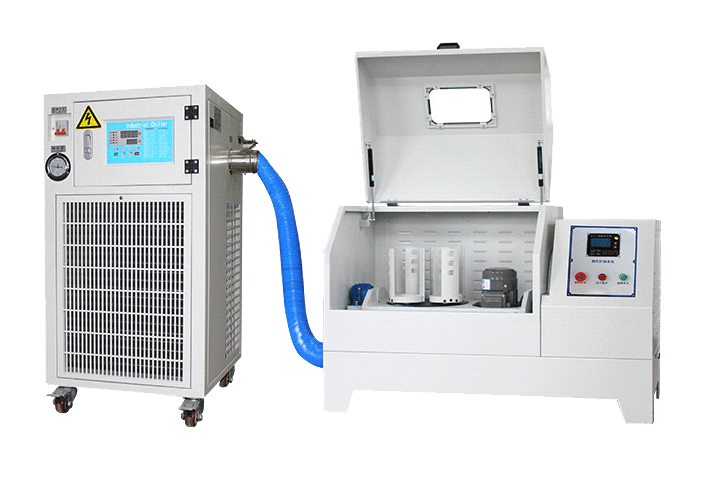
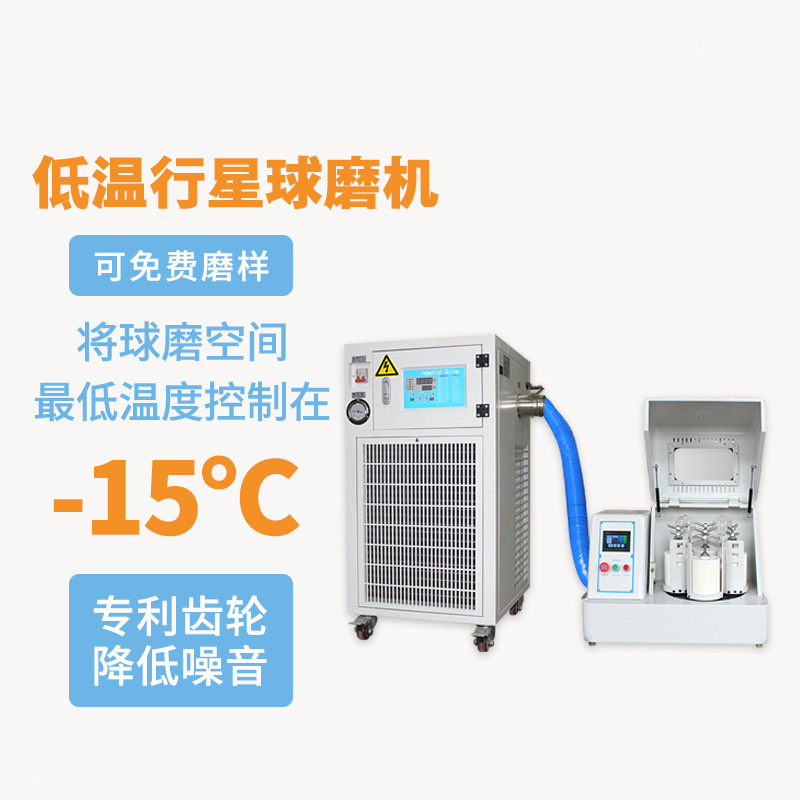
A low temperature planetary ball mill is a laboratory equipment for grinding and homogenizing small batches of powdery, fibrous and brittle materials, in which the grinding bowls move along a complex path and the heating of the contents is limited by a cooling circuit. The device occupies a certain place in the sample preparation chain: it takes the material, already reduced to a particle size of several millimeters, and reduces it to a powder with a given particle size distribution. The cooled version is chosen not because of the fashion for low temperatures, but because some materials melt, degrade, oxidize or change phase composition when heated, and conventional grinding is unsuitable for them.
The specific design of such an installation is TENCAN described on the page low temperature planetary ball mill; The parameters given there refer to the specified model and are not automatically transferred to other devices. Below we break down what the operation of a cooled planetary mill consists of, which components determine the result, and which characteristics need to be read with reservations.
What is this equipment and where is it used?
A planetary ball mill is a batch machine. A sample of material and grinding media are loaded into the grinding glasses, the glasses are hermetically sealed and rotated. Grinding occurs due to impacts and abrasion of the balls on the material: the particles are destroyed along defects and cracks, gradually decreasing in size. This is a fundamentally different process than grinding in a bead mill, which uses a stream of fine grinding media in a liquid medium, or than drum processing in a roller mill, where the drum itself rotates without planetary motion. Mixing powders, in turn, solves a different problem and does not replace grinding.
Typical tasks for which such installations are used: sample preparation before X-ray diffraction or elemental analysis, production of fine powders for sintering and ceramics, mechanical alloying, grinding of polymers, fibers and plant materials, deagglomeration of nano-sized additives. Cooling is especially important where the material is temperature sensitive: thermoplastics, waxes, some pharmaceutical substances, components of lithium-ion materials, organic crystals and soft metals soften when heated and stick to the walls and balls, after which the grinding actually stops. Heat removal allows you to keep the process in working mode and maintain the representativeness of the sample.
How does a cooled planetary ball mill work?
Planetary motion and grinding energy
The glasses are mounted on a carrier - a supporting disk that rotates around a central axis. The glasses themselves rotate around their own axes, usually in the opposite direction. This combination of movements creates an alternating field of centrifugal forces: the balls are pressed against the wall of the glass, then come off, pass through the cavity and hit the opposite side, intensely abrading and destroying the particles. The wall of the cup and the counter flows of the balls provide a mixed impact and abrasion mechanism, so the result depends not only on the speed, but also on the geometry, as well as on the ratio of the radii of the carrier and the cup.
The energy transferred to the sample is proportional to the mass and speed of the grinding media, as well as the frequency of collisions. As the speed increases, not only the dispersion increases, but also the amount of heat generated: a significant part of the grinding work turns into heat. This is one of the reasons why refrigerated models are designed with a separate circuit and why heat must be controlled rather than simply increased in speed.
Heat Dissipation: Air Cooling, Liquid Loop, Nitrogen
It is important to distinguish between cooling methods here, because they give different results and are not always interchangeable. Air cooling is the act of blowing the work area with fans or blowing through the case: it removes excess heat and protects the drive, but does not deeply reduce the temperature. The liquid circuit removes heat from the walls of the glasses or from the working chamber much more efficiently, but requires a coolant and control of its temperature. Liquid nitrogen supply is a separate mode in which the material is cooled to a brittle state; This is already a cryogenic process that places special demands on cup materials, seals and safety precautions.
It is impossible to call a conventional model cryogenic just because it is “low-temperature”: air cooling and liquid nitrogen cooling are different things. You should also not confuse the temperature of the working space of the installation with the temperature of the sample itself: the sensor can measure the chamber or coolant, while inside the glass local overheating upon impact still occurs. If such data are not given for a specific model, it is more correct to consider the temperature of the sample unknown and clarify it experimentally.
Main installation components
Grinding glasses
The glass is the working chamber where the grinding takes place; it determines the volume of the hitch, the permissible speed, the degree of wear and the contact of the material with a foreign surface. The volume of one glass, the total volume of the set and the workload are different quantities: part of the volume is occupied by grinding media, part is the free space necessary for the movement of the balls. A small glass with large balls will give a different result than a large glass with small ones, even with the same weight.
Grinding media
The balls transmit impact and abrasion energy. Their diameter affects the ratio of impact and abrasion, density affects the energy of a single impact, and material affects wear and the likelihood of introducing impurities. Large balls crush fragile and relatively large fractions faster, while small balls work more efficiently at the fine stage and during disagglomeration. The number of balls, the ratio of their mass to the mass of the sample and the grinding time are selected for the task, and are not set arbitrarily.
Drive, control and safety
The drive sets the speed and stability of rotation, and the control system sets the possibility of reproducible modes: programs with alternating rotation, pauses and reverse. Pauses are also needed to remove heat. From an operational point of view, balancing, securing cups, monitoring their overheating and protecting the operator in the event of possible depressurization are important. For air-sensitive materials, there are vacuum cups and glove boxes, but these are separate items and not a feature of any mill.
How to read specifications
- Cup volume and loading. Check whether the volume of one glass, a set or the maximum weight is indicated. The workload is usually noticeably smaller than the geometric volume.
- Rotation speed. The speed of rotation of the carrier and the speed of rotation of the glass are not the same thing; comparing models based on one figure without indicating what exactly was measured is incorrect.
- Final size. The catalog value is a guideline for certain conditions, and not a guarantee. The result depends on the material, initial particle size, grinding media, medium, time and method of measurement.
- Cooling. You need to understand the circuit type, refrigerant, range, and what temperature is being controlled.
- Material of glasses and balls. Determines wear, contaminant transfer and acceptable samples.
- Nutrition, dimensions, weight. Affect laboratory placement and site preparation.
Units also require verification: mixing millimeters and micrometers, minutes and hours, or degrees Celsius and kelvins in translation leads to gross errors in experimental planning. If the value looks inconsistent, the best solution is not to correct it yourself, but to check with the manufacturer.
Materials and applications
For fragile and abrasive materials - minerals, glass, oxide ceramics, slags - cooling primarily serves as protection against overheating of components and stabilization of the process. For polymers, waxes, fibers, plant samples and organic crystals, it is fundamental: without heat removal, the material melts, smears and stops grinding. For metals prone to sticking, the grinding medium, shape and size of the grinding media are also important.
Dry and wet grinding solve different problems. Dry grinding is convenient where the powder is needed as is, but it is prone to agglomeration and dust formation. Wet grinding with a liquid media reduces sticking, helps dissipate heat and produces a narrower particle distribution, but requires subsequent drying and testing of the interaction of the liquid with the material. Disagglomeration is not the same as grinding of primary particles: mild modes break up conglomerates without destroying the particles themselves.
Limitations of the method
Planetary grinding is a batch process with a limited sample size, and it cannot be directly scaled to production volume. Wear on cups and balls is inevitable, and it is not possible to completely prevent the introduction of impurities: ceramics, zirconium dioxide or tungsten carbide reduce contamination to varying degrees, but do not give zero results. High-energy grinding can change the crystal structure and amorphize the particle surface. Finally, discussion of mode selection is not a substitute for operating instructions for a specific installation, and for hazardous or reactive substances, unvalidated recipes should not be used.
Compatibility of glass, grinding media and sample
The grinding glass is selected for the machine and the material. The glass must correspond in seating dimensions and permissible speed of a specific planetary mill; There are no universal glasses that fit any model. Next, chemical compatibility is taken into account: acidic and alkaline environments, solvents and aggressive additives have different effects on stainless steel, zirconium dioxide, agate, corundum, polyurethane or PTFE.
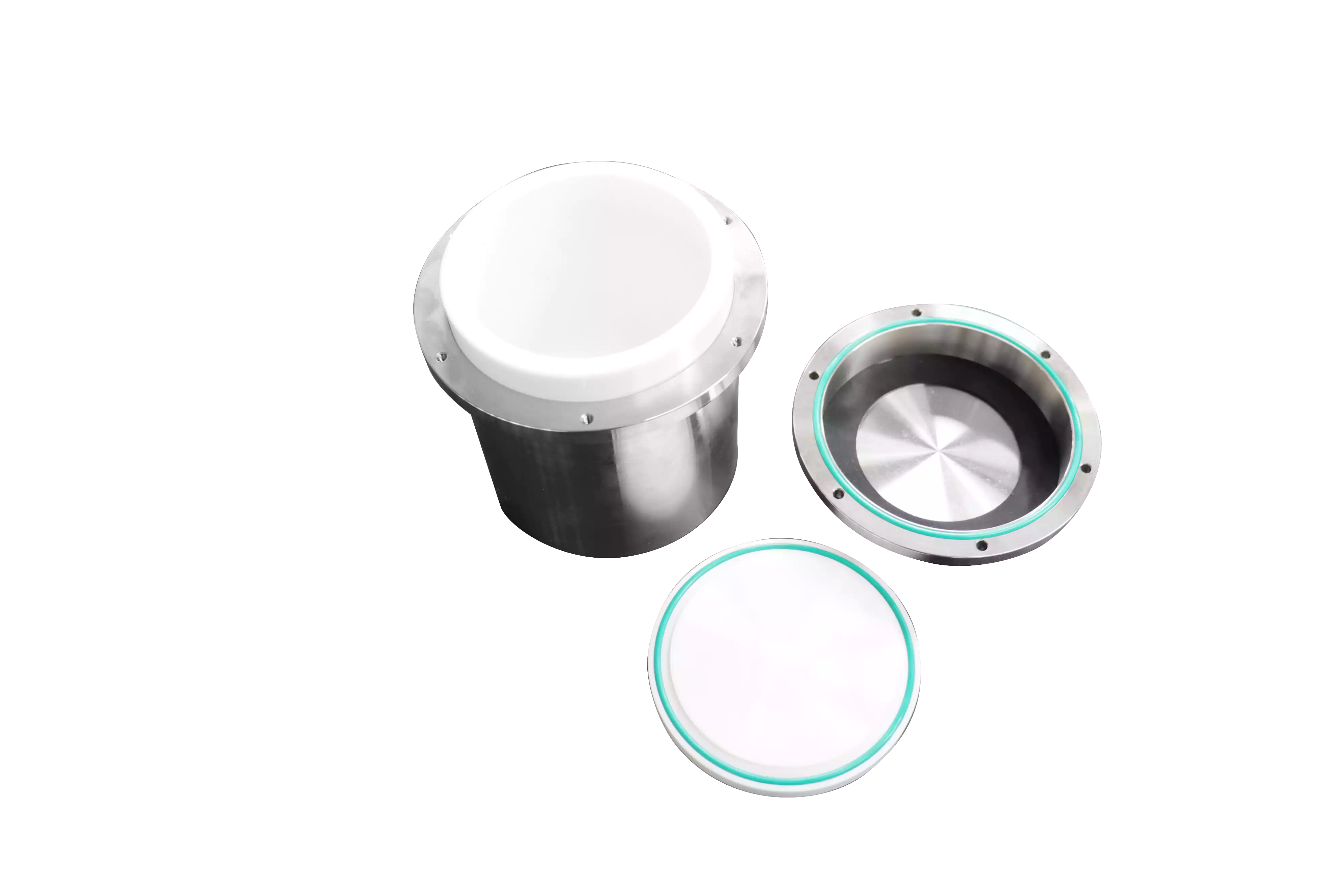
For tasks where it is necessary to combine the mechanical strength of the housing and the contact surface made of ceramics, combined solutions are used - for example, 304 steel grinding bowl with zirconia lining. This design uses a durable steel body and lining that operates in contact with the specimen, reducing metal wear and the likelihood of iron transfer. At the same time, the choice of lining still remains a compromise: zirconium dioxide is hard and wear-resistant, but it also gradually wears out, and its particles can get into the sample. A lined cup reduces contamination but does not eliminate it.
The grinding media must be coordinated with the beaker material and the sample. Harder balls will wear out a softer glass faster; large balls in a thin-walled glass increase the risk of damage to the lining. It’s also worth considering cleaning: replaceable cups and separate sets of grinding media for different materials make it much easier to prevent cross-contamination between samples.
Selection criteria
- Temperature sensitivity of the sample: is heat removal required in principle or is a conventional model sufficient?
- The required final size and its measurability using the method available in the laboratory.
- Available sample per grind and the number of glasses required for parallel samples.
- Material of contact surfaces and permissible level of impurities.
- Dry or wet process, the need for a protective atmosphere.
- Refrigerant and availability of its supply, safety requirements.
- Reproducibility of modes and ease of logging.
You should focus primarily on compatibility and repeatability, and not on maximum speed: high speeds accelerate wear, increase heating and often worsen repeatability.
Questions and answers
Is the low temperature version always necessary?
No. If the material is fragile and not sensitive to heat, a conventional planetary mill will do the job faster and easier. Cooling is justified when the sample softens, oxidizes, or changes phase composition when heated.
Can air cooling be considered cryogenic?
No. Airflow reduces the temperature of the components and slows down the heating, but does not transform the material into a brittle state. Cryogenic grinding involves a refrigerant such as liquid nitrogen and requires a confirmed package.
What glass material should I choose?
First - compatibility with the sample and the device, then - acceptable wear. For soft samples, a less hard lining is sometimes sufficient; for abrasive materials, you need to choose wear-resistant materials and take into account that impurities are still possible.
Is it possible to grind and mix different powders at the same time?
Co-grinding does mix the components, but uniformity depends on density, particle size and mode. If the goal is precisely mixing without changing the size, there is separate equipment for this.
What to check before ordering
Before choosing, you should request confirmed data on a specific model: cooling method and refrigerant, cup volume and workload, speed range, permissible cup and ball materials, room and power requirements. It is useful to determine in advance how much weight is needed for one grind and how the result will be measured. A complete list of grinding equipment and accessories is given in catalog TENCAN, where the current models and their parameters are indicated.