
What is a large roller ball mill and its place in the process
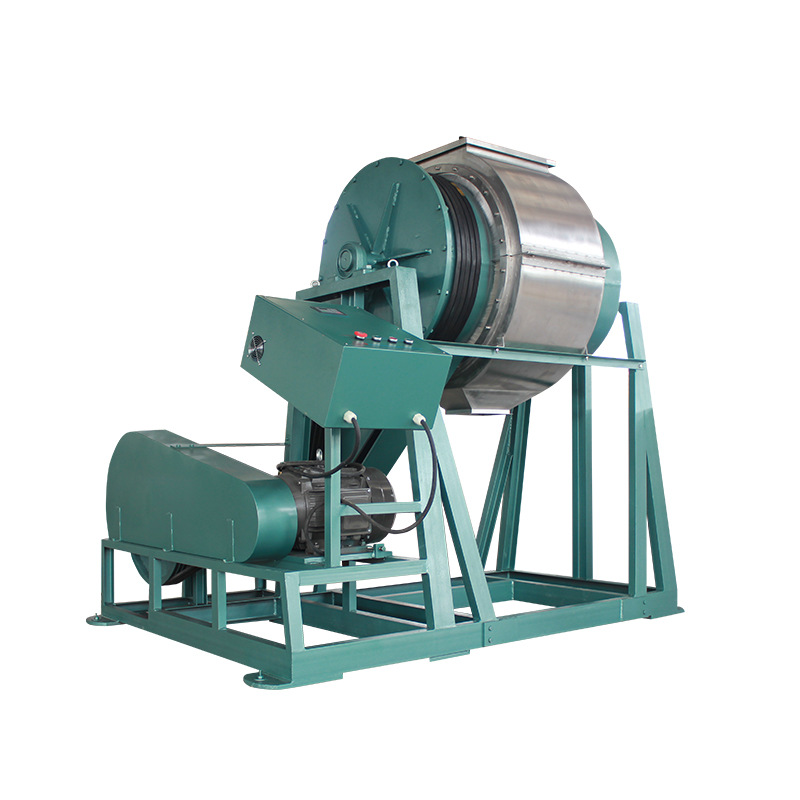
A large roller ball mill is a grinding installation in which a cylindrical drum with grinding media rotates due to friction against drive rollers. It takes place between the preparation of the charge and subsequent operations - classification, mixing, drying, pressing or laboratory analysis. The task of the machine is to reduce particle size and homogenize the powder, and not to replace the entire technological chain. In the catalog TENCAN such a setup is presented in card of large roller ball mill.
The word “large” in the name indicates the standard size and scope of application, but does not replace the passport data. It is impossible to transfer the characteristics of one design to the entire range of similar machines: drum capacity, permissible loading weight, rotation speed, drive power and lining material are determined by the specific design. For a correct comparison, you need manufacturer data, and not just the appearance or series name.
Design and working principle
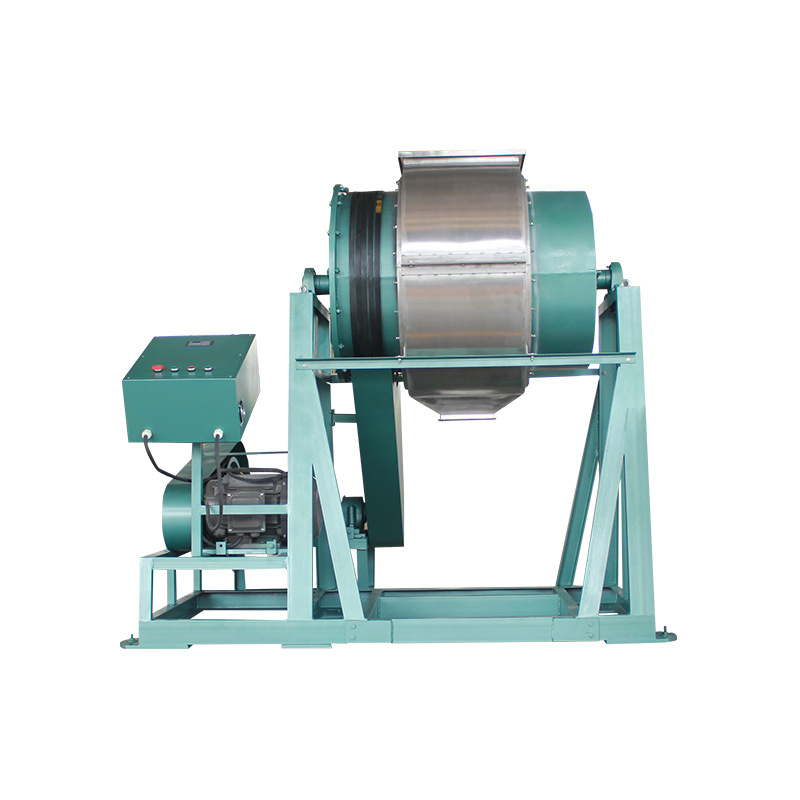
A typical roller ball mill layout includes a frame, support and drive rollers, a replaceable drum, a loading and unloading system, guards and interlocks. The drum does not have a rigid gear drive: rotation is transmitted through contact with the rollers. Therefore, the condition of the roller surface, the alignment of the supports, the mass of the drum and the uniformity of loading are no less important than the engine power.
Drive rollers and drum rotation
One or more rollers receive rotation from the drive, and the rest serve as supports. The friction force causes the drum to turn. If the load mass is distributed unevenly, the load on the supports increases and a slipping mode is possible. For a large installation, control of the drum beat, cleanliness of the rollers and the absence of foreign objects in the contact area are important. Adjusting the rotation speed changes the nature of the movement of the grinding media, but should not be considered as a universal replacement for selecting the size of the drum and grinding media.
Drum, lining and grinding media
Inside the drum there are grinding media. As they rotate, they climb up the wall and then fall or roll. This combines impact and abrasion. At a relatively low frequency, rolling and abrasion predominate; at a higher frequency, the role of impact increases. There is a critical speed at which centrifugal force holds the load against the wall; the operating frequency is usually considered as a fraction of this value, but specific permissible modes must be taken from the documentation for this design.
The lining and grinding media can be made of different materials: steel, ceramics, zirconium dioxide, tungsten carbide, agate and others. The choice depends on the hardness of the sample, the allowable introduction of impurities, purification requirements and the economics of the process. Harder material of the grinding media does not mean “zero pollution”: wear is inevitable, and its contribution is determined by the load, grinding time, media properties and the condition of the equipment.
Loading, unloading and sealing
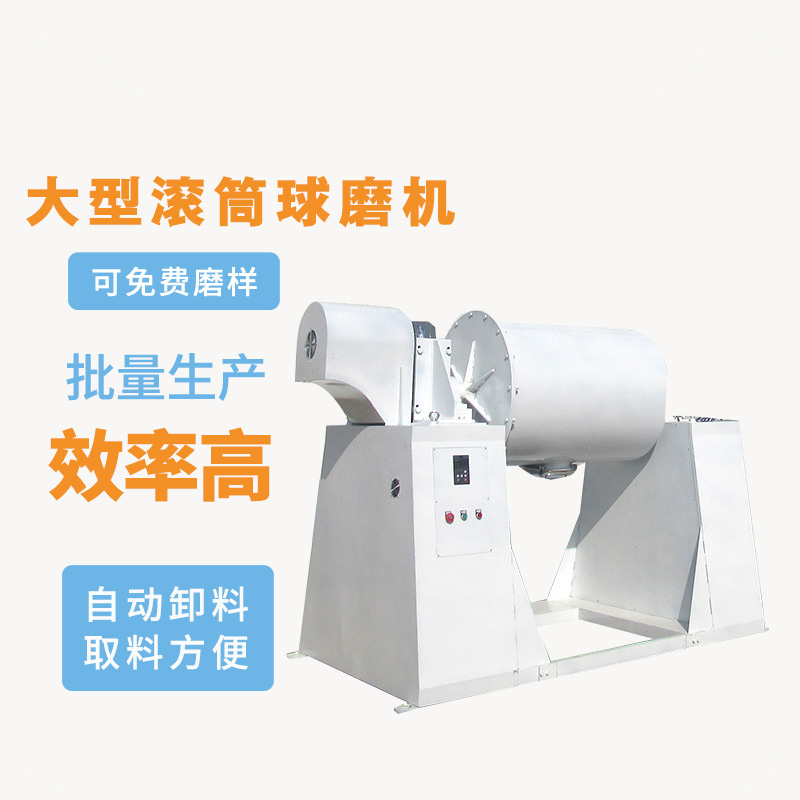
Depending on the design, the mill can operate in batches or in continuous mode; this needs to be clarified for a specific model, and not assumed by the name. A sealed lid is important for dry powders because dust release not only affects material loss, but also safety. For wet grinding, the durability of the seals, ease of draining the suspension, and the absence of stagnant zones are important. If a gas or cooling medium supply is provided, a distinction must be made between conventional air cooling and cryogenic versions with liquid nitrogen: these are different systems with different operating requirements.
Dry and wet grinding: not just “with or without water”
Dry and wet grinding differ not only in the presence of liquid. The aggregation of particles, heat generation, behavior of the powder on the walls, wear of equipment and subsequent processing of the product change. In one case, it is necessary to maintain flowability and avoid the need for drying; in the other, it is necessary to suppress dust, reduce heat, or obtain a stable suspension. In addition, the grinding of primary particles and the destruction of agglomerates are not the same thing: sometimes after grinding the particle size distribution improves due to disagglomeration, although the crystals themselves do not noticeably decrease.
When considering dry grinding
The dry process is convenient if further operations are carried out with powder, and the introduction of liquid is undesirable. In this case, material sticking to the grinding media and lining, dusting during loading and unloading, as well as uneven grinding due to agglomeration are possible. For fine powders, it is useful to evaluate the tendency to generate dust and the need for local exhaust. You cannot promise a given size only according to the standard minimum from the catalog: the result depends on the source material, environment, time and method of measurement.
When considering wet grinding
Wet grinding may be appropriate if the product is then used as a slurry or if drying is acceptable and economically feasible. The liquid removes some of the heat and reduces dust, but adds issues of compatibility with the material of the drum and seals, suspension viscosity, delamination and flushing. Water or solvent may react with the sample, so preliminary testing is required. For sensitive materials, temperature is discussed separately: the temperature of the working chamber of the installation is not equal to the measured temperature of the sample.
Heating occurs due to the supply of mechanical energy and internal friction. Air cooling, pauses in operation and moderate loading help reduce the temperature, but do not turn a conventional mill into a cryogenic one. If grinding at low temperatures is required, an appropriate liquid nitrogen system with proven safe operating conditions is required.
How to correctly read the characteristics of a large roller mill
Technical parameters must be read in the context of the task. Machines with the same name may have different drums, drives and unloading systems. Listed below are questions that allow you to compare the proposal with real requirements, without replacing calculations with promises.
Volume, workload and batch weight
The total volume of the drum, the effective working load, the mass of the grinding media and the mass of the sample are different values. You cannot fill material “to the top” just because a large volume is indicated: part of the space is occupied by grinding media, and part must be left for the movement of the load. For a batch, it is important to know not only the mass of the powder, but also its bulk density. Productivity in kilograms or tons per hour depends on the size of the initial and final product, mode and permissible cycle time.
Speed, diameter and energy
Rotation speed alone does not describe the result: it is related to the diameter of the drum and the critical speed. A larger drum at the same angular speed creates a different picture of the movement of the grinding bodies. Drive power characterizes the available energy, but does not guarantee its useful use. It is necessary to take into account the filling, size and density of the grinding media, as well as friction losses in the roller support. To compare options, it is useful to request consistent data: drum diameter and length, frequency, power, equipment weight and permissible load.
Particle size and size distribution
The final size is not a single number, but a distribution characteristic. The result depends on the initial coarseness, hardness, fragility, tendency to agglomerate, grinding medium and grinding time. The measurement method also matters: sieve analysis, laser diffraction and microscopy answer different questions. Where a typical minimum is stated in the description, this is a guide and not a guarantee for any sample. For a demanding task, it is reasonable to conduct a trial grinding and evaluate the particle size distribution before and after processing.
Materials, compatibility and contamination prevention
For a roller ball mill, the compatibility of the drum, lining and grinding media with the sample is important. Steel is convenient in terms of mechanical resistance, but may be unacceptable with increased requirements for cleanliness. Ceramics and zirconia reduce the contribution of some metallic impurities, but are themselves subject to wear and brittle fracture. Tungsten carbide is chosen for hard materials, but it does not exclude material transfer. Agate has its own limitations in terms of load and fragility. Therefore, the phrase “inert material” requires testing in a specific environment rather than being taken as an absolute.
Separately, a distinction should be made between the drum of a roller mill and the grinding bowl of a planetary mill. The glass is installed in the rotor of the planetary drive and experiences complex motion; it cannot be considered a replacement roller drum without confirmation of the mounting dimensions, fastening, weight and manufacturer's tolerances. Even a close nominal volume does not prove interchangeability. The same applies to grinding media: size, density and material must be suitable for the specific machine and task.
Cleaning between foods is part of the choice, not an afterthought. You need to understand which areas come into contact with the material, how the drum is removed, whether seals are accessible for inspection, and whether cross-contamination can be verified. For potent or hazardous substances, general recommendations do not replace operating instructions and risk assessment.
Selection criteria and compatibility check
Sample properties and grinding purpose
First, hardness, brittleness, initial particle size, moisture content, sensitivity to heat and oxidation, as well as acceptable addition of impurities are recorded. Then the goal is formulated: particle size reduction, disagglomeration, homogenization or preparation for analysis. For plastic, fibrous and stick-prone materials, a ball mill may not be optimal; this is determined by testing, and not by the name of the equipment.
Scale, regime and infrastructure
It is necessary to agree on the batch weight, the number of cycles, the allowable grinding time and the required productivity. They check whether the process will be dry or wet, whether sealing, gas supply, cooling and special unloading are needed. For a large installation, available power, floor condition, ventilation, enclosures and service areas are important. You should not select a machine based solely on the maximum drum volume: payload and actual cycle time may be more significant.
Tooling, wear and maintenance
The material of the lining and grinding media is selected according to the sample and acceptable contamination. Check availability of replacement drums, seal life, cleaning procedures, and wear monitoring capabilities. For an accurate comparison, a list of wear parts and conditions for their replacement are requested, but without assumptions about delivery times and service networks, unless confirmed. A good sign is the ability to test on a representative sample and obtain a report indicating grinding conditions.
On website TENCAN you can compare the description of the equipment with other areas of powder preparation. TENCAN — brand Changsha Tianchuang Powder Technology Co., Ltd.; specific parameters, equipment and limitations must be confirmed in the documentation for the selected version.
Frequently asked questions
How is a roller ball mill different from a roller crusher?
In a roller crusher, material is crushed between rotating rollers. In a roller ball mill, the rollers serve as supports and drive the drum, and grinding occurs inside the drum using grinding media. These are different principles and different areas of application.
Can I use the grinding bowl from a planetary mill?
Only with confirmed compatibility with a specific roller installation. The seating dimensions, fastening method, weight, permissible frequency and seal material must comply with the documentation. External similarity or identical volume is not evidence.
Does the mill guarantee the specified size?
No. The final result depends on the material, initial size, grinding media, mode, time and measurement method. Typical values from the catalog serve as a guide, but for a critical task a trial grind is needed.
Is cooling necessary?
The solution depends on the heat generation and sensitivity of the sample. Air cooling and pauses in operation are not the same as a cryogenic liquid nitrogen system. If low-temperature operation is required, it must be confirmed by the design of the installation and the rules of safe operation.
Selecting a large roller ball mill begins with a description of the sample, the required particle size distribution, and the actual batch size. Only then do the parameters of the drum, drive and equipment add up to a verifiable solution, and not into a set of attractive, but unconfirmed promises.