
A laboratory rod mill is an apparatus for grinding samples, in which the grinding bodies are rods freely lying in a horizontal rotating drum. In the sample preparation process chain, it occupies an intermediate position between pre-crushing and fine grinding: after the crusher, the material is still too coarse for reduction and analysis, and a planetary ball mill often produces an excess of fine fractions where a representative sample is needed. Laboratory Rod Mill TENCAN belongs specifically to this class of equipment for sample preparation.
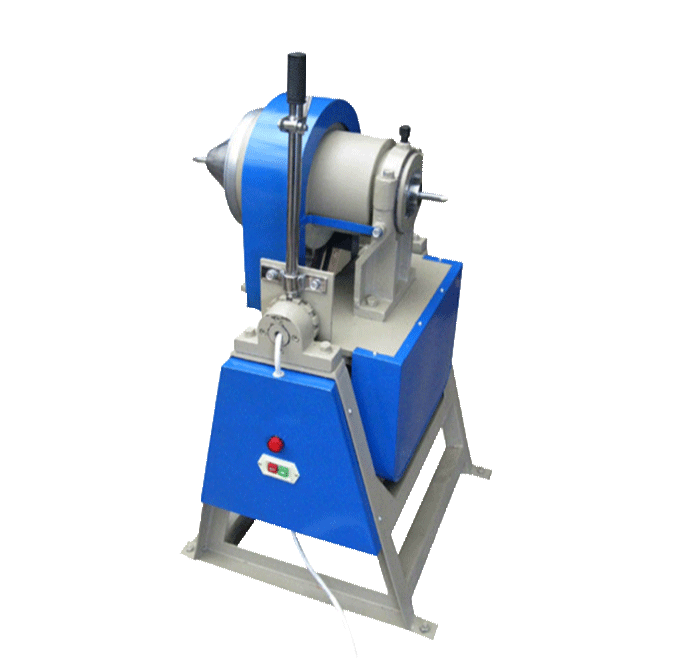
Next, we will talk about the operating principle of such a device, the differences between rod and ball grinding, the correct reading of the characteristics and the conditions that should be clarified before choosing. The general principles of the equipment class and selection criteria are described; specific parameter values for the selected design are taken from the product card and the manufacturer’s technical documentation.
Place of a rod mill in sample preparation
Sample preparation solves several problems at the same time: to reduce the size of the material, maintain representativeness, not lose the determined components and not introduce foreign impurities. The rod mill is used where a relatively coarse but homogeneous product is needed: ores and mineral raw materials, slag, clinker, ceramic materials, glass, some brittle powders. A typical sequence of operations looks like this: sampling and drying a sample, crushing to fine grains, grinding in a rod mill, reducing, sifting or transferring the material for further fine grinding and analysis.
The main reason to use rods rather than balls is to avoid overgrinding. In rod loading, the particle is more often destroyed along the contact line between the rods, rather than at the point of impact, so the material is crushed more evenly and produces less fine fraction. This is significant for sample preparation: the over-grinded fraction changes the behavior of the sample during reduction, sifting and subsequent analysis, and also increases dust loss.
Rod grinding is generally considered to be a coarse to medium grinding operation. This does not mean that the output size is fixed: it depends on the initial size, processing time, mass and diameter of the rods, drum rotation speed and the properties of the material itself. It is impossible to name a specific particle size without these conditions - the same installation on different samples gives different results.
Design and working principle
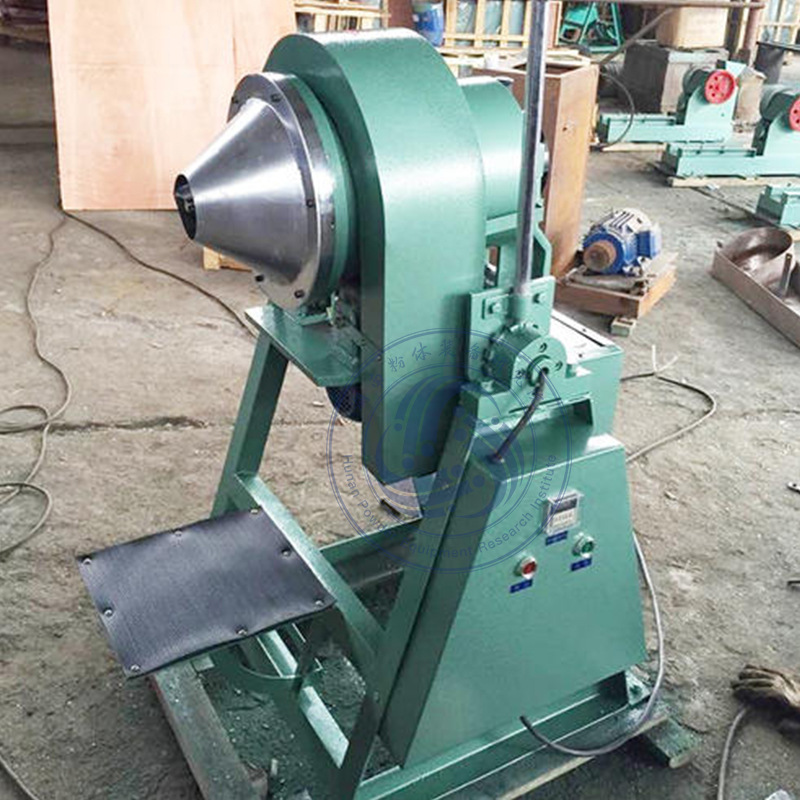
The basis is a horizontal cylindrical drum mounted on supports and connected to the drive. Grinding rods and sample are loaded inside the drum. The layout of a specific design - type of drive, method of installing the drum, the presence of a casing, timer or reverse system - is determined by the model and described in its card; The principle of operation itself does not change.
Drum and its geometry
The diameter and length of the drum determine the working volume and the maximum size of the feed: the larger the piece, the larger the internal diameter is needed so that the rods can grab it when rolling and destroy it. The inner surface may have a lining - its material affects wear and the possible transfer of impurities into the sample. For wet grinding, the tightness of the loading unit is important: the liquid should not leak out and carry away the fine fraction. The volume of the drum and the working load are not the same thing: part of the volume always remains free, otherwise the rods have nowhere to roll.
Rod loading
The rods are cylinders with a length slightly less than the length of the drum, laid parallel to its axis. As they rotate, they roll over each other and over the layer of material, forming many linear contacts. The total mass of the rods, their diameters and the ratio between rods of different diameters determine the impact energy and the nature of grinding. During operation, the rods wear out and shorten, so their condition is periodically monitored: a worn load changes both productivity and particle size distribution.
Rotation and operating mode
The drum rotation speed is one of the determining parameters. If the frequency is too high, the rods are pressed against the wall under the influence of centrifugal force and stop rolling, and grinding practically stops. The operating mode is cascade, in which the load rises to a certain height and then rolls down. Therefore, moderate rotation speeds are chosen for rod mills, and the range specified by the manufacturer is not exceeded. The duration of grinding is set according to the result: first, the mode is selected for a specific material, then it is reproduced for samples of the same type.
Loading, unloading and cleaning
The sample is loaded through the neck, observing the relationship between the mass of the material, the mass of the rods and the free volume of the drum. Insufficient loading reduces the number of effective contacts, excessive loading interferes with rolling and overloads the drive. Unloading is performed through the discharge opening or by tilting the drum, depending on the design. Between samples, the drum and rods are cleaned: remnants of previous material are the most common source of cross-contamination in the laboratory.
How does rod grinding differ from other operations?
Rods and balls
Ball loading destroys particles mainly by point impacts and gives a wider distribution of particle sizes with a noticeable proportion of fine fractions. Rods work differently: linear contact and rolling results in more uniform grinding and less overgrinding. Therefore, a rod mill is chosen when the subsequent operation is sensitive to the amount of fines - for example, when preparing samples for sieving or analysis, where it is important to preserve large classes.
Grinding and mixing are not the same thing
Mixers bring components into contact, but do not aim to reduce particle size. If the mixer is used as a mill, the particle distribution is random and poorly reproducible. The opposite is also true: a rod mill is not designed to produce a homogeneous mixture of different powders, and it should not be considered as a mixing equipment.
Other devices solve other problems
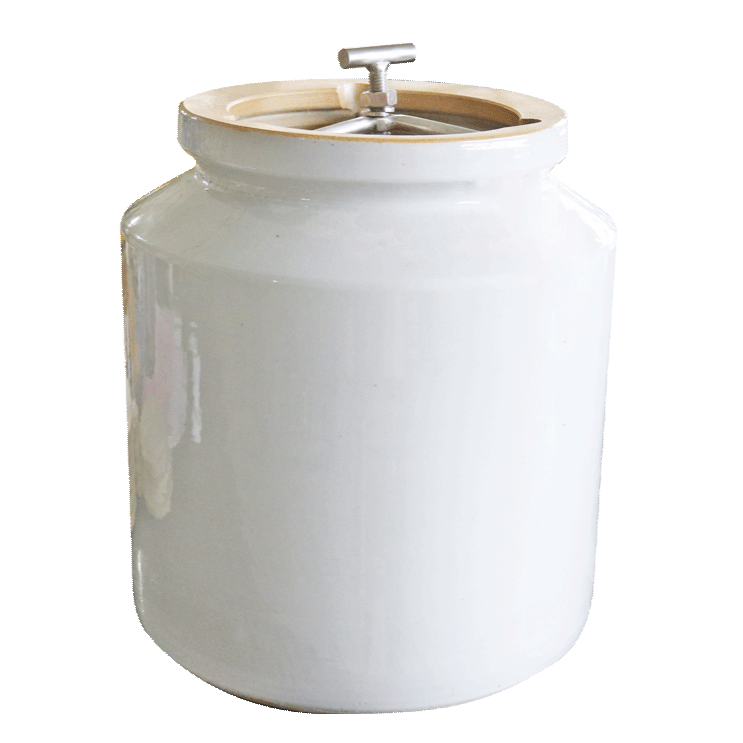
Large pieces are pre-crushed in jaw or roller crushers; Ultrafine grinding is performed by planetary ball and bead mills, which operate on a different principle. We would like to mention separately ceramic grinding drum: This is a feature of roller ball mills, not rod mills. The geometry of the drum, the nature of the loading and the method of energy transfer in these devices are different, so the modes and expectations for size do not transfer from one type of equipment to another.
Characteristics and their correct reading
The product card and documentation provide a set of parameters that are easy to read incorrectly. It is useful to separate them by meaning:
- Drum volume — geometric capacity, not the mass of the sample that can be loaded in one cycle.
- Workload — the mass of rods and material that ensures normal rolling; it is always less than the full volume.
- Sample weight per cycle — a value depending on the bulk density of the material: for light powders it is less than for ore.
- Diameter and length of rods — parameters related to feed size and drum size.
- Drum speed — working value, beyond which leads to loss of grinding efficiency.
- Drive power and supply voltage — operational characteristics that determine the requirements for the laboratory network.
- Material of rods, lining and drum — factor influencing wear and possible introduction of impurities.
- Unloading method and sealing — determine the suitability of the apparatus for wet grinding and for dust-producing materials.
Productivity over time is not equal to the weight of one load: it depends on the number of cycles, time for loading, unloading and cleaning. The final particle size is also not a passport constant, but the result of a specific combination of material, grinding mode and duration. The typical minimum size specified for an equipment class is not guaranteed for any sample.
Separately, it is worth distinguishing between dry and wet grinding. Dry mode is easier to use, but is accompanied by dust formation and requires sealed unloading. Wet grinding reduces dust and makes it easier to unload the fine fraction, but requires working with liquid and subsequent drying of the sample, as well as the compatibility of the drum material with the selected medium.
Suitable materials, applications and limitations
Rod grinding is suitable for brittle materials of moderate hardness and above:
- ores and mineral raw materials, including preparation of technological samples;
- slags, clinker, refractory and building materials;
- ceramics, glass, oxides and other brittle powders;
- some brittle metal powders and alloys.
Limitations are associated both with the properties of the sample and with the design of the apparatus. Plastic, viscous and fibrous materials are not crushed, but deformed or spread on the walls of the drum. Wet and sticky samples require drying or switching to wet grinding, if provided for in the design. For heat-sensitive materials, it is important to consider heat during long-term operation: air cooling reduces the temperature of the case, but this is not the same as a cryogenic process where the material is cooled with liquid nitrogen. The temperature of the working space of the installation and the temperature of the sample itself are different values.
The introduction of impurities requires special attention. The rods and lining wear out, and wear debris ends up in the sample. Harder feed material gives less wear, but does not eliminate it completely: the claim of “zero contamination” is incorrect for any grinding equipment. If impurities are critical, the material of the grinding media and lining is selected taking into account the elements being determined and controlled by a blank experiment.
How to choose a rod mill and check compatibility
- Determine the task: what coarseness needs to be obtained and what will happen next - reduction, sifting, analysis or fine grinding.
- Estimate the mass of the sample per cycle and the bulk density of the material; With this, correlate the volume of the drum and the workload.
- Compare the size of the feed with the size of the drum: a piece that is too large will not be captured by the load.
- Select rod and lining material based on sample hardness and acceptable impurity levels.
- Check whether dry or wet grinding is needed and whether it is provided for in this version.
- Check operational requirements: power supply, dimensions, noise, ventilation, ease of cleaning.
- Agree on the grinding mode on a real sample before transferring it to series.
Compatibility is checked not by name, but by a set of conditions: sample type, its size and weight, required final size, permissible impurities and available mode. If the data contradicts each other, the units are in doubt, or the wording is unclear, it is better to check the meaning with the manufacturer rather than correct it with a guess. An overview of equipment directions is given at website TENCAN.
Questions and answers
Can a rod mill be used for wet grinding?
Wet grinding is used in rod mills, but the suitability of a particular design is determined by the tightness of the loading and unloading units, the lining material and the admissibility of contact with liquid. If the mode is not indicated in the product card, it should be clarified.
How is a rod mill different from a ball mill?
The type of grinding load and the nature of destruction: rods provide linear contact and a narrower distribution of particles with a smaller proportion of fine fractions, balls provide pinpoint impacts and a wider range of particle sizes.
Why can’t you name one specific output size?
The coarseness is determined by the source material, its hardness and feed size, the mass and diameter of the rods, the rotation speed and grinding duration. The same mode on different samples gives different results, so the mode is selected experimentally.
Do I need to clean the drum between samples?
Yes, if the samples differ in composition. Remaining material and wear debris will distort the result of the following analysis. The cleaning method depends on the material of the drum and lining.
Does a rod mill replace a crusher?
No. Crushers are designed for large pieces, and a rod mill works with material that has already been reduced to grits. The combination of these operations in one device is not provided.