
The Laboratory Vibratory Ball Mill is a benchtop equipment for fine grinding, homogenization and mechanical activation of small samples. In such a machine, the grinding bowl does not rotate around a common axis, as in a planetary mill, but receives high-frequency vibrations from a vibration drive. The grinding bodies inside the glass repeatedly hit the particles, roll and abrade the material. Due to intense movement, the medium quickly transfers mechanical energy to the sample, which is why vibration mills are in demand in laboratory sample preparation, when it is necessary to obtain a representative fine powder from a small sample. U TENCAN presented laboratory vibrating ball mill; Specific parameters - cup volume, oscillation frequency, power and equipment - should be checked in the current product card.
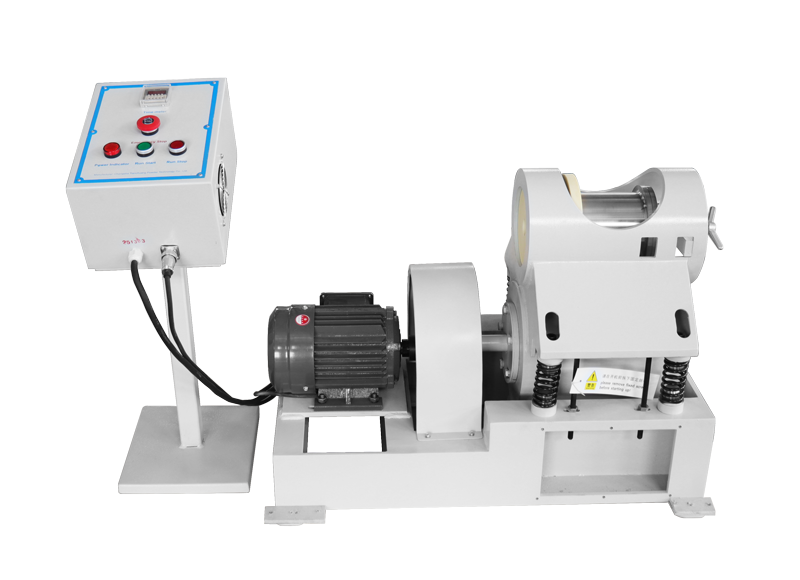
What is a laboratory vibrating ball mill and where is it used?
The vibratory ball mill occupies an intermediate position between planetary and drum laboratory mills. It is not intended for crushing large pieces: jaw, roller or hammer crushers are used for this. A vibration mill works with already prepared raw materials - usually with a particle size ranging from a few millimeters to hundreds of micrometers - and brings it to a finer state. The main tasks that such equipment solves are: grinding, mixing, disagglomeration, homogenization and mechanical activation of materials. In laboratories, it is used in the preparation of samples for chemical, X-ray diffraction, spectral and other types of analysis, as well as in studies of ceramics, glass, minerals, catalysts, pigments and composites.
It is important to distinguish between the actual grinding and mixing. A vibrating mill can crush particles and mix components at the same time, but this does not make it a universal mixer. If the task is only to average dry powders without changing the fineness, a V-shape or other mixer is often sufficient. If you need to obtain a fine powder, a vibration mill may be more convenient because it combines impact and abrasion. TENCAN produces a wide range of laboratory equipment, so when selecting it is important to correlate the type of mill with the actual task, and not just with the desired size.
Design and principle of operation
Main nodes
In a typical laboratory vibration mill, several functional units can be distinguished. This is the base or housing that dampens vibration and holds the machine on the work surface; vibration drive with electric motor and unbalance mechanism; grinding bowl attachment unit; the grinding bowl itself with grinding media; control panel with timer and, depending on the model, intensity adjustment. Some designs provide air cooling of the working area, which helps remove heat generated by friction and impact. The presence of cooling does not mean that the sample is guaranteed not to heat up: the temperature of the beaker, the temperature of the body and the temperature of the sample are different values.
How does grinding happen?
The grinding mechanism in a vibration mill is based on a combination of impact, shear and abrasion. The glass oscillates with a certain frequency and amplitude. Grinding bodies - usually balls - move inside the chamber, collide with each other and with the walls, and particles falling between them are destroyed. The higher the energy of movement, the more intense the process, but at the same time the wear of the glass and grinding media, as well as heat generation, increases. Therefore, the mode is selected not according to the principle of “maximum speed at any cost,” but based on the properties of the material, the required size and acceptable contamination.
The result is influenced by many factors: the hardness and fragility of the sample, its original size, sample weight, size and material of the balls, filling of the glass, ratio of the mass of the balls to the mass of the sample, grinding time, dry or wet process. Even with the same settings, different materials behave differently. Plastic material may not abrade, but deform and stick; fragile - quickly crushed, but gives a wide distribution of particle sizes; powder prone to aggregation - form secondary conglomerates that are difficult to destroy without changing the regime.
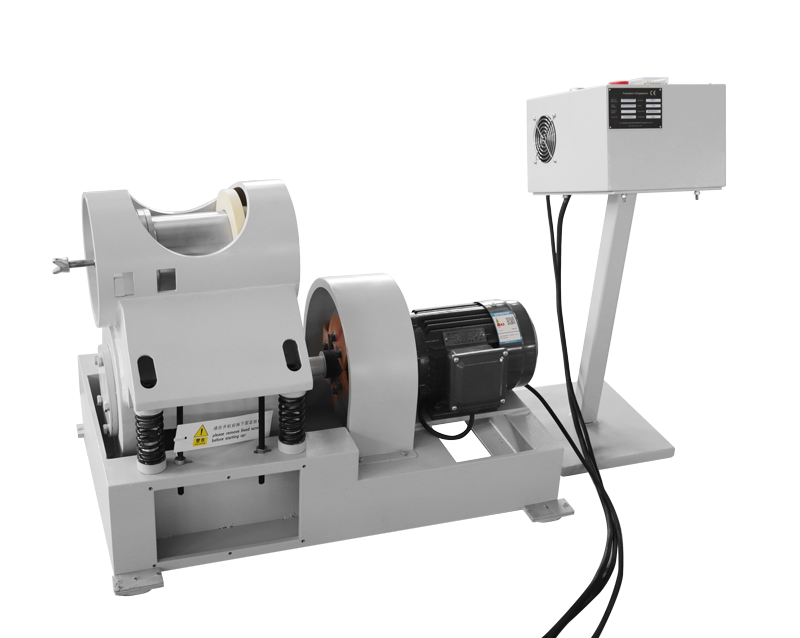
Dry and wet grinding, cooling and atmosphere
Dry grinding is convenient when it is not desirable to introduce liquid and when dry powder is needed after grinding. However, during a dry process, dusting, adhesion to walls and aggregation of small particles are possible. Wet grinding often produces a more homogeneous suspension and reduces dusting, but requires subsequent filtration or drying. The liquid can chemically interact with the sample or beaker material, so its choice is part of the technique, and not an arbitrary addition. For some applications, wet grinding provides better particle dispersion and reduced re-aggregation, but does not guarantee a finer result for any material.
Cooling needs to be considered separately. Air cooling removes some of the heat from the work area, but does not make the process cryogenic. Cryogenic grinding with liquid nitrogen is a different approach: it requires a special design of the mill, safe operation and consideration of the fragility of the material at low temperatures. If a cryogenic option is not stated on the product data sheet, a conventional vibration mill should not be called cryogenic. The temperature of the working space, the temperature of the beaker wall and the temperature of the sample itself can vary markedly, especially under short-term but intense conditions.
The atmosphere in the glass also affects the result. For materials sensitive to oxygen or moisture, sealed cups and a glove box are sometimes used, but these are separate solutions. If the task requires an inert atmosphere, you need to check whether a particular model provides such a possibility and what seals are used for this.
Grinding bowls and grinding media: compatibility and impurities
The grinding bowl and grinding media are not a secondary part, but part of the working system. Their material determines what impurities can get into the sample, how quickly the equipment wears out, and whether the selected mode can be used. The glass must withstand impact loads, not collapse and maintain its geometry. The grinding media must be of suitable size, density and hardness. It is impossible to transfer the parameters of one equipment to another: a glass for a planetary mill, a drum for a roller mill and a vessel for a vibration machine are different products with different loading conditions.
Agate grinding balls as a grinding medium option
Agate grinding balls are one of the options for grinding media for laboratory mills. Agate is a natural silica-based mineral that is characterized by high hardness and relatively low metal content compared to steel balls. This makes it interesting for applications where contamination of the sample with iron or other metals is undesirable. At the same time, agate is not an absolutely inert and irreversibly wear-resistant material. When grinding hard abrasive materials for a long time, with increased load or an incorrect ratio of the mass of the balls and the sample, the surface of the balls may abrade and the equipment material may get into the sample. Therefore, the choice of agate balls should be based on the properties of the sample and purity requirements, and not just on the word “ceramics” or “agate”.
You can view the available positions and clarify the characteristics in the card agate grinding balls. Before use, it is important to ensure that the diameter and material of the balls are compatible with the specific beaker and vibration mill mode. Compatibility does not follow from the mere fact that both products are grinding equipment. It is necessary to take into account the internal volume of the glass, the permissible loading weight, the size of the balls, the vibration frequency and the processing time.
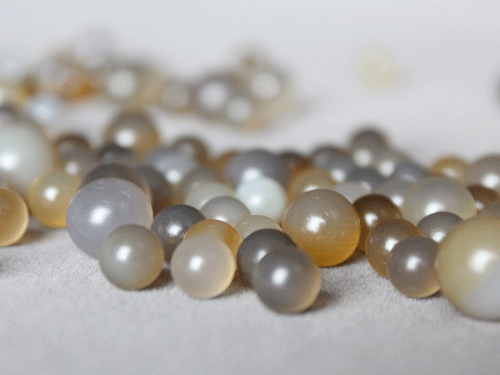
Wear, cleaning and cross contamination
Any grinding medium wears out over time. The degree of wear depends on the hardness of the sample, grinding time, speed of movement and the quality of the equipment itself. If, after grinding, the color of the powder changes, inclusions appear, or the ash content increases, this may indicate material carryover. It is wise to use separate beakers and balls for different sample types, or to thoroughly clean the equipment between runs. Cleaning must be appropriate to the material: agate cannot be arbitrarily treated with aggressive reagents unless permitted by the manufacturer, and steel parts must be protected from corrosion. Water, alcohol, ultrasonic bath or mild detergents are not suitable in all cases; It is better to follow the manual for your specific equipment.
What do the characteristics mean and how to read them
When choosing a vibration mill, it is easy to confuse different parameters. The volume of one glass is the capacity of a separate chamber, and the total volume is the total capacity of all glasses, if there are several of them. The working load is the mass or volume of material that can be processed, taking into account the grinding media and available space. Sample weight is not the same as production per hour. Productivity depends on cycle time, cooling requirements, loading and unloading, and material properties. Therefore, numbers from different cards cannot be mechanically compared if they refer to different conditions.
The frequency and amplitude of vibrations determine the intensity of mechanical action. Higher frequency does not always mean better results: excessive energy can lead to overheating, wear and contamination. The final fineness depends on the material, initial particle size, grinding type, medium, time and measurement method. The typical minimum shown in the catalog does not constitute a guarantee for any sample. If the description indicates the maximum temperature or maximum load, you need to understand under what conditions it is achievable and how long you can work in this mode.
For cooling, it is important to distinguish between air cooling and liquid nitrogen cooling. Air cooling helps remove heat, but does not make the process cryogenic. If the card only says “cooling,” you shouldn’t tell the manufacturer that it’s a cryogenic system. If the data contradicts each other or the units are unclear, it is better to clarify the parameter with the supplier than to guess the value.
Selection criteria and common mistakes
Selecting a laboratory vibrating ball mill starts with the application, not the model. First, it is determined what needs to be obtained: a fine powder, a homogeneous suspension, mechanically activated material, or a representative sample for analysis. Then the sample weight, initial size, required final size, acceptable contamination, sensitivity to heat and the ability to use wet grinding are assessed. After this, the type of mill, the material of the glass and grinding media, as well as the mode are selected. If cleanliness requirements are high, metal grinding media may not be suitable; if the material is very hard, the soft equipment will wear out quickly; If the sample tends to aggregate, wet grinding or another method may be required.
Common mistakes: expecting “zero contamination” from any ceramic material; transfer of parameters of one model to the entire range; confusion between glass volume and loading; use of a planetary bowl in a vibration mill without confirmation of compatibility; an attempt to grind a large piece in a vibration mill instead of pre-crushing; ignoring heat and wear. Also, you should not choose equipment just because it belongs to the same category of “grinding bodies”. Compatibility is confirmed by the design, dimensions, weight and manufacturer's recommendations.
Frequently asked questions
How does a vibration mill differ from a planetary mill?
In a planetary mill, the glasses rotate around their own axis and around a common axis, due to which a centrifugal field arises. In a vibrating mill, the glass vibrates at a high frequency, and the grinding bodies move under the influence of vibration. Both types can produce fine grinding, but the nature of the load, heat generation and selection of equipment differ. These mills cannot be considered interchangeable without checking operation and compatibility.
Can agate balls be used in a laboratory vibrating mill?
Only if the manufacturer confirms compatibility in size, weight and material for a specific model and glass. Agate balls are suitable for applications where it is important to reduce the introduction of metal impurities, but they do not completely eliminate wear and contamination. Before work, check the permissible load, the diameter of the balls and the mode.
What has the greatest influence on the final size?
A set of factors: material properties, initial coarseness, grinding type, material and size of grinding media, sample-to-ball ratio, time and intensity. There is no one setting that guarantees the same result for all powders. Size is confirmed by measurement, and not just by calculation.
Is cooling necessary for vibration grinding?
Depends on sample sensitivity and mode. Air cooling helps reduce heat in the work area, but does not replace a cryogenic system. If the material softens, oxidizes or decomposes when heated, the mode is adjusted or a suitable mill design is used, if provided.
How to avoid cross contamination?
Use separate equipment for different types of samples, properly clean beakers and balls, monitor wear, and do not use aggressive reagents without the manufacturer’s recommendations. If purity is critical, the tooling material is selected taking into account the possible transfer of impurities and control blank grinding is carried out.
Laboratory Vibrating Ball Mill TENCAN — It is a tool for applications that require fine grinding and reproducible preparation of small samples. It does not replace the crusher, planetary mill or mixer in all cases, but takes its place in the material processing chain. The correct choice of glass, grinding media and mode is more important than the maximum declared speed. Before purchasing, you should check the task with the current product card, clarify the parameters and make sure that the selected equipment is compatible with the mill.