
Laboratory agitated ball mill is equipment for fine grinding, mixing and deagglomeration of small batches of powders, suspensions and pastes. Unlike a drum mill, where the drum itself rotates, here the grinding chamber remains stationary, and the grinding bodies are driven by the stirrer. In the technological chain, such a machine is usually located between preliminary sample preparation - crushing, drying, sifting - and analytical or technological operations: measuring the particle size distribution, preparing a charge, obtaining a suspension, preparing the material for sintering or further research.
On website TENCAN presented in the crushing equipment section laboratory ball mill with stirring. Specific parameters - chamber volume, drive type, available lining materials, control range and equipment - should be checked in the current product card and not transferred from another model.
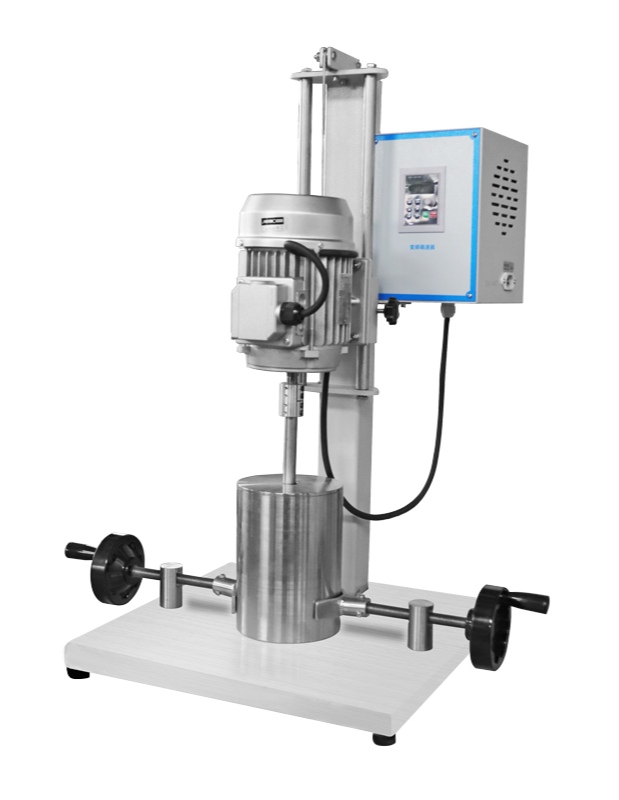
What kind of equipment is this and how does it differ from other mills?
The design is based on a grinding chamber, inside of which there is a mixer with a shaft and working elements. The chamber is filled with grinding media, usually balls; The specific type, size and material are determined by the design of the model and the grinding task. When the mixer rotates, the balls are drawn into motion, collide with each other, rub against the walls and process the material. This method refers to grinding with stirring: energy is transferred not to the body, but to the environment through a moving working element.
For the laboratory, not only achievable fineness is important, but also reproducibility. What matters here are drive stability, the ability to set time and mode, ease of cleaning, temperature control and loading repeatability. A laboratory mill does not replace an industrial installation, but it allows you to test the mode on a small amount of material, compare preparation options and evaluate the behavior of the sample before scaling.
Stir grinding should not be mixed with other grinding principles. In a planetary mill, the grinding bowls rotate around a common axis and around their own axis; in a drum mill the drum rotates; The roll crusher crushes the material by compression between the rolls. A stirred ball mill works differently: a fixed chamber and a moving stirrer create intense movement of the grinding media. Therefore, “mills” with the same name may require different modes, equipment and selection criteria.
Terminologically, bead mills are close, but they are not automatically the same equipment. Such machines may differ in the type of grinding media, method of product output, chamber design and purpose. When choosing, it is important to look not only at the name of the series, but also at the specific product card, type of medium and task: dry grinding of powder, preparation of a suspension, disagglomeration or mixing of components.
Design and working principle of grinding with stirring
A typical laboratory setup includes several interconnected units. Their execution determines not only productivity, but also ease of working with the sample.
- Grinding chamber. It contains the material and grinding media. The material of the chamber, the quality of the seals, ease of loading and cleaning, as well as the ability to control the tightness are important.
- Mixer. The shaft and working elements transmit movement to the grinding media. The geometry of the stirrer affects the nature of circulation, the intensity of collisions and abrasion.
- Drive and control. The electric motor, transmission and control system set the mode. For reproducibility, smooth starting, stable speed and clear indication of parameters are important.
- Cooling or temperature control system. May be provided for by the design of a specific model. The presence of such a system and its type must be clarified from the documentation, and not assumed based on appearance.
- Grinding bodies. Usually these are balls, but the material, diameter and density are selected separately. They must be compatible with the chamber, sample and grinding task.
During operation, the stirrer engages the balls in a complex movement. Part of the energy is spent on collisions and abrasion of the material, and part on heating, wear and movement of the medium. Therefore, the result does not depend on one parameter, but on a combination of load volume, diameter and density of the balls, rotation speed, processing time and sample properties. Increasing the speed does not always improve grinding: overheating, increased wear, agglomeration and undesirable changes in the material are possible.
Dry and wet grinding
Dry grinding is convenient when you need to obtain powder without subsequent drying. However, small particles are prone to agglomeration, sticking to walls and dust formation. Wet grinding with liquid can improve dispersion and reduce dust, but adds the steps of liquid separation, drying, and monitoring its effect on the sample. The liquid is not a universal additive: its chemical compatibility with the material, grinding media and chamber must be confirmed.
Heat, cooling and atmosphere
Stir grinding generates heat. In the descriptions there are different solutions: natural or air cooling, jacket, refrigerant circulation. Air cooling does not make the process cryogenic, and the mention of liquid nitrogen requires separate confirmation for the specific model. The temperature of the wall or working space is not equal to the temperature of the sample: heating of the material depends on the grinding energy, heat removal, load mass and powder properties. If the material is sensitive to heat, this must be checked experimentally and the permissible conditions must be clarified with the manufacturer.
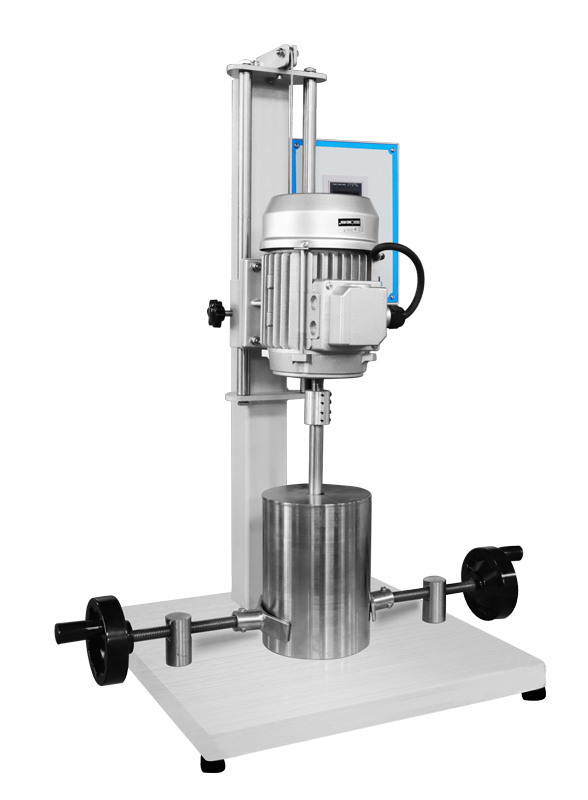
How to Read Laboratory Mill Specifications
In the equipment card it is useful to separate parameters that relate to the installation as a whole, to the grinding chamber and to the grinding media. Below are the main points that require deciphering before purchasing or launching.
- Chamber volume and workload. The total volume of the chamber is not equal to the mass of the sample that can be loaded. It is necessary to distinguish between geometric volume, useful workload, mass of material and mass of grinding media.
- Grinding bodies. The diameter, density and material of the balls affect impact energy and contamination. Large, dense balls provide greater impact but may increase wear; fine balls help abrasion but require checking for separation from the product.
- Rotation speed. The stirrer speed alone does not describe the impact on the material. The peripheral speed is important, depending on the diameter of the working elements, as well as the chamber geometry and filling.
- Grinding time and specific energy. Processing time is a convenient, but not the only indicator. To compare modes, it is sometimes useful to estimate the supplied energy, but the drive power does not equal the useful energy transferred to the sample.
- Chamber and lining material. Stainless steel, ceramics, zirconia, tungsten carbide and other materials have different applications. The choice affects wear, cleaning and possible transfer of impurities.
- Cooling and temperature control. It is necessary to clarify what exactly is being cooled, whether there is a temperature sensor, and how the heating of the sample is controlled. This data cannot be replaced by the general word “cooling”.
- Control and reproducibility. For the laboratory, repeatability of the mode setting, overload protection, and ease of recording parameters and maintenance are important.
The final fineness specified in the catalog usually refers to specific conditions and typical material. It does not guarantee the same result for any sample. The particle size distribution is influenced by the initial size, hardness, fragility, tendency to agglomerate, medium, grinding media, mode and method of measurement. If a minimum size is given in the description, it should be taken as a guideline that requires verification on a specific sample.
Productivity also cannot be read as a constant. It depends on the permissible load, the required fineness, the number of stages, grinding time and cleaning operations. For one task, the batch per cycle is important, for another - the number of cycles per day and the reproducibility between them.
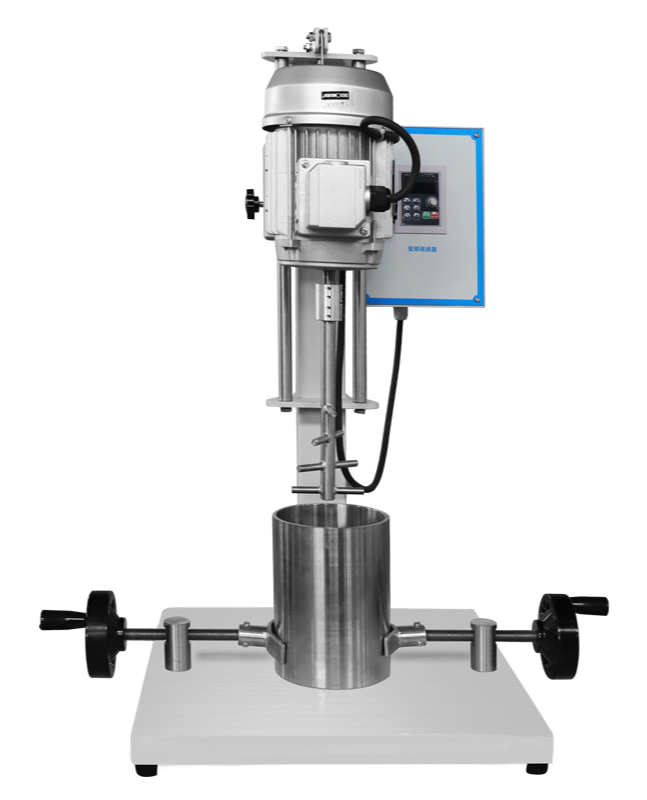
Materials, wear and method limitations
Stir grinding works well for many brittle and relatively hard materials, but is not a universal solution. Plastic, elastic, fibrous and highly adhesive materials may not be crushed effectively and may become deformed, clog the chamber or form aggregates. Large pieces usually require pre-crushing, while wet and pasty materials require separate loading assessment and cleaning.
Wear is inevitable under any abrasive influence. The material of the chamber, lining and grinding media can enter the sample in the form of impurities. Tungsten carbide, ceramic or zirconia do not mean “zero contamination”: they only change the composition of possible impurities and the wear rate. For trace analysis, preparation of spectral samples or purity studies, this issue must be considered separately, taking into account the acceptable level of impurities and subsequent purification.
Cleaning is part of the technique, not a secondary operation. Residues from the previous sample in the seals, chamber corners, and around the stirrer may interfere with the results. You need to clarify which materials can be disassembled, washed and dried, which cleaning products are compatible with seals, and how to check for transfer. For hazardous substances, general recommendations do not replace operating instructions and local safety procedures.
Equipment requires special attention. The vacuum grinding bowl for the planetary mill belongs to another group of equipment; its name alone does not indicate compatibility with the stirred ball mill. If a non-standard chamber, lining or grinding media is expected, it is necessary to check the mounting dimensions, seals, material and permissible loads with the manufacturer.
How to choose a mill and check compatibility
It is better to start the selection not with a model, but with a description of the problem. It is useful to record what exactly you want to get and what restrictions cannot be violated.
- Problem and sample. Specify the material, initial size, required result, acceptable contamination and method of size control.
- Quantity of material. Separate the total sample mass, the mass of one load and the number of replicates. Check that the workload matches the chamber, and not just its full volume.
- Dry or wet process. Assess the need for liquid, subsequent drying, the influence of the environment and the admissibility of heating. For sensitive materials, specify cooling separately.
- Materials of the chamber and grinding media. Compare the hardness, abrasiveness and chemical compatibility of the sample with the equipment. Take wear and cleaning into account.
- Mode and control. Check the available control range, job repeatability, drive protection and the ability to record cycle parameters.
- Testing on a real sample. Compare several modes for size, uniformity, temperature, losses and contamination. Only after this choose a working option.
When choosing equipment TENCAN It is useful to rely on the current product card and check with the supplier exactly those parameters that are critical for the task: workload volume, chamber material, type of grinding media, cooling, control and cleaning procedure. You should not transfer the characteristics of one model to the entire range or consider an option as standard equipment without confirmation.
If the grinding result is inconsistent, the cause may not be the mill, but the loading, ball wear, sample moisture, agglomeration, or sampling method. Therefore, the preparation and measurement technique must be consistent with the grinding mode.
Questions and answers
How does a stirred ball mill differ from a planetary mill?
In a planetary mill, the grinding bowls move, but in a stirring mill, the chamber is stationary and the movement is created by the stirrer. Because of this, the nature of the impact on the material, equipment and approach to selecting the mode differ.
Can this mill be used for dry grinding?
Yes, dry grinding is possible if it is provided for by the task and design. Dust formation, sticking, agglomeration and heating must be taken into account. For a specific powder, the regime is checked experimentally.
Is the grinding bowl from a planetary mill suitable?
Not automatically. Even accessories similar in name may have different mounting dimensions, seals and permissible loads. Compatibility is confirmed by documentation or manufacturer, not by external similarity.
How do you know that the grinding mode is selected correctly?
They focus on reproducible particle size distribution, absence of unwanted agglomeration, acceptable heating, acceptable wear and absence of excess contamination. One successful cycle does not yet prove the stability of the technique.