
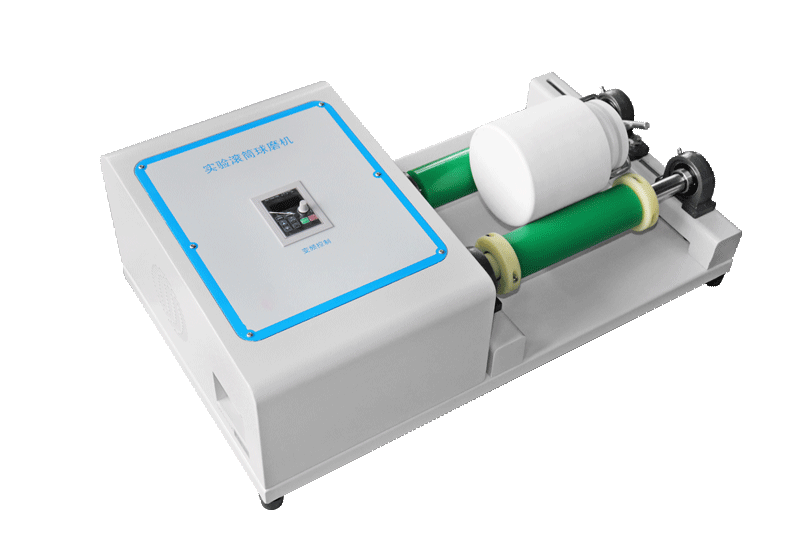
A laboratory roller ball mill is an equipment for grinding, mixing and homogenizing small portions of powder materials, in which a grinding drum with grinding media rotates on driven rollers. In sample preparation, such a machine is usually located after preliminary crushing, dividing or sieving the sample and before analysis, pressing, sintering or further mixing. Its value is not in the universal “grinding fineness”, but in the reproducible cycle, convenient drum change and the ability to work with different materials in the laboratory. In the catalog TENCAN laboratory roller ball mill presented on a separate page; The parameters given there refer to a specific design, and not to the entire class of equipment.
Place in sample preparation and typical tasks
A roller ball mill does not replace a crusher and does not do the same job as a planetary mill. A crusher reduces pieces to a smaller granular fraction, a planetary mill creates a complex movement of drums and high energy intensity, and a roller mill uses a relatively simple principle: the drum rotates around its axis, the grinding bodies roll and abrade the material. Therefore, when choosing, it is important to compare not only the name of the mill type, but also the nature of the effect on the sample.
In laboratory practice, such equipment is used for the preparation of mineralogical samples, ceramic and glass powders, slags, pigments, soils and chemical materials. The suitability of a particular substance is determined by its hardness, brittleness, tendency to stick, and cleanliness requirements. For coarse crushing or obtaining pieces, crushing equipment is first used; The roller mill operates with a pre-prepared charge, the size of which must correspond to the selected drum and grinding media.
The laboratory format does not mean that the machine is suitable for any sample quantity. In the product card, you need to separate the drum volume, payload and sample weight. In addition, the roller mill can be used not only for particle size reduction, but also for mixing and deagglomeration, if appropriate for the application. Brand TENCAN refers to Changsha Tianchuang Powder Technology Co., Ltd.; The specific configuration is determined by the product card and the conditions of use.
Design and working principle
A typical laboratory roller mill includes a frame, drive rollers, supports, an electric motor, a control system, and a protective housing. The replaceable grinding drum is mounted on rollers and rotates due to friction. Inside the drum there are grinding media and material; as they rotate, they rise, roll, and interact with the sample. In a particular model, the layout, number of seats and set of adjustments may differ, so based on its appearance, you cannot attribute to the machine functions that are not in the description.
Grinding in such a mill involves two main mechanisms: impact and abrasion. At low rotation speeds, the grinding media predominantly slide and roll, so the role of abrasion increases. If the frequency is too high, they can be pressed against the wall and centrifuged, and the useful grinding work is reduced. The optimal mode depends on the diameter of the drum, the load, the size and density of the grinding media, as well as the properties of the sample. Therefore, the same speed cannot be considered equally suitable for all materials.
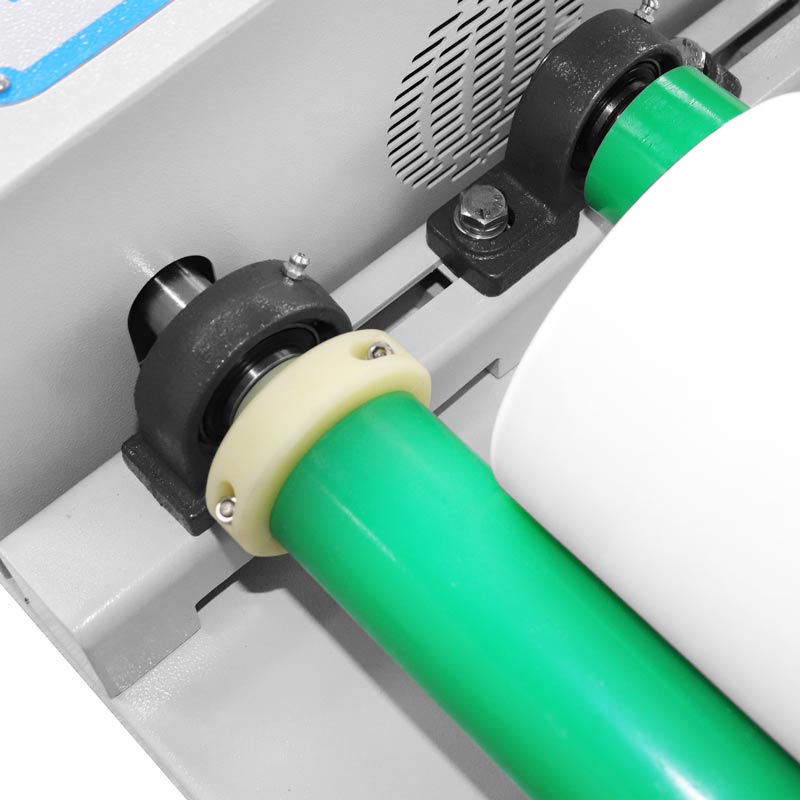
Unlike a planetary mill, where the drums perform a complex movement, in a roller mill the main movement is the rotation of the drum around its own axis. This makes the design clearer for the operator, but does not eliminate the requirements for balancing, lid fastening and loading uniformity. If the drum is installed misaligned, the cover is not sealed or the grinding media are unevenly distributed, vibration, noise and wear increase. Before starting, check the fit of the drum on the rollers, fixation and the absence of foreign objects in the working area.
A roller mill can be convenient for applications that require a repeatable cycle and easy changing of the grinding chamber. However, it should not be expected that it will automatically replace the planetary mill in applications requiring very high energy or special motion of the grinding media. The choice between types of equipment is made according to the task, and not according to the “easier - more difficult” hierarchy.
Grinding drum and grinding media: compatibility is more important than the material name
The grinding drum is not just a container, but a working chamber on which material loss, wear, cleaning and acceptable grinding conditions depend. The drum material must be compatible with the sample and the environment: it must not be destroyed by contact with liquid, must not introduce unacceptable impurities, and must withstand the selected mode. Even hard material wears out, so the expression “contamination-free” is only applicable as an advertising simplification and not as a technical guarantee.
Nylon grinding drum
In the catalog TENCAN given nylon grinding drum for roller mills. Nylon is a polymer, so it is considered primarily where a metal working chamber is undesirable or where a softer environment with respect to the sample is needed. However, nylon is not a universal material: it can wear out, hold contaminants on the surface, is limited in temperature and is not suitable for some solvents. Before use, you need to check the chemical compatibility with the liquid if wet grinding is planned, as well as the permissible load and cleaning method.
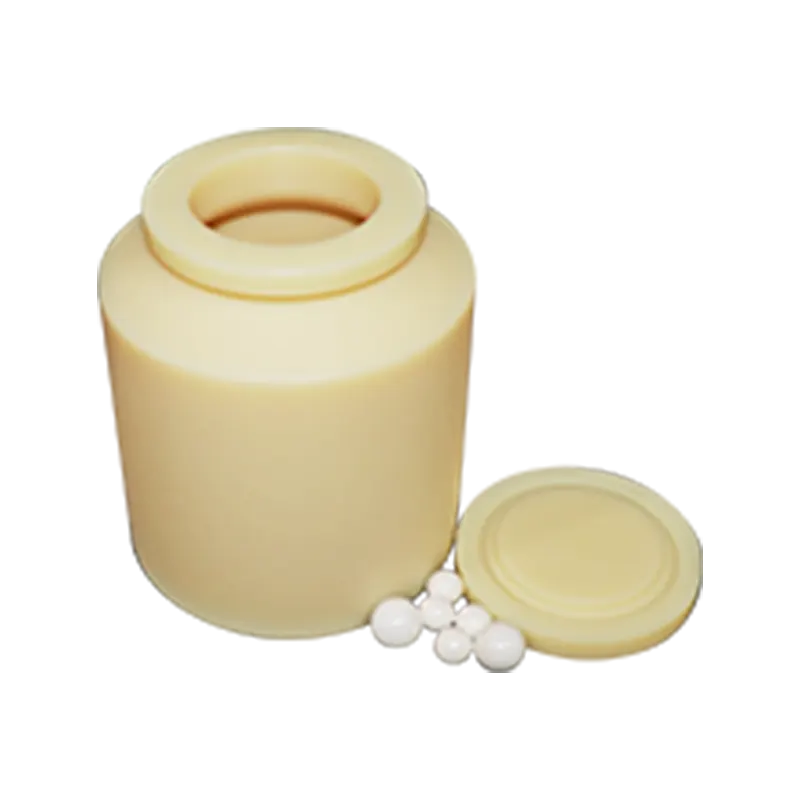
The compatibility of a drum with a mill is determined not by the name of the material, but by geometry and operating conditions. It is necessary to check the outer diameter and length of the drum, fit on the rollers, position of the lid, seal and permissible load weight. A drum that is too heavy or incorrectly installed can overload the drive; too easy - behave unstable. If the card does not contain the required size or there are conflicting data, it is better to clarify the parameter rather than select it “by eye”.
Grinding media and loading
Grinding media are the second element that determines the result. For a laboratory mill, the material, density, size, shape and number of balls are important. Large and dense bodies give a stronger impact, but can wear out the drum faster and contaminate the sample more. Small bodies increase the role of abrasion and work better with fine powders, but are more difficult to separate and clean. The number of grinding media should not be arbitrary: when overloaded, the free volume decreases, the movement of the load worsens and the load on the drive increases.
The material of the grinding media is selected taking into account the hardness of the sample and acceptable contamination. It cannot be assumed that ceramics, zirconia or tungsten carbide do not introduce impurities at all. Any material wears out, and wear products end up in the sample. For trace analysis, it is especially important to assess in advance which elements are unacceptable and to provide for cleaning or a separate working chamber. The grinding media and the drum are different elements and cannot be judged by just one general description.
How to Read the Specifications of a Laboratory Roller Mill
When reading characteristics, it is useful to immediately separate several quantities that are often confused in everyday speech.
- Drum volume — geometric capacity of one working chamber. It is not equal to the mass of the sample and does not mean that the drum can be filled entirely.
- Workload — the amount of material and grinding media allowed for a specific mode. It is less than the total volume, since part of the space is needed for loading movement.
- Sample weight — characteristics of a specific experiment. It depends on the bulk density, size and the chosen technique.
- Performance — result in a certain time, which depends on the material, cycle time and permissible size. This is not a constant value of the machine.
- Number of seats — the number of drums that are simultaneously installed in the mill. It does not indicate the total load weight without data for each drum.
The size of the finished powder also cannot be promised based on one catalog number. The final particle size depends on the initial particle size, hardness of the material, grinding media, time, dry or wet mode and measurement method. Results from sieve analysis, laser diffraction and microscopy may vary. The standard minimum, if stated, applies to specific conditions and is not guaranteed for any sample.
Separately, they check the power supply, dimensions, weight of the installation, noise level and room requirements. These parameters do not make grinding better, but they do affect safety and ease of use. If the value on the card looks contradictory or the units are unclear, it is wiser to clarify the measurement condition than to recalculate the characteristic yourself.
Dry and wet grinding: what changes
Dry grinding is simpler in organization: after the cycle there is no need to separate the liquid and dry the material. However, dry powders are prone to dusting, sticking and aggregation, and some materials accumulate static charges. The tightness of the drum and careful unloading are no less important than the rotation mode. If the powder clumps, this does not always mean that the grinding is not working: it may be the agglomerate that is being measured, rather than the primary particles.
Wet grinding introduces a liquid medium that can improve particle distribution and reduce dusting, but adds its own limitations. It is necessary to check the compatibility of the liquid with the material of the drum and seal, eliminate undesirable reactions and provide for cleaning. After wet grinding, drying is often required, which can lead to re-aggregation. Therefore, wet mode is not automatically “thinner”; it is suitable only when the entire chain of procedures is agreed upon.
Grinding and disagglomeration are not the same thing. If the task is to destroy loose aggregates, a soft mode may be sufficient. If primary particles need to be reduced, longer exposure times and proper selection of grinding media will be required. Mixing is also not the same as grinding: a drum mill can mix powders, but the uniformity of the mixture must be checked separately.
For heat-sensitive materials, heating in the grinding zone is important. Conventional air cooling, pauses or room cooling are not cryogenic grinding. If the installation description does not state operation with liquid nitrogen or a special cooling system, the process should not be called cryogenic. Also, do not assume that a standard drum is gas-tight: working with air-sensitive media requires separate confirmation.
Selection criteria and compatibility check
Choosing a laboratory roller ball mill starts with the application, not with a list of accessories. It is useful to determine in advance:
- what material and what initial size will be loaded;
- what sample mass is needed in one cycle and how many cycles are expected;
- what outcome is considered acceptable and how it will be measured;
- whether dry or wet grinding is needed, are there any restrictions on temperature and atmosphere;
- what impurities are unacceptable and how the cleaning will be organized;
- what drums and grinding media are available for a particular model.
After this, compatibility is checked: drum fit, permissible load, seal material and the possibility of replacing the working chamber. You cannot select a drum only by material or outer diameter. If you intend to work with an aggressive liquid, abrasive powder or trace analysis, restrictions are discussed before purchase, and not after the first cycle. In the card laboratory roller ball mill TENCAN information about a specific product is indicated; it should be matched to the drum card and not to general equipment class descriptions.
For repeatability, not only the technical characteristics are important, but also the procedure: the same loading weight, the same time, the same initial size and the same unloading method. If the technique has not yet been developed, it is useful to start with small batches and record observations. You should not transfer the parameters of one material to another just because both look similar. Documentation and maintenance of the specific installation remains the basis for safe operation.
Brief answers to frequently asked questions
How is a roller mill different from a planetary mill?
The nature of the movement: in a roller drum it rotates around its own axis on drive rollers, while in a planetary drum the complex movement of the drums is used. This affects energy, heat generation and loading scale, so the type is chosen according to the task.
Can a nylon drum be used for wet grinding?
Sometimes yes, but only after checking the chemical compatibility of the liquid with nylon, the tightness of the lid and the permissible temperature. There is no universal answer for all solvents and modes.
Why can’t you judge the size by one number from the catalogue?
The final particle size depends on the material, initial particle size, grinding media, time and measurement method. The catalog value refers to specific conditions and does not replace testing on a specific sample.
Do I need to select grinding media separately?
Yes, material, size and number of grinding media affect efficiency and contamination. It is impossible to transfer the parameters of one set to another sample without taking into account hardness, abrasiveness and cleanliness requirements.