
A laboratory jaw crusher is a machine for the primary crushing of lump samples by compression between two working jaws. In sample preparation, it takes place after sampling and before fine grinding: it reduces the size of the material in order to obtain a representative sample for division, analysis or the next stage of grinding. Laboratory Jaw Crusher TENCAN designed specifically for such tasks; its card on the website helps you check the performance and parameters of a particular model.
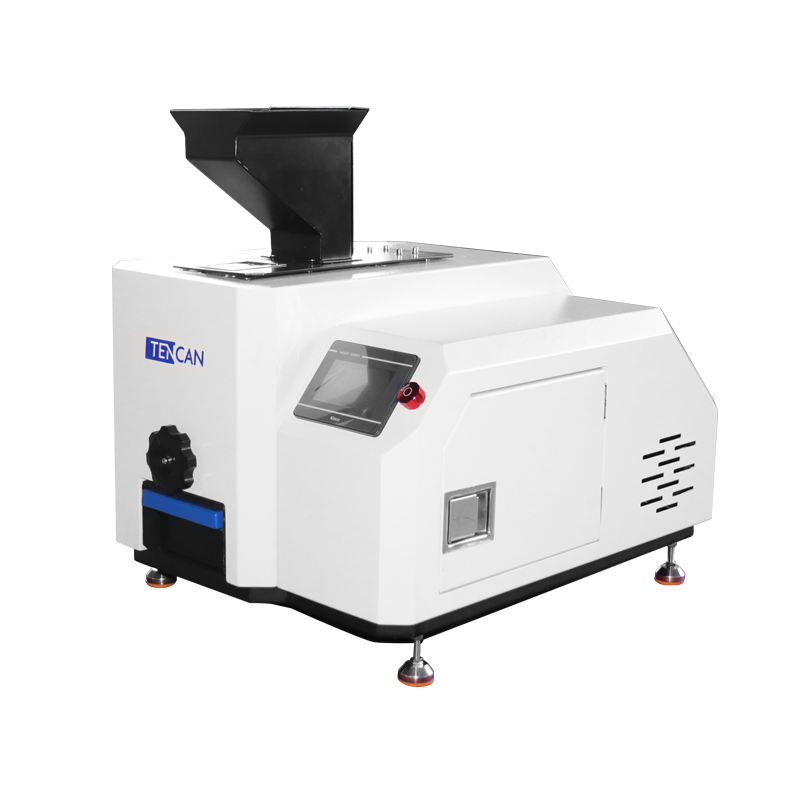
What is a laboratory jaw crusher and where is it located in the process
A jaw crusher does not replace a ball mill and does not perform fine grinding. Its task is to break down the pieces to a coarse size with which you can work further: reduce the sample, prepare the material for grinding, and obtain a homogeneous fraction for laboratory analysis. Unlike a ball mill, where the material is abraded by grinding media, compression acts predominantly here. Therefore, the jaw crusher is considered as a first stage equipment and not as a universal crusher.
What is important for a laboratory is not so much maximum productivity as reproducibility and controllability of the result. The operator needs to understand which piece is acceptable for loading, how the discharge slot is configured, how the material will be unloaded, and how to clean the work surfaces between samples. These questions are more important than advertising promises: even the right machine will not give the correct sample if the selection or reduction technique is violated.
The name “cheek” is associated with two working cheeks: one is usually stationary, the second makes a reciprocating movement. The material gets into the space between them and is destroyed when approaching. This principle is suitable for brittle and fairly hard materials, but has natural limitations in the shape of the piece, moisture content and final size.
Design and principle of operation
A typical laboratory crusher includes a feeding hopper, fixed and movable jaws, a drive with an eccentric shaft, spacer elements, a mechanism for adjusting the discharge gap and a receiving tray. For safety, casings and guards for moving parts are provided. In a particular model, the set of components, lining materials and adjustment method may differ, so technical details should be checked using the product card and manual.
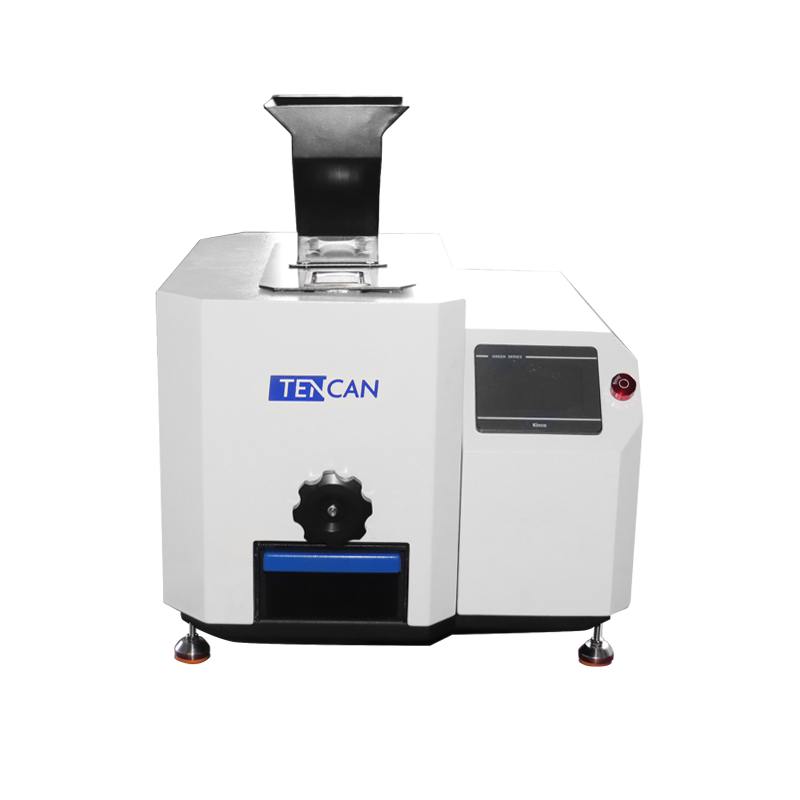
Basic elements
- The loading hole and hopper through which the sample is fed into the working chamber.
- A fixed jaw that absorbs force when the material is destroyed.
- A movable cheek connected to the drive and performing a working stroke.
- An eccentric shaft and transmission mechanism that determine the movement of the cheek.
- Spacer plates that transmit force and participate in overload protection.
- An adjustment unit that changes the width of the unloading slot.
- Receiving pallet or tray for unloaded material.
How does destruction occur?
The drive rotates the eccentric shaft, and the movable cheek periodically approaches the fixed one. At the moment of approach, the piece comes under pressure, cracks appear in it, and it collapses. Then the cheek moves away, the material falls lower and falls under the next working stroke. Unloading occurs through a slot at the bottom of the chamber. It is not impact grinding or ball attrition, so the particle shape and size distribution is different from ball mill products.
The width of the unloading gap is an important, but not the only factor. The actual size of the product depends on the source material, its cracking, the shape of the pieces, the feeding mode and the condition of the working surfaces. The slit setting provides a reference rather than guaranteeing a narrow particle distribution. To obtain a finer powder after crushing, a separate mill is usually required, and its type is selected for a specific task.
Parameters that are important to read on the card
When choosing a laboratory jaw crusher, it is not enough to compare only the name and appearance. Several interrelated parameters need to be checked, and each of them should be read in the context of the sample preparation technique. If the meaning in the description is unclear or the units are questionable, it is better to check with the supplier rather than making an assumption.
- Loading hole size. It determines what size pieces can be fed into the machine. The maximum permissible fineness is usually less than the geometric size of the hole, since the piece needs to freely enter the working area.
- Discharge gap range. Shows the limits within which the output coarseness can be adjusted. This is not a promise of the same particle size distribution for all materials.
- Performance. For a laboratory crusher, this is an approximate value, depending on the material, bulk density, load size, slot setting and feed organization. It cannot be transferred from one sample to another without verification.
- Material of working jaws and lining. It affects wear and possible transfer of impurities into the sample. There is no universal material that is suitable for all samples and does not introduce contamination.
- Drive and power supply. The laboratory needs to check in advance the compatibility with the available network, as well as the possibility of connecting dust extraction and grounding.
- Dimensions, weight and noise level. These options are important for placement on an existing bench, in a fume hood, or in a separate sample preparation room.
- Cleaning method. Access to the chamber and removable parts affects processing speed and the risk of cross-contamination between samples.
Separately, a distinction is made between the passport characteristics and the actual result on a specific sample. For example, the stated gap range describes mechanical adjustment, but does not guarantee that soft material will not be over-grinded, and layered material will not produce lamellar particles. For critical analyses, it is useful to carry out test crushing and evaluate the particle size distribution.
Suitable materials and restrictions
Laboratory jaw crusher is usually used for brittle materials: ores, minerals, slags, ceramics, glass, clinker, some soils and soils. It is convenient when you need to quickly reduce the size of a small batch and maintain the possibility of further sample reduction. But the suitability of a particular sample is determined not only by the name of the material, but by its hardness, viscosity, humidity and permissible level of contamination.
Ductile metals and soft polymers may not break, but become deformed and clog the chamber. Fibrous, sticky and highly moist materials are prone to sticking and uneven feeding. They sometimes require pre-drying or a different grinding principle. Temperature-sensitive samples must be assessed separately: the work area may become heated and this will affect the properties of the sample. Very hard material increases the load on the cheeks and accelerates wear.
The introduction of impurities is another limitation that cannot be ignored. Upon contact with work surfaces, some of the material may pass into the sample. The softer the sample and the harder the working jaws, the more noticeable the contribution of wear may be. There is no such thing as “zero pollution” for mechanical crushing. If the analysis is sensitive to iron, tungsten or other elements, lining material and blank runs must be discussed separately.
Before work, it is important to consider cleaning: removing residues with a brush or compressed air where permissible, disassembling accessible components, washing and drying in accordance with the instructions. For hazardous or dusty substances, local exhaust, personal protective equipment and risk assessment are required; The article on choosing equipment does not replace instructions for safe operation.
How to choose a laboratory jaw crusher TENCAN
The choice begins not with the model, but with the test and methodology. First, they formulate what initial size needs to be accepted, what product is required at the output and what will happen next - reduction, abrasion, chemical analysis or other processing. It is then checked that a typical piece will fit into the feed opening and that the slot adjustment will achieve the desired stage. Work surface materials, laboratory performance and ease of cleaning are then assessed.
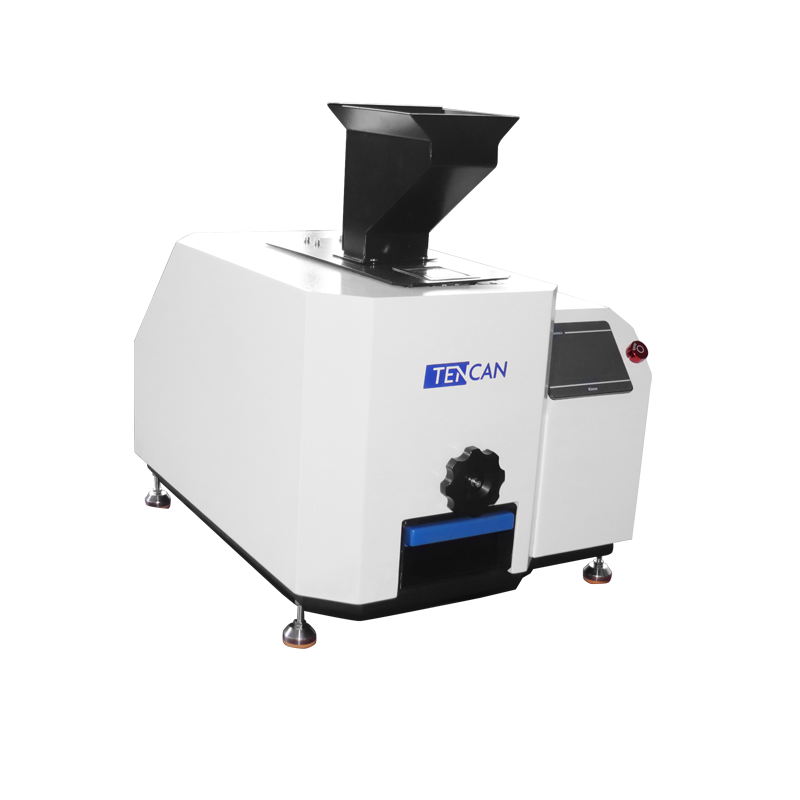
- Determine the maximum size of the initial pieces and the required size after crushing.
- Evaluate a single sample and the required number of repetitions to understand the actual working volume.
- Check the compatibility of the sample material with the working cheeks and the permissible level of impurities.
- Check the power supply, dimensions, weight and the possibility of placement taking into account dust removal.
- Consider cleaning between samples and procedures to control for cross-contamination.
- Specify the adjustment range, performance and equipment in the card of a specific model, without transferring the parameters of one machine to the entire range.
In the card laboratory jaw crusher TENCAN you should look exactly at the execution of the chosen option. If ball grinding is planned after crushing, the mill, grinding bowls and grinding media are selected separately for the final task. Mill accessories do not become part of the crusher and are not intended to be compatible with the crusher. A general overview of equipment areas is available at website TENCAN.
Frequently asked questions
How is a jaw crusher different from a ball mill?
The crusher crushes the pieces by compression between the jaws and prepares the material for the next stage. A ball mill grinds the material with grinding media and usually produces a finer product. These are different operations, and it is impossible to replace one with the other without checking the methodology.
Is it possible to immediately obtain a fine powder?
As a rule, no. The jaw crusher is designed for primary particle size reduction. The final fineness depends on the material and setting, but micron powder usually requires a separate mill. You should not expect from one machine the result of the entire technological chain.
How to choose the width of the unloading slot?
It is selected according to the required size of the next stage and the behavior of the specific material. A gap that is too narrow reduces productivity and increases the load; a gap that is too wide produces a larger product. After setting, you need to control the actual distribution of particles.
Is the crusher suitable for wet and sticky samples?
Such materials often stick to the cheeks and make unloading difficult. Sometimes pre-drying helps, but the decision depends on the technique and properties of the sample. For very wet or plastic materials, a different grinding method may be required.
How to reduce cross contamination?
Requires cleaning of accessible surfaces, working according to instructions and, if necessary, a dry run or a representative check. Wear cannot be completely eliminated, so for sensitive analyzes the contribution of the material of the working jaws is assessed in advance and a suitable design is selected.