
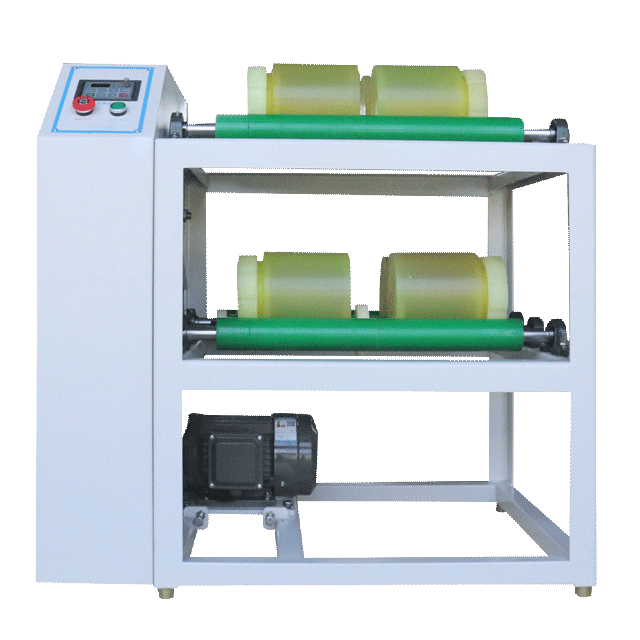
Eight Position Roller Mill TENCAN — This is laboratory equipment for grinding and sample preparation, in which the grinding drums rotate on driven rollers. Eight working positions allow you to place several drums in one installation and carry out parallel grinding without mixing samples. According to the principle of operation, this is a roller, or drum, mill, and not a planetary, vibration or bead mill: the rotation of the drum is created by contact with the rollers, and grinding is provided by grinding bodies inside the drum. The equipment is presented under the brand TENCAN; The full name of the company is Changsha Tianchuang Powder Technology Co., Ltd. Information about specific configurations, acceptable reels and modes is provided in eight position roller mill card TENCAN.
Operating principle and place in the sample preparation process
In a roller mill, the drum is mounted on rotating rollers. The friction force causes the drum to rotate around its axis. Inside the drum, the grinding bodies rise along with the wall, and then roll and fall, creating impact and abrasive effects on the material. This mechanism differs from a planetary mill, where the drum makes a complex movement relative to a common axis and its own axis, and from a bead mill, where grinding occurs in a liquid medium using a mixing rotor and small grinding media.
The roller mill performs grinding and homogenization of the powder, but is not a classifier. It does not guarantee a given upper particle size: the result depends on the initial particle size, hardness, brittleness, humidity, material of the drum and grinding media, their size, degree of filling, time and rotation speed. In the process chain, such a setup is usually located between preliminary crushing or sample division and analytical measurements. If the pieces are too large for the drum, they are first crushed in a crusher; if a suspension is needed, use wet grinding in a sealed drum.
Eight working positions make the installation convenient for serial laboratory work: you can prepare replicates, blank samples, samples with different grinding times or different materials. However, parallelism does not replace the individual testing of each sample. Mixing materials in one drum is unacceptable if separate analysis is required; cross-contamination and residuals from a previous sample must be taken into account during planning.
Device and main elements
The eight-position layout belongs to the laboratory class of equipment. This installation takes up a certain amount of space on a table or foundation and requires access to working positions and maintenance of moving parts. Specific dimensions, weight and placement requirements are checked according to the documentation, since the convenience of daily work depends on them.
Working positions and drive
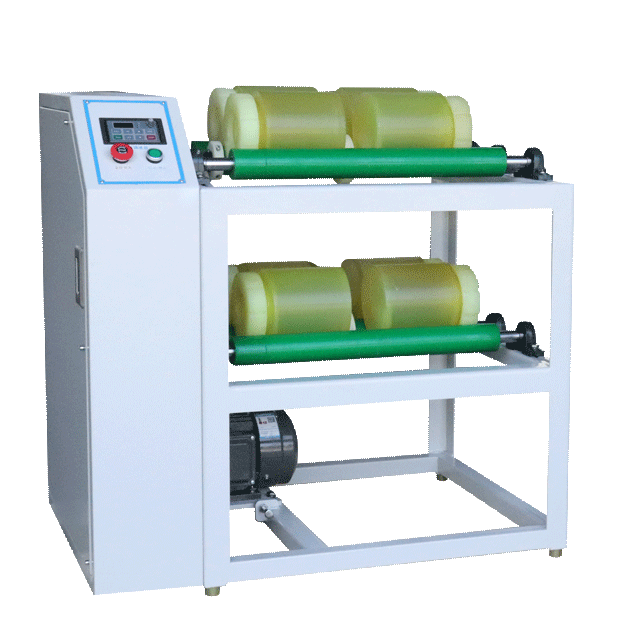
Eight working positions are seats for grinding drums. In a typical roller mill, each position includes rollers, supports, and elements that keep the drum from moving. The drive rotates the rollers; Due to friction, the drum also rotates. The design can be made in a common building, which saves space in the laboratory, but requires convenient access to positions. The synchronization of rotation and the possibility of independent adjustment by position are determined by the specific model; This does not follow from the name alone. Therefore, before purchasing, they clarify whether it is possible to set different modes for different positions or whether all reels operate in the same mode.
Grinding drums and grinding media
The drum is a replaceable working element that is in contact with the sample. Roller mills use cylindrical drums of different volumes and made of different materials; The specific list for a given installation must be checked from the card and manual. The internal diameter and length, wall thickness, tightness, closure method, compatibility with rollers and permissible weight are important. You cannot select a drum based only on the outer diameter: for rotation on rollers, the seating dimensions, balancing and permissible load are important.
The grinding media are loaded inside the drum along with the material. Their material must be compatible with the sample and not introduce unacceptable impurities. Denser bodies provide more impact energy for the same size, but increase drive load and wear. Large balls work better for pre-grinding, small balls for fine grinding and disagglomeration, but this is a general rule and not a guarantee for any material. The number of grinding media and sample is selected so that there is free volume for movement; The exact ratios are indicated in the manual for a specific installation.
Management, fencing and maintenance
A laboratory roller mill must have clear controls, an emergency stop, and protective guards for the rotating rollers and drums. The specific set of functions - timer, frequency adjustment, overload protection, sound or light indication - depends on the design. The product card checks not only the presence of a function, but also its range. After work, remove powder residues, inspect rollers, fasteners and drums, check wear and tightness. It is convenient to keep separate records of drums and grinding media for different materials to reduce the risk of cross-contamination.
Eight working positions: practical meaning
Eight positions are primarily an organization of parallel work, and not an automatic eightfold increase in productivity. Productivity depends on the volume of each drum, load weight, cycle time and the permissible number of samples processed simultaneously. If one drum holds a small volume, eight positions provide an advantage in the number of parallel samples, but do not replace the production mill. For the laboratory, the most important thing is not maximum speed, but reproducibility: the same drums, the same load and the same mode allow you to compare results.
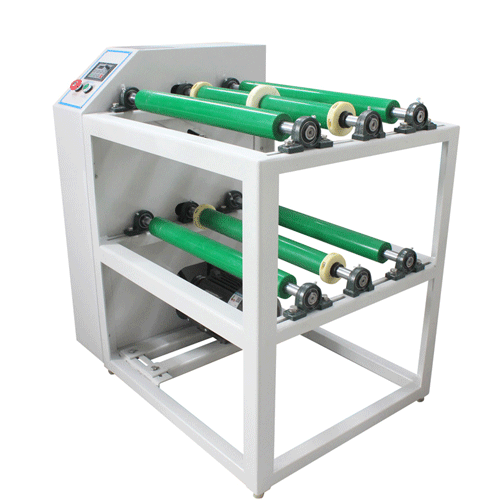
Eight positions are useful for experimental designs that have replicates and controls. You can install several drums with the same material and different grinding times, check the effect of the size of the grinding media, or compare batches of raw materials. But if the positions have a common drive, all the reels will rotate at the same frequency; The possibility of independent configuration must be checked separately. Also, do not assume that eight drums can be loaded without taking into account the total weight: the drive, frame and fastenings are designed to carry a certain load.
When working with multiple samples, labeling helps. The position number, drum number, sample weight, grinding media material and grinding time are recorded in the log. This is especially important when the installation is used by different employees. Parallel grinding should not result in mixing of samples during loading, unloading or cleaning; Each material requires its own procedure.
Characteristics and their correct reading
When choosing an eight station roller mill, it is not enough to look at the number of stations. It is necessary to compare several groups of parameters, each of which is responsible for its part of the work.
- Number of working positions. There are eight positions listed for this model. This characterizes the capacity of the installation by the number of drums, but does not indicate the permissible volume of each drum, much less the total productivity in kilograms per hour.
- Permissible drum size and weight. The diameter, length, mounting dimensions and weight of the drum must correspond to the rollers and fasteners. A larger drum may not fit on the supports or create an unacceptable load.
- Volume of one drum and working load. These are different quantities. The internal volume is not equal to the mass of the sample: part of the space is occupied by grinding bodies, part must remain free for movement. The total volume of eight drums is also not equal to the payload.
- Rotation speed. For a roller mill, it is important to distinguish between the rotation speed of the rollers and the rotation speed of the drum. They are connected through diameters and may not coincide. In addition, there is a mode in which the grinding bodies stop falling and begin to rotate along with the wall; the operating range must be confirmed for the specific installation.
- Grinding time. This is a technological parameter and not a permanent characteristic. It depends on the required size and properties of the material. Increasing the time does not always improve the result: overgrinding, heating, aggregation and contamination are possible.
- Power and energy. The drive power is not equal to the energy transferred to the sample. Part of the energy is spent on friction, heating and movement of grinding bodies. It is incorrect to compare installations only by power.
- Dimensions, weight and placement conditions. The eight-position installation requires a stable surface, access to positions, and space for maintenance. The supply voltage, noise level and ventilation requirements are checked according to the documentation.
If the description contains units that are difficult to match with the task, it is better to clarify the meaning of the parameter with the supplier. You cannot transfer the characteristics of one drum or one model to the entire range. Also, you should not independently convert the frequency of the rollers into the frequency of the drum without knowing the geometry and gear ratio.
Suitable tasks and restrictions
Multi-position roller mills are used in materials science, geology, ceramics, chemistry, and quality control laboratories. Typical applications include grinding minerals, ceramic powders, pigments, catalysts, slags, soils and other brittle materials, as well as deagglomeration and preparation of suspensions. Eight positions are especially useful when you need to process a series of samples using the same method or compare several modes.
The limits are determined not only by the machine, but also by the drum. A piece that is too large may not fit into the drum or may damage it; material that is too viscous will stick; wet powder may clump. Wet grinding requires sealed drums and a fluid that is compatible with the material and seals. After wet grinding, liquid separation and drying are required, which can change the particle aggregates. Dry grinding is easier to prepare, but may be accompanied by dust formation and heating.
The Eight Station Roller Mill is not a cryogenic machine unless the documentation specifically states otherwise. Conventional air cooling or natural heat dissipation does not turn the process into a low-temperature one. The temperature of the housing or workspace is not equal to the temperature of the sample. For heat-sensitive materials, frictional heating must be taken into account and, if necessary, pause, reduce the load, or use confirmed cooling. Also, the installation does not replace a crusher for large pieces, a mixer for bulk components or a bead mill for fine wet dispersion.
How to choose drums and grinding media
The selection begins with the sample material and purity requirements. The drum and grinding media must be chemically compatible with the powder and medium. Soft materials are more easily contaminated by wear products; abrasive ones, on the contrary, intensively wear out the walls and balls. There is no material with zero wear and universal compatibility. Stainless steel, agate, zirconia, corundum and tungsten carbide differ in hardness, density, brittleness and impurity composition, so the choice is always a compromise.
The size of the grinding media affects the impact energy and the number of contacts. Large bodies help break down larger particles, but can result in uneven grinding and increased wear. Smaller bodies increase the contact area and are suitable for fine grinding, but are more difficult to separate and lose effectiveness more quickly when aggregating. Filling the drum should leave free space; Overloading reduces the movement of the grinding media, and underloading reduces efficiency. Specific recommendations on weight and ratio are given for the selected drum and material.
For eight-position work, it is convenient to have a set of identical drums and grinding media to compare positions. But the same appearance does not guarantee the same internal geometry and wear. Before the batch, check the cleanliness, absence of cracks and chips, tightness of the lid and compliance with the fitting dimensions. After abrasive materials, drums and balls are inspected especially carefully. If the grinding media card indicates compatibility with a specific drum, this is confirmed by documentation, not by photograph.
How is it different from other mills?
The planetary ball mill provides more complex movement of the drums and, as a rule, higher energy impact on small volumes. It can produce fine grinding faster, but it heats up the material more strongly and requires careful selection of glasses. A roller mill operates more quietly: the drum rotates on supports, and energy is transferred through friction and rolling of the grinding media. This is convenient for parallel samples and long-term modes, but you should not expect from it the same specific energies as from a planetary one.
A vibration mill uses high-frequency vibrations, a bead mill uses mixing of small grinding bodies in a liquid medium, and an attritor mill uses the rotation of a shaft with a stirrer. A large drum mill differs in scale and type of drive. A roller crusher crushes the pieces between the rollers and is not a fine powder mill. These differences are important when selecting equipment: the same task may look similar, but require a different operating principle.
Selection criteria and check before purchase
It is convenient to make a practical choice using a checklist. First, the problem is formulated: how many samples need to be processed in parallel, what volume of each drum is acceptable, what the initial and target size is, whether dry or wet grinding is needed, are there any restrictions on temperature and contamination. It is then checked which drums and grinding media are available for the selected installation and whether they are compatible with the sample.
- Confirm the number of positions and how the drive is organized: common mode or independent setting.
- Check the permissible dimensions, weight and material of the drums with rollers and fasteners.
- Check the useful loading volume, and not just the full drum volume.
- Check the speed range and how it is set.
- Evaluate the ease of loading, unloading and cleaning eight positions.
- Clarify safety barriers, emergency stops and placement requirements.
- Request guidance and confirmation of compatibility of drums, media and materials.
On website TENCAN you can compare this installation with other categories of equipment and select the appropriate type of mill. However, the decision on a specific configuration is made based on the documentation for the product, and not just on the name of the category. If there is no data to answer, the parameter needs to be clarified and not replaced with an assumption.
Brief questions and answers
Do eight positions give eight times the productivity?
No. Eight positions increase the number of drums processed in parallel, but productivity depends on the volume of each drum, load weight, cycle time and load capacity. The total volume is not equal to the useful mass of the sample.
Can I use wet grinding?
This depends on the drum, its tightness and the compatibility of the liquid with the material. Wet grinding requires confirmed operating conditions; it usually requires separation of the liquid and drying, which can change the aggregates.
Is this mill cryogenic?
No, unless the documentation specifically states a cryogenic system. Conventional cooling of the enclosure or room is not the same as cooling the sample with liquid nitrogen. The sample temperature cannot be determined from the temperature of the working space.
Can I install any drums?
It is forbidden. You need drums that match the seating dimensions, weight and permissible load. The outer diameter alone does not confirm compatibility; check the documentation and condition of the drum.
How to choose grinding media?
According to the sample material, required size, acceptable contamination and compatibility with the drum. Denser and larger bodies provide more energy, but increase wear and tear; There is no universal size and material.