
A lined drum ball mill is an equipment for grinding and homogenizing powder materials in which the sample is processed in a rotating drum by grinding media. In the technological chain, such an apparatus is usually located between preliminary crushing, sample division and subsequent operations - sifting, mixing, pressing or analytical testing. In the catalog TENCAN this position is represented as lined drum ball mill: This is an internally lined drum type and should not be confused with a planetary, vibratory or bead mill. The task of the device is to controllably reduce the particle size and obtain a representative sample, and not to “grind everything to nanosize.”
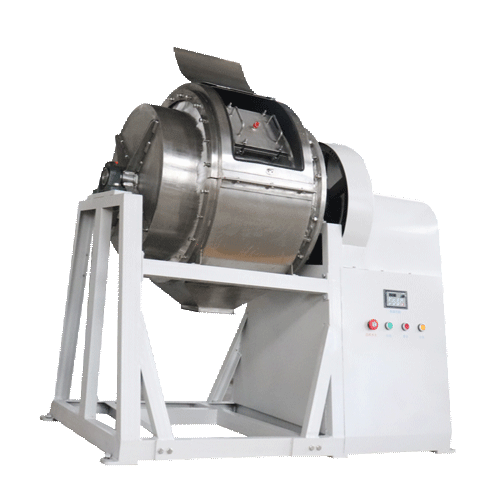
What is a lined drum ball mill and where is it used?
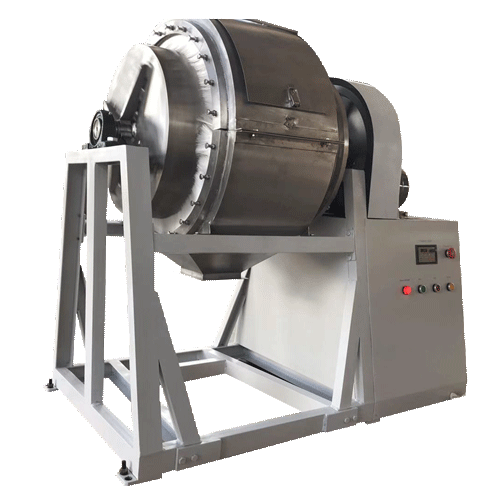
Structurally, such a mill includes a drum, an internal lining, a support frame or roller bearings, a drive, a fence and controls. The drum is a working chamber: material and grinding media are loaded into it. As the camera rotates, it transfers energy to the balls, which destroy particles through impact and abrasion. The lining protects the shell from abrasive wear, affects the nature of the movement of the grinding media and can be a replaceable element. In the version indicated in the card, we are talking specifically about a drum mill with an internal lining; the name of the type in the page address - inner-lined-roll-ball-mill - also indicates the roller nature of the drum drive.
Unlike a planetary ball mill, there is no complex planetary motion of the grinding bowls. Unlike a bead mill, larger grinding media are used, and the process is often organized periodically. This is important when selecting: devices with a similar name may have different mechanisms, different energy intensity and different areas of application. Drum grinding is suitable for brittle bulk materials, ores, minerals, ceramics, glass, clinker and other samples, as long as the material is compatible with the lining and grinding media.
Specific parameters - the internal volume of the drum, the permissible load weight, rotation speed, lining material, the presence of a timer or speed control - should not be inferred from one name. They are checked against the product card and the manual for the specific model. The same family name does not mean that all devices have the same dimensions and equipment.
How drum grinding works: impact, abrasion and rotation mode
When the drum rotates, the grinding bodies first rise together with the wall, then separate from it and fall down. Depending on the speed and load, one of the modes is implemented: rolling, waterfall movement with noticeable impacts, or pressing the balls against the wall. If the speed is too high, the balls can centrifuge, that is, remain against the wall and do almost no useful work. Therefore, increasing the speed does not always improve grinding: each drum diameter and each load has its own operating range.
The size of the result depends not only on time. It is influenced by the initial size, hardness and brittleness of the material, the size and density of the balls, the degree of filling of the drum, the ratio of the mass of the balls and the sample, dry or wet mode, as well as the tendency of particles to aggregate. After a certain stage, grinding may slow down: small particles begin to stick together, and energy is spent on grinding the already obtained powder. Therefore, “longer” does not always mean “thinner”.
Dry and wet grinding
Dry grinding is convenient when you need powder without subsequent drying, and the material does not generate excessive dust and does not oxidize in air. It requires attention to dust generation, cleaning and possible aggregation of fine particles. Wet grinding involves a liquid, which can improve dispersion and reduce heat, but adds separation and drying steps, the risk of material modification, and the need to select a fluid medium. Not every model allows both modes: the possibility of wet grinding, acceptable liquids and seals must be confirmed according to the manual. Unless explicitly stated on the card, wet mode cannot be considered a standard option.
A distinction is made between grinding and mixing. A drum mill can indeed homogenize components, but this does not make it a universal mixer. If the goal is to evenly distribute the additive without significantly changing the particle size, a different type of equipment or a separately selected soft mode may be required.
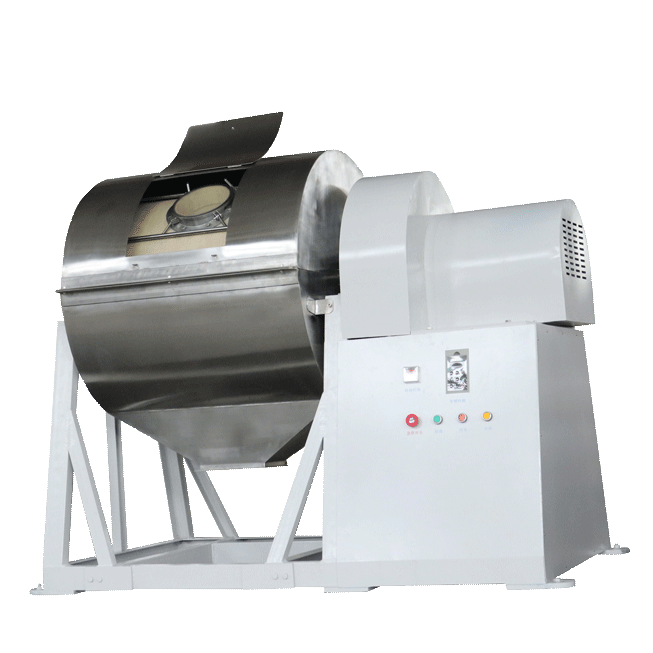
Lining and grinding media: compatibility is more important than the material name
Lining functions and risk of impurities
The lining performs several tasks: it protects the body from abrasive wear, shapes the movement profile of the balls, reduces noise and vibration, and in some versions facilitates cleaning. Its material can be metal, ceramic or polymer, but for a particular mill only those options are available that are indicated in its specification. You cannot transfer the lining material of one model to the entire family.
Any lining wears out. Metal can introduce iron or alloying elements, ceramic can cause chips, and polymer can introduce wear products. Tungsten carbide, zirconium dioxide, corundum or agate do not mean “zero pollution”: they only change the composition of possible impurities and their quantity. For trace analysis, it is useful to evaluate blank grinding, cleanup, and acceptable background levels. If the sample material is sensitive to a particular element, the lining and grinding media are selected taking into account this limitation, and not just based on hardness.
How to choose grinding media and loading
Large balls give stronger impacts and are better suited for coarse grinding, while small balls are better for finer grinding. The density of the ball material affects the impact energy, and their own hardness and fragility affects wear. Agate grinding media are used when it is important to limit metal contamination, but agate is fragile and inferior to steel or tungsten carbide in density; its suitability depends on the sample material, drum size and load capacity. The presence of agate balls in the catalog does not in itself confirm compatibility with a particular mill: you need to check the dimensions, lining, mode and instructions from the manual.
The drum should not be filled to the top: part of the volume is necessary for the movement of balls and material. The specific workload is determined by the design, drive and manual. Excessive loading can reduce grinding efficiency, overload the drive and accelerate wear. It is not advisable to mix balls of different materials and sizes unnecessarily: this complicates reproducibility and contamination assessment.
Characteristics and their correct reading
Volume, load and performance
In equipment descriptions, it is important to distinguish between the geometric volume of the drum, permissible workload, sample weight and time productivity. The volume of the drum is not yet the amount of material that can be loaded. The working load takes into account the mass of the grinding media and the free volume. The sample weight depends on the bulk density and the application. Productivity in kilograms per hour or per cycle hour depends on the size, mode and properties of the material, so it cannot be mechanically recalculated from the volume of one model.
Particle size and distribution
The final particle size is characterized not by one number, but by distribution. The D50 and D90 indicators mean that a certain proportion of particles have a size below the specified value; they do not describe all the powder. The typical catalog minimum is a guide to suitable conditions and is not a guarantee for any sample. The result is influenced by the initial particle size, time, medium, grinding media and measurement method. Sieve analysis and laser diffraction may give different results, especially for aggregates and non-spherical particles.
Selection criteria, compatibility and limitations
The selection begins with the task: what mass of sample is needed, what is the initial and target size, how hard and abrasive the material is, is it sensitive to contamination, is heating acceptable, is dry or wet mode needed. Then the design of the mill is checked: internal volume, lining material, permissible grinding media, maximum loading, speed range, unloading method, cleaning and safety. If you plan to work with several materials, the risk of cross-contamination and the complexity of cleaning are assessed in advance.
It is useful to check the data against lined drum ball mill card and general areas of equipment for website TENCAN. If a parameter of one model is indicated in the description, it does not become a characteristic of the entire range. If the value appears contradictory or the units are unclear, it is best not to use it in the calculation until clarified.
It is also important to discuss restrictions. A drum mill does not replace a planetary mill where high energy intensity and small loads are needed. Conventional air cooling does not become cryogenic simply because the apparatus heats up less. The mill does not guarantee nanometer size, complete absence of aggregates, or “perfect” uniformity. It also does not replace the instruction manual, especially when working with hazardous, toxic or reactive materials.
Frequently asked questions
Is this a planetary ball mill?
No. In a planetary mill, the glasses rotate in a complex manner, but here the working body is a drum with an internal lining. The mechanism of movement of the grinding media and the scope of application differ, so the parameters of one type cannot be transferred to another.
Is it possible to do wet grinding?
Only if it is expressly permitted by the specific performance. It is necessary to check the seals, lining material, permissible liquids, unloading method and subsequent cleaning. The absence of a mention of wet mode on the card does not mean that it is allowed.
How to choose lining material?
First, the sensitivity of the sample to contamination, the abrasiveness of the material, compatibility with grinding media and ease of cleaning are taken into account. There is no universal material: a more wear-resistant option can have a greater influence on the composition of impurities, while a soft one can wear out faster.
Does the mill guarantee the production of nanoparticles?
No. The achievable fineness depends on the material, initial size, grinding media, mode and measurement. The catalog minimum is a guideline and not a promise for any sample. Nanoscale applications often require different grinding principles and additional aggregation control.
Can I use agate balls?
This is only possible after checking the compatibility with the specific mill: drum dimensions, lining, load capacity and instructions from the manual. Agate reduces the risk of metal contamination, but is fragile and can itself become a source of particles. The presence of an item in the catalog does not prove its suitability for a given model.