
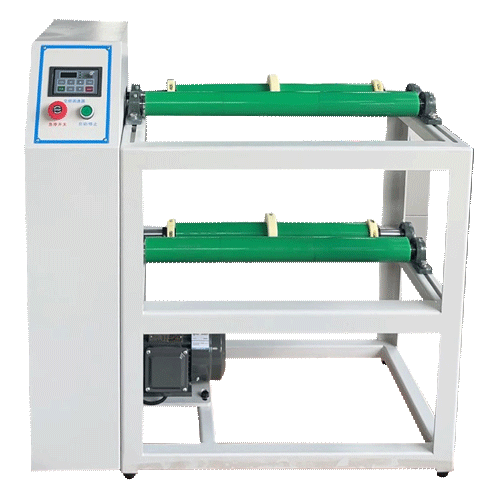
A four-position roller mill is a laboratory equipment for grinding, mixing and homogenizing samples, in which the grinding drums rotate on driven rollers. Unlike a planetary mill, where the glass makes a complex movement, here the drum lies on rollers and is driven into rotation by friction. This scheme applies to drum, or roller, ball mills. Model four position roller mill TENCAN designed to work with several grinding drums simultaneously. This is convenient when you need to prepare a series of samples under similar conditions, compare materials, or conduct parallel tests.
The main purpose of such equipment is not to replace an industrial mill, but to provide reproducible sample preparation in the laboratory. The roller mill is suitable for dry and wet grinding, deagglomeration, mixing of powders and obtaining a more uniform particle size distribution. The result depends on the sample material, initial particle size, drum type, grinding media, rotation speed and processing time. Therefore, the selection of a mill and accessories must be considered as a single task and not as a set of independent parameters.
What does four-position layout mean?
The four-position layout means that the unit has multiple locations for placing grinding drums. In the standard version, the drums are mounted on drive rollers, which rotate them due to friction. This scheme allows you to process several samples in parallel, but it is important to understand: parallelism does not always mean complete independence. If the positions are connected by a common drive, the rotation mode is set for the entire installation. The possibilities of individual adjustment of each position should be clarified in the documentation of the specific model.
The practical meaning of the four positions is evident in the laboratory workload. You can prepare several samples of the same material under the same conditions and then compare the results. You can also work with different materials, if this is permissible due to cleanliness conditions and if the drums are correctly selected in terms of weight and size. However, you should not randomly mix different types and sizes of drums without checking the fit dimensions, load capacity and stability on the rollers. Unbalanced loading increases vibration, accelerates component wear and impairs repeatability.
For a four-station roller mill, it is useful to determine in advance how many samples will be processed simultaneously and whether identical conditions are required. If the task is to compare materials, it is better to use the same drums, the same grinding media and the same grinding time. If the task is the preliminary preparation of different samples, a more flexible approach is allowed, but with the obligatory check of the compatibility of all accessories.
Design and principle of operation
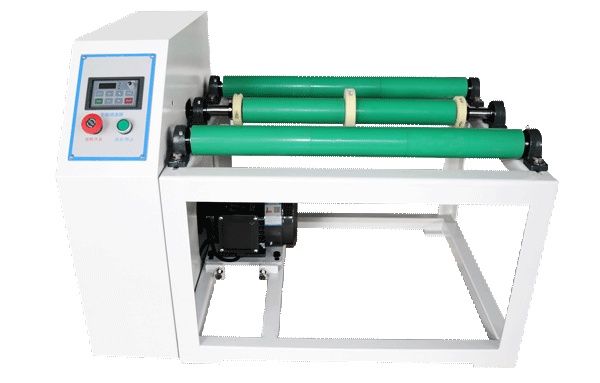
A roller mill usually includes a frame, drive rollers, an electric motor, a transmission system, a control panel and protective elements. The drum is mounted on rollers and rotates around its longitudinal axis. Inside the drum there are grinding media - most often balls, although in some applications cylinders or other bodies are used. When rotating, the grinding bodies rise along the wall, then fall or roll. Grinding occurs due to impact, abrasion and shear between bodies and material.
This is fundamentally different from a planetary mill, where the grinding bowl is fixed in the rotor and moves along a complex trajectory with high centrifugal force. The roller mill is gentler in nature and is often used where more gradual grinding or mixing is needed without extreme local heat. At the same time, one cannot assume that a roller mill is always “cold”: the grinding energy turns into heat, and during prolonged processing the drum and sample can heat up. Cooling, if provided, must be evaluated separately for the specific model and conditions.
Rotation speed is one of the key factors. If the speed is too low, the grinding media do not rise high enough and low abrasion predominates. If the speed is too high, the bodies may press against the wall and stop falling, that is, a regime close to centrifugation will occur. The optimum speed depends on the internal diameter of the drum, the size and density of the grinding media, the degree of filling and the properties of the sample. Therefore, it is impossible to transfer values from one model to another without verification.
Grinding drums and grinding media
The grinding drum is not just a container, but a working part of the mill. It sets the loading volume, the shape of the trajectory of the grinding media, the degree of wear and the risk of introducing impurities. The drum material must be compatible with the sample and the analytical purpose. For hard and abrasive materials, more wear-resistant options are chosen; For soft, chemically sensitive or easily contaminated samples, polymer or ceramic designs are sometimes more convenient. However, no material guarantees absolute absence of contamination: wear, abrasion of walls and grinding media must always be taken into account.
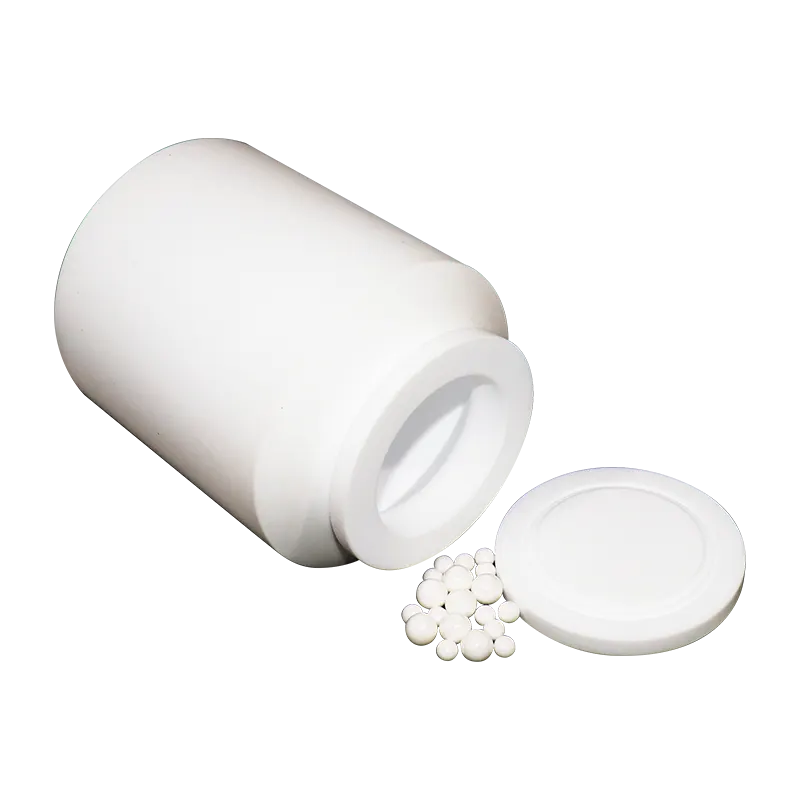
Roller mills use different drums, including PTFE. PTFE grinding drum It is interesting primarily for its low adhesion, chemical resistance and ease of cleaning. Such a drum can be useful for samples that are prone to sticking, for soft materials, and for applications where reducing metal contamination is important. However, PTFE is a relatively soft material. It is not intended for intensive grinding of hard abrasive powders, since accelerated wear, deformation and the ingress of polymer particles into the sample are possible. In addition, temperature and mechanical limitations need to be clarified for a specific product.
Drum and mill compatibility
The compatibility of a drum with a roller mill is determined not only by the name of the series. It is necessary to check the outer diameter and length of the drum, the weight with loading, the method of installation on the rollers, the permissible peripheral speed and stability during rotation. If the drum is too small, it may slip or become misaligned. If it is too large or heavy, the load on the drive and rollers increases. If the surface of the drum is damaged, rotation becomes uneven. Therefore, accessories from another series cannot be considered automatically compatible: confirmation from the manufacturer or verification according to the documentation is required.
Grinding media are also selected for the drum and sample. Stainless steel balls are useful for many laboratory applications, but can introduce iron and chromium. Zirconium dioxide is highly dense and wear-resistant, but it is not completely inert under all conditions. Agate, corundum, tungsten carbide and polymer coatings have their own areas of application. It is important to consider not only the material, but also the size of the balls. Large balls give a stronger blow, small ones - more intense abrasion. A mixture of balls of different sizes sometimes improves volume filling, but complicates reproducibility.
Drum filling
The degree to which the drum is filled affects grinding efficiency more than it seems. If the drum is too small, the grinding media hits the walls more often and has less contact with the material. If there is too much, there is no free space for movement and the grinding slows down. Usually the working load is indicated in the documentation, but it still needs to be correlated with the bulk density of the sample and grinding media. You cannot transfer a volume fraction that is convenient for one material to another without checking. It is also important to remember that the volume of one drum, the total volume of all drums and the mass of the sample are different quantities.
Parameters, dry and wet grinding
When choosing a mode, it is important to read the characteristics correctly. The volume of the drum indicates the geometric capacity, but is not equal to the mass of the sample. The working load takes into account the free volume for the movement of grinding media. The weight of the sample depends on the density of the material and the required ratio with the grinding media. Grinding time affects the fineness, but does not guarantee that the desired particle size will be achieved. The rotation speed must correspond to the diameter of the drum and the type of grinding media. The final result is assessed by the distribution of particles, and not by a single “minimum size” value.
Dry grinding is convenient when the material is not prone to agglomeration and does not require subsequent filtration. It is easier to prepare and clean, but may be accompanied by dust formation, sticking and unevenness. Wet grinding often produces a more consistent particle distribution and reduces dusting, but requires the selection of a fluid that is compatible with the sample, drum, and grinding media. After wet grinding, drying or phase separation is necessary, which can change the condition of the sample. In addition, the liquid may accelerate the wear of some materials and affect chemical analysis.
A distinction is made between grinding and mixing. A roller mill can mix powders, but mixing is not a substitute for grinding: if particle size is to be reduced, sufficient energy and suitable grinding media are required. Disagglomeration also does not always mean true comminution of the primary particles. Sometimes the task is to destroy agglomerates, and then a soft mode may be preferable to an aggressive one. For such cases, it is important to determine in advance what exactly will be considered the result: average size, upper limit of fineness, uniformity or degree of mixing.
Limitations and common mistakes
The roller mill is not a one-size-fits-all solution for all materials. Hard, abrasive or large samples may require pre-crushing, a different type of mill or more wear-resistant tooling. The same drum cannot be expected to fit all samples. The PTFE drum, while suitable for soft and sticky materials, should not be used for intensive grinding of hard minerals without assessing wear. Metal drums and balls can introduce impurities that are critical to trace analysis. Ceramics and zirconium oxide are also not completely inert in all environments.
Common errors include overloading, improper filling, incompatible drums, and lack of temperature control. Overload leads to vibration and accelerated wear. Insufficient loading reduces efficiency. Grinding too long can cause agglomeration, heat and contamination. Mixing different types of drums without checking creates a risk of damaging the drive. Using contaminated instrumentation will negate the benefits of accurate analysis. Therefore, before starting work, it is worth defining the requirements for cleanliness, acceptable wear and reproducibility.
Selection criteria and compatibility
The choice begins with the sample material and the purpose of processing. It is necessary to understand whether particle size reduction, disagglomeration, mixing or preparation for analysis is required. The number of samples and the desired throughput are then determined. Four Position Roller Mill TENCAN suitable if it is necessary to process several samples in parallel and at the same time control the same conditions. Next, drums are selected according to material, volume, weight, seat dimensions and compatibility with the roller drive. After this, grinding media and mode are selected.
It is important for the laboratory to think ahead about cleaning. Collapsible drums are more convenient to wash and check for wear. Polymer and PTFE versions are usually easier to clean from sticky samples, but require careful handling. Metal and ceramic drums may be more durable, but their own weight and hardness will affect the load. If a laboratory uses different materials, it may be advisable to assign separate drums to groups of samples to reduce cross-contamination. This is especially important for trace analysis and samples with low levels of detectable elements.
Compatibility is confirmed not only by external similarity. It is necessary to check the mill model, drum type, permissible loading weight, rotation speed and fixation method. If there is no data, it is better to request clarification from the manufacturer than to select equipment based on assumptions. On the website TENCAN view our range of equipment and accessories, including laboratory equipment TENCAN for sample preparation. In this case, specific parameters should always be taken from the current documentation for the selected model.
FAQ
How does a four-position roller mill differ from a planetary mill?
In a planetary mill, the glass moves along a complex trajectory in the rotor, which creates high centrifugal forces and intensive grinding. In a roller mill, the drum rotates on rollers, and the grinding media work by rising, falling and rolling. The roller circuit is usually simpler and softer, but its capabilities depend on the diameter of the drum, speed and load.
Can a PTFE drum be used for hard materials?
The PTFE drum is often chosen for soft, sticky or chemically sensitive samples where low adhesion and media resistance are important. For hard abrasive materials it may not be wear-resistant enough. The decision is made after assessing the hardness of the sample, grinding time and acceptable contamination.
What is more important: rotation speed or grinding time?
Both parameters are related. A speed that is too low does not provide enough energy, and a speed that is too high can cause the grinding media to slip or centrifuge. Grinding time affects the coarseness, but beyond a certain limit, rising temperatures and agglomeration can deteriorate the result. You need to select a mode for a specific sample and drum.
How do you know if the drum is compatible with the mill?
Check the mounting dimensions, outer diameter, length, loaded weight and permissible speed. The drum must lie firmly on the rollers and not create excessive vibration. If the documentation does not confirm compatibility, consult the manufacturer. External similarity does not replace verification.
Four Position Roller Mill TENCAN — This is a laboratory sample preparation tool that reveals its capabilities only with the correct selection of drums, grinding media and mode. It does not guarantee a specified size for any material and does not eliminate the need for cleanliness control. But with precise design, compatible equipment, and repeatable conditions, it helps produce more uniform samples and compare results across a series of tests.