
A fast ball mill is a grinding equipment designed for rapid grinding, homogenization and sample preparation prior to analysis. In the catalog TENCAN such a product is presented in the section of grinding equipment called Fast Ball Mill. Its place in the technological chain is between sampling and preliminary sample reduction and subsequent analytical measurement, when it is required to obtain a representative powder in a short time.
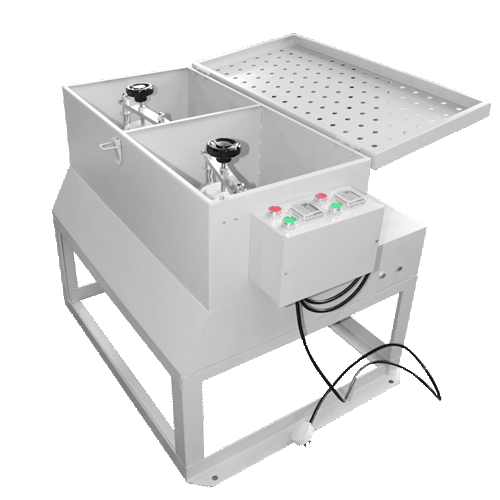
The ball mill is not a one-size-fits-all solution for all materials. Its effectiveness depends on the initial size, hardness, fragility, humidity and tendency of the sample to aggregate. Therefore, when selecting, it is important to separate the concepts of grinding, mixing and deagglomeration, and also to understand which parameters really relate to a specific model and which are common to the class of equipment.
What is fast ball mill and where is it in the process
A fast ball mill refers to ball mills in which grinding occurs due to the movement of grinding media inside the working chamber. Unlike large continuous industrial equipment, such units are more often used for batch sample preparation, where reproducibility and controlled processing time are important. In the Russian-language catalog, the product is designated as “Fast ball mill”; this name refers to the objective of reducing grinding time, but does not replace the technical specification of a specific design.
Typical applications include laboratories, incoming raw material inspection areas, quality departments and research groups that need to quickly condition a sample to a state suitable for sieve, spectral, chemical or other analysis. At the same time, the mill itself does not perform the analysis and does not guarantee the specified size: it creates the conditions for grinding, and the result depends on the material, grinding media, load and mode.
Basic Installation Elements
- working chamber or grinding drum, which contains the sample and grinding media;
- a drive that provides movement of the camera or working parts;
- a fastening and unloading system that allows you to safely remove the powder;
- controls for time, speed and, if equipped, cooling;
- replaceable grinding chambers and grinding media, if provided for by the design.
The composition of the nodes depends on the design. For one model the list may be shorter, for another it may include additional options. An option does not become standard equipment just because it appears in the description of another product.
Difference from other mills
The planetary ball mill uses the rotation of the grinding bowls around a common axis and its own axis, creating a complex trajectory of grinding media. A vibration mill operates by oscillating the working chamber. A roller drum mill typically rotates the drum at a relatively low speed. The bead mill uses fine grinding media and is often designed for liquid systems. A fast ball mill is a distinct type of equipment and should not automatically be described as a planetary, vibratory or bead mill without proof of design.
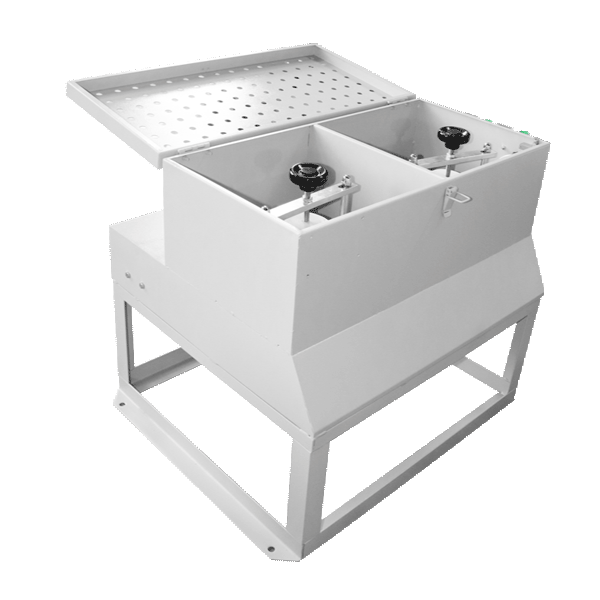
How does grinding work in a high speed ball mill?
In a ball mill, the material is crushed by impact, abrasion and shear between the grinding media and the chamber walls. If the grinding media moves with sufficient energy, large particles are destroyed and aggregates can break down into smaller components. However, this does not mean that any sample will be crushed to the same size: brittle materials are destroyed more easily, plastic materials are deformed, and fibrous materials require different processing principles.
Movement of grinding media
As the chamber rotates, the grinding media can rise, fall, roll or slide. The ratio of these modes depends on the speed, chamber diameter, size and mass of the balls, as well as on the degree of filling. Too low a speed leads to poor grinding, too high - to increased wear, heating and waste of energy. Specific speed values for a particular model should be taken from the manual and not transferred from other equipment.
Dry and wet grinding
Dry grinding is convenient when you need to obtain powder without subsequent drying. It is suitable for many mineral, ceramic and brittle materials but may experience dusting, sticking and aggregation. Wet grinding introduces a liquid medium that reduces dust, helps dissipate heat, and improves particle distribution. In this case, the liquid must be removed, and its choice can affect the material and subsequent measurements. Wet grinding is not automatically finer: the result depends on the combination of medium, grinding media and mode.
Grinding, disagglomeration and mixing
A ball mill can simultaneously grind and mix components, but these processes are not identical. If the task is to destroy aggregates, and not the primary particles themselves, the mode should be softer. If powders need to be mixed without significantly changing the particle size, excessive energy will result in undesirable grinding. Therefore, when choosing equipment, it is important to formulate the goal: reducing particle size, obtaining a homogeneous sample, disagglomeration or combining operations.
What characteristics are important to read correctly?
In a product card, different parameters may look similar, but do not mean the same thing. In order not to make a mistake when selecting, it is useful to separately check the chamber volume, permissible load, size of grinding media, speed, processing time and expected particle size. None of these indicators should be transferred to the entire range TENCAN: it refers to a specific performance.
Chamber volume and loading
The volume of the grinding chamber is a geometric capacity, and not the mass of the sample that can be loaded. The working load is usually less than the full volume, since part of the space is occupied by the grinding media, and part is necessary for their movement. It is impossible to equate the volume of one glass, the total volume of several chambers, the mass of the sample and productivity over time. If the description indicates volume, you need to understand whether it refers to one camera, the entire kit, or the payload.
Size and weight of grinding media
Larger balls produce stronger impacts and are suitable for pre-shredding relatively large particles. Smaller balls create more contact and can be useful for fine grinding, but have less mass and energy. A mixture of balls of different diameters sometimes allows different failure mechanisms to be combined, but this requires testing on a specific material. The material of the grinding media also affects wear and the possible introduction of impurities.
Speed, time and size
Increasing speed and processing time does not always improve the result. After a certain limit, heating increases, wear increases, and fine particles can aggregate back. The final particle size depends on the initial particle size, hardness, medium, mode and measurement method. The typical catalog minimum is not guaranteed for any sample. If the specification indicates fineness, it should be clarified for what material and under what conditions it is achieved.
Temperature and cooling
During grinding, mechanical energy is partially converted into heat. Air cooling reduces the temperature of the case and workspace, but is not equal to the measured temperature of the sample. Cooling with liquid nitrogen is a separate cryogenic process that requires appropriate execution and safety measures. You cannot call conventional air cooling cryogenic without confirmation. For heat-sensitive materials, it is necessary to evaluate the heating in advance and select a mode that does not destroy the sample.
Grinding media: 304 stainless steel and other materials
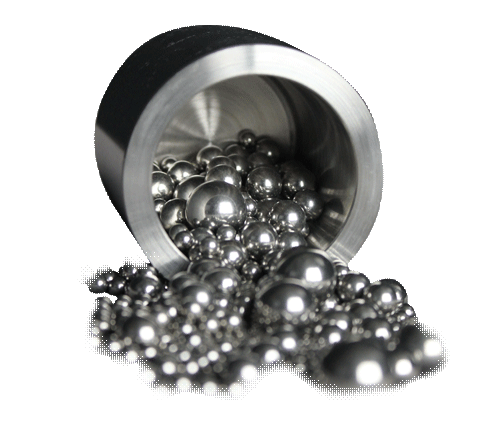
Grinding media are a consumable item that directly affects grinding efficiency and sample purity. In the catalog TENCAN presented 304 stainless steel grinding balls. Stainless steel combines a fairly high density with corrosion resistance, so such balls are used in tasks where a wear-resistant environment is needed and the use of easily degradable materials is unacceptable. However, this does not mean zero contamination: steel grinding media can introduce iron, chromium and nickel, especially when grinding hard materials for a long time.
Compatibility with material and device
The compatibility of grinding media is determined not only by the ball material, but also by the mill design, chamber size, load capacity and grinding task. 304 stainless steel balls should not automatically be considered suitable for any mill TENCAN: When selecting, you need to clarify the standard size, permissible load weight and recommendations for a specific model. A randomly chosen affiliation does not prove compatibility.
Wear, cleaning and introduction of impurities
During operation, the grinding media and lining wear out. Wear products end up in the sample, so for trace analysis it is important to choose a material that does not distort the elements being determined. Ceramic, zirconia, agate, tungsten carbide and stainless steel have different wear profiles and different contamination risks. Tungsten carbide does not mean zero contamination, and polymer materials can be soft and less suitable for hard samples. Cleaning between samples also affects cross-contamination: residues from previous material must be removed according to guidelines.
What tasks is it suitable for and what are the limitations?
A fast ball mill is appropriate where you need to quickly obtain a representative sample of brittle, friable or moderately hard materials. It can be used to prepare minerals, ceramics, glass, some chemicals and other materials if their properties are compatible with the selected chamber and grinding media. It should be taken into account that plastic, viscous, wet and fibrous materials can be difficult to grind in a ball mill without special measures.
When a high-speed ball mill is not needed
If the task is only mixing without changing the coarseness, a mixer may be suitable. If ultra-fine grinding down to the micron level is required, planetary, vibratory or bead mills are often considered. If the material is large and strong, a crusher may be needed first. A fast ball mill does not replace all these devices, but takes its place in the sample preparation chain.
A separate restriction concerns hazardous substances. Unvalidated recipes, temperatures, pressures, and detailed operations should not be specified for toxic, explosive, or radioactive materials. Discussion of equipment selection does not replace specific installation guidelines and safety requirements.
How to choose equipment and consumables
The selection begins with the question: what material needs to be processed, what is its initial size, what final size is needed and what analysis method will be used. Then they clarify whether heating is acceptable, whether dry or wet grinding is required, whether there are restrictions on the introduction of impurities and how often the operation will be repeated. The available mill designs and suitable grinding media are then compared.
- check whether the indicated volume refers to one chamber or a set;
- clarify the permissible weight of the sample and grinding media for the selected model;
- evaluate the material of the chamber and grinding media in terms of wear and contamination;
- determine whether replacement chambers are needed for different materials;
- provide for cleaning, maintenance and safe unloading;
- do not transfer the characteristics of one model to the entire line.
IN catalog TENCAN There are different groups of grinding equipment and accessories presented, so it is better to base the final choice on the current card of a specific product. If there is not enough data to make a decision, you should request clarification rather than substitute parameters by analogy.
Frequently asked questions
Can one mill be used for both dry and wet grinding?
It depends on the design and materials of the camera. Some installations allow both modes, others only allow one. Before operating, check the manual to ensure that the fluid will not damage the seals, coating or drive.
How does a fast ball mill differ from a planetary one?
The planetary mill creates complex rotation of the beakers and usually provides high grinding energy. The fast ball mill has a different design and kinematics; its parameters cannot be derived from the characteristics of the planetary model. For each task, a different type of equipment is selected.
How to choose grinding media material?
It is necessary to take into account the hardness of the sample, acceptable contamination, wear and cleanability. 304 stainless steel is suitable for many applications, but can introduce metallic elements. For trace analysis, ceramics, agate, or other materials are sometimes preferred if they are compatible with the mill.
Does the mill guarantee the specified size?
No. The fineness depends on the material, the initial particle size, grinding media, time, speed and method of measurement. Catalog minimum is not a promise for any sample. The result is checked on a specific sample.
Is cooling necessary?
If the material is heat sensitive, cooling or short grinding cycles may be necessary. Air cooling and liquid nitrogen cryogenic cooling are different solutions. The choice depends on the design of the installation and the properties of the sample.
Brief summary
Fast Ball Mill TENCAN — This is equipment for rapid grinding and sample preparation, which requires the correct selection of grinding media, chamber and mode. Half the success depends not on the name of the model, but on the suitability of the material, size and analytical task. 304 stainless steel grinding balls may be an option, but compatibility with the specific mill and grade should be verified by documentation. Technical parameters must be read separately: volume, loading, speed, time, size and cooling answer different questions. This approach allows you to avoid unreasonable expectations and choose equipment consciously.