
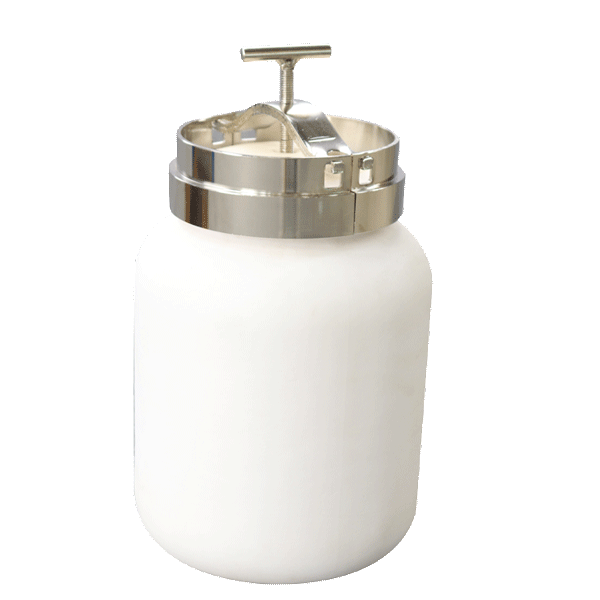
A corundum grinding drum is a ceramic working container in which the sample and grinding media are located during grinding. It is installed on a roller mill: rotation is transmitted through the rollers, and abrasion and impact of the grinding bodies on the material occurs inside the drum. Such a product is chosen when not only the grind size is important, but also the composition of the medium, wall wear, cleaning and possible transfer of impurities into the sample.
In the catalog TENCAN the product is presented as corundum grinding drum for roller mill. This is not a stand-alone shredder or a universal container: the drum only works as part of a suitable machine, and its fit, dimensions, lid and permissible mode must correspond to a specific installation. Therefore, the correct choice begins with the task of grinding and checking compatibility, and not with just the name of the material.
Function and place in the grinding system
In a roller ball mill, the drum is a replaceable working chamber. It lies on drive rollers, rotates and carries the grinding media; As a result, the material is crushed between the balls, walls and ends. The drum itself does not create the movement - it is set by the machine. Therefore, the product has two groups of properties: some are related to the material and geometry of the container, others are related to compatibility with the mill.
The corundum drum is classified as ceramic equipment. Its task is to provide a working cavity with a certain resistance to abrasion and with predictable behavior when in contact with the sample. This is especially important when metal tooling is undesirable due to the risk of introducing iron or other elements, and when frequent cleaning is required between batches of samples. However, ceramic does not mean there is no wear: the walls, edges, cover and seal gradually wear out, and drum material may be released into the sample in the form of small particles.
A roller mill can have several working positions. For example, eight position roller mill is designed for simultaneous operation of several drums, but this does not mean that any corundum drum will automatically fit it. It is necessary to check the outer diameter, length, method of fixation, permissible load, clearances and requirements of the mill manufacturer. If the parameters are not confirmed, the product cannot be considered compatible only by hardware type.
It is useful to distinguish between several concepts that are often confused in applications. The grinding drum is a container. Grinding bodies are balls or other bodies inside it. A roller mill is a machine that rotates a drum. The bead mill and roller crusher are different grinding principles and do not replace this kit. This division helps to formulate requirements more precisely and avoid purchasing equipment that does not meet the task.
Material and design of corundum drum
Corundum is a crystalline form of aluminum oxide Al2O3. In technical ceramics, this name is used for materials based on aluminum oxide, which have high hardness and resistance to abrasive wear. For a grinding drum, not only these general properties are important, but also the specific design: homogeneity of the ceramic, the condition of the internal surface, wall thickness, design of the lid and seals. The name of the material cannot be used to judge the purity of the product, porosity or permissible loads - this information must be confirmed for a specific product.
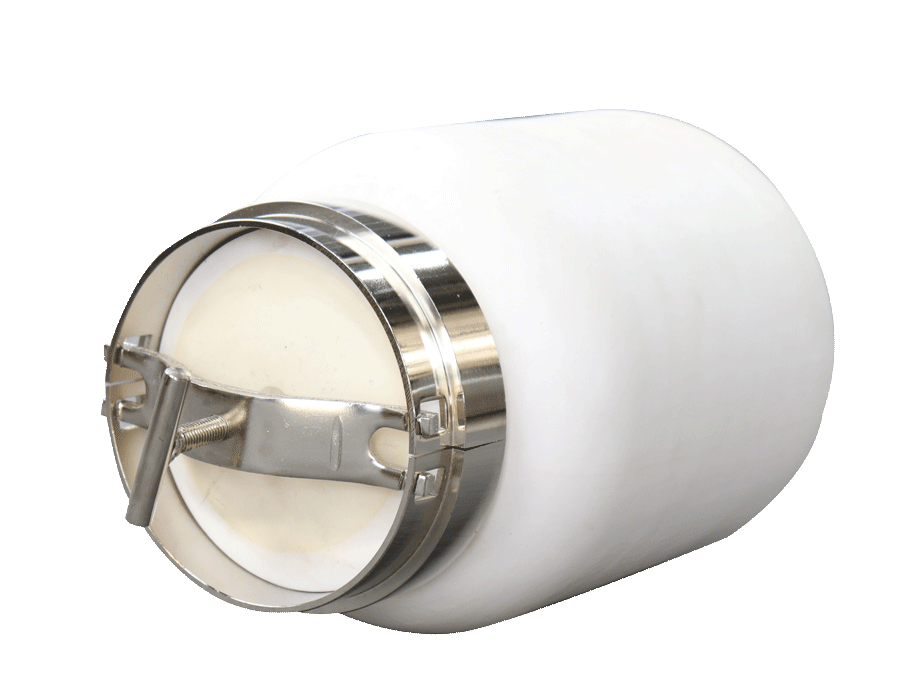
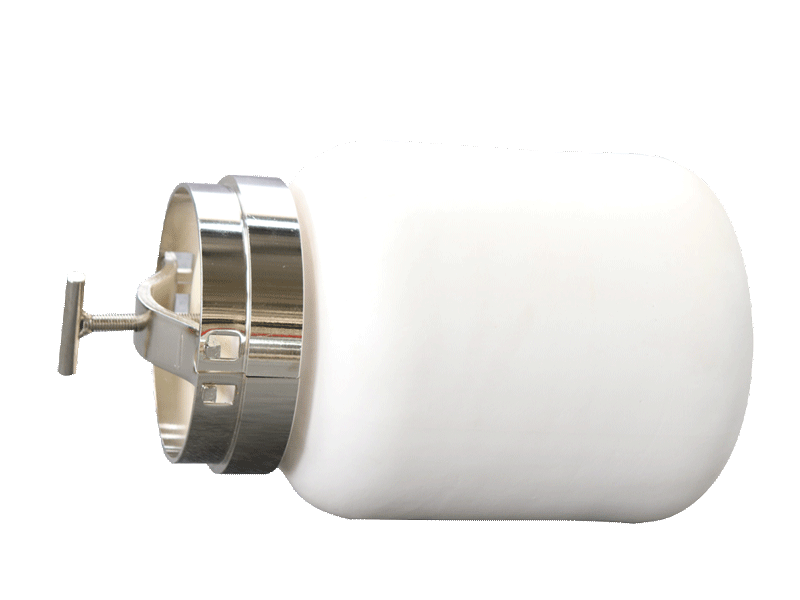
A typical design includes a solid-bottom body, a lid and a sealing element. For a roller mill, the external geometry is important: the cylindrical surface must lie stably on the rollers, and the cover must not interfere with rotation and create dangerous protrusions. The internal cavity should allow the sample and grinding media to be loaded, and then the material to be removed without loss or damage to the ceramic. If dimensions are indicated on the product card, they should be read together with the installation method for a specific mill, and not separately from it.
The ceramic drum is not indestructible. Shocks during installation, falls, sudden tightening of the cover and improper cleaning can cause chips. Chips are dangerous not only due to loss of tightness: they become a source of large particles of drum material and change the hydrodynamics or movement of the grinding media. It is therefore a good idea to inspect the edges, interior surface and seal before each load. For critical analytical tasks, it is better to have a separate drum for sensitive samples and not use it for obviously abrasive or coloring materials unless necessary.
Dimensions, volume and grinding mode: what exactly to specify
The first question when selecting is not “which volume is larger,” but what mass of sample and how many grinding media are needed for a representative result. The nominal volume of the drum, internal volume, payload and sample weight are different values. Part of the volume is occupied by grinding bodies, part remains free for the movement of balls and material. If the drum is loaded too tightly, grinding will slow down or become uneven; if there is too little material, the proportion of wear on the equipment and contact of the balls with the walls will increase. Specific recommendations should be given by the manufacturer for a given drum and process.
For a corundum drum, it is important to specify the internal diameter and height, wall thickness, neck dimensions, type of cover and seal, as well as external dimensions that determine the fit on the rollers. You should not transfer the parameters of one drum to the entire range: even products with a similar name may differ in geometry and purpose. If the description only indicates a nominal volume, this is not sufficient to check compatibility with the mill and to calculate the load.
Dry and wet grinding differ not only in the presence of liquid. In the wet process, the rheology of the suspension, the conditions of movement of the grinding media and the requirements for tightness change. The possibility of wet grinding in a ceramic drum depends on the design of the lid, seal and verified operating conditions. Any corundum drum cannot automatically be assumed to be liquid-tight or pressure-tight. If such a task is important, the compaction method and the permissible environment must be agreed separately.
The rotation mode also matters. Too high a speed can lead to excessive wear and overheating, too low - to insufficient mixing and a lengthy process. For a roller mill, it is important to respect the range specified by the machine manufacturer and take into account the weight of the loaded drum. You cannot transfer the speed selected for a metal drum to a ceramic one without checking the strength, balance and permissible load. The final particle size depends on the initial particle size, hardness of the material, grinding media, time, medium and measurement method, therefore one value from the catalog does not guarantee the result for any sample.
Samples for which drum material is important
Corundum equipment is considered for grinding minerals, ceramic raw materials, oxides, slags, catalysts, pigments and other powder materials when abrasion resistance is required. In laboratory practice, drum material is selected based on which elements are considered critical in the analysis. If the sample is subsequently tested for aluminum, the influence of the corundum lining cannot be ruled out in advance. Even durable ceramics wear out, and particles can become powdered. This does not make the material unsuitable, but requires control and, if necessary, a separate blank test.
Corundum is not universally inert to all media. For aqueous suspensions, acids, alkalis, organic solvents and high temperatures, suitability must be verified for the specific product. General understanding of the chemical resistance of ceramics does not replace the manufacturer's instructions. If you intend to work with an aggressive or dangerous environment, you should not select the mode by analogy with another drum: you need confirmed sealing materials, covers and operating conditions.
A distinction is made between grinding and mixing. The drum can mix the powder as it rotates, but mixing evenly does not mean achieving the desired fineness. Also, disagglomeration should not be confused with true comminution of primary particles. If the task is to destroy agglomerates, the mode and grinding media may be different than for fine grinding of crystalline material. For a corundum drum, this means that the choice of grinding media and process time must be based on the purpose, and not just the name of the equipment.
When working with abrasive powders, wear is inevitable. It depends on the hardness of the sample, the size and material of the grinding media, duration, speed and filling fraction. Mild conditions reduce wear but increase time. Harsh conditions speed up the process, but increase the risk of contamination and damage to the ceramic. A compromise is sought experimentally, starting with small batches and monitoring the condition of the drum after each cycle. For iron-sensitive materials, a ceramic drum may be preferable to a steel drum, but this does not replace testing for aluminum and other ceramic components.
Wear, cleaning and impurity control
The wear of the corundum drum manifests itself in different ways: the inner surface becomes rougher, the edges of the neck lose their shape, and the seal no longer provides the required tightness. Over time, the abrasive material can change the geometry of the cavity, which will affect the movement of the grinding media. Therefore, visual inspection should be regular, and not only when visible chips appear. If cracks, deep grooves or damage to the sealing surface appear, further use requires the assessment of the manufacturer.
Cleaning ceramics requires care. Hard metal scrapers and impact methods can leave scratches and chips. It is better to use products and tools that are compatible with ceramics and do not damage the seal. After wet cleaning, the drum must be dried, otherwise residual moisture will affect the next sample. Effective cleaning or separate equipment is required between incompatible materials. For microimpurities, it is not enough to simply rinse the drum: sometimes a control rinsing and checking the cleanliness of the dry residue is required.
The transfer of impurities consists of several sources: drum wear, grinding media wear, remnants of the previous sample, contamination during loading and unloading. We cannot promise complete absence of pollution. It is more correct to evaluate the contribution of each source and select the conditions under which it is lower than acceptable for a particular analysis. For example, corundum grinding media reduce the risk of metal contamination compared to steel, but may themselves add aluminum. If the analytical method is sensitive to this element, a separate test is required.
It is useful to keep a simple log of the equipment: what samples the drum was used for, what it was cleaned with, how long it worked, whether there were any chips or discoloration. This helps avoid using the same drum for materials that may mutually contaminate each other. In a laboratory with several employees, this practice reduces the risk of accidental confusion. It also provides a basis for timely replacement of the product, without waiting for the destruction of the ceramics.
How to choose a drum and check compatibility
The choice begins with a description of the sample: material, initial size, required task, sensitivity of the analysis to contaminants, dry or wet process, required mass. Then the appropriate type of grinding media and the approximate volume of the working chamber are determined. After this, the corundum drum is checked for size and fit on the roller mill. It is not enough to know that the mill is roller: the outer diameter, length, location of the rollers, method of fixation, permissible weight and clearances around the cover are important.
If you intend to use an eight-position mill, you need to separately clarify which drums are intended for its working positions and how safety is ensured during rotation. The presence of eight positions does not prove compatibility with a specific corundum drum. For a live installation, confirmation of geometry and mode must be requested. For a new task - to compare the requirements of the mill and the characteristics of the drum. In controversial cases, it is more reasonable to choose a product for which compatibility is documented than to select based on external similarity.
Additionally, the availability of spare seals and the possibility of cleaning are checked. If the drum is used frequently, not only the initial price of the kit is important, but also the service life of the equipment, grinding reproducibility and labor costs for cleaning. For analytical series, it is better to provide separate equipment for critical materials. For training or research work, a more flexible approach is acceptable, but with mandatory wear control. General information about equipment areas TENCAN are given on main page of the site; specific parameters should be taken from the card of the selected product and accompanying documentation.
Can a corundum drum be considered completely inert?
No. Corundum ceramics are resistant to abrasive wear, but do not exclude the transfer of aluminum and other material components. Sensitive analysis requires a control experiment and an assessment of the permissible level of impurities.
Is this drum suitable for wet grinding?
This depends on the cover design, seal and verified operating conditions. The presence of a ceramic body does not in itself guarantee liquid tightness. The possibility of a wet process needs to be clarified for a specific product.
How does a corundum drum differ from a steel drum?
The steel drum can be impact-resistant and comfortable for rough tasks, but is capable of introducing iron. The corundum option is chosen for its different durability and lower risk of metal contamination, but it is fragile and also wears out. The choice depends on the sample and analysis.
Can a drum be installed on any roller mill?
No. It is necessary to check the external dimensions, fit, permissible weight, speed and clearances. Even equipment of the same type requires confirmation of compatibility. An unsuitable drum may rotate unstably or create a dangerous load.
How often should I check for wear?
Before each load, a visual inspection is carried out, and after abrasive or long cycles, the edges, interior surfaces and seals are checked more closely. The frequency depends on the intensity of work and the properties of the material; If chips or cracks appear, the product is removed from critical processes until evaluation.