
A corundum grinding bowl for a planetary mill is a replaceable working vessel in which the sample and grinding media are placed and in which the impact and abrasion effect occurs when the planetary disk moves. The glass forms the boundary of the working area: it holds the material, establishes contact with the grinding media and protects the mill chamber from dust and splashes. In the catalog TENCAN the product is presented as corundum grinding bowl for planetary mill; specific dimensions, configuration and compatibility with the mill are checked using the card and documentation, and not just by the name of the material.
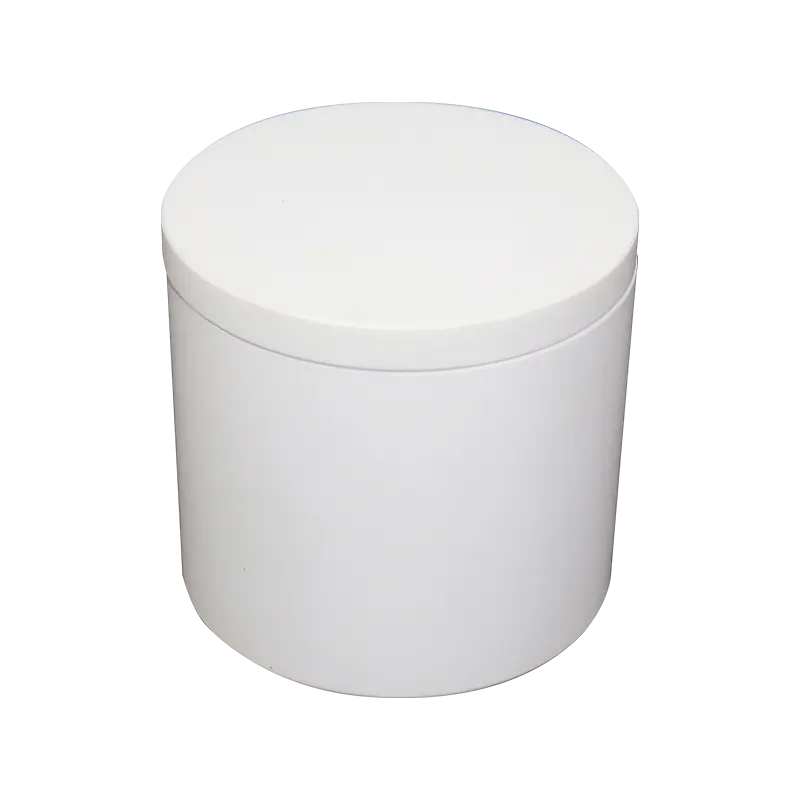
What is this product and where does it work?
In a planetary ball mill, the grinding bowls are mounted on a rotating disk. The disk imparts movement to the glasses around a common axis, and the glasses themselves simultaneously rotate around their own axes. As a result, the grinding bodies inside the glass repeatedly change direction, collide with the material and walls, creating an impact and abrasive effect. The glass in this system is not a passive container, but a part, the geometry and condition of which determine the reproducibility of sample preparation.
The corundum glass belongs to ceramic working vessels. Its task is to withstand contact with the abrasive medium, maintain the shape of the seating part, ensure closure and, if wet grinding is provided, sufficient tightness. At the same time, the glass is not an independent mill: the productivity and achieved coarseness are determined by the entire system - the mill model, mode, grinding media, sample properties and processing time.
Therefore, the name “corundum” only answers part of the question about suitability. It indicates the material of the work surface, but does not confirm compatibility with a specific machine, does not determine the permissible load, and does not guarantee that the beaker material will not transfer into the sample. These issues are resolved based on the product data sheet and the conditions of the task.
Cup material and process selection
What does corundum mean?
Corundum is aluminum oxide Al2O3, which in ceramic form is used where wear resistance and abrasion resistance are needed. For a grinding bowl this means that the working surface is able to withstand the abrasive effects of many mineral and ceramic materials. However, ceramics remains fragile: it does not withstand impact loads, chipped edges, and improperly tightened fasteners.
Corundum should not be perceived as a “zero contamination” material. When worn, aluminum oxide particles may enter the sample. If aluminum is determined in a sample or trace elements are assessed, this risk must be considered separately. For tasks where contact with Al2O3 is unacceptable, the glass material is selected differently; in such cases, not only hardness is compared, but also chemical compatibility, wear levels and cleanliness requirements.
Zirconium dioxide, tungsten carbide, agate, stainless steel or polymer materials solve different problems and have their own limitations. It is impossible to transfer the properties of one material to the entire range of glasses: a corundum glass is a specific design with a specific area of application, and not a universal replacement for all types of grinding vessels.
Dry and wet grinding
When dry grinding, the material is in a glass without a liquid medium. This process is useful for samples that cannot or are not desirable to be brought into contact with a solvent, but it may be subject to dusting, sticking, and aggregate formation. For a corundum beaker, the condition of the lid, the cleanliness of the seal and the absence of dust in the mill seating area are important.
Wet grinding involves a liquid medium that helps disperse the material and reduces dust. This increases the importance of tightness and chemical resistance of the seal. Not every solvent is equally suitable for ceramics and gasket material; The possibility of wet grinding is checked according to the documentation for the specific glass and compatibility with the sample. You cannot automatically assume that because a glass is ceramic, it is suitable for any liquid and any mode.
In addition, grinding and disagglomeration are not the same thing. In a planetary mill, primary particles may be destroyed, but agglomerates may also be predominantly destroyed. Mixing components also does not replace specialized mixing equipment. Understanding the purpose of the process helps you choose the right glass, grinding media and processing time, and not focus only on the name of the material.
Design and parameters that need to be read correctly
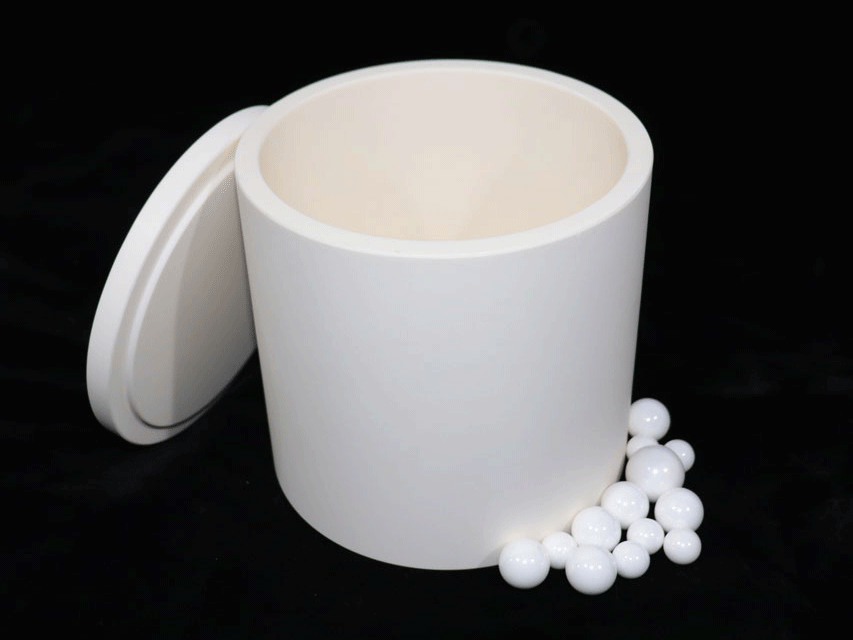
Volume, loading and number of glasses
In the product card, it is necessary to distinguish between the nominal internal volume of one glass, the total volume of the set, the working load and the mass of the sample. If the set includes several glasses, the total volume is not equal to the volume of one vessel. You cannot transfer the value specified for one size to another: their geometry and permissible load may differ.
The working load depends on the bulk density of the sample, the size and density of the grinding media, the desired material-grinding media ratio and the permissible heating. There is no universal fill percentage suitable for all materials. Too much loading increases stress and the risk of overfilling; too little can reduce processing efficiency. These parameters are selected based on the task and documentation, and not just on the volume of the glass.
Geometry and landing part
For compatibility, the outer diameter, height, bottom shape, fixing elements and clamping method in a particular planetary mill are important. A glass with a suitable volume, but a different fit profile, does not become compatible. Suitability cannot be determined solely by the fact that a product is called a “grinding bowl for a planetary mill”: the check is based on the mill model and dimensional documentation.
Corundum ceramics require careful handling of edges and sealing surfaces. A chip on the edge can disrupt the closure, and a crack can make further operation unsafe. Therefore, when receiving the glass, it is useful to inspect the working surface, seating belt, lid and seal, as well as check the markings and completeness with the order.
Cover and seal
The lid holds the contents and reduces the release of dust or liquid. For wet grinding, the seal material is of particular importance: it must be compatible with the solvent and process conditions. The specific delivery description should clarify what items are included, how they are installed, and whether spare seals are provided. An accessory cannot be considered a standard part unless it is confirmed by a card.
Sealing should not be achieved by over-tightening, which creates local stresses in the ceramic. The closing method and permissible force are determined by the design of the product. If smudges, dust or difficult opening appear during the process, the mode and condition of the seal must be checked before continuing work.
Wear, cleaning and introduction of impurities
Wear of the corundum glass is associated with the abrasive effect of the sample and grinding media, impact loads and cleaning conditions. The most vulnerable are the edges, the inner surface in the area of intense ball movement, seating surfaces and the sealing belt. The appearance of chips, cracks, noticeable wear or a violation of the geometry is the basis for replacement, and not for “fine-tuning” the mode.
The introduction of impurities does not only come from the glass. It can be caused by grinding media, residues from a previous sample, dust from the environment, and insufficient cleaning of the lid. Corundum does not mean complete absence of contamination; the question is whether the transition of Al2O3 into the sample is acceptable and how it relates to the sensitivity of the analytical method. For trace determinations, it is useful to evaluate a blank sample and monitor the cleanliness of the entire work area.
Cleaning begins by removing dry powder with a soft brush or vacuum cleaner, avoiding abrasive sponges and metal scrapers. A suitable cleaning agent that is compatible with the ceramic and seal is then used and any residue is thoroughly removed. Aggressive reagents cannot be used without checking the documentation. After wet cleaning, the glass is dried under conditions that prevent dust from settling; It is better to store it closed and separate from the samples to avoid contamination.
Planetary Mill Compatibility and Selection Criteria
The compatibility of a corundum cup with a planetary mill is determined not by the name of the material, but by the fit, fastening, permissible load and machine mode. Availability of the product in the catalog TENCAN does not mean it will fit any planetary mill. Before ordering, check the mill model, mounting dimensions, fixation method, permissible loading weight and operating conditions.
- Check the planetary mill model and seat type.
- Check the external dimensions, height and fixing elements of the glass.
- Specify the nominal volume of one glass and the permissible workload.
- Assess the compatibility of the beaker material with the sample and the permissibility of the transition of Al2O3 into the sample.
- Select grinding media based on material, size and density; check if they are included in the kit.
- Check cap and seal for dry or wet process.
- Consider cleaning, storing and protecting ceramics from chips.
For selection, it is also useful to state the purpose: whether fine grinding, disagglomeration, mixing or sample preparation before analysis is needed. Not only the glass, but also the grinding media, the loading ratio and the processing time depend on this. Current information about equipment and product lines TENCAN are given on company website; Specific product parameters should be taken from the card and accompanying documentation.
Brief questions and answers
Can a corundum beaker be used for wet grinding?
The possibility depends on the tightness of the cap, the resistance of the seal to the selected liquid and the manufacturer’s assumptions. If there is no confirmation on the card for a specific environment, the mode should be negotiated rather than considered standard.
Doesn't the corundum beaker contaminate the sample?
No, it does not guarantee the absence of contamination. When worn, aluminum oxide particles may enter. This is especially important for samples where aluminum is determined or low levels of foreign inclusions are required.
Will a glass fit from one planetary mill to another?
Only if the mounting dimensions, fastenings and permissible loads match. The same volume or similar name does not replace verification of the mill model and documentation.
Do I need to buy grinding media separately?
The contents depend on the specific delivery. The material and size of the grinding media are chosen for the sample and the task, and not just for the glass. Before ordering, please check what exactly is included in the kit.
How can you tell if a glass is worn out?
Signs: chips, cracks, noticeable wear on the inner surface, damage to the sealing band and poor fit. With such changes, the glass is replaced; Further work with damaged ceramics is undesirable.