
Corundum grinding balls TENCAN — These are ceramic grinding media based on corundum, crystalline aluminum oxide. They are loaded into a grinding bowl or drum along with the sample; When the mill moves, the balls transfer impact and friction energy to the particles. The purpose is to grind, disagglomerate or more uniformly distribute particles, and not to create a finished product without process control. This is not a do-it-yourself setup or a zero-contamination environment: the ball wears out and its material must be taken into account when planning the analysis. For current performance information, see card of corundum grinding balls TENCAN; The parameters of a specific batch are checked before ordering.
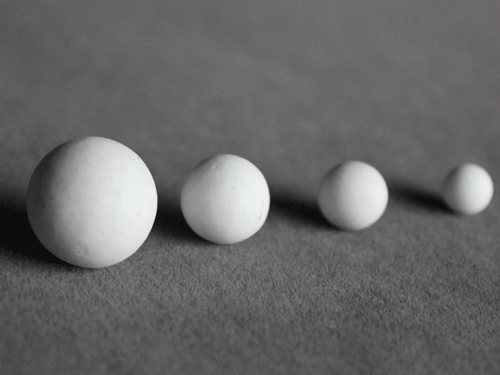
What are corundum balls and where do they work?
In the sample preparation scheme, the corundum ball plays the role of a grinding body: it is located inside the grinding bowl or drum, contacts the sample and transfers mechanical energy to it. In a planetary mill, the glass undergoes a complex movement; in a drum mill, it rotates along with the load; in a vibration mill, it receives vibrations. In each case, the movement is set by the equipment, and the ball only participates in the transfer of energy. Therefore, the mill type, permissible load, bowl material and dimensions of the grinding media are checked together, and not selected based on the product name alone.
The corundum ball does not have a complex internal structure: it is a solid ceramic body. Material, diameter, surface condition, batch uniformity and absence of defects are important for practice. Small deviations in diameter can affect placement, number of contacts and reproducibility of the result, so the lot is evaluated as a set and not just one sample.
Corundum balls do not replace a grinding bowl, liner or mill. They are also not a one-size-fits-all environment: compatibility is subject to specific mill manual and beaker specifications. If the equipment description does not directly indicate the acceptable grinding media material, this condition must be clarified before loading.
What is important in a party
- geometry and diameter uniformity;
- appearance: chips, cracks, foreign inclusions;
- material and declared properties of ceramics;
- storage conditions and shock protection;
- the ability to identify a batch during repeated work.
How the corundum medium is involved in grinding
Grinding in a ball mill occurs due to impact and abrasion. Larger balls produce stronger single impacts and are suitable for breaking up relatively large particles. Small balls provide more contact points and promote fine abrasion, but they are more difficult to separate from the powder, and too fine a fraction can clog the tooling elements. There is no one diameter that works equally well for all materials and applications.
It's not just the balls that influence the outcome. The initial size of the sample, its hardness, fragility, tendency to agglomerate, the ratio of the mass of grinding media to the sample, the filling of the glass, the speed and duration of grinding, as well as the medium—air or liquid—are significant. Therefore, the typical minimum size from the catalog cannot be automatically transferred to any sample: it relates to certain conditions and method of measurement.
Dry and wet grinding
When dry grinding, the material is in a glass without a liquid medium. This option is convenient when you need to preserve the powder without subsequent drying, but fine grinding can be complicated by agglomeration and sticking to the walls. In wet grinding, liquid is added to aid dispersion and heat removal, but liquid separation and drying are then required. The liquid must be compatible with the sample and the material of the cup and seals; Corundum is stable in many environments, but this does not mean resistance to any acids, alkalis or salts.
Grinding, disagglomeration and mixing
These are different tasks. Grinding reduces the size of the primary particles and increases the specific surface area. Disagglomeration breaks up loose associations of particles without necessarily breaking up each particle. Mixing tends to distribute the components evenly and may hardly change the coarseness. Corundum balls are capable of participating in all three operations, but the mode and readiness criterion are chosen according to the target. Mixing powders using balls does not replace a specialized mixer if strict uniformity throughout the entire volume is required.
Material, wear and contamination
Corundum has high hardness and abrasion resistance, so it is used where a metallic environment is undesirable. However, high hardness does not mean no wear. Ceramics can gradually become rounded, lose mass, form microscopic chips and transfer material of their composition into the sample. The higher the grinding energy, the duration of the operation and the abrasiveness of the sample, the more noticeable this contribution.
For corundum balls, the key question is whether the presence of aluminum in the sample is acceptable. If the assay is sensitive to Al, alumina may not be the best choice. We cannot promise a complete absence of contamination: even durable ceramics wear out, and the source of impurities can be the walls of the beaker, the stirrer, the unloading tool and the previous sample.
It is useful to compare materials based on the type of possible contamination and operating conditions. Metal grinding media can introduce iron, chromium or nickel, zirconium dioxide - zirconium, corundum - aluminum. There is no universally best option: the choice depends on the analyte, the permissible impurity limit, the hardness of the sample and the aggressiveness of the environment.
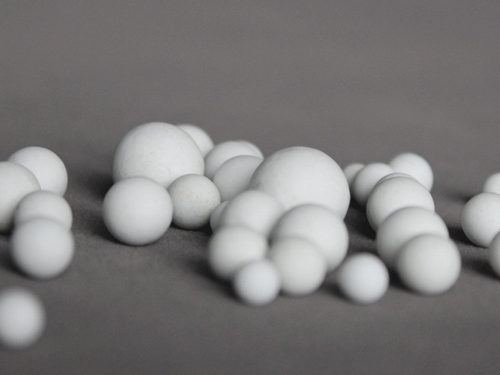
Impurities: not just the ball material
Before starting work, it is worth assessing the entire circuit: the material of the glass, its seal, the lid, grinding media and unloading devices. If the glass is softer than the balls, wear on the wall may be more noticeable than wear on the balls themselves. If the material of the cup and the balls are different, both components are potentially included in the sample. Blank grinding without a sample or with a model medium helps evaluate the contribution of the equipment, but requires a separate procedure and does not replace a certified analysis.
How to read specifications
Information about material, available diameters, dimensional tolerances, apparent density, strength and wear resistance is useful in the product description. However, you cannot transfer the parameters of one batch to the entire range. If the value is missing or looks contradictory, it is not invented: it is clarified with the supplier and checked against the accompanying documents. Particular care should be taken when making promises of “zero pollution” and “absolute chemical inertness.”
Compatible with mill and grinding bowl
Compatibility is determined not only by the material of the balls. It is necessary to check the mill model, permissible bowl volume, maximum load, speed, dimensions of grinding media and seal material. A ball that is too large may interfere with closure, damage the lid, or move unevenly in the cavity. Too fine a fraction sometimes passes through the fastening elements and makes unloading difficult. These issues are resolved according to the specific installation manual.
You cannot choose a medium according to the simple rule “ceramics are always compatible with ceramics.” Even related materials differ in porosity, strength and wear. If corundum balls are operated in a stainless steel bowl, the wall may wear out faster due to the harder environment; If the glass is ceramic, both elements may wear out. Each pair requires manufacturer's inspection. Screening equipment, including a vibrating screen, is a separate operation and does not in itself confirm ball compatibility with the mill.
Brand TENCAN refers to Changsha Tianchuang Powder Technology Co., Ltd.; directions of equipment and consumables are presented on website TENCAN. When selecting, it is useful to go from the task and installation passport, and not from a random combination of cards.
Diameter, quantity and loading
Ball diameter is not an indicator of performance. The mass of a batch depends on the diameter, density of the material and the number of balls, so quantity and mass are not interchangeable. Large balls are more often used for preliminary destruction, small ones for finer abrasion and increasing the number of contacts. Mixed loading can change the placement and range of effects, but complicates the reproducibility and separation of balls after grinding.
The degree of filling of the glass and the ratio of the mass of the balls to the mass of the sample depend on the mill model and the properties of the sample. These values should not be transferred from another task without checking: overloading increases drive load and heat, and underloading reduces efficiency. Practical parameters are selected according to the manual and trial grinding with control of coarseness and temperature.
Selection criteria
- chemical composition of the sample and acceptable contamination;
- initial and target size, acceptable particle distribution;
- dry or wet process, liquid properties;
- glass material and approved grinding media;
- mill model, glass volume and mode;
- available diameters, batch uniformity and condition;
- ease of ball separation, cleaning and wear monitoring.
Operation, cleaning and wear monitoring
Before the first loading, the balls are inspected: there should be no cracks, deep chips or foreign inclusions on the surface. It is best not to use a damaged ball as it may break during the process and contaminate the sample. It is useful to identify the batch by number or date so that if the result changes you can return to the operating conditions.
After each sample, the balls are cleaned of powder residues. First remove the bulk mechanically, then wash with a suitable solvent or mild neutral detergent if this does not damage the ceramics and glass. Do not use aggressive media or metal brushes unless necessary: they may leave marks or damage the surface. After washing, the balls are thoroughly dried and stored separately from dust and moisture.
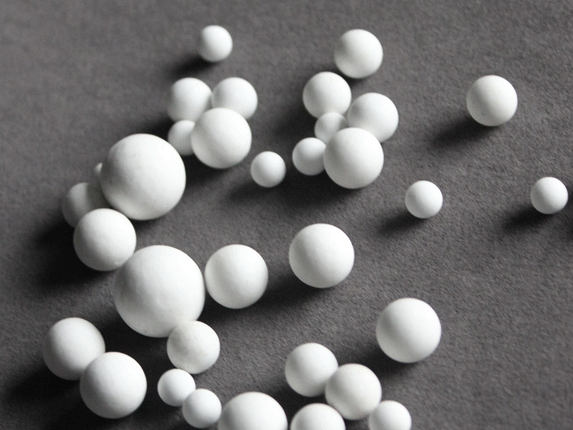
Cleaning between samples
If samples vary in composition, washing alone may not be sufficient to prevent trace carryover. In such cases, separate sets of balls or a more thorough cleaning procedure established by the laboratory are used. It is impossible to describe one universal sequence for all substances: acids, oils, pigments and powders with high adhesion require different measures. It is important that cleaning does not become a source of new impurities.
Wear monitoring and replacement
Wear is assessed by appearance, change in diameter and, if necessary, weight. Weighing before and after a series under the same conditions provides a guide, but is not a certified method for determining sample contamination. Signs for replacement include cracks, chips, strong rounding, persistent changes in results and the appearance of ball material in the sample above the permissible level. Products should be stored in dry containers, protected from shock and temperature changes.
Frequently asked questions
Do corundum balls not contaminate the sample at all?
No. They can wear out and introduce aluminum. The degree of contribution depends on the sample material, grinding energy, time, and the state of the balls and glass. Aluminum or trace tests require a separate assessment.
Will these balls fit any planetary mill?
Only if permitted by the mill management and compatible with the bowl, volume, compaction and size of the grinding media. The name “corundum” does not confirm compatibility with a specific model.
How is corundum different from zirconium dioxide?
These are different ceramic materials with different densities, strengths and the nature of possible contamination. Corundum is associated with the risk of introducing aluminum, zirconium dioxide - zirconium. The choice depends on the analyte and conditions rather than on a general claim of superiority.
Is it possible to wash balls in acid?
Without confirmation - no. Corundum is not resistant to any chemicals, and an aggressive environment can damage the ceramics, glass or seals. Use a procedure consistent with the equipment materials and laboratory requirements.
Do I need to sift the powder after grinding?
This is often done to separate balls and break up large aggregates, but sifting is a separate operation. Screening equipment does not confirm ball compatibility with the mill or replace ball wear monitoring.
Practical conclusion. Corundum grinding balls are selected based on a combination of sample material, acceptable contamination, batch size and condition, and the requirements of the specific mill and bowl. This approach allows you to use the ceramic medium consciously and not attribute to it properties that it does not have.