
Corundum grinding balls — These are aluminum oxide ceramic bodies that are loaded into a grinding bowl or ball mill drum along with the sample. They transfer impact and abrasion energy to the material, so the grind size, speed of operation and purity of the product depend on their size, shape and condition. In the catalog TENCAN such bodies are represented as corundum grinding balls; Specific diameters, packaging and conditions of use are indicated in the product card.
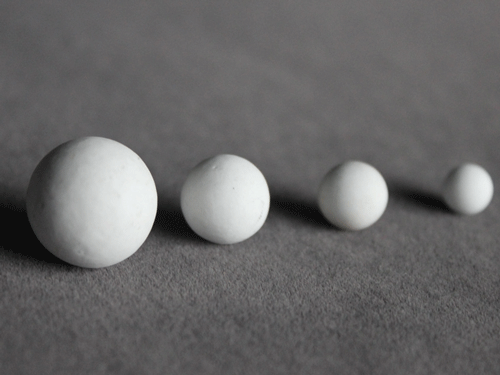
What are corundum grinding balls
Corundum is a mineral based on aluminum oxide Al2O3. In engineering, this name most often refers to ceramics with a high aluminum oxide content, obtained by sintering. Therefore, the word “corundum” in the product name indicates primarily the material, and not the size, shape or degree of purity of a particular batch. The grinding ball is a consumable element of the grinding system: it is not a lining, does not replace the grinding bowl and does not work separately from the mill.
In a ball mill, the ball receives relative motion when the working chamber rotates or oscillates. In a planetary mill, the glasses rotate around a common axis and around their own axes; in a drum mill, the drum usually rests on rollers, and in a vibration chamber it oscillates. In all cases, the grinding bodies collide with the material and with each other, wear it out and gradually wear out themselves. That is why the properties of the balls are no less important than the mill mode.
Corundum balls are used for fine grinding, deagglomeration and mixing of powders when a ceramic grinding medium is needed. They are considered for minerals, ceramic raw materials, glass, pigments and other fragile materials. At the same time, corundum is not universal: it contains aluminum, can be abraded and contribute to the composition of the sample. The decision on application is made based on the analysis task, acceptable contamination and the parameters of a particular mill.
How balls work in a mill
Grinding in a ball mill consists of impact and abrasion. When a ball collides with a particle, a local load arises, which destroys large grains; When the balls rub and roll, the material gradually wears away and opens along the grain boundaries. Large balls create stronger impacts, small ones give more contact and contribute to fine abrasion. Therefore, a set of balls of different diameters can influence the particle size distribution, but does not in itself guarantee a narrow distribution or a given size.
Dry and wet grinding are different conditions. In the dry process it is easier to obtain powder, but dusting, sticking to the walls and overheating are possible. In the wet process, the liquid removes heat, reduces dusting and can speed up disagglomeration, but after grinding the liquid must be separated and dried. The liquid must be compatible with the sample, the material of the glass and the grinding media. It is impossible to transfer the example of one material to another: corundum is chemically resistant in many environments, but not in all, and prolonged contact with an aggressive environment requires separate testing.
It is important to distinguish between comminution, deagglomeration and mixing. During grinding, the size of the primary particles decreases, during deagglomeration, their loose associations are destroyed, and when mixed, the components are only redistributed in volume. A ball mill can perform all three tasks, but the mode and grinding media are selected differently. If you only want to mix bulk components, the grinding operation may be redundant and lead to undesirable changes in the particles.
A bead mill with small grinding media is a separate class of equipment. Corundum balls from the product card should not automatically be considered the standard medium for any bead, vibration or planetary installation: first check the chamber size, allowable diameter of the bodies, lining material and the recommendations of the mill manufacturer.
Material and characteristics that are important to read correctly
Corundum ceramics are valued for their high hardness and wear resistance. The reference hardness of corundum is about 9 on the Mohs scale, but this is a characteristic of the mineral and not a guarantee of the service life of a particular product. Wear is influenced by raw material purity, porosity, crystal size, sintering quality, ball shape, beaker condition, mill speed and sample properties. Two balls that look similar can behave differently if they have different microstructure or diameter tolerances.
In the product card you need to look not only at the word “corundum”. The nominal diameter and tolerance, shape and sphericity, color and presence of visible defects, packaging, cleaning recommendations and acceptable operating conditions are practically significant. If the description indicates the degree of purity of the material, it should not be confused with the purity of the finished product: even slight wear of the grinding media and lining adds components to the sample. The color of ceramics is also not a sufficient indicator of quality.
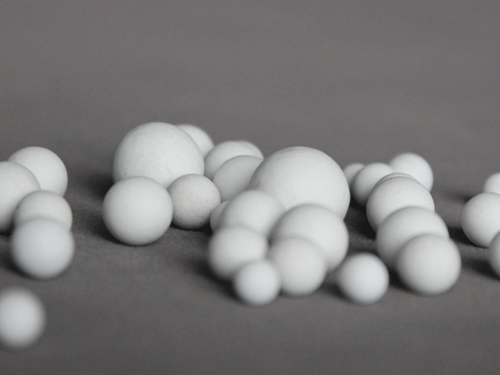
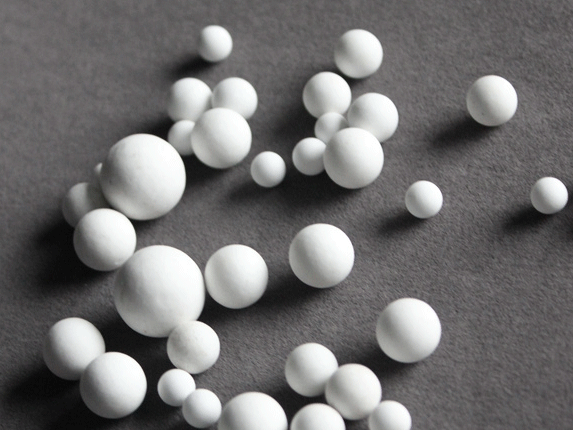
Ball size is a compromise between impact energy and number of contacts. Too large bodies can cause coarse grinding, excessive wear and overheating; too small - do not destroy large grains and work slowly. The diameter must correspond to the internal dimensions of the glass, the design of the lid and the permissible loading of the mill. You cannot select a ball based only on a photograph: the tolerance, porosity and actual batch cannot be determined from a photograph.
Wear, soiling and cleaning
The wear of the grinding media manifests itself gradually: the diameter changes, chips appear, the number of small particles increases, and grinding takes longer. Corundum is hard but brittle, so edge chipping and cracking can occur if overloaded, improperly loaded or a faulty mill. Damaged balls are less predictable in terms of wear and are easier to retain sample residues, so it is better to take them out of service if the condition is in doubt.
Contamination is a key issue for laboratory grinding. Corundum balls do not provide “zero” addition of impurities: the material of the grinding media and lining wears out, and the product receives the appropriate additive. For most crude applications this may not be significant, but when analyzing for aluminum, when making precise compositional measurements or when preparing highly pure powders, a separate assessment is needed. Sometimes another material is more suitable, although it will not be universal.
Cleaning begins with removing any remaining sample immediately after work. The balls are washed in a compatible manner, dried and stored separately from samples and unused materials. Do not mix balls from different batches unnecessarily: this makes it more difficult to track wear and possible transfer of impurities. For wet grinding, it is especially important to remove dried residues from recesses and cracks, otherwise the next sample may be contaminated by the previous one.
Aggressive cleaning media are used only after checking their effect on the ceramics and the sample. Corundum cannot be assumed to withstand any acid, alkali or temperature. If the laboratory has traceability requirements, a separate record is kept for grinding media: date of entry, operating conditions, signs of wear and batch replacement. This is more practical than focusing only on the external shine after washing.
Compatibility, Applications and Limitations
Corundum balls are appropriate where a solid ceramic medium is needed and the possible addition of aluminum is acceptable. This includes the preparation of mineral samples, grinding of ceramic powders, pigments, glass and other fragile materials. For coarse crushing of large pieces, such a medium does not replace a jaw or roller crusher. For viscous, fibrous or highly plastic materials, a ball mill may be ineffective, and for samples where aluminum is not acceptable, corundum may not be suitable.
Compatibility with the mill is confirmed by the passport, product card and actual dimensions, and not by external similarity. It is necessary to check the diameter of the balls with the size of the cup, the material of the cup and lining, the permissible load, the rotation speed and the maximum weight of the sample. If the glass is softer than the balls, the glass will wear out first; if it is harder, the wear of the grinding media will increase. In both cases, the product may receive impurities that need to be taken into account.
For example, card laboratory planetary ball mill with 360 degree rotation describes a specific equipment model. It does not prove that any corundum balls are suitable for its glasses: before use, you need to separately check the diameter, the material of the grinding bowl, the permissible size of the grinding media and the loading mode. This is especially important when the mill operates at high speeds and small chamber volumes.
Before ordering, it is useful to make a short checklist:
- clarify the nominal diameter, tolerance and packaging of the balls;
- check the material of the balls with the material of the cup and lining;
- check the permissible body size and loading for a specific mill;
- evaluate the mass of the sample, the ratio of balls to powder, dry or wet process;
- consider cleaning, drying, storage and acceptable contamination of the sample.
General directions of equipment and accessories TENCAN you can look at main page of the site. However, selection still remains a task for a specific sample and a specific installation. There is no point in buying grinding media “just in case”: the wrong diameter or material can cause more problems than benefits.
Brief answers to frequently asked questions
How do corundum balls differ from steel balls?
Steel balls are usually denser and hit harder, but can introduce iron. Corundum ceramics are harder than many materials and are less likely to contaminate the sample with metal, but they contain aluminum and also wear out. The choice depends on the acceptable impurities and what kind of grinding mechanism is needed.
Is it possible to wash corundum balls with water?
Water cleaning is possible if it is compatible with the sample and does not degrade the condition of the ceramic. After washing, the balls are thoroughly dried and stored separately. For acids, alkalis and other aggressive media, a separate chemical resistance test is required.
Are corundum balls suitable for wet grinding?
Wet grinding with corundum balls is considered when the fluid is compatible with the material and sample. Suitability for any liquid cannot be promised: the properties of the medium, temperature and duration of contact affect the result and wear. For a specific task, the entire system is checked, not just the material of the balls.
When is it time to replace the balls?
The reason is chips, cracks, noticeable changes in diameter, increased wear and increased grinding time. If a batch does not clean well or there are concerns about the transfer of impurities, it is better to replace it. Corundum balls TENCAN should be selected according to the product card and the conditions of a particular mill, and not just by the name of the material.