
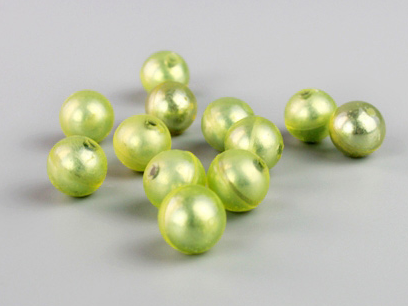
Iron-core, polyurethane-coated grinding balls are grinding media that operate inside the grinding chamber of a ball mill or similar unit. An inner core of iron or steel gives the ball the mass and inertia necessary to transfer impact and abrasion energy, while an outer layer of polyurethane forms the working surface in contact with the sample, lining and other balls. Such balls are not an independent device: they are a replaceable accessory, which determines the nature of grinding, particle size distribution and the likelihood of introducing unwanted impurities. The device, characteristics, limitations and selection criteria are discussed below; Specific dimensions, tolerances and coating parameters for the supplied batch should be checked in the product card Grinding balls with iron core and polyurethane coating production TENCAN.
Function and place in the grinding process
In a ball mill, grinding occurs due to collisions and abrasion between the grinding media and the material. The ball receives energy from the rotation of the drum, glass or from the movement of the working element and transfers it to the sample. Two groups of results depend on the properties of the grinding medium: the speed of particle size reduction and the purity of the product. Metal balls provide high impact energy, but when worn, they can introduce iron and alloying elements. Ceramic bodies are less prone to metal contamination, but their density and strength limit the modes available. Balls with an iron core and a polyurethane coating occupy an intermediate position: the core retains mass, and the polymer shell reduces direct metal-to-material contact.
It is important to separate the concepts of “grinding body” and “mill”. The balls themselves do not create the movement; they only work in an installation with suitable chamber geometry, rotation speed and load. The loading movement can be cascaded or cascading depending on the speed and diameter of the chamber, and this directly affects the impact to abrasion ratio. Therefore, the choice of a ball cannot be considered in isolation from the apparatus in which it will be used.
Design: Core, Cover and Interface
Metal core
The core determines the mass and center of gravity of the ball, and therefore the energy transferred during a collision. The higher the density of the core material, the greater the impulse for the same diameter, but the higher the load on the lining and the mill drive. In products of this type, the core is usually completely covered with polymer, so its material should not be in direct contact with the sample while the coating is intact.
Polyurethane coating
Polyurethane is an elastomer that combines elasticity with fairly high resistance to abrasive wear. In the context of grinding balls, the coating serves several purposes: it separates the core metal from the specimen, softens impact, reduces noise and vibration, and can also reduce material buildup. At the same time, the coating is not “absolute protection”: its properties depend on the brand of polymer, layer thickness, temperature and chemical environment. Polyurethane should not be automatically assumed to be chemically inert to any solvents or reagents.
Interface
The adhesion strength of the coating to the core is a key parameter for durability. If adhesion is insufficient or the layer is damaged, the polymer may peel off, exposing the metal. That is why during operation it is important to control the condition of the surface and not use balls with obvious defects.
Grinding media, bowls and drums: do not confuse
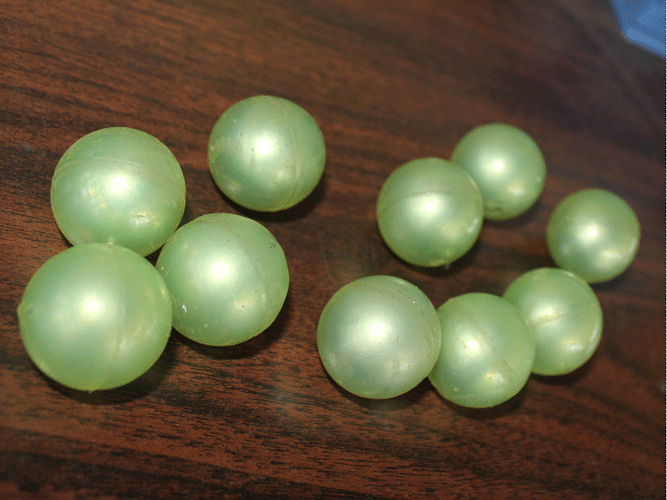
In the catalogs of grinding equipment, grinding bowls, grinding media and grinding drums coexist. These are different elements. The glass or drum forms the working chamber, and the grinding bodies inside it directly crush the material. Polyurethane coating may be present on glasses, drums, and balls, but this does not mean that one product automatically replaces another. The compatibility of the bowl, drum and grinding media is determined by size, material, cover and seal design, and cleanliness requirements. It is impossible to transfer the characteristics of one element to the entire system.
How to correctly read the characteristics of grinding media
Descriptions of grinding media often contain values that are easy to confuse. To make the selection correct, it is useful to separate the following groups:
- Geometric dimensions. Nominal ball diameter, diameter tolerance, sphericity. The nominal value does not mean that every ball in the lot is exactly that size; the actual spread is indicated separately.
- The mass of one ball and the mass of the load. These are different quantities. The mass of one ball depends on the diameter and density; Load mass depends on the number of balls and their total volume.
- Volume and degree of filling. The volume of the grinding chamber, the volume occupied by the balls, and the volume of the sample are three independent parameters. Ball loading affects the movement mode, and the amount of material affects the grinding efficiency.
- Density of the material. The core density and coating density are different; the average density of the ball is determined by their ratio. You cannot transfer the density of the metal to a product with a polymer layer without correction.
- Wear resistance. The wear rate depends not only on the ball material, but also on the hardness of the sample, speed, medium (dry or wet grinding) and operating time.
Separately, it is worth noting that the rotation speed of the mill and the linear speed of the grinding media are not the same thing. The diameter of the chamber and the gear ratio determine the speed at which the balls move relative to the walls. Therefore, the same speed at different settings gives different modes. Time productivity is also not equal to the weight of one load: it depends on the initial size, target size and allowable processing time.
Materials and applications: where such balls are appropriate
Polyurethane coating is usually considered where there is a need to reduce metal contamination while maintaining a reasonably high grinding energy. Typical applications include sample preparation prior to analysis, grinding brittle to moderately hard materials, dispersing pigments, ceramic and polymer powders, and handling materials sensitive to iron contamination. The polymer layer also reduces noise and vibration, which is important for laboratory conditions.
However, such balls are not a universal solution. Limitations are related to temperature, chemical resistance of polyurethane and mechanical stress. When heated above what is permissible for the selected brand of polymer, the coating can soften, and when in contact with aggressive solvents, it can swell or collapse. Therefore, before using in wet grinding, it is necessary to ensure that the medium does not interact with the polyurethane. Contamination from polymer-coated balls cannot be considered “zero”: when worn, polymer particles may enter, and if the layer is damaged, the core material may enter.
For comparison: ceramic and zirconium bodies also do not provide absolute cleanliness, since they wear out and can introduce their own material. The choice always involves a compromise between grinding energy, wear and acceptable levels of impurities.
Dry and wet grinding: what changes
During dry grinding, the main factors are abrasive wear, dust formation and sticking. A polyurethane surface can reduce adhesion of soft materials, but does not eliminate it completely. During wet grinding, a medium is added: water, organic solvents, oils or suspensions. It is important to consider not only chemical compatibility with the coating, but also how the environment affects the friction and movement of the balls. In some cases, the liquid reduces impact loads and increases the proportion of abrasion, which changes the particle size distribution of the product.
Particle destruction and disagglomeration are different processes. If the task is to break up aggregates, and not to reduce the size of primary crystals, the mode and type of grinding media are selected differently. Due to its elasticity, a polyurethane coating may be preferable where a hard metal impact is undesirable.
Hardware Compatibility
The balls must match the grinding chamber in size and quantity. Bodies that are too large may jam, and bodies that are too small may not provide the necessary energy. For planetary mills, the diameter of the glass and its internal geometry are important; for drum and roller mills - drum volume and rotation speed. Bead mills use a different class of grinding media—small bead balls—and iron-core polyurethane balls should not automatically be considered suitable for them. If the task is fine dispersion in a liquid medium, it makes sense to separately consider a laboratory bead mill, for example Laboratory bead mill TENCAN, and check with the manufacturer what grinding media are provided for it.
Compatibility needs to be checked on several points: chamber material and size, permissible load weight, maximum speed, presence of lining, cleanliness requirements. None of these points can be replaced by the general considerations that “balls are suitable for ball mills.” General information about equipment directions and selection is provided on the website TENCAN.
Wear, cleaning and storage
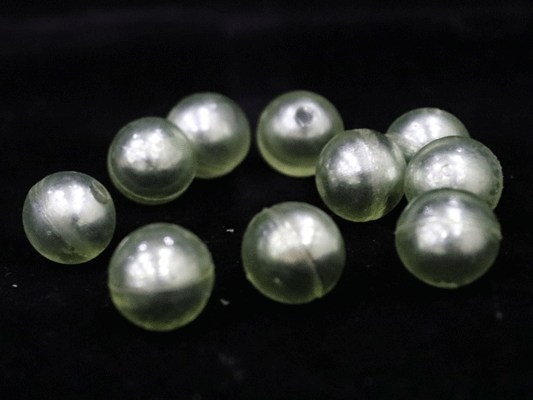
Monitoring the condition of the balls is part of the sample preparation technique. Regular inspection allows you to notice the appearance of cracks, peeling, darkening or exposed areas of the core. It is better to remove balls with damaged coating from work, since they cease to perform their main function - to separate the metal and the sample.
Cleaning between samples reduces the risk of cross-contamination. The cleaning method depends on the sample material and the durability of the polyurethane: some media allow rinsing with water, others require solvents that can be aggressive to the polymer. If compatibility information is not available, it is safer to choose mechanical cleaning or contact your supplier for recommendations. The balls should be stored in a dry place, without direct sunlight and without contact with substances that destroy the polymer.
How to evaluate the grinding result
The choice of grinding media is checked by the result, and the result is measured. Particle size distribution is determined by sieve analysis, laser diffraction or other methods; different methods give different numbers for the same powder. Therefore, it is correct to compare variants of balls only with the same sampling and measurement methods. The result is influenced by the initial size, sample weight, ratio of material to grinding media, medium and time. Differences cannot be attributed to coverage alone if other conditions have changed.
For laboratory practice, it is useful to record the experimental conditions: type of mill, diameter and number of balls, sample loading, speed and duration. Then, when replacing a batch of grinding media, you can see whether the grinding progress has really changed or whether another factor influenced the result.
Selection criteria
When selecting polyurethane-coated grinding balls, it is useful to go from the task to the parameters:
- Determine target particle size and acceptable contamination. If iron is not an option, a polymer coating provides an advantage but requires wear control.
- Specify what type of mill is used: planetary, drum, roller or other. The permissible dimensions and loading depend on this.
- Match the diameter and number of balls with the volume of the chamber and the mass of the sample, and do not select them “by eye”.
- Check the chemical compatibility of the coating with the wet grinding medium.
- Assess the process temperature and make sure that it does not exceed the limits established for a specific brand of polyurethane.
Only after this does it make sense to compare specific designs and check with the manufacturer about the available dimensions and tolerances.
Frequently asked questions
How do these balls differ from steel balls?
Steel balls transfer energy directly to the metal and introduce iron when worn. The polyurethane coating separates the metal from the sample and softens the impact, but adds temperature and chemical resistance limitations.
Can they be used in wet grinding?
Yes, if the environment does not destroy the polyurethane and does not cause swelling. Specific compatibility with water, acids, alkalis or solvents must be checked according to the manufacturer's data.
How can you tell if the coating has worn out?
Signs include discoloration, roughness, cracks, peeling and the appearance of a metallic sheen. Such balls are replaced so as not to introduce impurities.
Are these balls suitable for a bead mill?
Not automatically. Bead mills typically operate with a different type of fine grinding media; Compatibility depends on the design of the device and must be confirmed by the manufacturer.
Is it possible to mix balls of different diameters?
In some modes, a mixture of diameters gives a wider size distribution, but this changes the loading dynamics. The decision is made based on the task and recommendations for a specific mill.