
Agate grinding balls are grinding bodies made from natural chalcedony, a variety of which is agate. They are loaded along with the sample into a grinding jar or drum of a laboratory mill, where they transfer impact and abrasion energy to the material and gradually turn large particles into powder. The place of these balls in the technological chain is the sample preparation stage between sample collection and subsequent analysis or synthesis. An agate grinding medium is chosen primarily where metal contamination of the sample is unacceptable and where the hardness of the sample allows working with ceramics.
Below we look at what determines the behavior of agate balls in a mill, how to correctly read their sizes, how their resource is limited, and why compatibility with a specific installation cannot be taken for granted.
What are agate grinding balls and what work do they do?
The grinding ball itself does not grind: it only works in conjunction with a vessel and a drive. The mill sets the glass or drum in motion - rotational, planetary, vibration; the balls rise and fall or rub against the walls and each other, and the material caught between the colliding bodies is destroyed. Agate grinding balls are one of the options for such a grinding medium, along with steel, corundum, zirconium and tungsten carbide bodies.
Impact and abrasion are two different mechanisms
In grinding, two mechanisms operate simultaneously. The impact splits large particles and is responsible for the rapid reduction in size; abrasion works more slowly, but it is what moves the material to fine fractions and destroys aggregates. The ratio of these mechanisms depends on the mill mode, the shape and size of the bodies, as well as on the properties of the sample. Therefore, the same set of balls in different settings and under different modes gives different results, and it is not worth transferring the mode from one mill to another without checking.
Particle disruption and disagglomeration are not the same thing
Grinding reduces the size of individual particles. Disagglomeration only breaks up loose conglomerates without changing the size of the primary crystals. For soft, stick-prone powders, milling can noticeably improve uniformity with just a small amount of energy, while for tough crystals, actual grinding will be required. Agate media is more often used where careful homogenization and moderate grinding are needed, rather than extreme productivity.
Why is agate chosen for grinding media?
Agate is a dense mineral containing no metals. Therefore, balls made from it are non-magnetic, do not conduct current and do not introduce iron, nickel, chromium and other elements of steel tools into the sample, which could distort the results of elemental analysis. For samples where metallic inclusions are unacceptable, this is a significant argument. However, “not a metal” does not mean “does not tolerate anything”: agate is an oxide material, and its own components can also enter the sample.
Ball material: composition, hardness and density
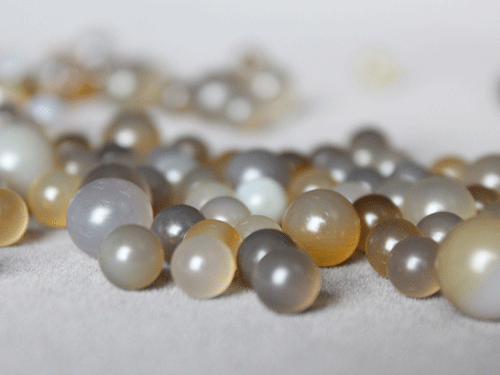
Agate is layered chalcedony, that is, a fine-crystalline form of silicon dioxide SiO₂ with impurities, which give the characteristic banded color. As a material for grinding media, it is interesting due to its combination of moderate hardness, density and chemical inertness in most aqueous and alcoholic media. Position agate grinding balls in the catalog it is classified as grinding media for ball mills, that is, we are talking specifically about a consumable medium, and not about independent installation.
Hardness: about 6.5–7 on the Mohs scale
Agate scratches glass confidently, but is inferior to corundum, tungsten carbide and most hard mineral phases. Practical conclusion: agate balls are reasonable to use for soft, medium-hard and brittle materials - organic compounds, polymers, dried plant and biological samples, oxides of medium hardness, some salts, glass and slags of moderate hardness. If the hardness of the sample is comparable to that of agate or higher, grinding will slow down sharply and wear on the medium will increase.
Density: about 2.6 g/cm³
Agate is approximately three times lighter than steel and almost two times lighter than zirconium dioxide. Lower density means less mass for the same diameter and therefore less energy per impact. For planetary and vibration mills, this limits the achievable grinding fineness: to obtain a comparable effect, it is necessary to increase the processing time, rotation speed or ball diameter. But the smaller mass of the balls reduces the load on the mechanism and the heating of the sample per unit time.
Fragility and its consequences
Agate is hard, but not viscous. During intense collisions, when the glass is overloaded, or when a large solid piece hits, the balls break off and the fragments remain in the sample. This is the second most important source of contamination after normal abrasive wear.
Dimensions, shape and loading: how to read the parameters correctly
Available diameters, dimensional tolerances and packaging of a specific item should be checked against the product card and accompanying documents, and not derived from general considerations. Below is the logic by which these values are interpreted.
Ball diameter
Large balls are heavier, give a stronger impact and crush relatively large particles well. Small balls create more contacts, provide denser layer packing and work better on thin fractions. In practice, the load is often collected from balls of two or three diameters: this combines the impact and abrasion components and gives a narrower particle size distribution than the monofraction.
Number of balls, load weight and filling degree
The number of balls and their total mass are different quantities related through the density of the material. With the same number of balls, the agate load will be noticeably lighter than the steel one, and this must be taken into account when transferring the mode from one medium to another. The degree of filling of the glass - the proportion of its volume occupied by the balls and material - is also not equal to the mass of the sample: too dense a load dampens the free movement of the balls and reduces the grinding efficiency; too thin a load reduces the number of contacts.
Beaker volume, workload, sample weight and productivity
These four parameters are often confused. The volume of the glass is the geometric capacity of the vessel. Working load is the volume that the balls and material actually occupy. Sample mass - how much sample is loaded in a particular experiment. Productivity - how much material the installation processes per unit of time in the selected mode. Numbers from one category cannot be automatically transferred to another.
Wear and transfer of impurities
Where does pollution come from?
During grinding, the contacting surfaces wear out. The material of the balls and lining passes into the sample, and the sample material is partially deposited on the balls. The speed of this process depends on the hardness of the sample, processing time, mode, presence of a liquid phase and the state of the surface of the balls. Agate introduces silicon and trace impurity elements into the sample, characteristic of a particular deposit of raw materials; In terms of analysis, this is critical. Therefore, the formulation “zero pollution” is incorrect for any grinding medium. It would be more precise to talk about the different contributions of individual elements and the need for a control experiment.
How to evaluate the contribution of the environment
A simple way is to grind without a sample, under the same conditions and for the same time, and then analyze the washout or residual dust. Another option is to compare the results of the analysis of a real sample after grinding in an agate and, for example, in a zirconium medium. If the discrepancy for the elements of interest lies within the error limits of the method, the contribution of the environment for this task is insignificant.
Chips, cracks and service life
Agate balls accumulate damage: microcracks, chips on the edges, loss of shape. Damaged balls work worse and crumble more actively, so they are rejected during inspection - visually and, if necessary, by weight. Worn balls change the load distribution in the glass, and you should not mix them with a new batch without control.
Cleaning, storage and handling
After work, the balls are removed, washed with a suitable solvent, dried and stored separately from balls made of other materials. The order of operations depends on the sample: water-soluble samples require water or diluted alcohol, hydrophobic samples require organic solvents. Environments that are aggressive to silica are not suitable for agate; If it is necessary to work with them, the durability of the material is checked separately. Specific washing and drying regimes are always determined by the method for a given sample, and not by general recommendations.
The same batch of balls should not be used interchangeably for fundamentally different materials without intermediate cleaning: carryover of residues from a previous sample is a common cause of difficult-to-explain analytical results. Fragile balls do not withstand sudden temperature changes and direct impacts, so when pouring and storing they are placed so that they do not collide.
Hardware compatibility: what to check
Grinding media are selected for a specific installation, and not for the “class of mills” in general. You need to check at least four things: the geometry and material of the grinding vessel, the range of permissible diameters and load weights, the maximum drive speed and the requirements for resistance of the medium. The equipment manufacturer usually specifies the recommended grinding media and its density; You should not deviate from these instructions without checking. A general overview of directions for preparing powders is given at website TENCAN.
Example: Lightweight Vibrating Ball Mill
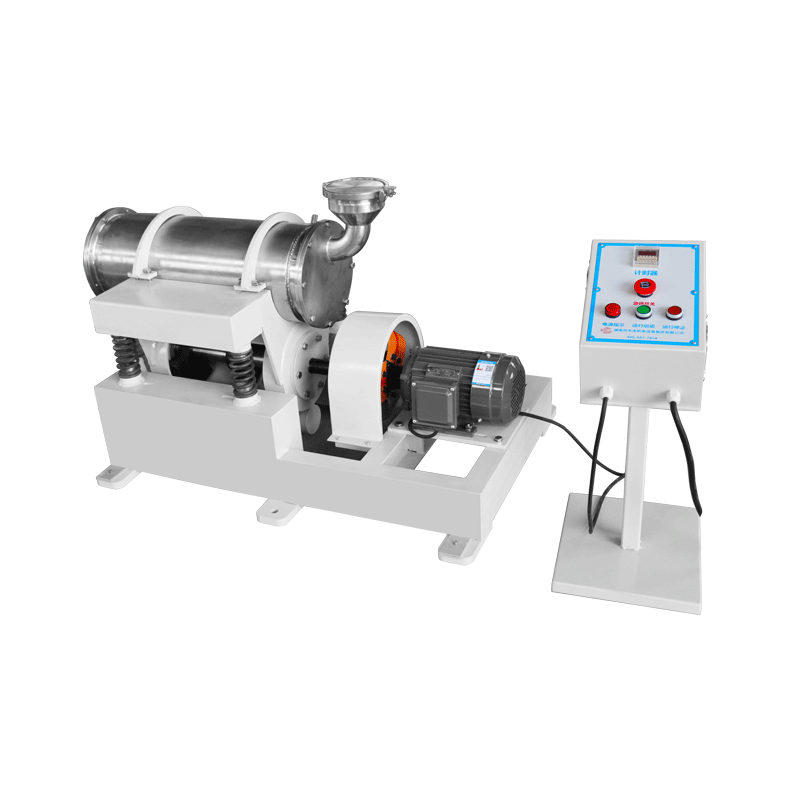
The vibrating mill drives the grinding vessel into high-frequency oscillatory motion; the balls inside make intense collisions at a small amplitude. This scheme places increased demands on the grinding medium, and not all ceramics can withstand prolonged vibration loads. That's why light vibrating ball mill and agate balls cannot be considered automatically compatible: compatibility is determined by the type and volume of the grinding vessel of this model, the permissible load weight and the declared media materials. This data is verified against the documentation for a specific design.
Dry and wet grinding
In dry grinding, agate balls operate in an environment where the powder tends to stick to the balls and walls; sticking reduces efficiency and results in uneven grinding. In wet grinding, the liquid phase removes heat, reduces dusting and sticking, and often speeds up the achievement of fine fractions, but adds a liquid separation step and the risk of partial sample dissolution. The liquid is chosen so that it does not react with either the sample or the agate.
Criteria for selecting agate grinding media
- Hardness and abrasiveness of the sample: agate is suitable for soft and medium materials; for hard phases it wears out quickly.
- Requirements for the purity of the sample: if metals are unacceptable, agate wins over steel; if silicon is critical, agate is not suitable.
- Required grinding fineness: low density limits the achievable particle size in a reasonable time.
- The geometry of the vessel and the mass of the load: the number and diameter of the balls must correspond to the specific glass or drum.
- Operating mode: Shock modes increase the risk of chipping and require more frequent inspection of the batch.
- Grinding medium: dry or wet process, type of liquid, temperature.
- Consumable life: service life depends on the sample and mode, and not just on the material of the balls.
Frequently asked questions
Is it possible to grind hard minerals with agate balls?
Technically possible, but ineffective. The hardness of agate is close to the hardness of quartz and many silicates, therefore, when grinding such materials, wear of the balls prevails, rather than grinding the sample. For solid phases, corundum, zirconium dioxide or tungsten carbide are usually considered.
How do you know when it’s time to replace agate balls?
Signs: chips, chipping of edges, noticeable loss of shape and deviation of mass from the original. If uncharacteristic particles appear in the sample or the spread of results increases, the batch is checked first.
Are agate balls suitable for wet grinding in alcohol?
Generally, yes: silica is chemically inert to ethanol and isopropanol. However, before serial work, you should make sure that the selected solvent does not interact with the sample itself and does not leach sample components.
How do agate balls differ from zirconium balls?
Zirconium dioxide is denser and harder, so it gives a stronger impact and wears out more slowly, but it introduces zirconium into the sample. Agate is lighter and softer, puts less strain on the mechanism, but it introduces silicon and chips faster on hard materials.
Is it necessary to use balls of different diameters?
Not required, but often useful. A mixture of large and small balls combines impact crushing with close contact and often produces a narrower particle size distribution than a single diameter charge.