
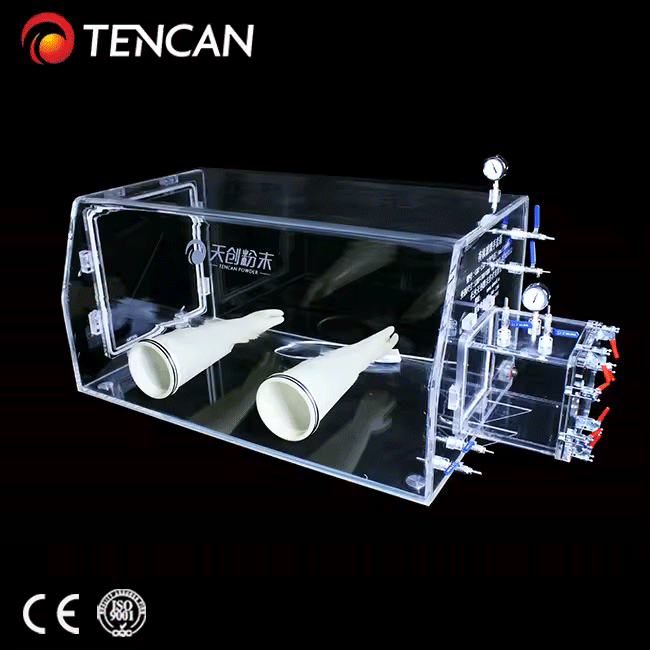
The acrylic glovebox is a transparent working chamber with gloves that separates the sample from the operator and the surrounding air. In the laboratory chain, it occupies a place between sample preparation and analysis: powders are weighed, poured, packaged, mixed or temporarily stored in it if it is necessary to reduce contact with oxygen, moisture and dust. In the catalog TENCAN presented plexiglass glove box, and further we are talking specifically about an acrylic chamber, and not about a vacuum metal box and not about a gas purification system.
What is an acrylic glove box and where is it used?
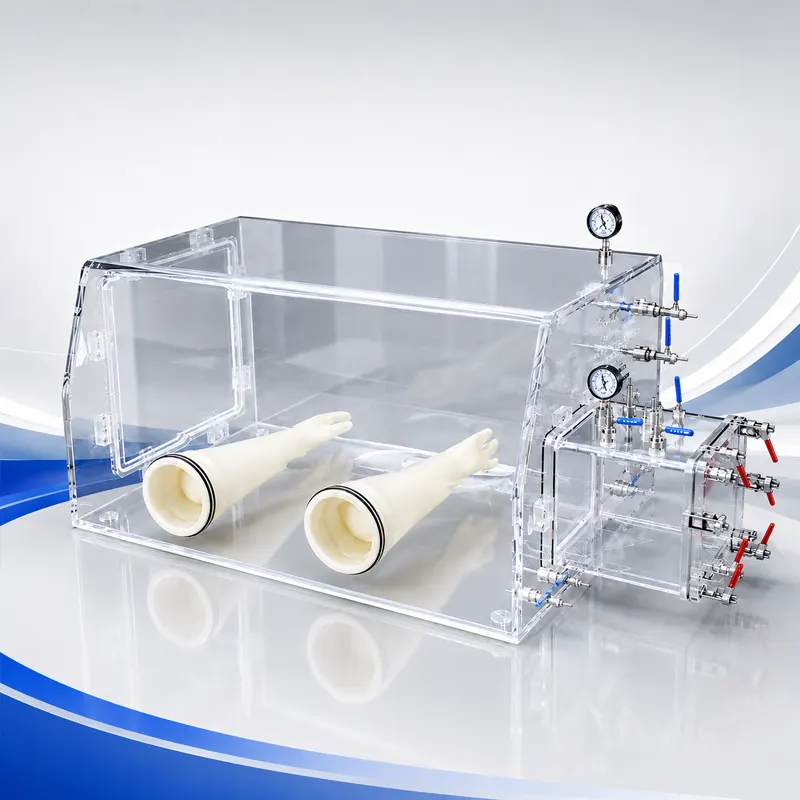
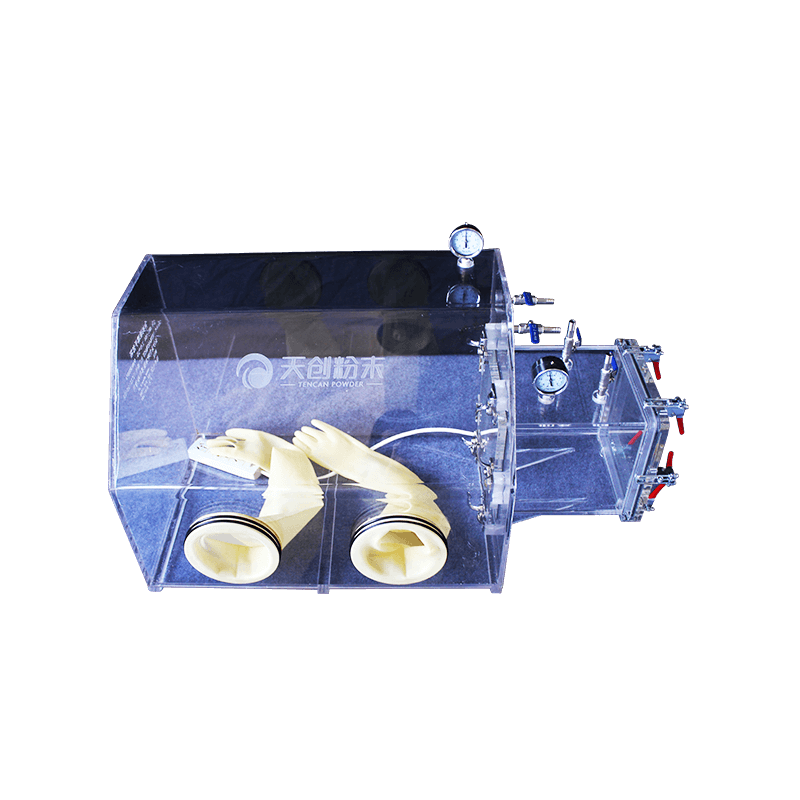
A plexiglass glovebox is a sealed or partially sealed chamber made of clear acrylic glass. The front wall contains glove ports through which the operator works inside the chamber without directly touching the sample with his hands. The transparency of the material allows you to see the position of the sample, instrument and glassware, which is especially important when working with small samples, thin powders and fragile samples.
Such a box is used not as an independent grinder or as a reactor, but as an insulation section. Its typical tasks include preparing powder for weighing, loading a sample into a grinding bowl, filling in an inert environment, working with materials sensitive to moisture or oxygen, and protecting the operator from dust. In materials science, chemistry, pharmaceuticals and quality control laboratories, acrylic boxes are valued for their availability, lightness and clarity, but they also have clear limitations on chemical resistance, pressure and temperature.
Acrylic glove box device
Transparent plexiglass chamber
The main element is a body made of acrylic glass, or PMMA. It is assembled from panels connected by welding, gluing or mechanically, depending on the design. PMMA is more transparent than many polymers, allowing the operator to clearly see the work area. At the same time, acrylic is sensitive to aggressive solvents, strong acids and alkalis, abrasive wear and deep scratches. If working with vapors of organic solvents is expected inside, the material of the chamber must be assessed separately: the mere fact of transparency does not mean chemical resistance.
Glove ports and gloves
Glove ports are holes in the wall where gloves are attached. The number of ports, their diameter, location and angle affect ergonomics. For one-way operation, a pair of ports is often sufficient; for more complex manipulations or two-operator operation, a different arrangement may be required. Gloves must be suitable for the task: long enough, durable and chemically compatible with the sample and the media used. It is important to check the tightness of the fastening, because it is the joints that most often become a source of air leaks.
Transition locks and gas lines
Depending on the design, the acrylic box may have a transition gate, gas inlets and outlets, taps or quick-release connections. The gateway allows objects to be passed in and out without fully opening the camera. Gas lines supply inert gas, such as nitrogen or argon, and relieve excess pressure. If the product card does not indicate a gateway or a specific type of gas fitting, it should not be considered standard equipment. These elements need to be specified for the selected model.
Supporting elements and internal equipment
The box body can be installed on a table, on a frame or on a special stand. It is useful to provide a shelf, tray or tray for tools inside so as not to contaminate the bottom of the chamber and reduce the risk of damage to the acrylic. Smooth liners that are easy to clean are often used to prepare powders. In this case, any internal elements should not interfere with the movement of the gloves and block the view.
How the box works: insulation, purging and circulation
The acrylic glove box creates a physical barrier. The operator is outside and the sample is inside the chamber. If the chamber is sealed and inert gas is supplied to it, the oxygen and moisture content in the working volume can be reduced. However, not every acrylic box is a continuous gas purification system. Simple purging, evacuation with gas replacement and circulation cleaning are different modes. A separate gas purifier by itself does not turn an acrylic chamber into a full-fledged atmosphere-controlled cabinet: a compatible sealed chamber, fittings and control system are needed.
When purging, gas is supplied to the chamber and displaces air. Efficiency depends on chamber volume, gas flow, location of inlets and purge time. The uniformity of atmosphere replacement is not guaranteed simply by the presence of a gas tap. If precise residual oxygen or moisture content is required, a control device and verification of the specific configuration is needed. It is important to distinguish between air cooling, purging with inert gas and cryogenic processing: an ordinary acrylic chamber does not become a cryogenic installation without the appropriate design and confirmed characteristics.
Vacuuming in an acrylic box also has limitations. Acrylic is not a metal, and deep vacuum is usually not a normal mode for it. If a product description only specifies a plexiglass glovebox, it cannot be assumed that it is designed for high vacuum. For vacuum tasks, other designs are used, for example, stainless steel glove boxes with a vacuum airlock.
How does an acrylic box differ from a metal and fume hood?
An acrylic box does not replace a fume hood. A fume hood removes vapors and aerosols from the work area, while a glove box primarily isolates the sample. If toxic or flammable vapors are generated internally, a clear chamber alone is not sufficient and requires an assessment of ventilation, material compatibility and safety. Acrylic can accumulate static charges, be damaged by solvents, and cannot withstand high temperatures. Therefore, for aggressive chemicals, high temperatures and explosive environments, metal or specialized boxes are often chosen.
A metal vacuum box made of stainless steel is stronger, withstands vacuum better and allows for more complex cleaning of the atmosphere. Acrylic boxing wins in transparency, weight and cost, but loses in chemical resistance, heat resistance and permissible pressure. The choice is determined by the task: visual isolation of powder at normal pressure is one situation, and long-term work with air-sensitive compounds under high vacuum is another.
Technical parameters: what to look at on the card
Dimensions and useful volume
Case dimensions and internal volume are not the same thing. The useful volume is less than the external one, because part of the space is occupied by walls, ports, shelves and transition elements. When preparing samples, what is more important is not the total volume, but a convenient working area: is there enough space for scales, dishes, a grinding glass or tray. If the card shows only external dimensions, internal dimensions must be specified separately.
Number and position of glove ports
The number of ports determines how many operations can be performed simultaneously and how comfortable it is to work with two hands. The position of the ports affects the reach of the far wall. Positioning too high or low can cause fatigue for the operator. For working with fine powders, it is more convenient to use ports located at a convenient height relative to the table, rather than overhead or at the very bottom.
Material and wall thickness
The thickness of acrylic panels affects rigidity and resistance to deformation, but does not transform acrylic into metal. A thicker wall cannot be assumed to automatically allow vacuum or high pressure. In addition, the quality of the connections, the presence of stiffeners and the method of compaction are important. When choosing, you need to look at what environments will come into contact with acrylic and how often cleaning is planned.
Gas and vacuum connections
If the box is used with inert gas, you should clarify the number of inputs, their type, the presence of control valves and the possibility of connecting to the line. The characteristics of one model should not be transferred to the entire range. For an acrylic box, purging and maintaining a slight overpressure is usually more important than a deep vacuum. All pressure and flow parameters must be confirmed by documentation of the specific product.
Additional options
Additional elements may include gateways, shelves, holders, sockets inside the chamber, humidity or oxygen sensors. The presence of such options changes the convenience of work, but does not eliminate the limitations of the material. If an option is not listed on the card, it should not be considered standard. This is especially important when comparing offers: the same transparent camera may have different configurations.
Materials and applicability: do's and don'ts
Working with powders
The acrylic box is suitable for many operations with dry powders: weighing, sifting, pouring, packaging, loading into mills and molds. Transparency helps control dust and material loss. However, the box itself does not grind or mix. If the task involves grinding, the mill and grinding bowl are first selected, and the box is used as an auxiliary medium for loading and unloading if really necessary.
Chemical and temperature restrictions
Acrylic is not resistant to a number of solvents, concentrated acids and alkalis. Even vapors from certain substances can cause clouding, cracking or loss of strength. Therefore, before work, you need to check the chemical compatibility of a particular sample and auxiliary liquids with PMMA. High temperatures are also dangerous: acrylic softens and deforms when heated. If the process requires heating, sintering or drying at elevated temperatures, an acrylic box is not a suitable chamber.
Static electricity and cleaning
Polymer walls can accumulate static charge, especially when handling dry, fine powders. This causes particles to stick to walls and gloves, makes cleaning difficult, and can interfere with accurate weighing. To reduce the effect, use grounding, antistatic equipment and humidity control if this is acceptable for the sample. Acrylic should be cleaned with mild agents, without abrasives or aggressive solvents, so as not to leave scratches or impair transparency.
Selection criteria and compatibility
The first criterion is the required degree of insulation. You need to understand whether we are talking about dust protection, humidity reduction, working in an inert atmosphere, or operator protection. A different configuration is suitable for each task. The second criterion is the compatibility of materials: the sample, cleaning agents and working atmosphere should not destroy acrylic. The third criterion is ergonomics: camera size, number of ports, glove length, access to far corners. The fourth is the method of transferring materials: through a door, airlock or gas vestibule. Fifth, the ability to control the atmosphere: sensors, taps, pressure gauges and their compatibility with the acrylic chamber.
Separately assess whether vacuum or high pressure is required. If so, acrylic boxing is most likely not suitable. It is also important to consider whether there will be an open flame, heat, ultraviolet radiation or sparking inside. Such conditions require other materials and protective equipment. The characteristics of one model cannot be transferred to the entire range, and even more so, one cannot assume that a glove box replaces exhaust ventilation, a glove box with gas purification or a vacuum chamber.
When selecting equipment for website TENCAN It is worth comparing the task, the size of the work area and the limitations of acrylic. For an acrylic box, it is especially important to clarify in advance the internal dimensions, port configurations, the presence of a gateway and acceptable environments. If this data is not on the card, you need to request it, and not make it up. Manufacturer - Changsha Tianchuang Powder Technology Co., Ltd.; brand TENCAN. You should not attribute missing certificates, tests, warranty periods or parameters to the product that are not in the current documentation.
Frequently asked questions
Can an acrylic box be used for wet grinding?
The box itself does not perform the grinding. If wet grinding is carried out in a mill, the box can only be used for loading and unloading, and only then provided that the liquid is chemically compatible with the acrylic. Many solvents and alkaline media are not suitable for PMMA. You need to test your specific environment and not assume that a transparent camera is universal.
How is an acrylic box different from a vacuum glove box?
The stainless steel vacuum box is designed for evacuation and gas displacement, is stronger and better suited for air-sensitive materials. An acrylic box is primarily a transparent chamber for isolation under normal or slight excess pressure. Deep vacuum for acrylic is usually not a standard mode.
Do I need a separate gas purifier?
A gas purifier can maintain moisture and oxygen levels, but it does not replace the sealed chamber, airlock, and control system. A separate purifier alone does not make an acrylic box a complete controlled atmosphere system. Compatibility must be assessed for the entire configuration.
Which gloves should you choose?
Gloves must be suitable in length, strength and chemical resistance. For dry powders, antistatic properties and lack of lint are important. For aggressive environments, a different material is needed, but this does not eliminate the limitations of the acrylic body. The glove fastening must be airtight.
Can acrylic box be washed with alcohol?
Some alcohols are acceptable for short-term cleaning, but there is no universal recommendation: it all depends on the specific substance, concentration and time of contact. Aggressive solvents may cause clouding and cracking. It is better to use mild products recommended for PMMA and not use abrasives.
What is important to remember
An acrylic glove box is a convenient and visual tool for isolating samples, protecting them from dust, and organizing work with powders at normal pressure. Its strengths are transparency, lightness and ease of visual control. Its limitations are acrylic's chemical resistance, temperature range, static charge, and inability to maintain a high vacuum. When choosing, you need to go from the task: what atmosphere is required, what substances come into contact with the chamber, how the sample gets in and out, what parameters are confirmed for a specific model. Only after this does the acrylic box become not just a transparent box, but a controlled sample preparation area.