
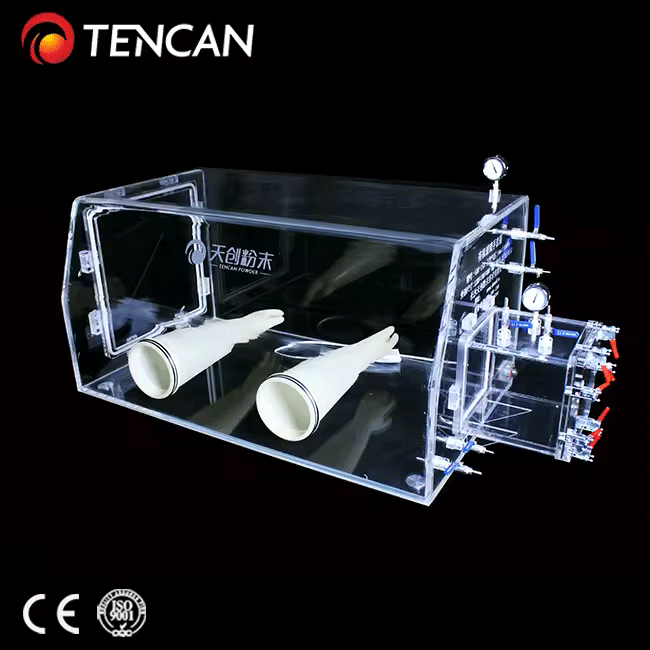
The acrylic glovebox is a transparent work chamber with glove ports that separates the sample from the outside environment and allows the operator to perform operations inside without exposing the work area. In laboratory practice, such a box occupies an intermediate position between a conventional fume hood and a full-fledged inert station: it helps to organize a protected area, but its real capabilities are determined by sealing, packaging and the method of controlling the gaseous environment. In the catalog TENCAN the product is presented as acrylic glove box; Below is its purpose, structure and selection criteria without promises that are not confirmed by the design.
What exactly does the glove box insulate?
The glove box has three boundaries: the sample, the operator, and the surrounding laboratory. A transparent chamber is needed primarily in order not to open the working area when weighing, pouring, packaging or loading the grinding glass. For a hygroscopic powder, protection from moisture and dust is important; for toxic or dispersed material - limiting operator contact with aerosol and dust; for oxygen-sensitive samples, it is possible to reduce the oxygen content in the chamber. These are different problems, and they are solved by different means.
A glove box is not the same as a fume hood. A fume hood removes air from the work area and protects the operator, but does not create a special atmosphere inside. Box, on the contrary, seeks to limit exchanges with the laboratory; therefore, for toxic gases and vapors, it does not replace ventilation without separate testing. Also, transparency and a closed door do not mean sterility: if aseptic work is required, proven cleaning procedures and controls are needed, not just an acrylic body.
The key difference is between isolation, gas displacement vacuum and circulation cleaning. Isolation is a basic function of the camera. Vacuuming with gas replacement is a separate mode in which the air is pumped out and the chamber is filled with working gas. Circulating purification is another system that continuously circulates atmosphere through the purifier. If a particular design does not have gas valves and a purifier, the box itself does not create an inert atmosphere. This needs to be checked by card and passport, and not by the name of the product.
How does an acrylic box work?
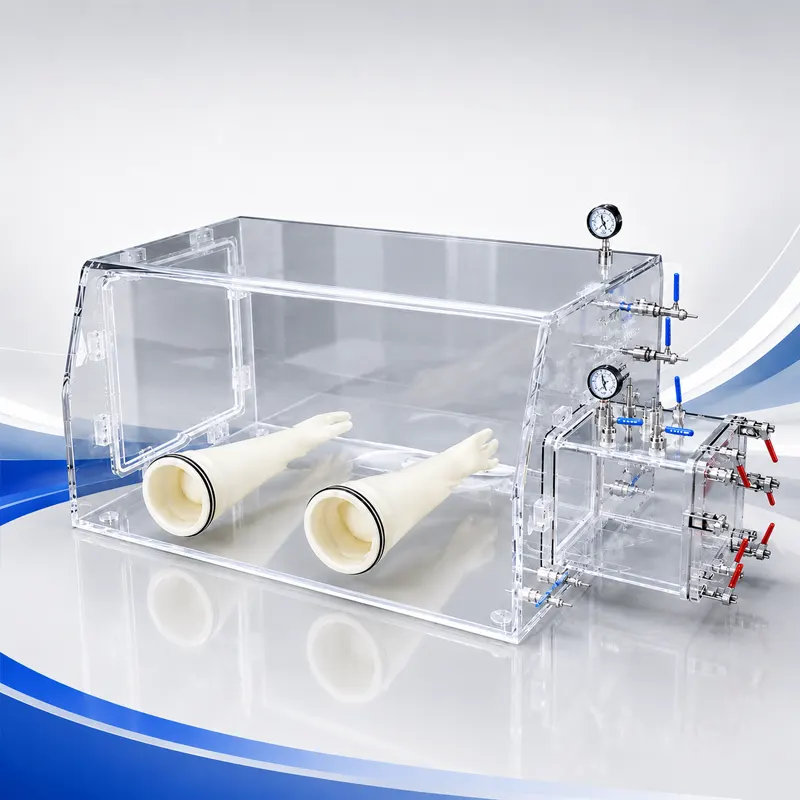
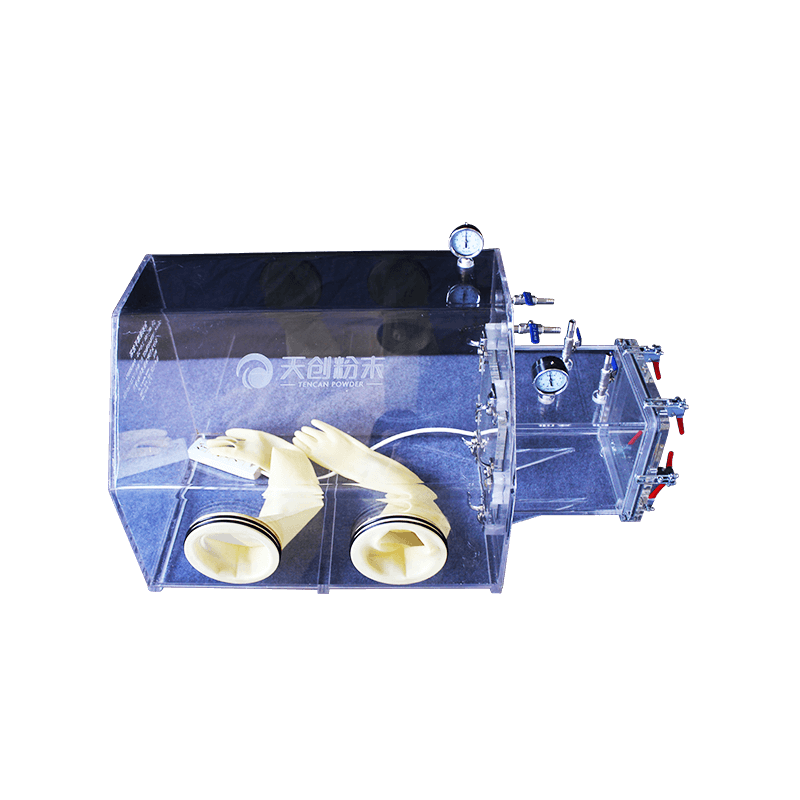
The main elements of such a box are a transparent chamber, a housing or frame, glove ports, seals, a door or transfer assembly, and, if provided, gas fittings and control devices. The specific layout depends on the design, so the same term “acrylic glovebox” can describe cameras with different equipment. Before choosing, it is useful to divide the structure into nodes and understand which of them is responsible for the desired operation.
Transparent camera and body
Plexiglas was chosen for the sake of visual control: the operator sees the sample, the tool and the position of the hands. Transparency is important when working with small quantities of powder where shedding, distribution and loss must be controlled. The body can be completely transparent or combine acrylic panels with a frame; Maintaining the shape of the chamber when opening the door and installing gloves depends on the rigidity of the frame and the quality of the connections. Acrylic is lighter than glass and easier to manufacture, but it is sensitive to scratches and is not designed to withstand high temperatures or harsh environments without testing compatibility.
Glove ports
Glove ports are where the operator's hands enter the camera. The number of ports, their diameter, the method of attaching the gloves and the material of the gloves themselves are important for selection. Cuffs that are too tight impede movement; cuffs that are too loose can compromise the seal. Gloves are a consumable item and a potential leak point: their integrity is checked before work, and replacement is carried out according to condition, and not just according to the calendar. The glove material must be compatible with the sample and cleaning agents; There is no universal solution for solvents, oils and fine powders.
Seals, door and sample transfer
The door, lid or transfer gate determines how convenient it is to bring in utensils and tools without destroying the work environment. The sealing contour, pressure, and surface quality have a greater effect on leakage than the thickness of the acrylic itself. If there is no airlock, each door opening exchanges air with the laboratory; for sensitive samples this means the need for repeated purging or a shorter operating window. It is better to place small items inside in advance, and plan operations so that the number of openings is minimal.
Gas environment and control
If the box is equipped with gas fittings, it is important to understand which modes it supports: gas supply, relief, evacuation with replacement, or circulation cleaning. The mere presence of a tap does not guarantee low oxygen and moisture content. For sensitive powders, a control sensor or indicator may be required, as well as a purge schedule. Vacuum in an acrylic chamber is not a universal option: if it is declared, you need to look at the design design, seals and control means, and not transfer this mode to any design.
What is important to know about plexiglass
Plexiglas is polymethyl methacrylate, a transparent thermoplastic. It gives a good overview, is relatively lightweight and is convenient for making cameras of complex shapes. But transparency does not equal chemical resistance. Acrylic is not universally resistant to solvents, concentrated acids and alkalis; Many organic liquids can cause clouding, swelling or stress cracking. Therefore, when working with non-aqueous media and aggressive reagents, compatibility is checked by specific substance and conditions, and not by the general word “plastic”.
The second feature is sensitivity to mechanical stress. Abrasive powders and hard brushes leave micro-scratches that impair visibility and can trap dirt. A soft cloth and a mild detergent compatible with acrylic are usually suitable for cleaning; aggressive solvents and abrasives are used only after checking. Acrylic tends to accumulate a static charge, so when working with fine powders, it is worth considering the adhesion of particles to walls and gloves. This does not make the material unusable, but requires organization of work and cleaning.
The temperature factor is also important: plexiglass is not intended to heat up inside the chamber without a separate assessment. If the task involves hot samples, drying or sintering, the glove box is not heating equipment and does not replace an oven or oven. Its role is insulation and protection during preparation, not heat treatment.
What parameters to read in the card
When choosing an acrylic box, it is helpful to go by the operation rather than the appearance. First, they formulate what exactly needs to be protected: the sample from moisture, the operator from dust, the area from cross-contamination, or all together. Then it is checked which parameters are confirmed for a particular execution. Below are guidelines for reading the card; If a value is not specified, it should not be guessed.
- Dimensions. External and internal dimensions are not the same thing. For work, the internal width, depth and height are important, taking into account gloves, utensils and tools.
- Working volume. A large chamber is more convenient, but requires more gas and time for purging; the small one reaches the mode faster, but limits movement.
- Panel thickness and design. Thickness itself does not guarantee tightness; the frame, connections and seals are important.
- Number and diameter of glove ports. Ergonomics, the number of simultaneously working hands and the ability to replace gloves depend on them.
- Type of seal and clamp. They clarify how the door is sealed and how leaks are checked.
- Door or airlock. The transfer gateway reduces the exchange with the laboratory, but adds operations and requires space.
- Gas fittings and taps. You need to understand the purpose of each connection and the allowable pressure.
- Vacuum and gas displacement. These are separate modes; their presence and limit parameters must be confirmed.
- Gas purification. A circulating cleaner is not the same as a simple purging box; specify what impurities and to what level he controls.
- Lighting and internal devices. Lights, shelves, holders and sockets must be suitable for the working conditions and not interfere with cleaning.
- Glove and seal materials. They must be compatible with the sample, cleaning agents and working gas.
It is worth distinguishing separately between the volume of the chamber and the volume of the sample. Even a capacious box is not intended for storing large quantities of powder: its purpose is a work area, not a warehouse. Also, you should not transfer the characteristics of one design to the entire range. If the card states a specific size, number of ports or mode, this applies to that model and not all acrylic boxes TENCAN.
Objectives, Constraints and Choices
Where boxing is useful
An acrylic glove box is appropriate where you need to quickly organize a transparent area for weighing hygroscopic powder, loading a grinding bowl, packaging dusty material, or working with a sample that cannot be kept open for a long time. In sample preparation, it helps reduce losses and cross-contamination if the tools and sequence of operations are thought out in advance. For educational and research tasks, visual observability is also important: the process is visible through the walls, and the operator’s hands are inside the chamber.
The box can be useful when working with powders that are prone to dust and moisture absorption, as well as when preparing samples for further grinding or analysis. But it does not grind, replace a planetary ball mill, or provide a vacuum or inert environment automatically. If the task requires long-term storage in an inert atmosphere, you need an appropriate cabinet with proven cleaning and control, and not just a transparent chamber.
What it doesn't replace
The glove box is not a fume hood for large quantities of toxic vapors, nor is it a sterilizer, drying cabinet, oven or pressure chamber. It does not make a hazardous substance safe on its own: when working with fine and toxic powders, personal protective equipment, proper cleaning and risk assessment are required. Aggressive solvents, concentrated acids, hydrogen fluoride mixtures and hot materials require separate testing for compatibility with acrylic and seals. If the process produces gases or aerosols, a closed box alone is not enough.
An acrylic chamber should not be considered “zero pollution”. Wall material, gloves, tools and utensils can be a source of impurities. This is especially important for trace analysis: before work, you need to assess which elements or compounds can go into the sample and provide a control procedure. It is also impossible to promise the same result for any powder: the behavior of the material depends on the size, humidity, flowability and static charge.
How to choose and serve
The selection begins with a sample and operation. They check the internal dimensions, the convenience of the glove ports, the ability to install the desired utensils, the compatibility of gloves and seals, and the presence of exactly the functions that are needed: purge, vacuum replacement, cleaning or control. If you plan to work with sensitive materials, clarify how tightness is checked and what environmental parameters can be measured. It is useful to think about tool placement in advance to reduce door openings.
Maintenance includes inspecting seals, checking gloves, cleaning clear panels with mild detergents, and checking the condition of fasteners. Small scratches impair visibility, but are critical primarily where they interfere with the view of the specimen or trap contaminants. If the box is used with gas purge, you need to follow a clear procedure for turning on, checking and replacing consumables. It is convenient to check current versions and confirmed parameters on the website TENCAN, and not according to old descriptions or assumptions about the configuration.
Frequently asked questions
Does an acrylic box replace an inert glove station?
No, unless sealing, gas purging, cleaning and media control are confirmed in a particular design. A basic clear box creates a protected work area, but does not guarantee low oxygen and moisture levels. For long-term work in an inert atmosphere, you need an appropriate system, and not just an acrylic chamber.
Can I work with moisture-sensitive powders?
It is possible if the task allows for a short working window and there is a way to reduce the humidity inside: blowing with dry gas, preliminary preparation of the chamber and a control indicator. Without this, the powder will come into contact with moisture every time it is opened. For very sensitive materials, one box may not be enough.
Is the box suitable for grinding bowls and grinding media?
It can be used for weighing, loading and unloading the grinding bowl if the internal dimensions can accommodate the utensils and the materials are compatible with the sample and cleaning. The grinding itself is done by a mill, not a box. The compatibility of a specific glass with a specific mill and operating conditions must be checked separately.
How to clean plexiglass?
Typically start with a mild detergent and soft cloth, avoiding abrasives and harsh solvents. The choice of product depends on the contamination and compatibility with acrylic; After cleaning, it is important to remove any residue so that it does not affect the sample. If you do not know how the reagent acts on acrylic, it is better to test it in an inconspicuous area or choose a different chamber material.
Is a vacuum needed in an acrylic box?
Only if the procedure requires it and the design confirms such a regime. Gas displacement evacuation is a separate feature and not a required feature of any glovebox. For an acrylic chamber, it is important to consider mechanical loads and seals; An unconfirmed vacuum should not be created.
An acrylic glove box is a work area organization tool, not a universal replacement for an inert station, fume hood or grinder. Its value lies in its transparency, local isolation and convenient sample preparation; the limits of possibilities are determined by the specific design, compatibility of materials and work discipline.