
The Class A corundum grinding bowl is a sintered aluminum oxide (corundum) working vessel that is installed in a planetary ball mill and serves as a chamber for grinding, homogenizing and deagglomerating samples. It is located in the grinding unit, where, together with the grinding media, it provides a mechanical effect on the material. The task of such a glass is to create a closed volume that can withstand repeated impact and abrasion loads, and at the same time introduce as few foreign elements into the sample as possible. For details of the available version, see grade A corundum grinding bowl card.
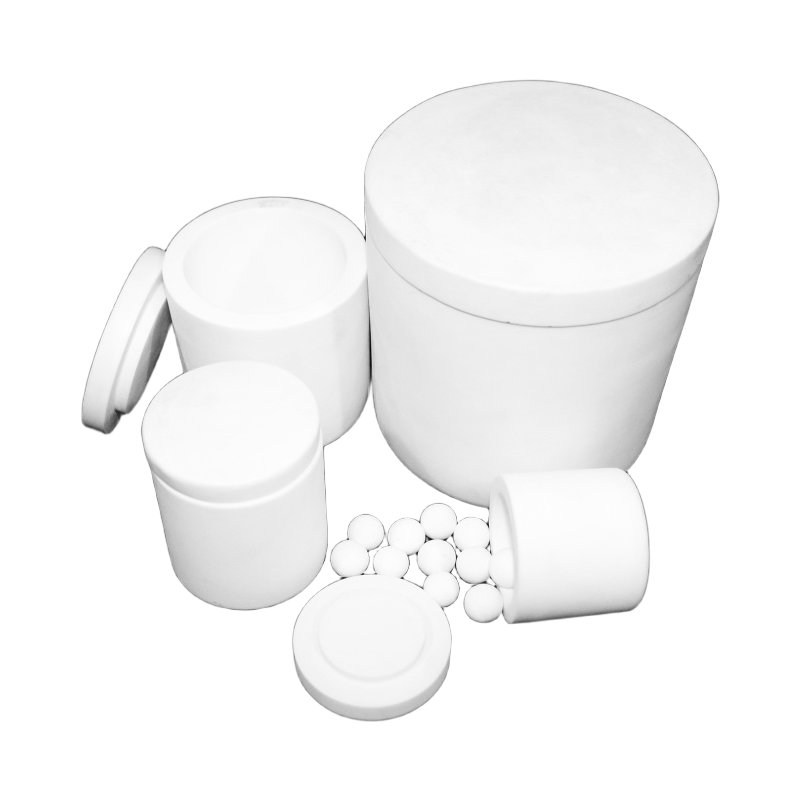
What is Grade A Corundum Grinding Bowl
In a planetary ball mill, the glass is a replaceable part that is in direct contact with the sample and the grinding media. Corundum is chosen when it is necessary to combine high hardness, chemical resistance and a relatively low level of metal contamination. Aluminum oxide contains no iron, chromium, nickel or cobalt, making it preferable to steel beakers for many analytical applications. However, this does not mean a complete absence of contamination: any material of the glass and grinding bodies wears out, and wear products pass into the sample.
The designation “Class A” in the product name indicates a performance that the manufacturer classifies as a specific group. This is not a universal international standard, but a marking of the supplier, so when preparing the methodology, you should clarify which parameters are included in this concept for a specific batch: ceramic composition, sintering technology, dimensional tolerances, lid and seal components. Unless specifically stated in the documentation, Class A should not be assigned a specific purity or resource.
The main purpose of the glass is to prepare samples before analysis, fine and ultra-fine grinding, mixing components and breaking down agglomerates. It is used in laboratory and research applications where reproducibility and controlled addition of impurities are important. The glass is not an independent grinder: without a planetary mill, grinding media and the correct mode, it does not perform the grinding function.
How the glass works and what happens in the grinding zone
A typical grinding bowl consists of a body, a lid and a sealing element. The body has a cylindrical or similar shape with an internal cavity into which the sample and grinding media are loaded. The lid is fixed on the body and must ensure tightness when rotating. The seal prevents the suspension from flowing out during wet grinding and the emission of dust during dry grinding. For some tasks, cups with additional seals or a gas atmosphere are used, but such possibilities must be checked against the specific product card.
In a planetary mill, the glass undergoes a complex movement: it rotates around its own axis and at the same time around the common axis of the carrier. Due to this, the grinding bodies are pressed against the walls, rise and then fall or slide over the material with acceleration. The main mechanisms of destruction are impact and abrasion. The relationship between them depends on the rotation speed, the diameter and density of the grinding media, the degree of filling of the glass and the properties of the sample. The corundum glass must withstand these loads without rapid loss of shape and without the formation of large chips.
The inner surface of the glass acts as a lining. The higher the hardness of the glass material, the slower it wears out when in contact with abrasive particles. Corundum is a very hard material, so it is resistant to abrasion compared to polymer and some metal options. However, when grinding very hard or abrasive powders, wear still occurs, especially if the grinding mode is selected with excess energy. The glass and grinding media should be considered as consumable items, and not as absolutely indestructible equipment.
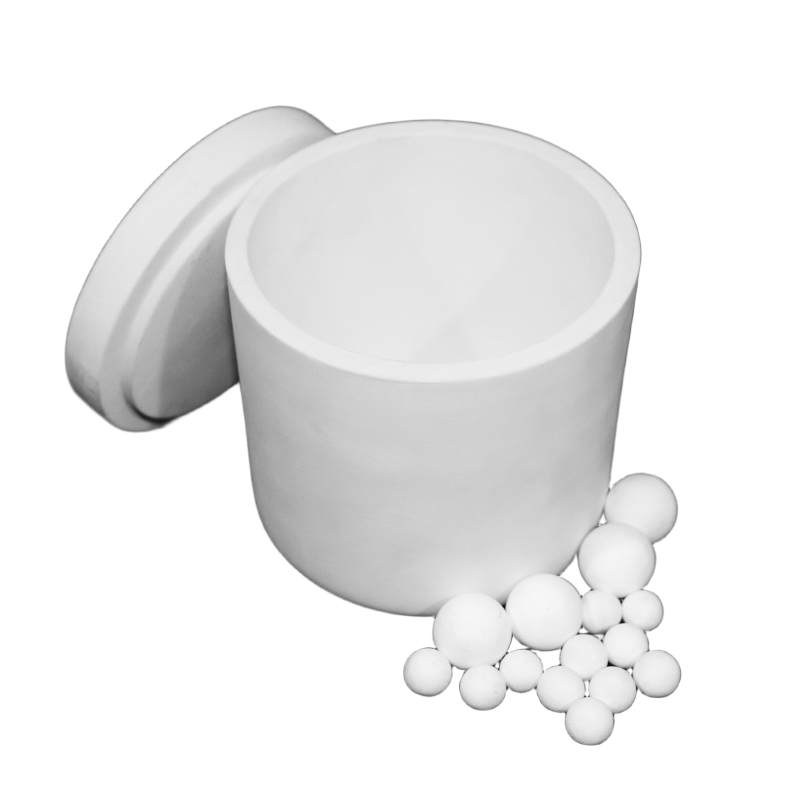
Material and addition of impurities: what is important to consider
Corundum is aluminum oxide Al2O3 in sintered form. It is chemically resistant to most acids, organic solvents and oxidizing environments. This property is important during wet grinding, when the sample is in a liquid medium. At the same time, aluminum oxide is not absolutely inert: it can interact with hydrofluoric acid, hot concentrated alkalis and some aggressive salts. Therefore, before choosing a medium, you need to check the chemical compatibility not only with the sample, but also with the material of the glass and grinding media.
The main risk of a corundum glass is the introduction of aluminum and oxygen. If aluminum is determined to be a trace impurity in a sample, corundum equipment may distort the result. In such cases, agate, zirconia, tungsten carbide or other materials are considered, assessing their own contaminant elements. For samples where aluminum is not the target analyte or where aluminum content is known to be high, corundum is often a good compromise between durability and purity.
The level of contamination depends not only on the glass material, but also on the grinding conditions. The longer the processing takes, the higher the speed and the harder the sample, the more material is removed from the surfaces. Grinding media also contribute. For example, zirconium dioxide balls add zirconium, corundum balls add aluminum, agate balls add silicon, steel balls add iron and alloying elements. There is no combination that will give “zero contamination” for any element. It is more correct to talk about a controlled and predictable contribution that can be assessed by idle experience.
Dry and wet grinding, compatibility and limitations
A corundum glass can be used for both dry and wet grinding, if the specific model and method allow it. With dry grinding, it is easier to preserve the powder, but dust formation increases, and fine particles are prone to aggregation and sticking to the walls. In wet grinding, liquid reduces dust, improves particle distribution, and often speeds up grinding, but adds separation and drying steps. The liquid medium must be compatible with the corundum, cap and seal, and must not react with the sample.
It is important to distinguish between chopping and mixing. The planetary mill with bowl and grinding media is designed primarily for particle size reduction and disagglomeration. Mixing powders is another operation for which there are separate mixers. For example, hydraulic twin shaft dissolver refers to mixing and dispersing equipment. The corundum grinding bowl for the planetary mill is not a standard accessory, and they cannot be automatically considered compatible.
The compatibility of the glass with the mill is determined by the seating dimensions, method of fastening, permissible rotation speed and seal design. Even if the diameter and height seem appropriate, different series of planetary mills may have different housings and locking systems. The glass should not be used in a roller drum, vibration mill, bead mill or roller crusher - these are different operating principles and different equipment requirements. Before ordering, you need to check the markings of the glass and the mill model according to the documentation TENCAN.
Dimensions, loading, wear and cleaning
The nominal volume of the beaker is a geometric characteristic, and not the mass of the sample that can be loaded. The working volume must contain grinding media and free space for their movement. If the glass is filled completely, grinding becomes ineffective and the strain on the lid and seal increases. The specific loading depends on the density of the sample, the size and number of balls, and the required fineness. These parameters are selected according to the methods and recommendations of the mill manufacturer, and not according to the volume of the glass alone.
The wear of a corundum glass manifests itself in different ways. First, the microgeometry of the inner surface changes, then matte zones, ring marks or local depressions may appear. With severe wear, the contribution of aluminum to the sample increases, and the grind size may no longer be reproduced. Increased wear is accelerated by high speeds, long cycles, large and dense grinding media, as well as abrasive materials. For control, it is useful to periodically repeat blank grinding without a sample and analyze the washout or the glass itself for material elements.
Cleaning the beaker should be thorough enough to avoid cross-contamination between samples without damaging the interior surface. Typically, mild detergents, distilled or deionized water, and a soft brush are used. Abrasive powders and hard metal tools can leave scratches that trap particles. Aggressive reagents are used only after checking compatibility with aluminum oxide and the seal. After washing, the glass is thoroughly dried, and the sealing elements are inspected and replaced if necessary.
For trace analyses, it is wise to assign separate beakers to specific types of materials. If this is not possible, intermediate cleaning and control blank grinding are performed between samples. This approach does not guarantee absolute purity, but makes the transfer of impurities more predictable. It is better to store glasses in a dry place, with the lid closed or in a protective case, so that dust and moisture do not fall on the inner surface.
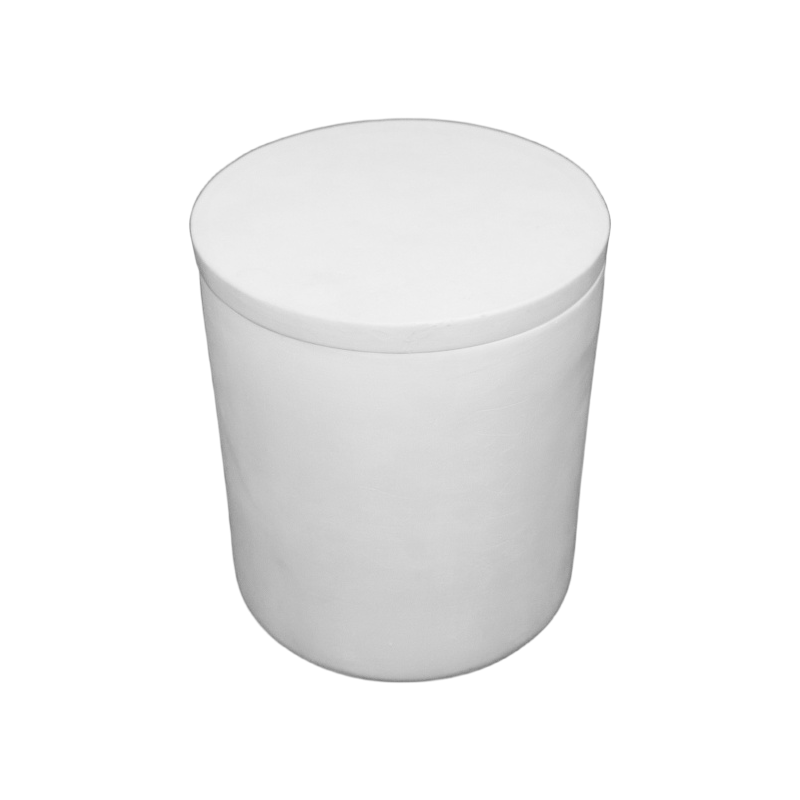
Selection criteria and answers to frequently asked questions
When choosing a grade A corundum glass, it is useful to check several conditions one by one. Firstly, compatibility with the planetary mill model: mounting dimensions, fastening, permissible speed and volume. Secondly, chemical compatibility with the sample and liquid medium. Thirdly, the permissible level of contamination for the target elements. Fourthly, the size of the glass and grinding media matches the grinding task. And finally, the presence of a lid, seals and the possibility of high-quality cleaning. After this, it is worth checking the available versions in catalog TENCAN and check the parameters with the supplier.
Is a corundum glass suitable for wet grinding?
Corundum is suitable for many neutral and slightly acidic media, but the final solution depends on the specific liquid. Water, alcohols and a number of organic solvents are usually compatible with aluminum oxide, while hydrofluoric acid and hot concentrated alkalis can destroy it. The durability of the seal and lid must also be considered.
How does a corundum glass differ from an agate glass?
Agate is softer than corundum and generally produces less silicon contamination, but wears more quickly with abrasive powders. Corundum is harder and has better abrasion resistance, but aluminum contributes. The choice depends on which element is critical to the analysis and how hard the sample is to be crushed.
How can you tell if a glass is worn out?
Signs of wear include changes in color or shine of the inner surface, dull spots, ring marks and indentations. Indirectly, wear is indicated by an increase in the aluminum content in blank samples and a deterioration in the reproducibility of particle size. If there are noticeable defects, it is better to replace the glass.
Can I use a glass from another mill?
Only if full compatibility in terms of seating dimensions, fastening and permissible speed is confirmed. External similarity does not guarantee safety. The glass cannot be used in equipment of a different operating principle, for example in a dissolver or roller mill.
Do I need a separate glass for each material?
For trace analyses, this is preferable because it reduces cross-contamination. If a separate glass is not possible, careful cleaning and control blank grinding helps. There is no universal rule: the decision depends on the cleanliness requirements and the available equipment.