
The Class A corundum grinding bowl for planetary mill is a replaceable working vessel in which the sample along with the grinding media is crushed, mixed and deagglomerated. The glass is installed in the socket of the planetary mill, rotates together with the carrier and around its own axis, therefore it is its material, geometry and condition of the seals that largely determine how correctly the sample will be prepared. The structure of such a glass, reading the characteristics, compatibility, wear, cleaning and limitations of corundum ceramics are discussed below.
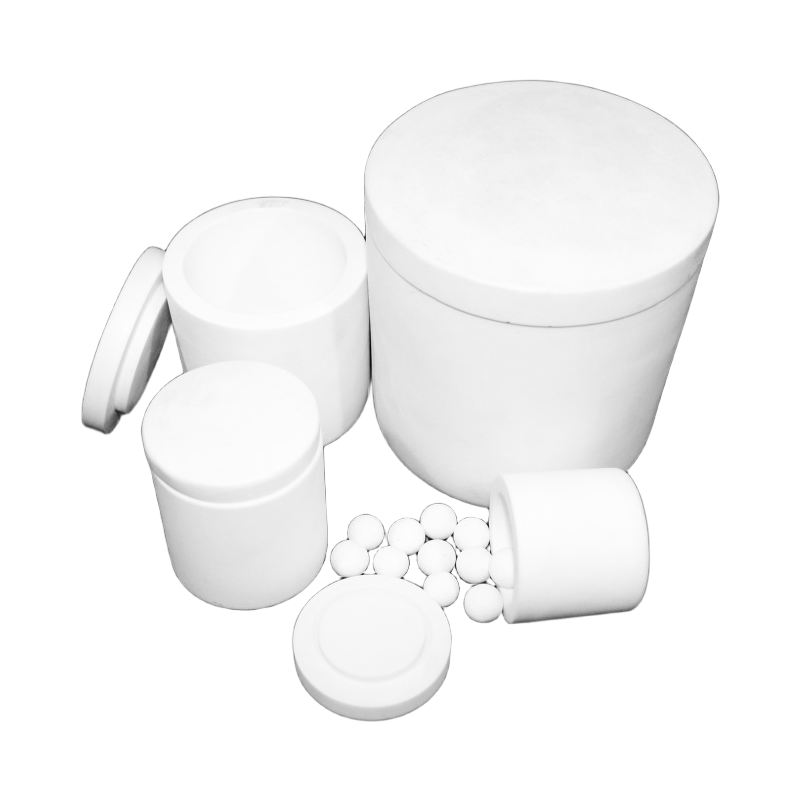
What is a corundum grinding bowl and where does it work?
The grinding bowl is not just a container for powder. In a planetary mill, it is part of a mechanical system that transfers energy to the sample through impact and abrasion of the grinding media. The carrier rotates the glasses in orbit, and each glass additionally rotates around its axis. The resulting centrifugal forces press the grinding media against the walls, then they break away and hit the material again. This is how the destruction of particles, their mixing, and partial disagglomeration occur.
For this mode, the glass must withstand not only abrasive wear, but also alternating loads, heating and vibration. Therefore, higher demands are placed on the body material, lid, sealing and seating surfaces than on conventional laboratory glassware. If the bowl does not fit into the mill seat or has lost its geometry, the process becomes unstable and the risk of equipment damage increases.
Function during grinding process
In a planetary mill, the beaker performs three related tasks. Firstly, it holds the sample and grinding media in a confined space. Secondly, it transfers mechanical energy from the drive to the load. Thirdly, it limits the transfer of material and wear products into the environment. The condition of the internal surface determines how effectively the grinding media captures and grinds particles, and the compaction determines whether the working medium is preserved during dry or wet grinding.
Basic elements
A typical grinding bowl for a planetary mill includes a body, a cover, a sealing element and seating surfaces that secure it into the housing. Some designs include additional sealing or gas parts, but these cannot be assumed without checking the specific card. For corundum glass class A from the presented assortment TENCAN It is important to clarify the configuration, dimensions, volume and acceptable modes on the current product page.
Why the glass material is important: corundum ceramics
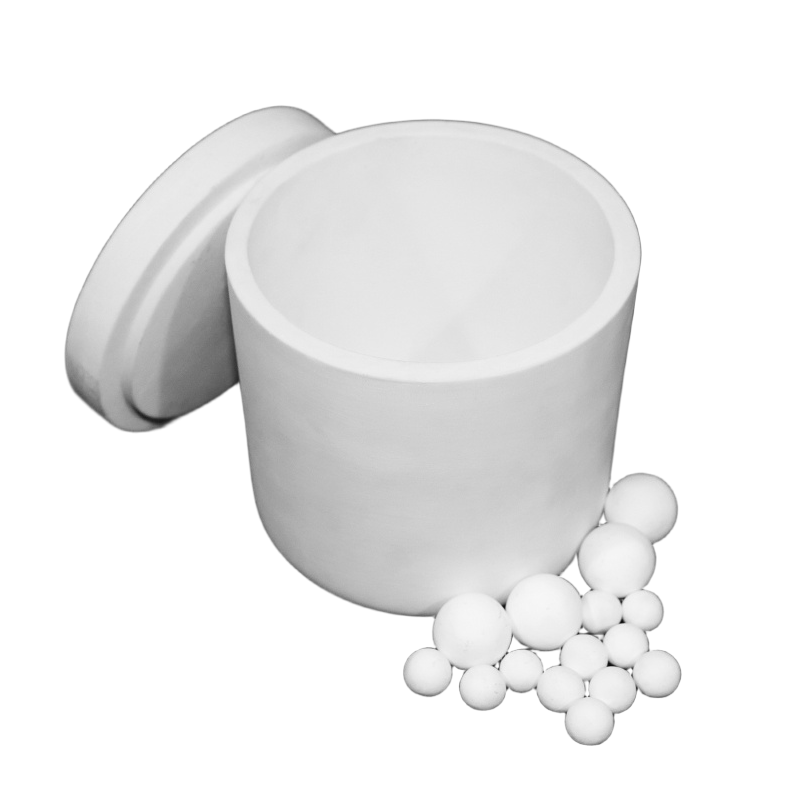
Corundum is a material based on aluminum oxide Al2O3. In engineering, corundum ceramics are sintered products with a high aluminum oxide content, which combine high hardness, wear resistance and chemical resistance. This is why corundum beakers are considered for grinding abrasive and relatively hard materials when a steel vessel may not be durable enough or when the transfer of certain metals needs to be reduced.
However, the word “corundum” does not mean complete inertness. Ceramics can wear out, and wear products end up in the sample. For most applications, this is not noticeable against the background of the bulk of the sample, but in the analysis of trace amounts of aluminum or when studying the purity of the material, this risk must be assessed separately. In addition, the properties of corundum products depend on purity, grain size, porosity and sintering technology, so it is impossible to transfer the characteristics of one class of ceramics to the entire range.
Class A: what does this designation mean?
The product name indicates class A. This is the designation from the card TENCAN helps highlight the performance within the line, but does not replace the universal international standard. If confirmation of specific parameters—aluminum oxide content, open porosity, tensile strength, or permissible temperature—is important to the job, this information should be requested and verified against the batch documentation. Don't assume that "Class A" automatically means zero contamination or the same behavior as any other corundum glass.
Comparison with other materials
Agate beakers are usually chosen for particularly pure samples where metal transfer is not acceptable, but agate is less resistant to shock loads. Zirconium dioxide glasses combine high density and wear resistance, but can also contribute to contamination. Steel cups are cheaper and more convenient for large loads, but the risk of transferring iron, chromium and nickel is higher. Corundum occupies an intermediate position: it is hard and chemically relatively stable, but is not a universal replacement for all materials.
How to read the characteristics of a glass correctly
The technical parameters of the grinding bowl must be read in the context of the entire process. The same number may represent the nominal volume of the vessel, the total volume of the set, the workload, or the mass of the sample. If you do not differentiate between these values, it is easy to overload the mill or end up with incomplete grinding.
- Nominal glass volume — geometric capacity of one vessel. It is not equal to the mass of powder that can be loaded.
- Workload — the volume that the grinding media and the sample actually occupy, taking into account the free space for movement.
- Total volume — capacity of all glasses installed in the mill. It should not be confused with the volume of one glass.
- Sample weight — depends on the density of the material, the bulk density of the powder and the selected fill.
- Final size — the result of the combined action of the original size, hardness, medium, time, grinding media and measurement method.
Volume, loading and sample weight
When selecting a glass, first determine how much material needs to be processed in one operation. Then it is taken into account that the grinding media occupy a significant part of the internal space. Too much load reduces ball movement and poor grinding, while too little load can result in ineffective impact and increased wear. Therefore, recommendations for filling should be taken from the manual for a specific mill, and not derived from the volume of the glass alone.
Speed, time and heat
The maximum speed of a planetary mill is specified for a specific drive model and equipment. You cannot automatically transfer it to another glass, even if it looks similar. The higher the grinding speed and time, the greater the heat and wear. Air cooling removes some of the heat from the work area, but is not equal to the measured sample temperature. Cryogenic modes with liquid nitrogen require separate confirmation for the bowl, seals and the entire system; an ordinary corundum beaker does not become cryogenic just because the mill operates in a refrigerated room.
Dry and wet grinding
Dry grinding is easier to prepare, but the powder can stick to the walls, and dust makes work difficult. Wet grinding often produces a more uniform particle size distribution and reduces dusting, but requires chemical compatibility of the fluid with the corundum, compaction and grinding media. After wet grinding, the beaker must be cleaned and dried, otherwise residual media will affect the next sample. It cannot be assumed that any solvent is equally safe for ceramics and lids.
Compatibility with equipment and accessories
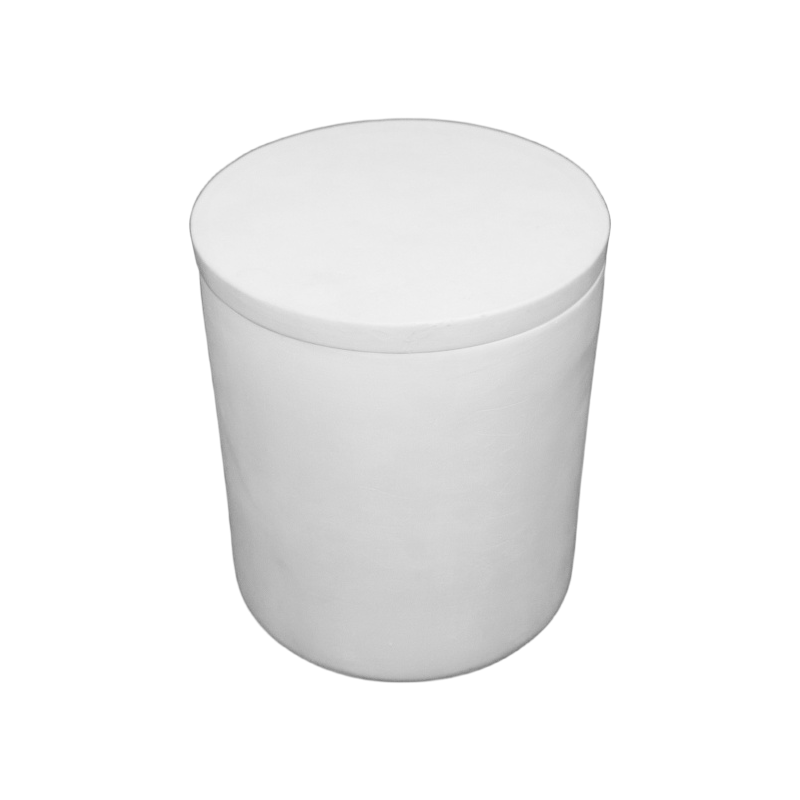
The compatibility of a glass is determined not only by the material. It is necessary to check the mounting dimensions, method of fixation, height, diameter, location of the cover and seal, as well as the permissible speed for this equipment. If the glass does not fit tightly into the socket and without play, additional vibrations occur during rotation. This is dangerous for both the sample and the mill.
Grinding media are the second part of the system. Their material, diameter and quantity must correspond to the volume of the glass and the task. Hard and dense balls transmit more energy, but wear out the walls more. Large balls crush better, small ones abrade and contribute to obtaining a finer powder. At the same time, a ball made of a harder material can accelerate the wear of the corundum cup, and therefore increase the transfer of impurities. The choice of grinding media is always related to the permissible contamination and the required size.
Planetary mill and drum mill are different devices
A grinding bowl for a planetary mill should not be automatically considered compatible with a drum or roller mill. In a planetary mill, the glass moves along a complex trajectory and experiences high accelerations. A drum mill uses another working element - a drum, which usually rests on rollers or rotates in bearings. Even if the diameters look similar, this does not prove interchangeability. For example, lined drum ball mill belongs to a different class of equipment, and its drum is not equal to the planetary cup in design and operating conditions.
Materials and applications: where corundum glass is appropriate
Corundum beakers are used to prepare samples of ceramics, glass, minerals, oxides, some catalysts, and other relatively hard or abrasive materials. They are suitable for applications where a combination of wear resistance, chemical resistance and a moderate risk of contamination is required. But when choosing a specific sample, it is not only the beaker material that decides, but also the entire methodology: initial size, required final size, acceptable proportion of impurities, dry or wet process, available time and subsequent analytical technique.
Limits are also important. If aluminum is the target element for analysis, corundum ceramics may not be desirable. For samples sensitive to iron or zirconium, grinding media must be evaluated separately. Chemically aggressive environments, especially at elevated temperatures, require checking the compatibility of the body, cover and seal. There is no one beaker that is suitable for all materials and all analytical tasks.
Contamination and wear
The wear of the glass occurs under the influence of abrasive material and grinding media. The harder the sample, the longer the grind, and the higher the energy, the more noticeable the material transfer may be. Corundum ceramics do not promise “zero pollution.” The actual value depends on the batch of ceramics, the state of the surface, the mode and properties of the sample. For trace analysis, it is useful to perform blank grinding or analyze the contribution of equipment, if the technique allows it.
Cleaning and Maintenance
After use, the glass is cleaned so as not to damage the inner surface and seal. Abrasive scrapers and rough powders can leave scratches, which then accumulate dirt and accelerate wear. For wet grinding, it is important to remove any remaining liquid and dry the vessel before the next load. If cracks, chips, deep grooves appear on the body, or the lid no longer closes tightly, the glass must be taken out of service and replaced. Minor defects in ceramics are dangerous not only due to contamination, but also to destruction under load.
How to choose grade A corundum glass
- Define your grinding task. Is grinding, deagglomeration or just mixing necessary? The energy and type of equipment depend on this.
- Check acceptable contamination. If aluminum is being analyzed, corundum may not be suitable; If metals are being analyzed, compare the risk with the grinding media.
- Check compatibility with mill. The mounting dimensions, mounting, cover and maximum speed must correspond to the specific drive model.
- Select the loading volume. Do not confuse the total volume of the beaker, the working volume and the mass of the sample.
- Select grinding media. The material, diameter and number of balls affect the size and wear of the glass.
- Evaluate dry or wet process. For wet grinding, check the compatibility of the fluid with the ceramic and seal.
- Consider cleaning. If quick changeovers between samples are required, surface accessibility and cleanability are important.
For up-to-date information about the product, its design and available options, please see the page corundum grinding bowl class A for planetary mill. You also need to check the sizes and equipment there, since even glasses that are similar in name may differ in fitment parameters.
Frequently asked questions
Can a corundum beaker be used for wet grinding?
Yes, wet grinding in a corundum beaker is possible if the liquid is compatible with the ceramic and seal, and the mill allows this mode. The specific environment, volume and time should be checked from the manual and product card. Any solvent cannot be assumed to be safe for the cap and sealing element.
Is a corundum glass a substitute for an agate glass?
No, these are different materials with different contamination and wear resistance profiles. Agate is often chosen for particularly pure samples, but it is less resistant to shock loads. Corundum is harder and better suited for abrasive materials, but can contribute to aluminum. The choice depends on the analytical task.
Why is the final size not guaranteed in advance?
The final particle size depends on the initial particle size, sample hardness, type and size of grinding media, speed, time, loading ratio and measurement method. The typical catalog minimum is not a promise for any material. For reproducibility, you need to fix the mode and check the result on a specific sample.
Does this glass fit the drum mill?
A planetary grinding bowl and a drum for a roller or drum mill are different working parts. External similarity does not confirm compatibility. It is necessary to check the design, fastening and permissible loads against the documentation for specific equipment.
How can you tell if a glass is worn out?
Signs of wear include chips, cracks, deep grooves, changes in the geometry of the seating surfaces, damage to the seal and loss of tightness. This glass can no longer be used for critical samples. Regular inspection helps you spot wear and tear before it affects your results.
What to check before ordering
Before ordering a grade A corundum grinding bowl, it is useful to make a short list: planetary mill model, required volume, mounting dimensions, grinding media material, dry or wet process, acceptable contamination, cleaning requirements and availability of spare seals. If this data is not available, selection becomes guesswork. TENCAN — manufacturer of laboratory and industrial equipment for grinding, mixing and sample preparation; a general overview of the directions is presented on the website www.tencanballmills.com.
A grade A corundum glass is not a universal part, but a working tool with specific limitations. Its strengths are the hardness, wear resistance and chemical resistance of corundum ceramics. Its limitations include potential aluminum carryover, shock sensitivity, and the need to precisely fit the mill. The correct choice begins with the sampling task, and not with the name of the material, and ends with checking the compatibility according to the documentation.