
The 304 stainless steel grinding bowl for planetary mill is a replaceable working container that contains the sample and grinding media during grinding. The glass does not create movement by itself: the planetary mill rotates it around its own axis and around a common axis, and the walls and lid limit the working area, hold the material and allow energy to be transferred through the grinding media. In the catalog TENCAN presented 304 stainless steel grinding bowl card. For the laboratory, this is both simple equipment and a critical part of the process: beaker material, surface quality, geometry and fit influence the grinding result, sample loss and possible contamination. Therefore, the choice begins with the question of what exactly will be ground, what analysis is planned, whether contact with steel is acceptable and whether the glass is suitable for a particular mill.
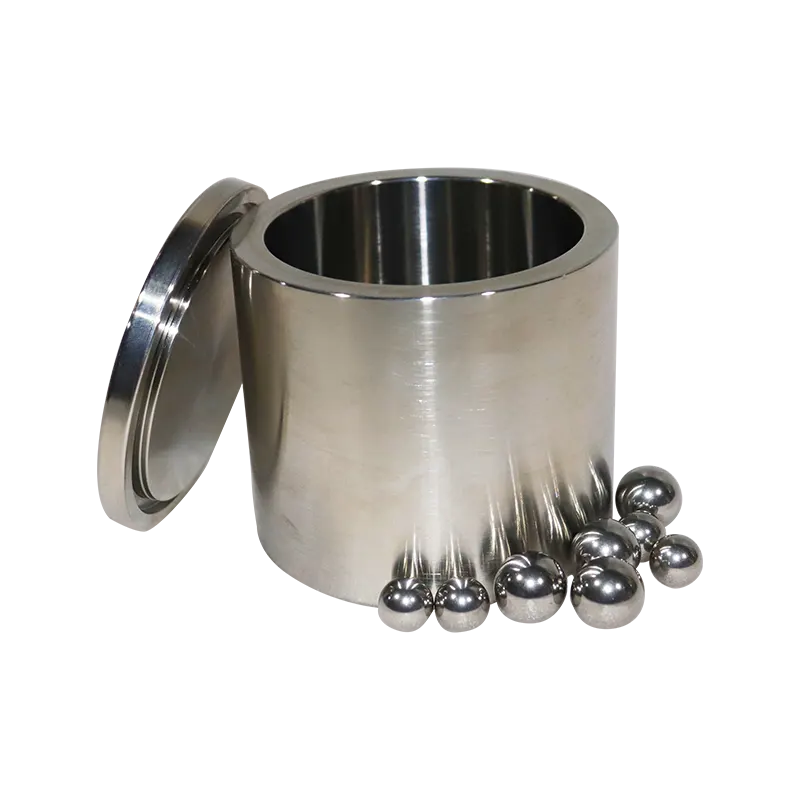
Function of a glass in a planetary mill
In a planetary mill, the grinding bowl is a grinding chamber and not an independent grinder. The drive sets a complex movement, the grinding bodies hit the material and abrade it, and the glass holds the entire system in a given volume. Hence, several practical requirements: the body must withstand loads, the lid must prevent powder from spilling out and liquid splashing, and the seating elements must ensure reliable fixation without play. For dry grinding, the tightness of the seal and the cleanliness of the edges are especially important; for wet grinding, the compatibility of the glass material with the liquid medium and subsequent cleaning are especially important.
The glass also sets the scale of the experience. If the volume is too large for a small sample, the grinding media will work more on the walls than on the material; if too small, sample mass and grinding energy are limited. At the same time, the movement of the grinding bodies and the efficiency of grinding depend not only on the glass, but also on the mill model, rotation speed, diameter and material of the balls, the ratio “material - grinding bodies” and processing time. Therefore, the glass cannot be assessed separately from the entire grinding system.
What does material 304 mean?
The product name indicates 304 stainless steel. This means that the working contact with the sample is provided by the steel, and not by a paint coating, polymer liner or ceramic lining. 304 steel is a common stainless material used in applications where mechanical strength, corrosion resistance and the ability to be regularly cleaned are required. However, the brand name itself does not guarantee chemical inertness to any sample, solution or abrasive load.
When grinding, the steel wears out. Abrasive powder, prolonged processing, large or heavy grinding media, poor cleaning and work with aggressive media increase the likelihood of wear particles appearing in the sample. For applications where iron, chromium, nickel or other elements related to the steel composition are analyzed, contact with such a glass requires separate testing. This does not mean that the glass is unsuitable: it is convenient and practical for many routine tasks, but trace analysis requires control of a blank experiment and comparison with alternative materials.
The corrosion resistance of 304 steel also depends on the environment. Water, acids, salts, chloride-containing solutions and wet powders can have different effects on the surface. If wet grinding with an unfamiliar liquid is intended, it is better to check compatibility with the supplier in advance and test the material on a small sample. The properties of one grade of steel should not be transferred to all grinding bowls. TENCAN or assume that stainless steel is suitable for all reagents.
Design, geometry and fitting dimensions
The grinding bowl's body, lid, seal and fixing elements are important. In a typical design, the lid is pressed against the body and the seal prevents loss of powder. For a specific product, you need to look at the shape of the bottom, wall thickness, condition of the edges, quality of the thread or lock, if they are provided for in the design. These details affect the ease of cleaning and how the glass behaves under prolonged vibration and shock loads.
Fit dimensions are a critical parameter. The same material and similar volume do not prove compatibility with the mill: the outer diameter, height, seat belt, method of fastening and permissible geometry of the cover are important. The grinding bowl for a planetary mill should not be confused with the drum for a roller mill or the container of a bead mill: these are different units with different loads and installation methods. If the product card does not indicate compatibility with a specific model, it must be confirmed by documentation or request, and not by photograph.
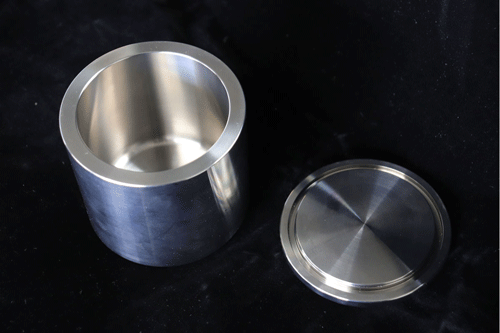
Separately, the nominal volume of the glass, the total volume of several glasses, the working load and the mass of the sample are distinguished. The nominal volume is a geometric capacity, and not a recommendation to load it completely. The total volume of two or four glasses is not equal to the volume of one vessel and does not determine productivity over time. The working load depends on the density of the material, the bulk volume, the size of the grinding media and the requirements of the technique.
How to read the characteristics of a glass
In the characteristics, it is useful to separate what relates to the glass itself and what relates to the process. Material, dimensions, volume, lid design and compatibility with the mill are the properties of the product. Rotation speed, grinding time, ball-to-sample mass ratio, temperature and final particle size are the process parameters. The latter cannot be automatically attributed to the glass: they are determined by the entire installation and the chosen methodology.
If the card indicates the volume, it must be read as the nominal capacity. If compatibility with a mill model is stated, it should be verified for the specific modification and mounting method. If the dimensions of the grinding media are given, this does not mean that they are optimal for any material. Large balls produce stronger impacts, smaller ones produce more points of contact and abrasion; the choice depends on the initial size, hardness and acceptable contamination. For fragile materials, the mode is important, and not just the material of the glass.
Temperature also requires caution. Heating of the beaker, lid, and sample may vary, and the body temperature is not the same as the sample temperature. During prolonged grinding, heat can affect polymers, organic components and sensitive powders. Conventional air cooling doesn't become cryogenic just because the beaker gets less hot; for cryogenic problems, a separate confirmed system is needed, and not an assumption about the properties of the glass.
Suitable materials and restrictions
A 304 steel beaker is typically considered for the preparation of mineral, ceramic, metal and composite powders where complete metal contact is not required. It is suitable for dry and wet grinding as long as the material and liquid are compatible with the steel and the design ensures a leak-tight seal. In materials science applications, such a glass may be part of the “crushing - grinding - sieving - pressing - sintering” route, but this does not mean that it is automatically compatible with any subsequent equipment. The connection to a kiln or press is determined by the task and documentation, not by location in the catalog.
Limitations are associated with abrasive wear and the transfer of impurities. For very hard powders, long grinding and trace analysis, agate, zirconia, tungsten carbide or polymer materials are sometimes chosen. But they do not mean “zero pollution”: each material has its own wear, fragility, chemical resistance and cleaning limitations. Tungsten carbide is not universal for food or highly acidic samples, and the polymer cup can be sensitive to temperature and solvents. The choice is made based on priority: minimal wear, chemical resistance, impact strength or cost.
Dry and wet grinding also differ in meaning. In the dry process, it is important not to lose the fine fraction and prevent sticking to the walls; in wet conditions - pick up the liquid, ensure a tight seal and then correctly remove the residue. Disagglomeration, that is, the destruction of agglomerates, is not equal to the reduction of primary particles. If the goal is to mix evenly without excessive chopping, you should not expect a different result from the glass just by changing the material.
Wear, contaminant transfer and cleaning
Glass wear can show up in a variety of ways: scratches, tarnish, chafing, edge changes, seal damage, or difficulty cleaning. The intensity of wear is influenced by the hardness of the sample, abrasiveness, size and mass of grinding media, grinding time and rotation speed. 304 steel is durable, but not infinite. If the beaker is used for different samples, cross-transfer of fine residues cannot be ruled out, especially after wet grinding or handling oily additives.
Cleaning must be reproducible. Typically a mild detergent, a soft brush, rinsing with a suitable liquid and drying thoroughly are used. You should not use aggressive compounds and abrasive cleaning if they can change the surface or leave their own residues. For trace analysis, it is useful to include a blank experiment: process a clean glass using the same procedure without a sample and evaluate the contribution of the equipment. If stains, odors, or visible deposits remain after cleaning, the beaker should not be used for sensitive samples until the cause is eliminated.
It is better to store the glass dry, with the lid open, or in conditions that do not allow the accumulation of moisture and dust. The seal should be inspected separately; even minor damage can result in loss of powder and a change in the actual load. Do not extend the life of a part using undescribed modifications if they affect fit or sealing. For critical series, it is better to keep a log: which sample was processed, how the glass was cleaned, whether there were any signs of wear.
How to choose a glass and grinding media
It is convenient to make a choice based on several points. First, the mill model and acceptable equipment are determined, then the volume and weight of the sample, and then the material of the bowl and grinding media. Next, check whether the sample, liquid and beaker material are compatible, how cleaning will be carried out, and whether control of impurities is needed. They separately clarify whether seals and fasteners are included in the delivery of a particular version: this information cannot be guessed from the name.
- Check the mounting dimensions and method of fixation for a specific mill.
- Compare the nominal volume with the actual workload, and not with the mass “by eye”.
- Assess the abrasiveness and chemical reactivity of the sample with respect to 304 steel.
- Select the material and diameter of the grinding media to suit the task, and not just the size of the glass.
- Consider cleanup and blank runs if the assay is sensitive to iron or other elements.
Additional versions and current product cards are collected in catalog TENCAN. When selecting, it is important to separate the confirmed parameters of a specific glass and general recommendations for planetary grinding. If there is not enough data for the conclusion, it is better to ask for clarification than to assume compatibility based on appearance.
Questions and answers
Can 304 steel beaker be used with any planetary mill TENCAN?
No. The cup material does not replace checking the fit dimensions, fixation method and acceptable equipment for a specific model. Compatibility is confirmed by documentation or checked with the supplier.
Does 304 steel guarantee no sample contamination?
No. Due to abrasive wear, particles of the glass material may enter the sample. For trace analysis, control is needed, and for increased requirements, alternative materials are considered, also checking their own wear.
What is the difference between dry grinding and wet grinding in such a glass?
Dry grinding requires special attention to tightness and dust loss, wet grinding - to the compatibility of the liquid with steel and the completeness of cleaning. In both cases, the working load is less than the nominal volume of the glass.
Can the glass be washed with regular detergent?
In general, a mild detergent is acceptable, but specific liquids and cleaning methods should be checked against the documentation. Aggressive environments and abrasive grinding can alter the surface and interfere with subsequent analysis.