
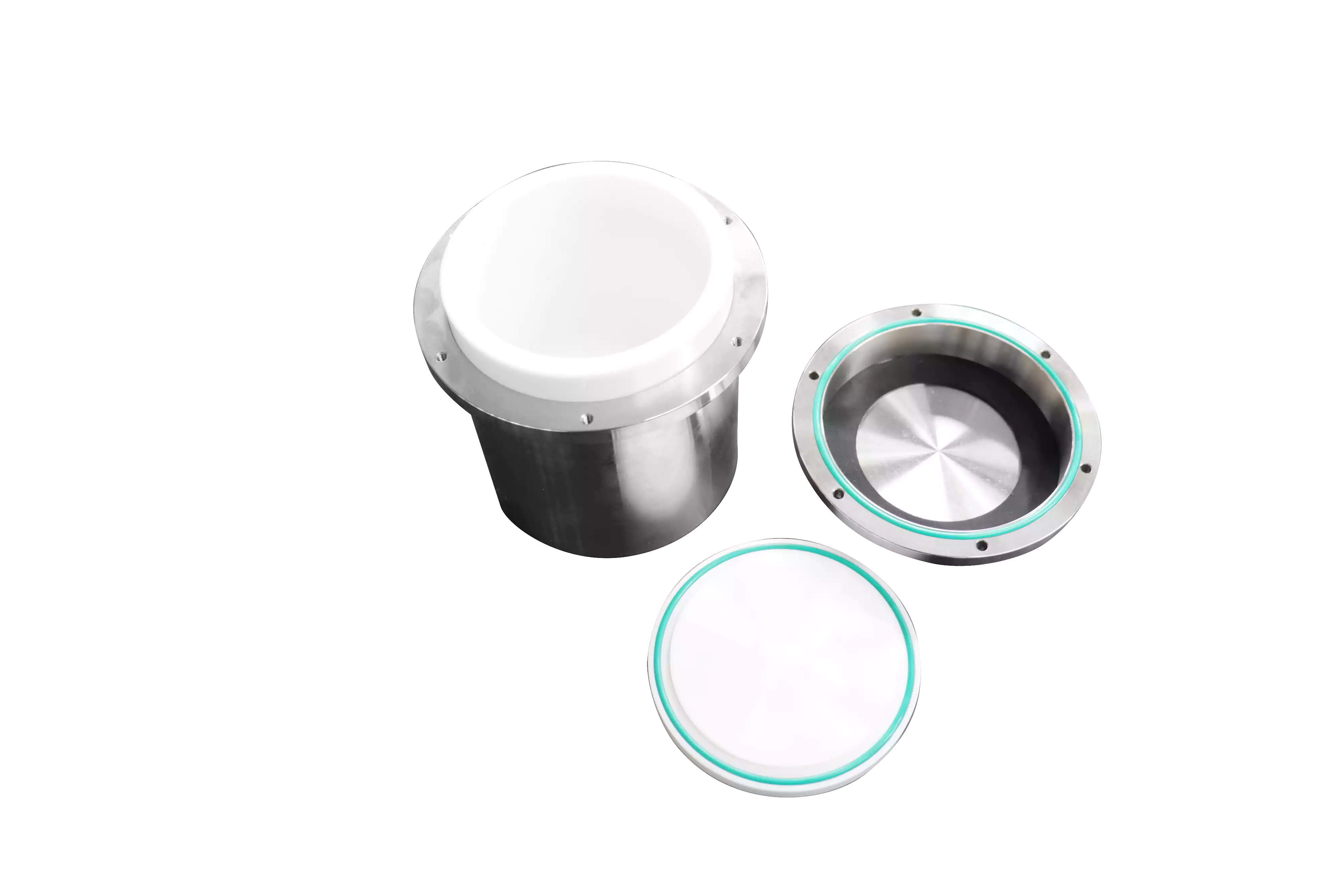
The 304 steel zirconia lined grinding bowl is a replaceable working chamber of a planetary ball mill that has a supporting body made of 304 stainless austenitic steel and a layer of zirconia ceramic (ZrO₂) on the inside surface in contact with the sample and grinding media. Metal is responsible for rigidity, accuracy of fitting dimensions and resistance to shock loads, ceramics is responsible for the purity of the sample: it does not contain iron, chromium and nickel, which enter the material upon contact with the steel wall. The product belongs to the grinding bowls for planetary mills and is used for fine grinding, homogenization and sample preparation before analysis. Product description is given in the card 304 steel grinding bowl with zirconia lining.
Place of the glass in the grinding process and working principle
In a planetary ball mill, the glasses are mounted on a carrier. The carrier rotates, and at the same time each glass rotates around its own axis, usually in the opposite direction. The resulting centrifugal forces are many times greater than the force of gravity: the grinding bodies are pressed against the wall, rise along it and break off, striking the material and abrading it. There are two main destruction mechanisms in the chamber - impact, which splits large particles and destroys agglomerates, and shear in a thin layer between the balls and the wall, which is responsible for fine grinding and mixing. Their ratio depends on the rotation speed, the diameter and density of the grinding media, the degree of filling of the glass, the mass and properties of the sample.
The glass here is not a passive container, but an element that defines the boundaries of the working chamber. Its internal diameter and height determine the trajectory of the balls and the volume in which grinding occurs; seat dimensions and weight affect the balancing of the carrier and the permissible rotation speed. Therefore, the glass is selected for a specific mill model, and not according to the principle “anything close in size will do.”
The role of the lining is double. It takes on a significant part of the impact and abrasive load instead of a steel body and at the same time serves as a barrier between the sample and the metal. The thinner the ceramic layer and the higher the grinding energy, the more carefully the condition of the surface is monitored.
Construction: body, lining, cover and loading
304 stainless steel body
304 steel is an austenitic chromium-nickel steel with approximately 18% chromium and 8-10% nickel. It is technologically advanced, resistant to atmospheric corrosion and most aqueous solutions, so it is convenient to use it to make a body with precise geometry and fastening elements. There are also limitations: 304 steel is prone to pitting corrosion in environments with chlorides, and its hardness is low compared to ceramics, so it is poorly suited as a direct contact surface when grinding hard materials.
Zirconium dioxide lining
Zirconium dioxide is a ceramic material with high hardness (for stabilized grades usually about 1200–1400 HV; the specific value depends on the composition and manufacturer), density of about 6 g/cm³ and noticeable fracture toughness compared to aluminum oxide. That is why it is widely used for linings and fine grinding media. Ceramics based on ZrO₂ are resistant to water, most organic solvents and weak acids, but are not universally inert: they are destroyed by hydrofluoric acid and hot concentrated solutions of a number of acids, as well as prolonged contact with strong alkalis at elevated temperatures. The composition of such ceramics usually includes stabilizing additives, most often yttrium oxide; this is taken into account if the content of these particular elements is analyzed.
Cap, sealing and seating geometry
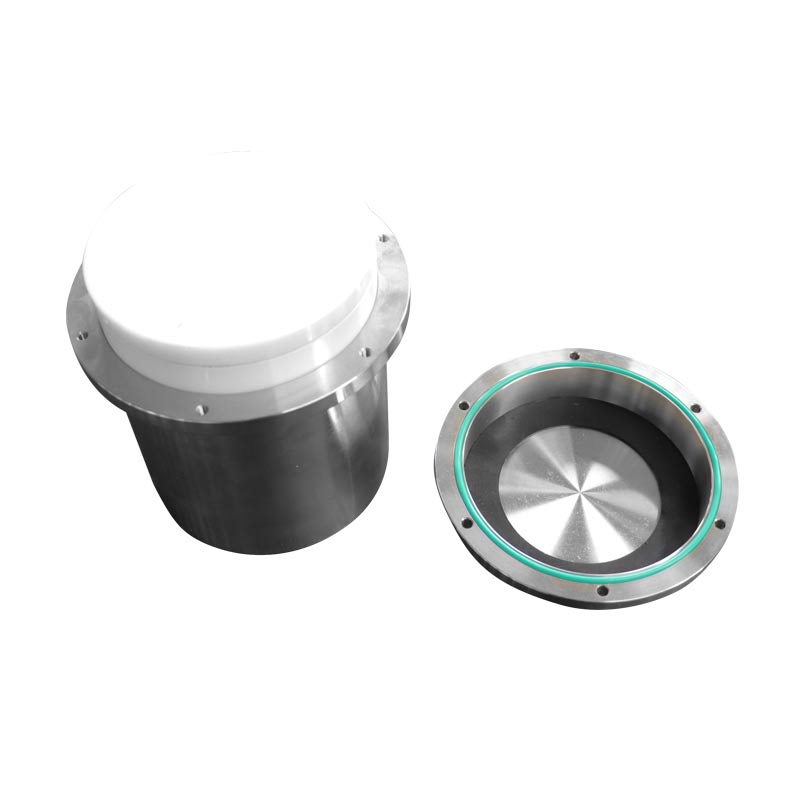
The cover keeps the material inside at high accelerations. The sealing ring and the method of fixation determine the suitability of the glass for wet grinding: both tightness and compatibility of the sealing material with the solvent are important. The seating geometry - diameter, height, clamping elements - is critical: the glass must fit into the holder without play and without deformation of the lid, and the masses of the glasses in one load must be consistent, otherwise the carrier operates with increased vibration.
Grinding media as part of the system
The lined glass works in tandem with grinding media. The material of the balls is selected so that their hardness and density correspond to the task, and their wear does not negate the purpose of the ceramic lining. If heavy steel balls are loaded into such a glass, the ceramics will wear out faster, and metal wear products will begin to get into the sample. The size of the balls is related to the initial coarseness: large ones give impact and crush faster, small ones increase the contact surface and work on a fine grind. Specific recommendations on the diameter and weight of the balls are provided by the installation manual; You should not transfer them from one model to another without checking.
Characteristics and their correct reading
Volume: nominal, working and sample weight
At least three different sizes appear in the descriptions of grinding bowls. Nominal (total) volume is the geometric capacity of the glass. The working volume is the part that can be occupied by grinding media and material without losing the mobility of the balls. Sample mass - how much sample is loaded in a particular experiment. These values are not interchangeable: the nominal chamber volume does not mean that the same amount of material can be loaded in one cycle. In practice, the glass is filled to about a third, less often - up to half the volume, taking into account the balls and sample; the exact value is determined by the technique and properties of the material. You should also not confuse time productivity (number of samples per shift) with the volume of one chamber.
Dimensions, mounting dimensions and weight
The outer diameter, height, seat belt and type of fixation must match the mill holder. Even a small discrepancy leads to beating, heating and accelerated wear of components. Mass is important for balancing: if two or four glasses are placed in the mill, their masses should be close. When switching to another design of the glass, it makes sense to check with the supplier about the mounting dimensions and weight, rather than relying on external similarity.
Material and surface condition
For lined glasses, the key characteristics are the material and thickness of the working layer, surface finish, radii in the corners. A smooth surface sticks less and is easier to clean, but it does not replace cleaning between samples. If the product card does not indicate the volume, lining thickness or permissible rotation speed, these parameters are requested separately: values from another model cannot be substituted.
Materials and applications: where appropriate and where there are limitations
The combination of “steel body plus ceramic lining” is in demand where a durable chamber and a low risk of metal contamination are simultaneously needed: preparation of ceramic and oxide powders, phosphors, catalysts, pigments, and some samples for X-ray diffraction and elemental analysis. A lining is also useful when metal is one of the components being determined and contact with a steel wall could distort the result.
The restrictions are specific. A lined glass does not replace an all-ceramic glass: the ceramic layer is thinner than a monolithic wall and wears out faster under intense impact loads. Coarse abrasive material requires preliminary crushing - a planetary mill with such a glass is designed for fine grinding, and not for coarse grinding of pieces. In wet grinding, applicability is determined by the compaction and chemical resistance of the ceramic to the selected liquid; when dry - the tendency of the material to stick and agglomerate, due to which part of the sample remains on the walls. It is also useful to remember the difference in tasks: mixing averages the components with almost no change in size, and grinding destroys particles and agglomerates; The grinding glass is involved in the second process.
Wear, cleaning and condition monitoring of the lining
The wear of the ceramic lining is unevenly distributed. The greatest load falls on the bottom and lower part of the wall, where the balls fall under the influence of centrifugal forces, as well as on the corner transitions. The first signs are loss of gloss, matte areas, discoloration, thin dark stripes. The appearance of a metallic sheen means that the ceramic has worn down to the body, and such a glass cannot be used for samples sensitive to iron, chromium and nickel. It is useful to keep a simple log: date of commissioning, number of cycles, nature of grinding - this allows you to evaluate the resource based on actual conditions.
Cleaning requires care. Residues are removed with a soft brush or wooden scraper, avoiding metal tools that leave scratches and particles. Then - washing with water and a neutral detergent, rinsing with distilled water and alcohol, drying at a moderate temperature. Hydrofluoric acid and hot concentrated acids are unacceptable, prolonged contact with strong alkalis is also undesirable. The outer steel casing is wiped down, but not soaked in chloride solutions: 304 steel is prone to pitting in such environments. Between samples, purity control should be carried out at least selectively, especially when working with microimpurities, since roughness and microcracks accumulate material residues.
Selection criteria and compatibility with equipment
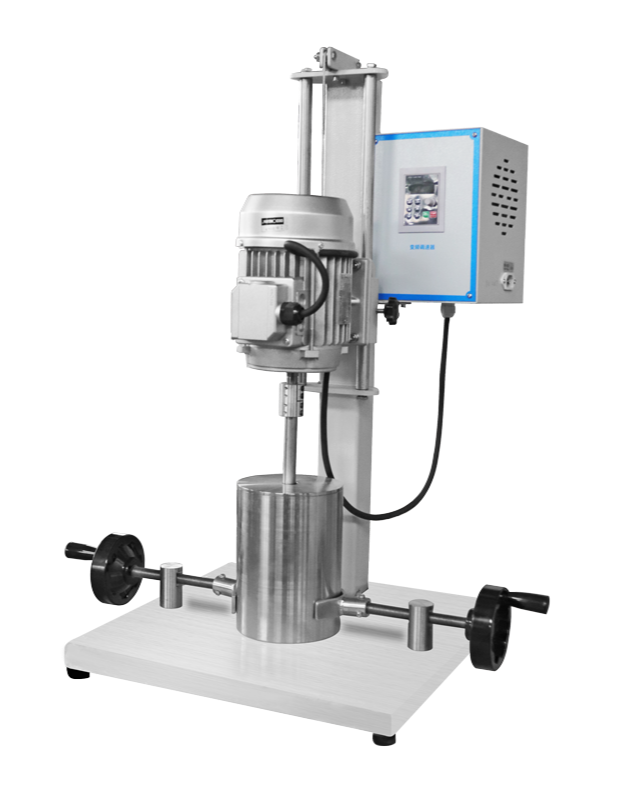
The choice begins with the mill, and not with the glass: the model, the number of seats, the range of rotation speeds, the permissible dimensions and weight, and the method of fixation are important. For a laboratory stirred ball mill, e.g. laboratory ball mill with stirring, the working chamber is structured differently: there is a mixing element and its own chamber geometry, so a glass for a planetary mill cannot be automatically considered compatible with it. Compatibility is confirmed by fitting dimensions, fastening and manufacturer's instructions.
- seat dimensions and type of cup fastening;
- chamber volume and expected sample mass;
- sample material and permissible level of impurities;
- type of grinding (dry or wet) and compatibility of the seal with the liquid;
- grinding media material and its combination with the lining;
- the number of glasses in the set and coordination of their masses;
- availability of consumables and spare parts.
Requirements need to be balanced. If the sample is not sensitive to iron, a ceramic lining provides no practical benefit; If every microgram of metal is important in the analysis, saving on beaker material results in unreliable results. General information about the direction of equipment and other types of grinding chambers is given on the website TENCAN.
Frequently asked questions
Can this glass be used for wet grinding?
Yes, if the lid and seal are designed for liquid and the medium does not destroy the ceramics. Water, alcohols and most organic solvents are usually acceptable; acids and alkalis require testing for a specific environment and concentration.
Which grinding media are suitable for the zirconia lined bowl?
It is logical to use balls comparable to the lining in hardness and chemical nature, so as not to accelerate its wear. Metal balls increase both ceramic wear and the risk of metal contamination; the final choice depends on the sample material and purity requirements.
How does a lined glass differ from a monolithic ceramic one?
A monolithic glass is made entirely of ceramic: it provides a more uniform contact surface, but requires careful handling. The lined one combines a durable metal body with a ceramic working layer, which is more resistant to mechanical overloads, but the layer is thinner and can open the steel when worn.
How can you tell if the lining is worn out?
Signs: loss of gloss, local darkening, appearance of a metallic sheen. At the first traces of metal, the glass is removed from work where the content of iron, chromium and nickel is controlled.
Is the beaker compatible with the stir grinder?
Not automatically. Such mills have their own working chamber and mixing element, so the suitability of the glass for a planetary mill is confirmed by the mounting dimensions and manufacturer’s documentation.