
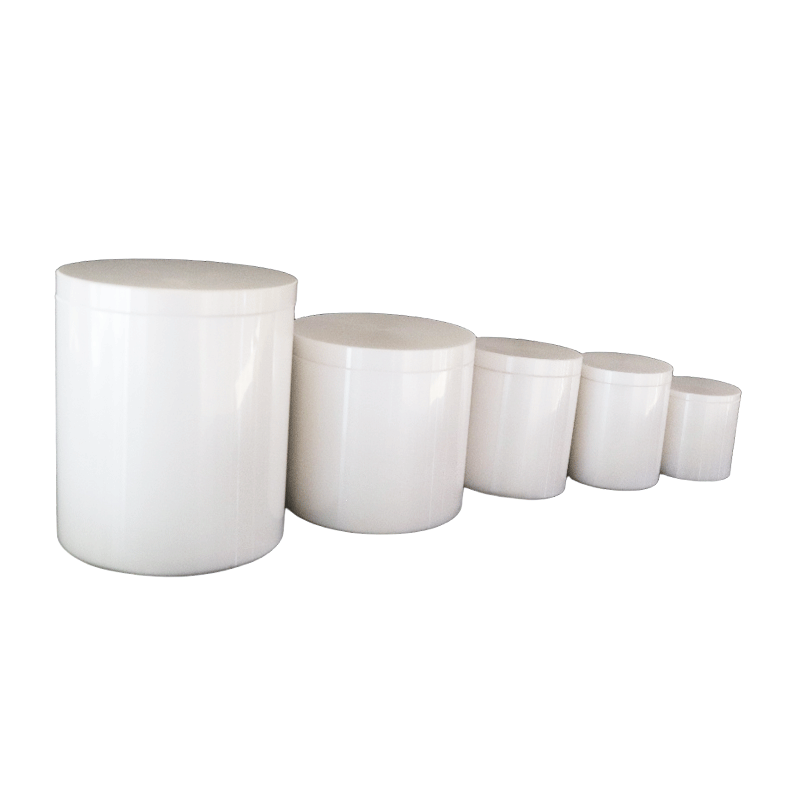
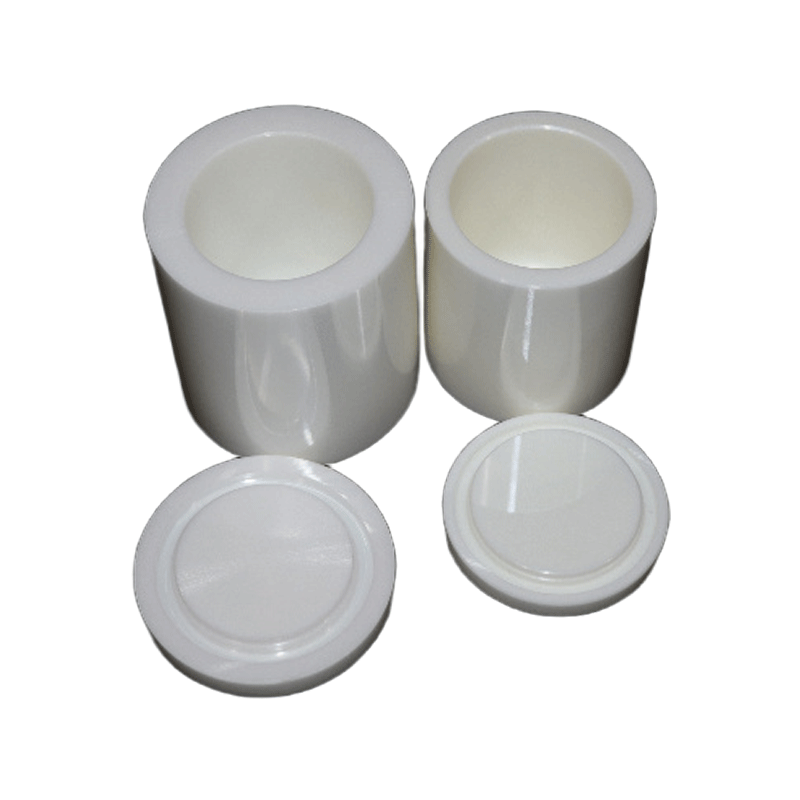
A zirconium dioxide grinding bowl for a planetary mill is not just a replaceable container, but a part of the working chamber that is in contact with the sample, grinding media and wear products. Not only the grind size, but also the purity of the sample, reproducibility between batches and the amount of cleaning work depend on its condition. Therefore, the choice of such a glass begins not with appearance, but with the task: what material is crushed, what kind of mill is used, how critical trace impurities are and how often the samples are supposed to be changed. In the catalog TENCAN presented zirconium dioxide grinding bowl for planetary mill; its specific compatibility with the device and mode is checked using the current card and documentation, and not just the category name.
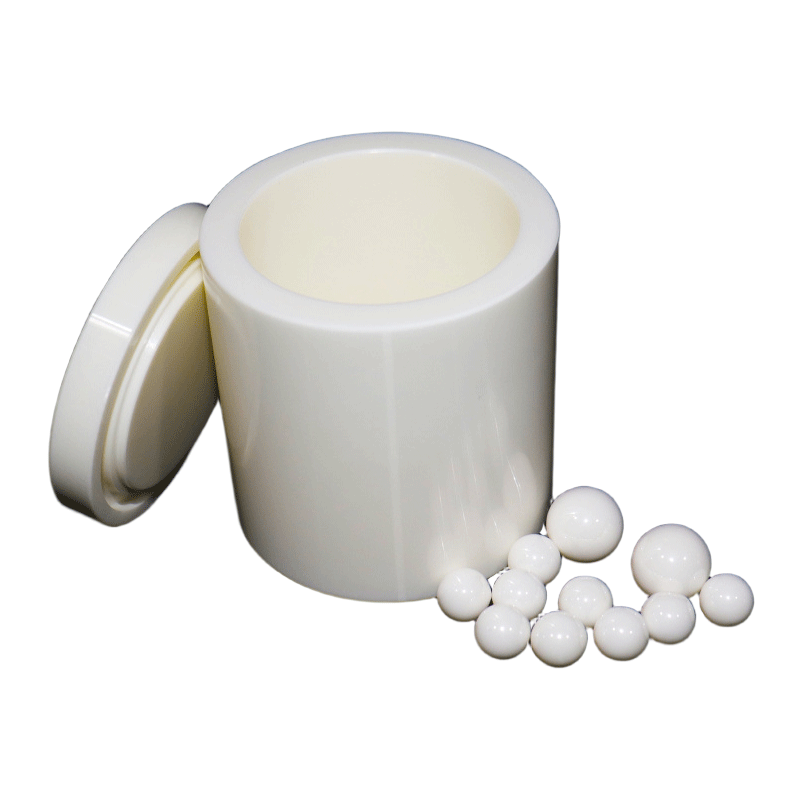
An incorrectly selected or worn glass can ruin accurate sample preparation. At the same time, the glass material itself does not guarantee “perfect cleanliness”: zirconium dioxide, like other ceramic materials, is subject to wear, and its suitability depends on the hardness and abrasiveness of the sample, grinding time, grinding media and cleaning conditions. Below are practical criteria that help you separate reasonable expectations from assumptions and select equipment for a specific analytical task.
Why does the glass affect the grinding result?
In a planetary ball mill, the beaker rotates along with the disk, and the grinding media repeatedly strikes the material and walls. Energy is transferred through the walls, so geometry, mass, fastening rigidity and the condition of the internal surface matter. A crack, chip or wear of the cover changes not only the appearance of the equipment, but also the process conditions: backlash appears, the seal is broken, part of the energy is spent not on grinding, but on deformation or slippage.
The beaker also determines what the sample comes into contact with in the chamber. If the wall material is not sufficiently resistant to abrasive, wear debris may become embedded in the powder. For ordinary grinding this is not always noticeable, but for subsequent elemental analysis, trace measurements or preparation of standards, such a detail becomes critical. Therefore, the question “which glass to choose” is closely related to the question “what result should be obtained and what method should be used to check it.”
Finally, the glass cannot be considered separately from the grinding media. Balls of the same or different material, their size, number and surface condition affect the wear of the entire system. The glass-ball pair must be assessed together: even a properly sized glass will not compensate for an unsuitable load or contaminated grinding media. That is why, in the trial grinding, not only the final coarseness is recorded, but also the glass material, ball material, loading ratio and time.
Zirconium dioxide: what the material does and does not promise
Zirconium dioxide is a ceramic material used in grinding equipment due to its combination of hardness, density and chemical resistance under certain conditions. For planetary grinding, this type of beaker may be a smart choice when looking to reduce the risk of carrying metal contaminants compared to some metal options. However, this does not mean that contamination disappears completely: ceramics also wear out, especially when in contact with hard, abrasive or large particles.
When assessing the suitability of a material, it is useful to separate several questions. The first is what exactly happens to the sample: abrasion, impact fracture, or disagglomeration. The second is which impurities are critical for subsequent analysis. The third is how the wall material will behave when in contact with a specific environment, including wet grinding, solvents and cleaning agents. There is no universal answer to these questions: zirconium dioxide does not become “chemically inert to everything” just because of the name, and its resistance does not cancel out mechanical wear.
For trace analysis, it is especially important to think through a control experiment in advance. Blank grinding without a sample or grinding an inert material under the same conditions helps to see what particles may transfer into the sample from the equipment. If such control is not provided, it is easy to attribute the contamination to the characteristics of the sample itself or, conversely, not to notice the contribution of the glass. At the same time, it is impossible to announce a specific pollution figure in advance: it depends on the material, mode, surface condition and measurement method.
Separately, it is worth considering the fragility of ceramics. Impact loads, careless installation, falling glass or sudden cooling can lead to cracks. It is a good idea to inspect the interior, edges and lid before each use. If chips, deep marks or signs of geometry violations appear, the glass should not be used for critical samples: a crack can not only worsen the grinding, but also create a risk of destruction during rotation.
Planetary Mill Compatibility: Geometry, Mounting and Cover
Compatibility starts with the seat. It is necessary to check the external dimensions of the glass, height, method of fixation, permissible nominal volume and requirements for the lid. Even if a product belongs to the category of glasses for planetary mills, this does not prove its suitability for a specific model of the apparatus. The parameters of one model are not transferred to the entire range, and the name of the series does not replace checking the documentation.
The cap and seal are not minor parts. They are the ones who hold the material inside during rotation and reduce losses during wet grinding. If the cover does not fit tightly, the gasket is worn out, or the fastening does not provide a stable position, leaks, air leaks, and uneven operation may occur. For volatile solvents and fine powders this is especially important, but specific permissible environments and modes need to be clarified for the equipment used, and not derived from general considerations.
It is useful to find out in advance which grinding media will be used and whether they are compatible with the selected glass in terms of material and size. Oversized or unsuitable balls can increase wear and damage the ceramic. You should also not assume that a glass suitable for one planetary mill will automatically be suitable for another: different devices have different nest sizes, speed, cooling and balancing requirements.
If the source material comes in the form of large pieces, pre-grinding is a separate operation. Multifunction crusher TENCAN refers to pre-treatment equipment, but its presence in the catalog does not in itself confirm compatibility with a specific grinding bowl or planetary mill. First you need to get a sample that is suitable in size and weight, and then separately check which glass and which balls are acceptable for the selected machine.
Wear, impurity transfer and cleanliness control
Wear on a ceramic glass rarely appears as uniform abrasion over the entire surface. More often, local contact zones, edges, bottom, place under the cover and the area where the grinding media change the direction of movement are important. Abrasive powder, long grinding time and high energy accelerate wear. As a result, particles of the wall material, as well as particles of grinding media, may enter the sample. This is not necessarily noticeable visually, but may appear when analyzing traces or when the properties of the powder change.
What helps reduce risk is not just one technique, but a set of measures: correct choice of material, monitoring the condition of equipment, selection of grinding media, limiting grinding time and thoughtful cleaning. There is no material that is suitable for every sample and every analysis. Tungsten carbide, ceramic, or zirconia do not mean "zero pollution"; they just introduce a different wear profile and a different set of impurities that need to be taken into account.
| Observation | What to check | Practical action |
|---|---|---|
| Matte areas or scratches have appeared on the surface | Condition of the inner surface, edges and cover | Compare with operating time and grinding conditions; In case of deep wear, do not use for sensitive samples. |
| The sample contains inclusions of unknown origin | Material of glass, grinding media, dishes and cleaning products | Carry out control grinding and check the entire sample preparation chain |
| The lid does not close tightly | Sealing, edges, fastening and no deformation | Replace worn parts; do not force the regime until the cause is clarified |
| The grinding result is not repeated from batch to batch | Loading, sample-to-ball mass ratio, time and equipment condition | Keep a log of conditions and do not change several parameters at the same time |
Blank grinding and control sample
If increased demands are placed on sample purity, it is useful to develop a control technique. Blank grinding with inert material or without sample under the same conditions shows what particles may appear in the chamber. This is not a universal certificate of cleanliness, but a comparison tool: it helps to notice the contribution of equipment and select a cleaning procedure. The result depends on the sensitivity of the analysis, so it must be interpreted together with the measurement technique.
Cleaning and preparing the glass between samples
Transfer of material between samples is one of the most common causes of questionable results. Residues of previous powder may remain in the micro-relief, under the edge, in the threads or in the seal. Therefore, cleaning is considered as part of the technique, and not as a final formality. However, aggressive cleaning agents, abrasive sponges and metal scrapers can damage the ceramics and worsen the situation.
It is safer to start by dry removing the residue with a soft brush or suitable tool that will not scratch the surface. A cleaning solution compatible with the glass material and the specific stain is then applied. Aqueous solutions, solvents and detergents require separate testing: what is acceptable for one material may not be acceptable for another. After wet cleaning, the glass is thoroughly dried so that any remaining liquid does not affect the grinding or cause corrosion of adjacent parts.
- Inspect the glass and lid before cleaning to avoid spreading contamination across the surface.
- Do not use abrasive powders or hard metal brushes on ceramics.
- Check the compatibility of the cleaning agent with the material of the cup and seal.
- Pay attention to the edges, internal transitions and where the lid fits.
- Keep clean glass closed and separate from contaminated equipment.
If the glass is used for different materials, visual inspection alone is not enough. For sensitive analyses, separate marking of equipment and assignment to specific sample types helps. This is especially useful when it is not possible to carry out a full check grinding before each batch. However, even when attaching a glass to one material, wear must be monitored: accumulated changes in the surface over time can affect the result.
Size, loading and mode: what exactly to indicate
The nominal volume of the glass, the total volume of the load and the mass of the sample are different values. It is impossible to select a glass only by volume if the permissible working load and the requirements of the mill are unknown. Too much material leaves little room for the balls to move, while too little can reduce grinding efficiency and increase tool wear. Specific ratios depend on the apparatus, material and task, so they are specified for the selected configuration.
When selecting a mode, it is useful to record the initial particle size, sample weight, material and size of grinding media, beaker volume, time and method of grinding. Dry and wet grinding behave differently: the medium can improve dispersion, but at the same time increase interaction with the wall and seal material. You should not transfer the regime from one glass to another just because they are close in volume. Geometry, mass and surface condition also matter.
The achievable coarseness is not a guaranteed property of the glass. It depends on the sample material, its initial distribution of particles, grinding media, energy, time and measurement method. A typical catalog minimum cannot be automatically promised for any sample. If the application requires a specific particle distribution, it is better to plan trial grinding and measurement rather than relying solely on a general category description.
What to check before ordering and trial grinding
Before choosing a grinding bowl, it is useful to collect the initial data in one place. This reduces the risk of buying equipment that is suitable in name, but not suitable in geometry or operating conditions. The more accurately the task is described, the less uncertainty remains when checking compatibility.
- Planetary mill model, year of manufacture and seating requirements.
- Required nominal glass volume and permissible workload.
- Sample material, initial size, hardness and abrasiveness.
- Required final particle size and method for controlling particle distribution.
- Dry or wet grinding, what medium is used.
- Material, size and number of grinding media.
- Critical impurities and the need for control grinding.
- Cleaning procedure and compatibility of cleaning products with equipment.
For test grinding, it is worth preparing a small amount of a representative sample, rather than using a random sample. It is necessary to write down all the conditions so that the result can be repeated or adjusted. If the grinding is unstable, first check the load, the condition of the glass, the lid and the grinding media, and only then change the mode. You should not change the material of the balls, time and volume at the same time: it is so difficult to understand what exactly influenced the result.
Current equipment and fixtures cards are posted on website TENCAN. When choosing, it is important to rely on data confirmed for a specific model: dimensions, materials, permissible modes and conditions of use. If a value is missing or appears contradictory, it is better to clarify it than to make a guess. This approach is especially important for zirconium dioxide grinding bowls, where sample purity, wear and compatibility with the apparatus are interrelated and cannot be reduced to one parameter.