
Grinding balls made of zirconium dioxide are a consumable item that simultaneously affects both the grind size and the chemical purity of the powder. In a laboratory mill, the sample comes into contact not only with the walls of the grinding bowl, but also with the grinding media, and the total area of this contact per hour of operation turns out to be very large. That is why the question about the material of the grinding media usually arises not at the time of purchase of the mill, but later - when extra lines appear in the spectrum, the powder darkens, and the reproducibility of results between samples decreases.
Below we discuss one practical topic: how to approach the selection of zirconium grinding media and the mode of operation with them in such a way as to control wear, the introduction of impurities and cleaning, and what exactly should be checked by trial grinding. Specific characteristics of the product - nominal size, tolerance, composition, porosity - are taken from the current product card, and are not derived from general considerations about “zirconium in general.”
It’s worth agreeing on terms right away. Contamination here means the ingress of material into the sample that was not in the original sample: zirconium, yttrium, hafnium, iron, silicon, aluminum. Under the transfer are traces of the previous sample remaining on the surface of the grinding bodies and walls. These are different mechanisms, and the measures against them are also different.
Why is it the grinding media that determines the purity of grinding?
The grinding bowl and grinding media are the only parts of the installation that are in constant contact with the powder. The drive, casing, and cooling system influence the mode indirectly, but the balls and lining work “inside” the sample. Each collision transfers energy to the material, and part of this energy is spent not on the destruction of particles, but on the deformation and microdestruction of the bodies themselves. The higher the transferred energy and the more abrasive the sample, the more noticeable this side channel is.
The second factor is the geometry of the contact. The balls form many points of contact with the particles, and the total friction surface is orders of magnitude larger than the area of the glass walls. If the body material is softer or less crack resistant than expected, wear accelerates and the impurity contribution increases along with it. Therefore, a discussion of “grinding media material” without discussing the glass and mode is almost always incomplete.
The third factor is time. Laboratory grinding often lasts from tens of minutes to several hours. Even a small rate of wear accumulated over such a time gives a measurable concentration of the element in the sample, especially if the mass of the sample is small. With a sample mass of several grams, fractions of a milligram of transferred material are enough to change the analysis result.
Finally, the purpose of the analysis is important. If a sample is being prepared to determine trace amounts of zirconium, zirconium bodies are obviously unsuccessful, regardless of their quality. If, for example, iron or silicon are being controlled, zirconium ceramics are often a reasonable compromise: they introduce an element that does not interfere with the given task.
Zirconium dioxide among other grinding media materials
Zirconium dioxide (ZrO2) as a structural ceramic exists in several versions, differing in the stabilizing additive: most often it is yttrium oxide, less often - magnesium or cerium oxide. The stabilizer retains the tetragonal phase and determines the mechanical properties of the material. For grinding media, this means that a “zirconium ball” is not one position, but a group of materials, and the comparison is correct only when the composition is indicated.
General guidelines that are useful to keep in mind: dense zirconia ceramics usually have a density of about 6 g/cm³, that is, they are heavier than alumina ceramics and glass, but lighter than steel balls. The exact values depend on the composition, porosity and sintering technology and should be taken from the supplier's accompanying data. The hardness and fracture toughness of zirconia ceramics is generally higher than that of aluminum oxide, which generally reduces the tendency to chipping.
It is useful to compare with other common materials not by “better”, but by what element is introduced and how quickly. Glass and agate are softer and lighter, they are good for soft materials and low energies, but wear out faster. Aluminum oxide contributes to aluminum; it is cheaper, but inferior to zirconium in density. Stainless steel contributes iron, chromium and nickel. Tungsten carbide is heavy and hard, but contributes tungsten and cobalt. Silicon nitride is lightweight and resistant, but introduces silicon. The choice always begins with the question: which element is acceptable in the sample.
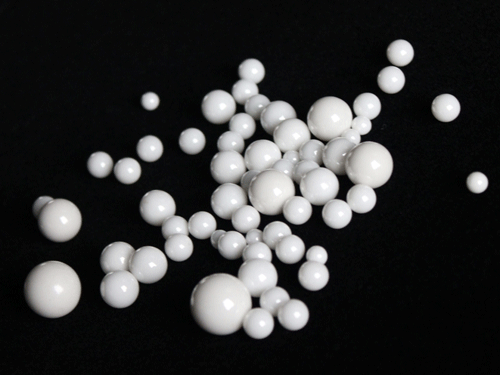
An important limitation that should be stated directly: zirconium bodies do not provide “zero pollution”. Any material wears out, the only question is the speed and how critical the introduced element is for a particular analysis. Promises of complete inertia found in older publications are technically incorrect and should not be used as a selection criterion.
Another limitation is weight. A dense zirconium ball with the same diameter is heavier than aluminum oxide or glass. For the drive, this means a large load, and the permissible load of a particular installation is always checked according to its passport, and not according to general recommendations.
What to specify in the product card before selection
The product card on the manufacturer’s website is the main source of confirmed data. General understanding of the material helps to understand the meaning of the parameters, but does not replace the specification. Below are the fields that you should look for and record before the kit is ordered.
Size and its tolerance
Nominal diameter is a key value, but not the only one. Diameter tolerance and batch uniformity are equally important: a mixture of balls of different sizes behaves differently than a monodisperse load. If the card shows a range of available sizes, it is useful to understand which ones are actually kept in stock and which ones are made to order.
The size is related both to the gap between the bodies and the lining, and to the number of balls for a given mass. Small bodies give more contacts and finer grinding, large bodies give more energy in one impact. The parameter of one item cannot be transferred to the entire assortment: products of different sizes behave differently.
Shape and geometry
The spherical shape is the most predictable: it evenly distributes the impact load and minimizes local stress concentrations. Deviation from sphericity, the presence of pads and cutting increase abrasive wear and can change the nature of the load movement. If the product is supplied in a shape other than a sphere, this should be taken into account when calculating the fill.
Composition and stabilizer
For zirconium ceramics, the type of stabilizer and the content of the main component are usually indicated. Additionally, they are interested in impurities - oxides of aluminum, silicon, iron - as well as porosity. A porous surface retains residues of the previous sample more easily and wears out faster, which directly affects the transfer and the purity of the grind.
Batch, packaging and accompanying data
The batch number and accompanying documents are needed to compare wear and tear between deliveries. If the manufacturer provides data on wear or grind purity, they relate to specific test conditions, and these conditions must be indicated. Without them, the wear figure is not transferred to another sample and another mode.
Wear of grinding media: mechanisms and factors
Wear is not a single quantity. Depending on the regime, one or another mechanism predominates, and their symptoms are different. It is useful to distinguish between them because prevention measures also differ.
Surface abrasion
Microabrasion occurs where particles slide across the surface of a body. Over time, it leads to loss of mass, the appearance of a characteristic shine and flattening of areas. The rate of abrasion increases with the abrasiveness of the sample, the speed of rotation or oscillation, and the grinding time. This mechanism usually results in a slow but constant supply of body material to the sample.
Impact and chip
With high-energy grinding, part of the load comes from the impact. Brittle material may chip, forming fragments. This is more dangerous than abrasion: a chip produces a large fragment, which not only contaminates the sample, but can also damage the beaker lining. The risk increases when there is a lack of medium (little liquid), when the chamber is overloaded, or when large bodies are used in high-energy mode.
Chemical exposure of the environment
The liquid grinding medium can be aggressive. Acidic and alkaline suspensions can accelerate the release of material components into solution, especially if the surface has open porosity. Increased grinding temperature enhances this effect. For stabilized zirconia ceramics, durability is generally high, but not universal: the specific environment must be tested rather than assumed.
Practical conclusion: when planning grinding, it is worth deciding in advance which wear mechanism will dominate, and selecting the size and number of balls to match it. The impact mode requires a more crack-resistant material and smaller bodies, the abrasive mode requires a harder surface and time control.
Addition of impurities: how it happens and how to evaluate it
It is convenient to consider the introduction of impurities as a balance: how much material passed from the bodies and lining into the sample and how much of this amount actually reached the analyzed sample. Some of the transferred material may not get into the sample sample; some may be bound in the form of sparingly soluble phases. Therefore, assessing color “by eye” is not sufficient, but it is also informative.
Direct transfer of body material
This is the most studied way: abrasion and chipping transform the material of the grinding media into powder. The composition of the transfer corresponds to the composition of the body, adjusted for which phases are preferentially destroyed. If the product card indicates the main components, you can predict in advance which elements will appear in the spectrum.
Carryover from previous sample
Residues on the surface of bodies and in the microrelief of the lining are a frequent source of discrepancies between series. It is especially noticeable when moving from a sample with a high content of the element being determined to a sample with a low one. Regular cleaning reduces this contribution, but does not eliminate it completely, especially on porous surfaces.
Blank grinding as an assessment tool
A useful technique is a blank experiment: grinding media and the selected medium are placed in a glass without a sample and processed in the same mode. Analysis of the liquid or dry residue after such an experiment gives an upper estimate of the contribution of consumables under given conditions. It is important to understand the limitation: without an abrasive sample, abrasion is weaker than in real grinding, so the blank experiment does not show the full contribution, but its lower limit.
What else affects the result?
The final concentration of the impurity is influenced by the mass of the sample, the duration of grinding, the ratio of the mass of the bodies and the sample, as well as the method of sampling the sample. Small samples are more sensitive to equal absolute transfer. Therefore, it is correct to compare series only under the same preparation conditions.
Compatible with grinding bowl and drive
Grinding media are not selected separately from the glass. The lining material and the material of the bodies wear out together, and if the hardnesses differ greatly, the softer element wears out predominantly. When the lining and bodies are made of ceramics with similar properties, the difference in wear is smaller, but the total transfer still remains and its composition becomes more complex.
Glass-body pairs should be assessed based on three criteria: element compatibility (what elements each section contributes), hardness compatibility, and geometry compatibility. The latter means that the diameter of the bodies must pass freely and not jam, and the filling must leave a volume for the sample and for the movement of the load.
The drive needs to be taken into account separately. Dense zirconium bodies increase the load mass, and the permissible range is set by the installation manufacturer. For example, in the equipment line TENCAN There is lightweight vibration ball mill — a vibrating apparatus for which the loading parameters and permissible grinding bowls are determined by the operational documentation. It is impossible to automatically consider any bodies compatible with a specific machine: compatibility is confirmed by the manufacturer based on the type of glass, loading weight and mode.
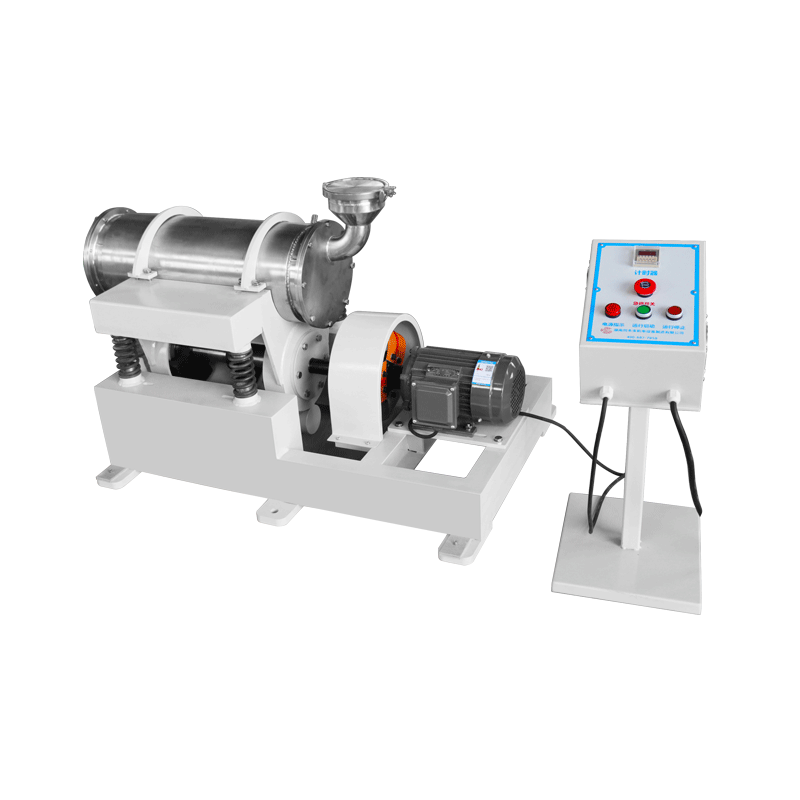
The guideline for selection is the general requirements for equipment for sample preparation and information about zirconium dioxide grinding balls. Comparison of these two cards provides a sufficient basis for an initial inquiry to the manufacturer, but a final determination of compatibility requires an answer to the specific configuration question.
Load, size and grinding medium
Three parameters determine the loading behavior: the size of the bodies, their number, and the environment. They are interconnected, and changing one almost always requires revising the others.
Body size and relationship with original size
The general rule is that the diameter of the grinding body should be significantly larger than the size of the largest particles of the source material. If the particles are comparable to bodies, instead of destruction there is dragging and pressing, and wear increases without useful work. The specific ratio depends on the material and is selected experimentally, but when moving from coarse to fine grinding it is useful to reduce the size of the bodies.
Number of bodies and chamber filling
The mass of the grinding media and the mass of the sample form a relationship, which is usually called the “balls-to-powder” ratio. Increasing this ratio increases the likelihood of collisions, but also increases wear and heat. Filling the chamber also has a limit: if the bodies occupy almost the entire volume, the load loses mobility and grinding slows down. The exact boundaries depend on the type of mill and are indicated in its documentation.
Qualitative comparison of grinding media materials
The table below provides only qualitative guidelines for preliminary selection. It does not replace a specific product specification.
| Material | Relative mass | Wear resistance | The main element introduced into the sample |
|---|---|---|---|
| Glass | low | low | silicon, sodium |
| Agate | low | average | silicon |
| Aluminum oxide | average | average | aluminum |
| Zirconium dioxide | high | high | zirconium, yttrium, hafnium |
| Stainless steel | high | average | iron, chrome, nickel |
| Tungsten carbide | very high | very high | tungsten, cobalt |
Dry and wet grinding
In dry grinding, bodies work primarily according to the abrasive-impact mechanism: particles stick to the surface, forming an intermediate layer, which itself becomes an abrasive. Dust formation and heating are higher. In wet grinding, the liquid dampens impacts, reduces temperature and reduces sticking, but adds a chemical factor: the medium can react with the surface of the bodies and lining. In addition, after wet grinding, it is necessary to separate the bodies from the suspension, which is another operation where losses and contamination are possible.
Thus, the transition from dry to wet grinding changes not only the coarseness, but also the contribution of wear. It is incorrect to transfer a mode from one circuit to another without checking it.
Cleaning, signs of wear and moving to a larger batch
Cleaning between samples
Cleaning grinding media is based on consistency, not just one strong product. First, mechanical residues are removed by rinsing and a soft brush. This is followed by washing with a solution compatible with the material of the bodies and with the previous sample. Finish with rinsing with clean media and drying. Aggressive acid or alkaline treatments are used only if the resistance of the material is confirmed, otherwise they themselves become a source of release of ceramic components into solution.
Porous surfaces require longer processing. If the product card indicates porosity or roughness, this directly affects the choice of procedure. There is no universal regulation: it is drawn up for a specific pair of “material of bodies - type of sample”.
Signs of wear at which the kit is checked
- change in appearance: loss of shine, appearance of matte areas, cutting, chips;
- change in the mass of the control sample of bodies during periodic weighing;
- deterioration in coarseness reproducibility between identical grinds;
- the appearance in the analysis of elements that were not in the original sample;
- a noticeable change in the color of the powder when switching to a new sample material.
None of these symptoms by itself proves a specific problem. It only indicates the direction of the check: measure wear, compare with idle experience, review the mode.
Moving from a lab sample to a larger batch
When scaling, one strives to maintain the ratio of the mass of the bodies and the sample, the size of the bodies and the degree of filling. But even with the formal coincidence of these parameters, the energy per collision is different in an installation of a different size. Therefore, the result obtained in the laboratory is not automatically transferred to a larger batch: separate verification of size and purity is required. It is useful to keep the same type of grinding media and the same delivery batch so that variability is associated only with the apparatus and mode, and not with the consumables.
Test grinding program and selection data
Test grinding allows you to turn assumptions into measurable values. It does not require complex equipment, but it does require discipline: the same conditions, the same selection procedures, recording the results.
What to include in your trial program
- Blank experiment without sample in the same environment and with the same regime as the working grinding.
- Weighing a control sample of grinding media before and after a series of grindings to assess mass loss.
- Grinding a representative sample and measuring the particle size distribution.
- Repeat the same grind at least twice to assess reproducibility.
- Elemental analysis of the sample and comparison with the starting material.
- Comparison of grinding in dry and wet environments, if both schemes are acceptable for the material.
This set provides answers to three questions: how quickly the bodies wear out, what element they contribute, and how stable the result is. Further decisions on size and material are made based on data, not descriptions.
What to tell us to select a configuration
- installation type, grinding bowl model and material;
- mass of the sample and its initial size;
- dry or wet grinding and composition of the liquid medium;
- target size and permissible grinding time;
- elements whose determination is critical and their permissible concentrations;
- the preferred size of grinding media, if it is already known from previous experience;
- drive load limits specified by the manufacturer.
This information allows you to compare the mode with the actual capabilities of the equipment and does not turn general recommendations into a guarantee of a specific result. To complete the picture, it is also useful to focus on the general equipment catalog TENCANto see which bowls and mill types are offered in the same line with the selected grinding media.
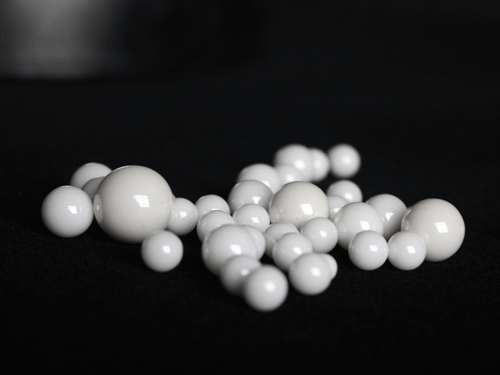
The bottom line is simple: zirconia grinding media is a cleanliness and coarseness control tool, not a one-size-fits-all solution. Their benefits are realized when the correct size is selected, compatibility with the cup and drive is confirmed, and the wear contribution is measured rather than assumed. The achievable minimum size and permissible level of impurity always depend on the material, initial size, medium, mode and method of measurement - and are confirmed only by trial grinding on a specific configuration.