
A vacuum tube furnace covers a narrow but important range of laboratory tasks: sintering, annealing, reduction, degassing, calcination and other types of heat treatment of small samples in a controlled environment. Its peculiarity is that the heating chamber, gas line and pumping system form a single circuit. Therefore, the same installation by two operators gives different results: the reason is usually not due to instability of the furnace, but to different sample preparation, different programs and different thoroughness of leak testing.
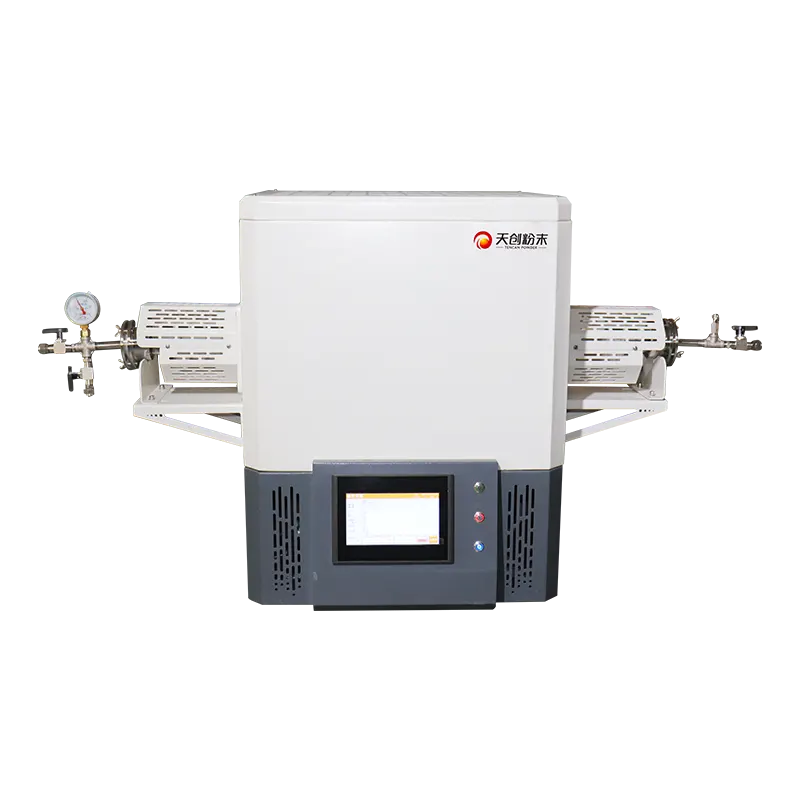
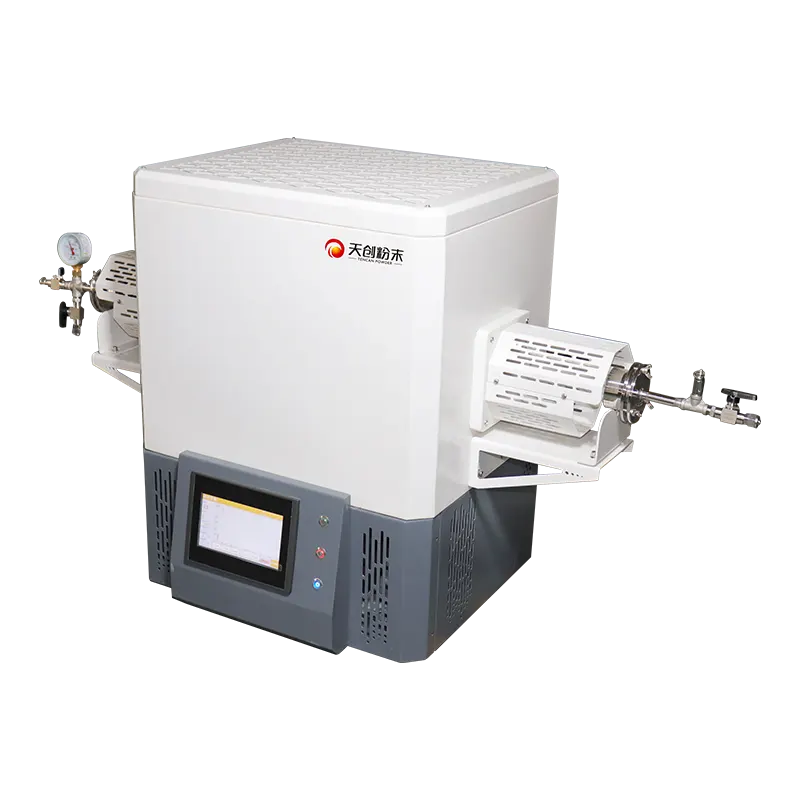
Below is a practical question: how to select the mode and configuration of a vacuum tube furnace so that the result is reproducible and the installation is not damaged. The oven is taken as an example. TENCAN sintering series — vacuum tube furnace. Passport values - maximum temperature, pipe material and diameter, pumping parameters, controller type - are taken from the documentation of a specific model and are not transferred from similar furnaces. The general physics discussed below helps you ask the right questions, but is not a substitute for operating instructions.
Process first, not equipment first
Heat treatment is a general name that hides different processes. Sintering densifies the powder preform through diffusion and shrinkage. Annealing relieves internal stresses and changes the defectiveness of the structure. Reduction removes oxygen from the oxide phase. Degassing removes adsorbed moisture and solvent residues. Calcination decomposes the precursor and forms the desired crystalline phase. The requirements for temperature, holding time, environment and cooling are different for these processes, so there is no single “correct mode”.
Before choosing a stove, it is useful to answer a few questions in writing about the sample.:
- what state or phase is needed at the output - dense workpiece, reduced powder, annealed film, cleaned surface;
- what should leave the sample - moisture, solvent, organic binder, oxygen, decomposition products of the precursor;
- how the sample behaves when heated - it shrinks, swells, releases volatiles, sinteres into a monolith, reacts with the substrate material;
- what environment is acceptable - vacuum, inert gas, reducing mixture, oxidizing atmosphere;
- what will happen to the sample after processing - it needs to be analyzed, crushed, polished or stored without contact with air.
The last point is often underestimated. If, after sintering, the sample is to be ground in a planetary mill, its porosity and fragility are determined by both the furnace mode and the choice of grinding glass. If the sample, on the contrary, must remain a dispersed powder, the particles should not be allowed to sinter together - then it is not the maximum density that is more important, but the control of agglomeration.
The second important point is the distinction between purpose and method. Calcination in a vacuum, annealing in an argon flow and reduction in a hydrogen-containing environment are three different processes with different requirements for tightness, ventilation and safety. It is not worth mixing them in one program without understanding the chemistry of the sample: the result of such a combination is difficult to interpret, and sometimes it is dangerous.
Finally, it is worth deciding in advance what exactly is considered success. Dense sinter, preserved phase composition, absence of an oxidized layer, stable mass after running - these are different criteria, and they lead to different regimes. The acceptance criterion is formulated before the selection begins, otherwise the work turns into an endless search.
How a vacuum tube furnace works and what determines the result
Structurally, a tube furnace is simpler than it seems, but each component affects the final result. Let's look at them in order - from the working area to the control system.
Reaction tube
The pipe is both a working chamber and a boundary between the sample and the external environment. Its material determines the permissible temperature, heating and cooling rates, as well as chemical resistance. Quartz glass is transparent and convenient for observation, but has its own temperature limitations and is sensitive to thermal shock and alkaline environments at high temperatures. Ceramic pipes can withstand higher temperatures, but are less resistant to sudden changes. Metal pipes are used where resistance to reducing environments and mechanical strength are required.
The diameter of the pipe is not only about the size of the sample. A larger diameter means a larger volume that needs to be pumped out and filled with gas, a longer recovery time and a more complex temperature distribution across the cross section. A small diameter gives better uniformity, but limits the size of the crucible and makes it difficult to handle gas-emitting samples.
Flanges, seals and sealing
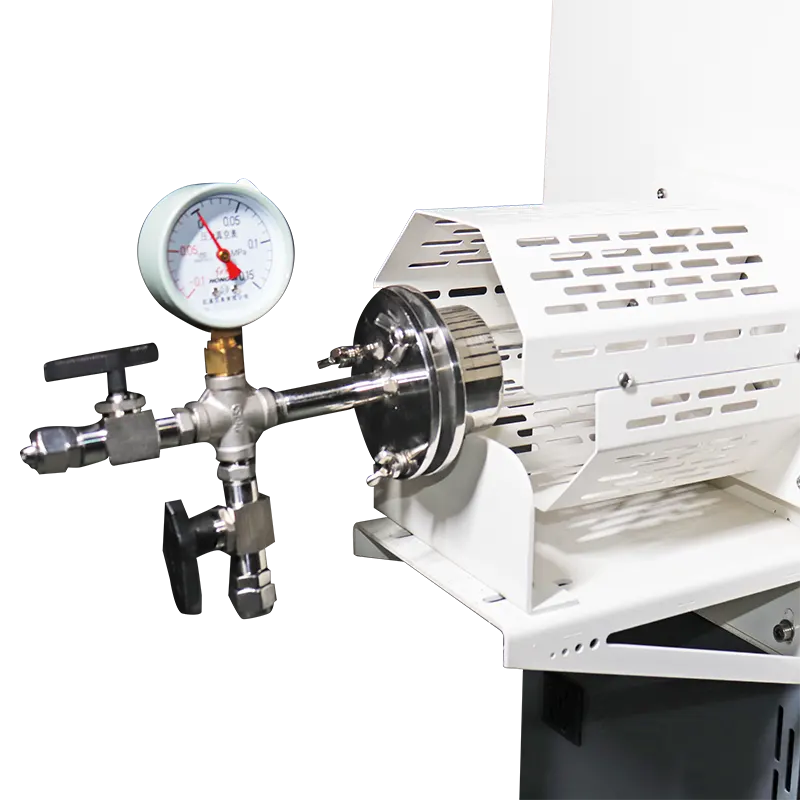
A vacuum furnace differs from a conventional muffle furnace in that it has sealed pipe ends. Flanges with O-rings, fittings for pumping out and introducing gas, inspection windows and inputs for thermocouples form a sealed circuit. The quality of the seals determines the achievable vacuum and, more importantly, the residual oxygen content. Even a slight leak leads to the sample oxidizing when heated, although the vacuum gauge shows an acceptable value.
Sealing elements are consumables. Their condition, the cleanliness of the seating surfaces and the correct tightening of the flanges influence the result more than many program parameters. Before each critical treatment, it makes sense to check the tightness on a cold system, without heating, and only then move on to the temperature program.
Pumping system and gas line
The vacuum pump, valves, pressure sensor and gas supply line work together. What is practically significant is not so much the limiting figures as the pumping speed of the working volume, the possibility of repeated purging with an inert gas, and the stability of the flow during heating. Blowing in cycles of “pumping and filling” allows you to displace air from the pipe more effectively than a single filling.
It is worth remembering separately: a vacuum and an inert environment solve different problems. The vacuum removes the gas phase and reduces the partial pressure of oxygen, but does not prevent the evaporation of volatile components of the sample. The inert gas protects against oxidation, but may contain residual oxygen and moisture if purge is insufficient. A restorative atmosphere requires special attention to safety, ventilation and compatibility with oven materials.
Heaters, temperature sensor and controller
The heating element transfers heat to the pipe, the pipe transfers heat to the gas and the sample, and the sensor measures the temperature at the point where it is installed. This is a key difference: the program target temperature and the actual sample temperature are not the same thing. The position of the thermocouple, thermal contact with the crucible, gas flow rate, and heat loss at the flanges shift the actual temperature of the sample relative to the set point.
The controller sets the program: ascent speed, shutter speed, number of steps, cooling speed. The possibility of a multi-stage program is important for processes where it is necessary to slowly go through the decomposition interval of the binder, and then quickly reach the sintering temperature. The more accurately the program describes the real process, the more reproducible the result.
Temperature: maximum, long-term operating and sample temperature
The documentation for tube furnaces usually shows two different values: maximum temperature and long-term operating temperature. The maximum is achievable for a short time and is not intended for long exposures. The long-term operating temperature is lower and determines the life of the heaters and pipes. Using the short-term maximum as the operating mode is a common mistake that accelerates wear and distorts the results.
In addition, the limitation may not be set by the heater, but by the material of the pipe or seals. Quartz tube, ceramic, and metal have different limits, and the temperature that is safe for the heater may not be acceptable for the mechanical seal. Therefore, when selecting a mode, they always look at the bottleneck of the entire chain, and not just at the power of the furnace.
The third level is the temperature of the sample itself. It depends on the mass and thermal conductivity of the sample, on whether it lies in a crucible or in a boat, on the density of contact with the substrate, on the gas velocity and on where the thermocouple is located. A heavy, massive workpiece heats up more slowly than a fine powder. During rapid heating, the sample can lag behind the set point by tens of degrees, and after reaching the shutter speed, it can take some time to catch up with it.
The temperature is distributed unevenly along the pipe: at the ends it is lower than in the center of the working area, and at the flanges it is always colder. If the sample lies close to the edge, the actual temperature may differ noticeably from the set temperature. For this reason, the position of the sample is recorded in the protocol as strictly as the temperature itself.
Practical conclusion: a regime tested on a small sample cannot be mechanically transferred to a large load. As the mass increases, it makes sense to reduce the heating rate and increase the holding time, rather than increase the temperature. If the result depends on the exact temperature, temperature control in the sample area or preliminary calibration against a standard is needed, rather than relying only on the controller reading.
Atmosphere: vacuum, inert gas and reducing environment
The choice of medium is the choice of what the sample will come into contact with at high temperature. A vacuum reduces the partial pressure of oxygen and promotes the removal of gaseous products, but is not a universal protection: some oxides dissociate when heated in a vacuum, others do not. An inert gas, most often argon, protects against oxidation and allows you to regulate the removal of volatiles by flow. A reducing environment is used where oxygen must be actively removed, but requires a separate assessment of the safety and ventilation of the room.
In practice, what is more important is not the “vacuum” or “argon” label, but the residual oxygen and moisture content in the working volume at the time of exposure. Purging with multiple pumping and filling cycles will usually give better results than filling once. A weak, continuous flow of gas during soaking helps carry away decomposition products and maintain a stable atmosphere, but too much flow creates a temperature gradient along the pipe and blows heat out of the work area.
A separate issue is volatile components. If the sample emits organics, sulfur, halogens, or alkaline fumes, these substances will come into contact with cold areas of the pipe, flanges, and seals. Sediment on the ends impairs the seal, and condensation can fall back onto the sample. Therefore, for such processes, traps, protective liners, removable inserts or a separate pipe are provided, as well as purging after exposure, before opening the furnace.
Clearly distinguish between gas-replacement evacuation and continuous circulation. These are different modes with different hardware implementations: the first allows you to create an environment and close the volume, the second requires continuous operation of the gas line and flow control. Also, you should not call conventional air cooling or purging with an inert gas a cryogenic process: cryogenic cooling requires a separate refrigerant and a different plant design.
If the process chemistry is sensitive to residual oxygen, it is useful to monitor its content in the outlet gas or at least estimate it indirectly - by the reproducibility of the result and the appearance of the sample. Direct measurement requires a separate sensor, and the presence of a vacuum gauge does not replace it.
Loading, crucible and boat
The material of the crucible or boat is part of the chemistry of the process, not just the vessel. At high temperatures, contact of the sample with the substrate can lead to reduction of the crucible material, the formation of eutectics, and adhesion or diffusion of impurities. Ceramics, oxide materials, graphite, metals and quartz behave differently depending on the environment and temperature.
The choice of container is determined by three conditions: compatibility with the sample, stability in the selected atmosphere, and the absence of undesirable contributions to the composition of the sample. If the product is to be analyzed for trace elements, contact with the support material may produce a noticeable background. That is why an “inert” crucible is a relative concept: absolute inertia does not exist, we are talking about an acceptable level of interaction for a specific task.
Load geometry also matters. A thin, leveled layer of powder heats up more evenly and releases gases more easily than a dense mound. A sample lying in a boat has a different thermal contact than a sample in a closed crucible with a lid. The lid reduces the loss of volatiles, but makes it difficult to remove them. Dense backfill reduces shrinkage, but can lead to uneven sintering across the cross-section.
The loading weight is limited not only by the volume of the pipe. More mass means more thermal inertia, more gases released and more residual heat after shutdown. Therefore, the transition from grams to tens of grams always requires a revision of the program, and sometimes a check of the heat balance of the furnace.
Equally important is the cleanliness of the equipment. Residue from a previous sample on a crucible or boat is a common source of cross-contamination and unexplained variations. It is wise to have separate containers for different materials and keep records of them; abrasive cleaning, acid treatment or annealing of empty equipment are selected based on compatibility with the material and should not change the properties of the crucible itself.
Heating, cooling and reproducibility
The heating rate affects two processes simultaneously: the thermal stresses in the pipe and sample and the chemistry. A slow rise allows time to devolatilize and reduces the risk of cracking the specimen. Fast lifting saves time, but increases the risk of overheating of local areas and heterogeneity in load volume.
Cooling is often more important than heating. If the sample is cooled quickly, nonequilibrium states are fixed in it, cracks and internal stresses appear; For some materials, it is the cooling rate that determines the final phase. Natural cooling in an oven, cooling in a gas stream, and extraction of the sample at high temperature give different results, and this parameter should be recorded in the protocol as strictly as the holding temperature.
Thermal stresses do not only affect the sample. The pipe and its seals are also subject to stress during sudden changes, and repeated rapid cycling shortens the life of the tooling. Therefore, reasonable heating and cooling rates are a compromise between performance and resource.
Reproducibility is ensured not by an ideal furnace, but by the repeatability of all conditions: the same load, the same sample position, the same program, the same purge, the same moment of opening the furnace. It is useful to keep a log of sample weight, container material, position in the tube, gas velocity, and actual deviations from the program. Then, if the results diverge, you can see which parameter has changed.
Trial run and configuration data
It is better to start selecting a mode not from the main sample, but from test runs. The first step is to check the valves for tightness and operation without heating. The second is a dry run with an empty pipe or with an inert filler to evaluate the behavior of the controller, the actual temperature distribution and the time to reach the mode. The third is a run with a simulator sample, similar in mass and thermal properties to the working one, in order to assess the release of volatiles and contamination of the pipe.
Only after this does it make sense to process the target sample, preferably with intermediate control: weight before and after, appearance, lack of adhesion, and, if necessary, X-ray phase analysis or density measurement. This approach allows you to separate the influence of the atmosphere from the influence of temperature and not change several parameters at once.
If the task is to move from a single sample to a larger batch, changing the mass alone is not enough. The heat balance, warm-up time, volume of released gases and temperature distribution throughout the load change. A reasonable way is a stepwise increase in mass with checking the result at each step, and not a direct transfer of the laboratory regime to a large load.
To select a configuration from the supplier, it is useful to prepare data in advance: type and dispersion of the material, weight of one load, required temperature and holding time, acceptable and unacceptable atmosphere, presence of aggressive volatiles, cooling requirements, room and ventilation restrictions, as well as process logging requirements. The more specific this information is, the more accurately you can compare the model and equipment.
It is also worth clarifying which parameters in the product card relate to short-term maximum and which to long-term operation, what pipe material is offered for the selected environment, what is the permissible heating rate and which consumables require regular replacement. These questions are more important than comparing furnaces based on a single number.
General overview of equipment areas TENCAN, including thermal and grinding solutions, are listed on the main page www.tencanballmills.com. It is important to understand that heat treatment and subsequent grinding are different stages of sample preparation, and the equipment for them is selected independently, according to its own criteria.
A vacuum tube furnace gives good results where the mode is described honestly: indicating the mass of the charge, the medium, the heating and cooling rate, the position of the sample and the method of temperature control. No model can compensate for uncertainty in these parameters. Conversely, consistent work with leak testing, purging, test runs and logging makes the result stable even on a modest installation.