
Preparing a sample in an agate mill seems like a simple operation: load the material, turn on the machine, wait for the desired size. In practice, it is at this stage that two opposing errors arise. The first is to consider the mill as a universal grinder that will “bring” any sample to the desired size. The second is to transfer to agate equipment the modes worked out on metal or ceramic grinding chambers. Three-headed agate mill TENCAN refers to laboratory sample preparation equipment, and its value is realized when mode, loading and cleaning are matched to the specific material and analytical task.
The open product card confirms the name, belonging to the grinding equipment and the presence of three working positions. This is enough to discuss work organization and selection criteria, but not enough to assign speed, maximum load, work position size or final size without an up-to-date specification. Therefore, below the general principles are separated from the parameters that need to be checked with the supplier and in trial grinding. This approach does not complicate the article: it protects against errors when the characteristics of one model or one material are automatically transferred to the entire range.
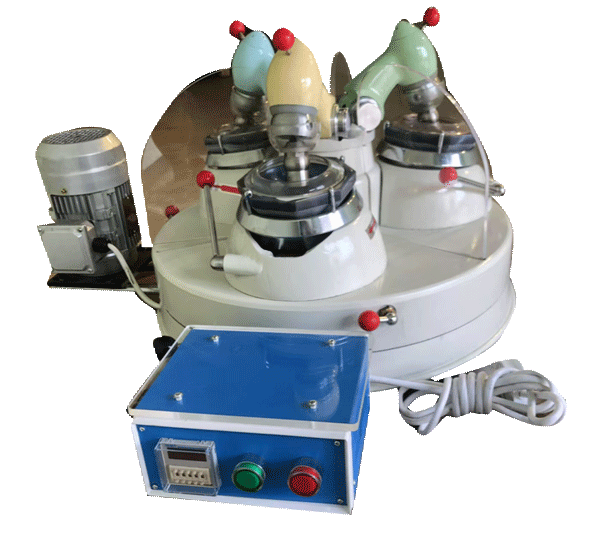
What has been confirmed and where is the limit of applicability?
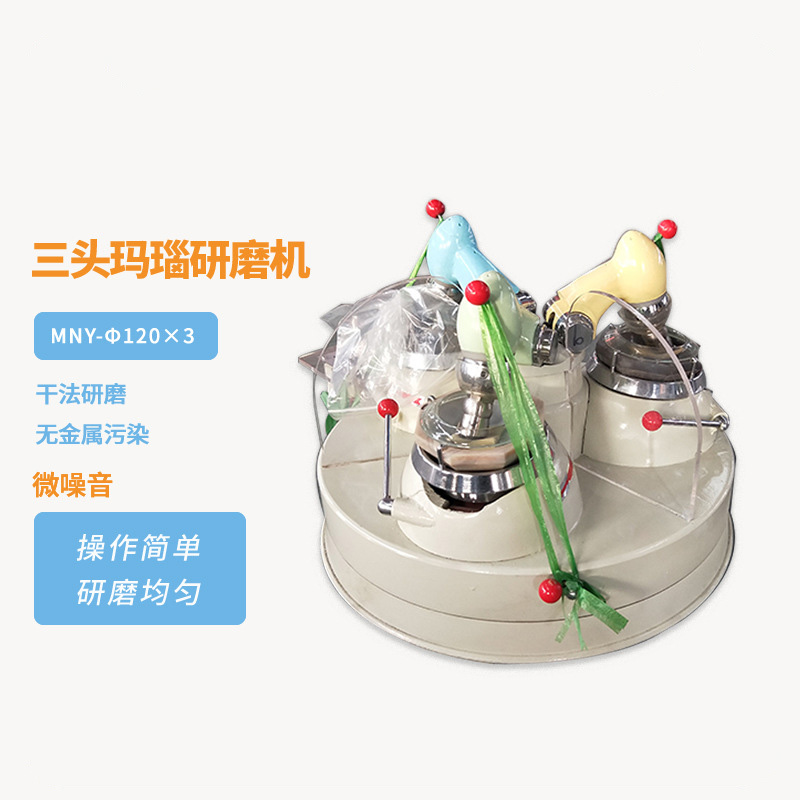
Three-headed agate mill TENCAN — This is a laboratory installation with three working positions, made using agate as a material for contact elements. This arrangement is interesting for laboratories where it is necessary to prepare several samples in parallel or maintain repetition when developing a technique. However, three positions does not automatically mean a threefold increase in productivity: the actual organization of work depends on the drive, control, permissible load of each position and requirements for grinding uniformity. These parameters should be clarified using the current card and manual, and not inferred from the name.
It is equally important to distinguish between categories of equipment. The three-head agate mill is not a planetary ball mill, not a bead mill, and not a roller crusher. The planetary mill creates a complex motion of the grinding bowls and is usually considered in conjunction with grinding media; the bead mill works with a fine grinding medium and is often used for dispersing; The crusher is designed for preliminary reduction of pieces. The three-position agate mill has its place in the sample preparation chain and should not be described in terms of the functions of another class of equipment. If the laboratory already has a planetary mill, the appearance of a three-headed agate installation does not automatically replace it: the task, scale and nature of the impact on the material change.
Agate is valued for its relatively low impurity levels compared to steel workpieces, but this does not mean “zero contamination.” Agate is a silica-based mineral, so its wear adds silicon and related components to the sample. For silicate samples, this contribution may be less noticeable than for the analysis of traces of silicon, particle surfaces, or highly pure materials. In addition, agate is fragile: impact loads, large solid particles and improper loading increase the risk of chipping. Therefore, choosing an agate mill begins not with the promise of perfect purity, but with checking whether the agate is acceptable for a particular analytical task.
Card three-head agate mill TENCAN serves as a starting point for selection, but does not replace the terms of reference. The request should indicate the material, initial particle size, required fraction, sample weight, sensitivity of the analysis to impurities and the intended organization of work. The discussion then moves from general words about “fine grinding” to testable conditions: what load is acceptable, how the mode is controlled, what working elements are available and how to clean them between samples.
Sample before grinding: questions that determine the mode
Before turning on the mill for the first time, it is useful to describe the sample not with just the word “powder”, but with a set of characteristics. For an agate mill, the hardness and brittleness of the material, the initial particle size, humidity, tendency to stick, uniformity and chemical composition are important. Separately, they record what exactly the target result is: reduction in particle size, disagglomeration, averaging, or preparation for subsequent analysis. These goals are not always the same. For example, vigorous stirring may make the sample visually homogeneous but may not change the particle size distribution.
The size of the result cannot be assigned only according to the passport minimum. The achievable size depends on the material, initial size, loading, time, medium and measurement method. For a ductile or fibrous sample, grinding may be slower than for a brittle one; for material prone to aggregation, measurement after dry grinding may show large aggregates even though the primary particles have already been ground. Therefore, the test report indicates not only the mode, but also the method of sample preparation before measurement: sifting, dispersion in liquid, drying or sampling without additional influence. Otherwise, comparison of the two modes will be incorrect.
| Question | Why is it important | What to record |
|---|---|---|
| Hardness and brittleness | Affect grinding speed and risk of agate wear | Description of the material, presence of solid inclusions |
| Initial size | Determines if pre-training is needed | Determination method and size range |
| Target size | Related to 分析方法 and acceptable spread | Measurement method, acceptance criterion |
| Weight per position | Affects filling, heating and repeatability | Sample weight and number of replicates |
| Sensitivity to impurities | Determines the acceptability of agate contact | Elements, detection limits, control experiment |
There are no universal values in the table: it specifies the structure of the request, not the recipe. For each laboratory, the limits are set by its own methods and internal criteria. If the sample contains particles harder than agate, the risk of wear and chipping increases; such cases include, for example, corundum, silicon carbide and tungsten carbide. This does not mean that any such material will immediately damage the work surface, but requires careful trial grinding and subsequent inspection. It is impossible to transfer successful experience from a soft mineral to a hard alloy just because both samples are called “powder”.
Three operating positions: parallelism and reproducibility
The main advantage of the three-head arrangement is the ability to organize the preparation of several samples in one installation. The practical implications depend on how independent the positions are and how their work is regulated. If positions have a common drive, it cannot be assumed in advance that each of them reproduces the same impact profile under different loads. If the control allows you to set the mode separately, this increases the possibilities, but requires a more strict protocol. In any case, before serial work, check whether there is a systematic difference between the positions.
To test the positional effect, use the same material, the same mass and the same time, and then switch positions. This technique helps to separate the properties of the sample from the features of a particular nest. If the result is position dependent, it may be due to loading, work surface conditions, mounting or controls. Without diagnostic data, a specific malfunction cannot be declared proven; It is more correct to record the observation and discuss it with the supplier. For routine work, a rule is sufficient: samples are compared only under identical conditions, and not under “about the same” load.
Three positions are convenient for a blank experiment and a control sample. Blank testing helps evaluate the contributions of operating elements, cleaning, and the environment. A control sample with a known material shows whether the mode is maintained after changing the sample. This is especially important when moving from one laboratory task to another, when the mill is not used daily. If the installation is idle, before a critical experiment it is useful to perform a short startup and inspect the operating elements, rather than assume that the previous setting has been preserved.
Dry and wet grinding: medium, coarseness and losses
Dry grinding is simpler from a logistics point of view: after processing, there is no need to separate the liquid and dry the sample. It is suitable for many brittle materials, but has limitations. Dust, adhesion to walls, aggregation of small particles and local heating can distort the result. If the sample is hygroscopic or sensitive to air moisture, dry grinding requires controlled conditions. In addition, during dry grinding, some of the material remains on the working surfaces; losses and cross-contamination must be estimated and not considered negligible.
Wet grinding is introduced into the technique when it is necessary to reduce dusting, improve dispersion or stabilize the suspension. Liquid can reduce aggregation and facilitate subsequent sampling, but adds new variables: chemical compatibility with the sample and agate, volume of liquid, temperature, evaporation, method of separation and drying. There is no universal “wet grinding” liquid. Water is not suitable for all materials; Organic solvents require assessment of safety, purity, and impact on analysis. The selection of the medium is part of the methodology, and not a secondary detail.
Wet grinding should not be automatically equated with a finer result. In some cases, the liquid does help break up the aggregates and produce a more stable suspension, but the measured size depends on how the suspension was prepared for analysis. If aggregates form again after drying, the dry powder may appear larger than it was in suspension. Therefore, the report records the entire chain: grinding, selection, dilution, dispersion, drying and measurement. Otherwise, comparison with literature data loses its meaning.
A distinction is made between grinding and mixing. A three-head agate mill can be used in laboratory practice to process multiple samples, but mixing the components alone does not guarantee particle size reduction. If the goal is to obtain a homogeneous mixture, the criterion will be the distribution of components, and not just the size. If the task is disagglomeration, it is necessary to prove that the aggregates are destroyed and not simply redistributed. This formulation helps to choose a mode and not replace one technological result with another.
Agate, wear and impurities: why there is no such thing as “zero pollution”
Agate has high hardness and low porosity, so it is often considered a material for careful sample preparation. However, contact wear exists in any material. Agate working elements can release silicon dioxide and trace components into the sample; intensity depends on sample hardness, time, loading and surface condition. For analyzes where silicon is not a detectable component or where its contribution is small compared to the matrix, this may be acceptable. For silicon trace analysis or surface testing, the risk becomes significant.
The fragility of agate is the second side of its advantages. Large solid particles, shock and overload increase the likelihood of chipping. After working with abrasive material, it is useful to inspect the work surfaces: chips, dull spots and clogged areas can affect both grinding and cleaning. A damaged surface should not be masked by longer grinding: this will increase wear and does not guarantee comparability. If in doubt, it is better to stop the series and coordinate further actions with the supplier than to continue by inertia.
The chemical resistance of agate is also not absolute. It is resistant to many media, but hydrofluoric acid and concentrated alkalis require separate compatibility assessment. The article does not provide methods for pickling or aggressive cleaning: such operations must be confirmed by management and internal safety regulations. For routine cleaning, it is more important to remove residues mechanically and not to damage the surface with abrasives. If traces are critical for analysis, a control experiment is carried out after cleaning: it shows the real contribution of the installation, and not the assumed one.
The word "agate" is not synonymous with "inert to any sample." The documentation should clarify the composition of the working elements, acceptable cleaning agents and restrictions on materials. If the supplier gives a general phrase about low contamination, it needs to be translated into specific analysis: what elements are controlled, what blank is acceptable and how often the surface is checked. This approach preserves the benefits of agate without turning them into an unreasonable promise.
Overheating, cleaning and transition to series
During grinding, mechanical energy is partially converted into heat. Agate has low thermal conductivity, so heating the working area and heating the sample are not the same thing. The sample temperature cannot be judged solely by the temperature of the housing or working position. If the technique is heat sensitive, you need to measure or control the factor that really matters to the sample and discuss available cooling options with your supplier. Conventional air cooling does not become cryogenic just because the unit is operating in a laboratory. Unless liquid nitrogen cooling is confirmed for a specific model, it is not planned as a standard feature.
Signs of unfavorable conditions may include excessive heat, foreign odors, discoloration of the sample, condensation, increased noise or vibration. You cannot make a diagnosis based on one sign. First, check the loading, time, surface cleanliness and correct assembly; then compared with a control run. If the problem persists, stop work and contact management and the supplier. For a lab series, stability is more important than record time, so splitting the operation into multiple runs is often safer than one overloaded attempt.
Cleaning between samples is part of the technique, not final cleaning. First, the bulk of the material is removed using a dry method, then hard-to-reach areas are cleaned and dried. Abrasive powders and hard brushes can damage the agate; aggressive reagents are used only with confirmed compatibility. If the next sample is sensitive to the previous material, use a separate control experiment. For a batch, it is useful to keep a log of what sample was processed, what position was used, how it was cleaned, and what was observed after cleanup. This helps distinguish contamination from natural dispersion.
Moving from one sample to a series requires a protocol. It records the mass, initial size, mode, time, medium, position, cleaning procedure and measurement method. The first three runs should not be made different: it is better to repeat the same mode and evaluate the spread. Then check the positions and only then change the parameters. If the laboratory moves to a larger batch, it cannot simply increase the loading at one position: first find out whether the design allows this and whether the uniformity will deteriorate. Sometimes it is more correct to divide the material into several samples than to force one.
What to prepare for trial grinding and configuration request
For a meaningful request, the supplier only needs to describe the problem in terms that can be verified. Indicate the material and its approximate hardness, initial particle size, required fraction, sample weight, number of replicates, admissibility of wet grinding, sensitivity to silicon and other impurities, cleaning and safety requirements. It is useful to communicate whether the mill will be used daily or periodically, how many samples are expected to be processed per shift, and what analytical methods are used. This information does not replace the specification, but helps to select a configuration without unnecessary assumptions.
The supplier will clarify the volume and permissible load of the work position, the material and design of the agate elements, available control modes, the presence of cooling, cleaning procedures, compatibility of replacement accessories and restrictions on solid materials. If additional equipment is offered, its connection to the three-head mill must be documented. The characteristics of grinding bowls for planetary mills or grinding media of other equipment cannot be transferred to this installation solely on the basis of external similarity. Compatibility is checked by card, manual and manufacturer's response, not by category name.
It is better to plan a trial grinding as a small study: a control experiment without a sample or with an inert material, three repetitions of the same mode, checking positions and measuring the size using the agreed method. Acceptance criteria are formulated in advance: reproducibility of the result, absence of visible damage to the agate, acceptable contribution of impurities, preservation of the properties of the sample. If the result does not meet expectations, change one variable at a time. This protocol is useful both when choosing between several equipment options and when transferring the technique to colleagues.
Three-headed agate mill TENCAN — a laboratory tool for careful sample preparation, and not a universal replacement for all types of grinding. Its strength is revealed where agate is acceptable in terms of chemistry and hardness, and three working positions help organize repetition and parallel processing. It is not the maximum load that gives a reliable result, but a confirmed mode, a clean surface, control of the installation contribution and clear measurement criteria. For initial acquaintance with the direction of equipment TENCAN can be used sample preparation equipment catalog, and specific parameters and compatibility can be clarified using the current product card and manual.