Pieces of material entering the laboratory are almost never the same. The size, shape, moisture content, and internal defects of an individual piece affect how it will break down and how representative the sample will be after crushing. That is why preparation for grinding begins not with choosing a mill, but with an understanding of what will happen to the material at the first stage of size reduction.
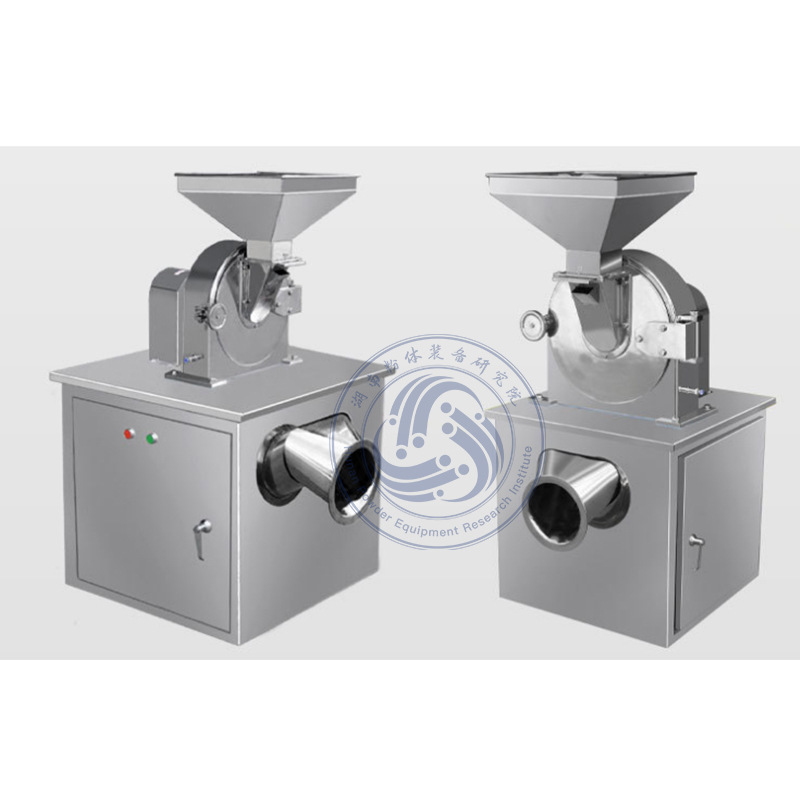
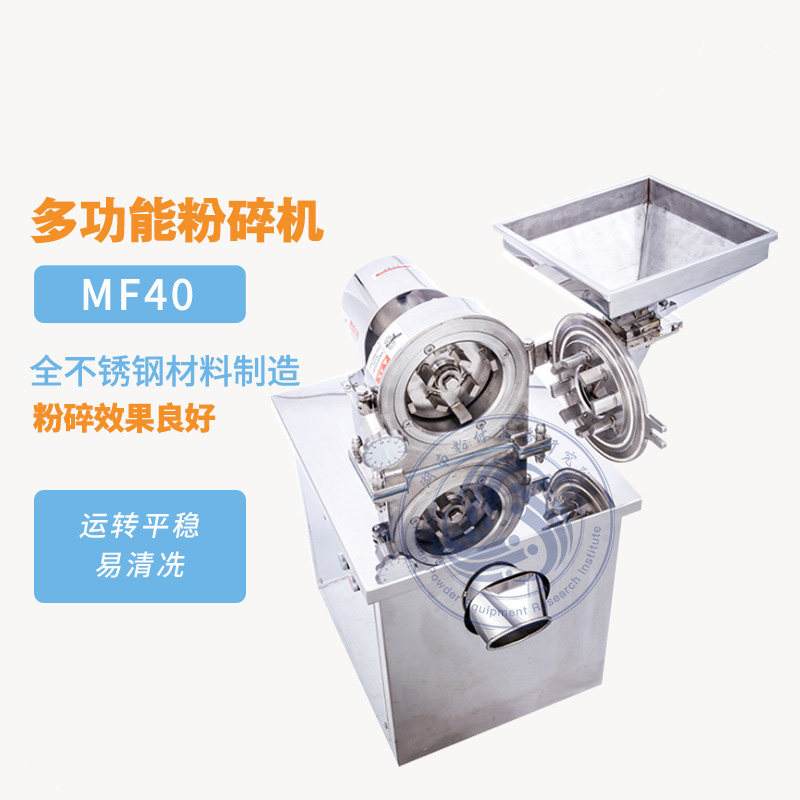
Multifunction crusher TENCAN in such a chain it solves the first problem - to reduce the pieces to a size suitable for the next operation. However, the same machine may produce different results on brittle, tough, wet or abrasive materials. Before choosing a mode, it is worth separating the properties of the sample from the characteristics of the equipment and checking which parameters are actually confirmed for a particular implementation. Product description and execution are given in multifunctional crusher card TENCAN.
Why does the crusher determine the quality of subsequent grinding?
Crushing and grinding are often thought of as two sequential operations with the same result. In practice these are different processes. The crusher breaks down large pieces, reducing them to a smaller fraction, and the mill works with the already prepared material and provides further crushing, mixing or deagglomeration. If the first stage is carried out carelessly, the second receives an uneven load: some of the material may be over-grinded, some may be under-prepared, and the particle size distribution becomes wider than required.
For an analytical sample, it is important not only to obtain a small product, but also to maintain its representativeness. Excessive crushing of brittle material often increases the proportion of small particles that are easily lost during sample handling or deposited on the walls. Wet material can stick to working parts and create stagnation zones. Abrasive material accelerates wear of contact surfaces. Therefore, the choice of crusher and mode is a compromise between the required size, preservation of sample properties, productivity and ease of cleaning.
Multifunction crusher TENCAN does not replace a ball, planetary or bead mill. It prepares the material for the next operation and should be considered in conjunction with it. If dry or wet grinding is planned after crushing, it is useful to determine in advance the acceptable particle size at the mill inlet, the acceptable dust content and cleanliness requirements. Then the requirements for a crusher are formulated not as “a universal machine is needed,” but as a set of specific conditions.
What does “multifunctional” mean and which components to check
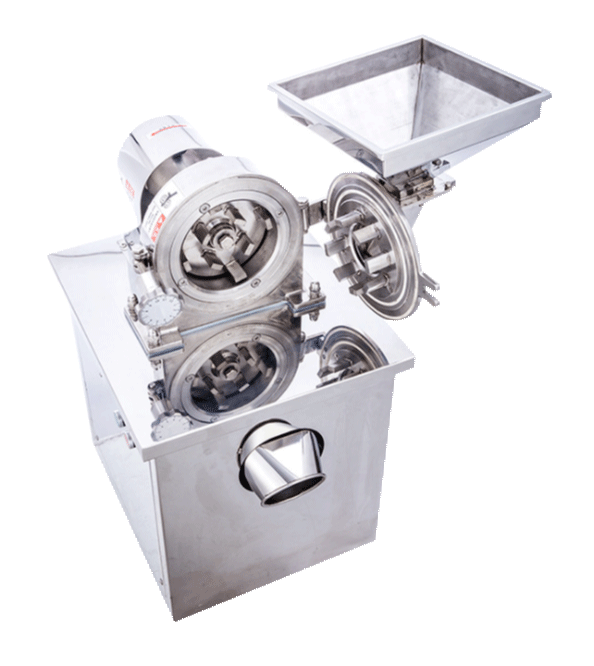
The name “multifunctional crusher” indicates the ability to work with different tasks and materials, but does not mean that the same design is equally suitable for all samples. Versatility is usually associated with the design of the working chamber, the ability to change the mode or use suitable interchangeable elements. The specific configuration, materials of contact surfaces and acceptable materials should be checked against the product card and manufacturer’s documentation, and not deduced from the name.
Working bodies and nature of destruction
In crushers, size reduction occurs through compression, impact, abrasion, or a combination of these mechanisms. Brittle material with pronounced cracks breaks down differently than tough or fibrous material. For the first, impact and compression are more important, for the second, the ability to avoid smearing the working parts. Therefore, when selecting a mode, you need to understand which type of destruction predominates in a particular design and how suitable it is for the structure of the sample. If the material is prone to plastic deformation, crushing may be less efficient than expected and cleaning may be more labor intensive.
Loading, unloading and cleaning
The loading unit affects how evenly the material enters the work area. Too large a piece can block the flow, and a small fraction can form dust and stick. Unloading should allow the product to be collected without loss and without additional contamination. Blind corners, steps, and hard-to-reach cavities make cleaning between samples difficult. This is especially important for the laboratory if the same machine is used for different materials or if the downstream analysis is sensitive to trace carryover.
Replacement parts and compatibility
If the design allows for replaceable operating elements, their compatibility with the material and apparatus must be checked separately. Not every appropriately sized element is designed for the same load as a standard one. The contact surface material must be compatible not only with the sample, but also with the cleaning conditions. In addition, replacing the unit may change the crushing pattern and particle distribution. Therefore, replacement elements are considered part of a specific configuration and not as a universal addition to any crusher.
Particle size and distribution: input, output and representativeness
When discussing coarseness, it is easy to confuse several different sizes. The maximum lump size allowed at the input is not equal to the typical size of the original sample. The size of the discharge gap is not equal to the final particle size. One number in the description does not guarantee that the entire product will be exactly that size: the actual distribution of particles depends on the material, humidity, mode and method of measurement. In preparation for grinding, what is more important is not the “ideal” average coarseness, but rather reproducible distribution and the absence of an undesirable proportion of large or over-grinded particles.
If, after crushing, the material is sent for sieve analysis, it is necessary to decide in advance which fraction is considered a product and which is returned for reprocessing. For brittle materials, excessive passes may increase dusting and change the granulometry. For viscous materials, repeated crushing sometimes leads to sticking and overheating. Therefore, the regime is checked not by one successful piece, but by a representative batch, comparing the size before and after the operation.
| Parameter | What does it mean in practice | What to clarify |
|---|---|---|
| Original piece size | Acceptable input material rather than average sample size | Maximum and typical size, shape of pieces |
| Discharge slot | The geometric parameter of the node, and not the guaranteed size of the product | Setting range and material influence |
| Product size | The result of crushing a specific sample in a specific mode | Measurement method and proportion of large particles |
| Particle distribution | Shows uniformity of preparation for grinding | Dust content, tendency to agglomerate |
It is also worth considering that crushed and grinded products behave differently when sampling. After crushing, the material may not be uniform in size, so sample reduction must be done so as not to lose large particles. After the mill, the distribution can be narrower, but there is a risk of aggregation of fine particles. Understanding these differences helps avoid placing demands on the crusher that are actually downstream.
Material, humidity and risk of contamination
Compatibility with the material is a more important criterion than external versatility. The same regime may be acceptable for dry, brittle materials but unsuccessful for wet, fibrous or abrasive materials. In laboratory practice, an error is most often associated not with insufficient power, but with an incorrect assessment of the behavior of the sample: sticking, dusting, overheating or accelerated wear.
Hardness, abrasiveness and brittleness
Hard material requires more careful attention to contact surfaces and load. The abrasive material accelerates wear, and wear debris may be introduced into the sample. Fragile material is easily over-grinded, so the goal is not to get the finest powder possible at any cost, but to maintain representativeness. For materials with a heterogeneous structure, it is useful to test several pieces of different sizes: the average result may hide the formation of large fragments or, conversely, an excess of fines.
Moisture, caking and sticking
Humidity affects flowability, dusting and the ability of the material to linger in the work area. Slightly damp material may behave lumpy, and excess moisture increases the risk of clogging and uneven discharge. Drying the sample sometimes helps, but it changes its state and must be consistent with the analytical technique. It is impossible to automatically transfer the mode selected for a dry sample to the material after storage in a humid atmosphere.
Impurity transfer and purification
No contact material guarantees absolute freedom from contamination. Stainless steel, ceramic or carbide have different applications, but all can wear out or retain residue from a previous sample. For sensitive assays, it is important to provide cleanup, control blanks, and, if necessary, a separate set of work items. If the same crusher is used for different materials, the processing order should take into account the risk of cross-carrying: less contaminating samples first, then more abrasive ones, with thorough cleaning in between.
Loading, mode and performance: what cannot be transferred from one sample to another
The volume of the loading unit is not equal to the mass of the sample that can be efficiently processed in one cycle. The working load depends on the bulk density, particle size, moisture content and the desired degree of crushing. A chamber that is too full can lead to jamming and uneven results; a chamber that is too small can result in excessive dust and inefficient use of the machine. For laboratory work, small batch reproducibility is more important than maximum single load.
Performance over time also cannot be measured by a single number. It depends on whether continuous feeding or batch processing is required, how long cleaning takes, whether intermediate unloading is required, and how often samples are changed. In a real laboratory, a significant portion of the time is not spent on crushing itself, but on preparation, weighing, cleaning and documentation. Therefore, when choosing a mode, it is useful to take into account the full cycle, and not just the passport indicator.
For sensitive materials, heating requires special attention. Crushing is accompanied by the release of energy, and prolonged operation can increase the temperature of the components and the sample. If the material is thermally unstable, the regime should be checked carefully, with temperature control and, if necessary, with pauses. Air cooling and liquid nitrogen cooling are different solutions; they cannot be replaced with each other without confirmation. The temperature of the working area of the machine is also not equal to the temperature of the sample itself.
Transition from laboratory sample to enlargement
The result obtained on a small sample does not automatically scale to a batch of kilograms. As the amount of material increases, the influence of heterogeneity, humidity and particle size distribution increases. In addition, the ratio between large and small pieces changes if the starting material has not been carefully averaged. Therefore, the transition to a larger batch begins with taking a representative sample, rather than simply multiplying the work time.
For coarsening, it is useful to keep the same type of preparation as in the laboratory, but check the particle distribution after crushing. If the material crushed easily on a small sample, but sticking or uneven unloading appeared on a large sample, the reason may not be in the machine, but in a change in humidity and granulometry. Sometimes an intermediate sample reduction or division of the batch into several portions is required. This does not degrade the result if each portion is processed according to a comparable regime.
Comparability is especially important when comparing multiple materials or batches. It is necessary to record not only the crusher settings, but also the initial size, sample weight, humidity, cleaning procedure and method of selecting the final product. Without this data, the difference in results can easily be attributed to the equipment, although it could be due to a non-uniform sample. For the laboratory, such documentation is often more useful than searching for a “universal” regime.
Trial crushing program and questions for the supplier
The crushing test must answer the practical question of whether the selected configuration produces material suitable for the next step and whether the result can be repeated on a new sample. For this, a small but representative party, divided into several parts, is sufficient. It is useful to check the different sizes of the original pieces, evaluate dust, adhesion, condition of the working parts and ease of cleaning. If the material is prone to overheating or sticking, this is fixed separately, without waiting for the problem in serial work.
- What is the maximum and typical size of the original pieces, as well as the acceptable variation in size?
- What product size is required before grinding and by what method will it be controlled?
- What contact surface materials are available for this design and how do they compare to the sample?
- How are loading and unloading organized to minimize losses and dust?
- What cleaning steps are required between samples and are there any hard-to-reach areas?
- Which mode is recommended for the first test and what parameters should be recorded?
- What moisture, hardness and abrasiveness limits should be considered?
To select a configuration, it is useful to indicate the material, its origin, typical and maximum size, moisture content, required size after crushing, single sample weight and further operation - for example, dry grinding in a laboratory mill. If you plan to work with multiple materials, it is worth discussing the cleaning procedure and the risk of transferring impurities separately. On website TENCAN You can check the direction of the equipment, and in the card of the multifunctional crusher you can clarify the design and available options. Specific parameters, modes and equipment should be accepted only after confirmation by the manufacturer and its own testing on a representative sample.