
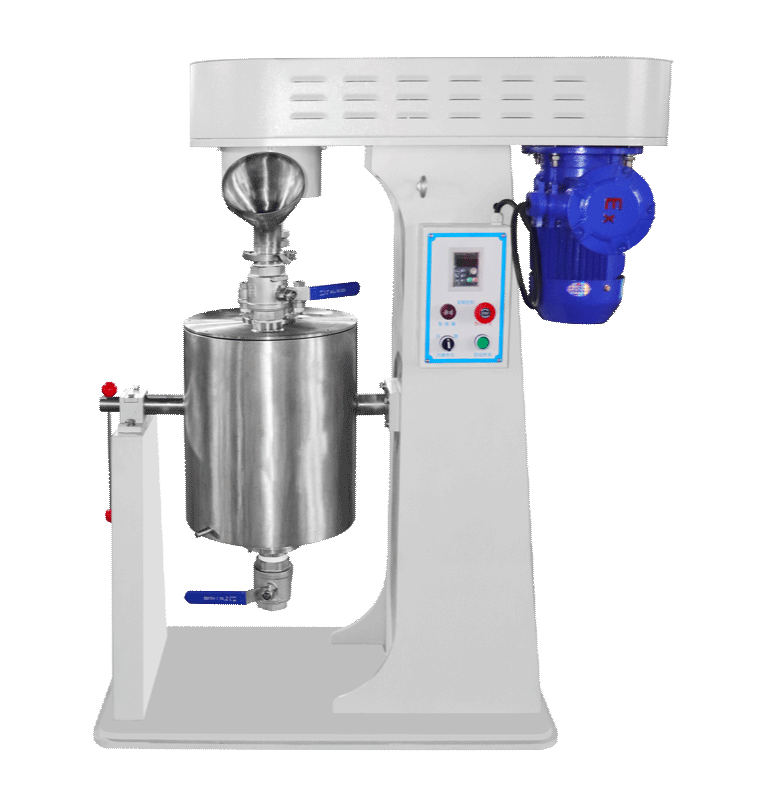
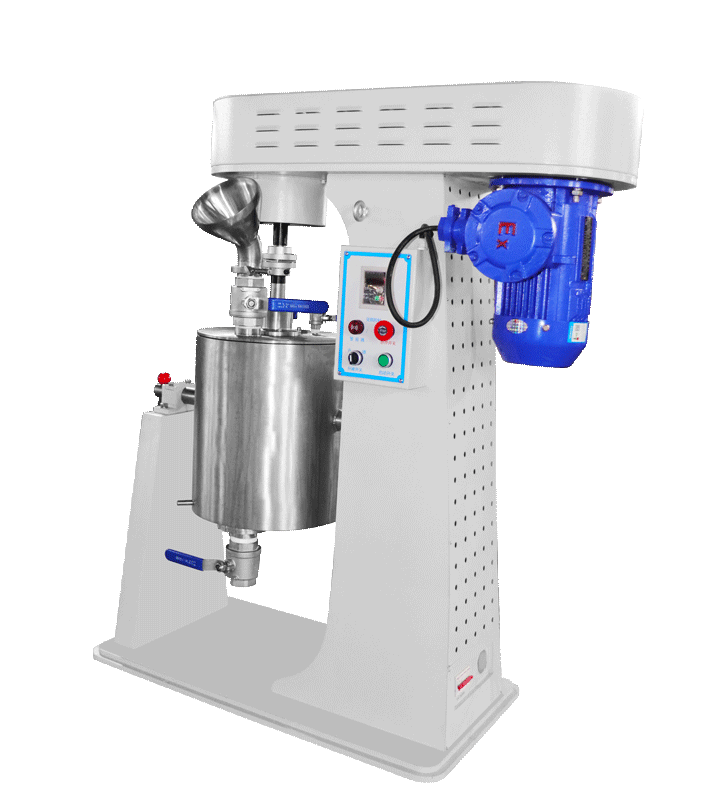
Preparing a sample for analysis, for pressing, or for the next technological operation almost always begins with the question of size: how much energy needs to be transferred to the powder in order to obtain the desired distribution of particles and not spoil the material itself. The laboratory ball mill with stirring solves this problem in a compact design: the grinding media are driven by the stirrer rather than by the rotation of the drum, so the energy is transferred to the medium more densely and predictably. Built on this principle lightweight ball mill with agitation TENCAN.
Below we discuss the conditions under which such a device is appropriate, the meaning of the characteristics that look on the product card, and the compromises between speed, heating, wear and powder purity. Specific values - chamber volume, speed range, materials of execution, permissible load - for each model are taken from the passport and product card; in the text they are not replaced by estimates.
It is worth immediately defining the framework: then we are talking about the logic of selection and the physics of the process, and not about the finished recipe. Working with flammable solvents, toxic powders and non-standard conditions requires separate instructions and agreement with the equipment manufacturer.
When does a mixing mill solve a problem and when does it not?
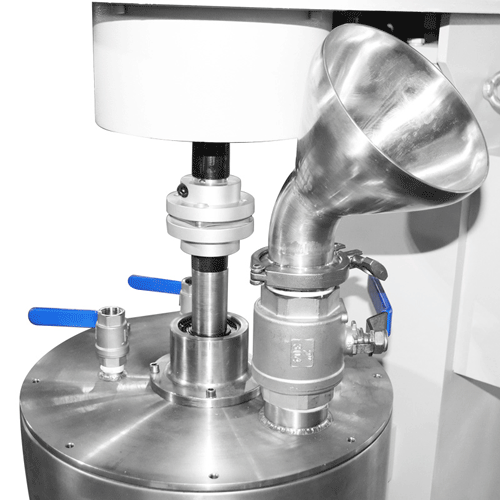
A stirring, or bead, mill is designed like this: the chamber is filled with grinding bodies and the grinding medium, and a rotating stirrer with disks or fingers transmits movement to both the bodies and the medium. Grinding occurs primarily due to shear deformations and abrasion in a dense layer of grinding media, and at high speeds an impact component is added. The denser the layer is packed and the higher the frequency of interactions, the more energy each particle receives in one pass.
Typical tasks where such a device is appropriate: fine and ultrafine grinding of relatively small batches, deagglomeration of already crushed powder, preparation of suspensions with a narrow distribution of particles, grinding of expensive or scarce materials, where every gram portion is important. The compact design and light weight of the case make it easy to place on a laboratory bench and transfer between rooms.
The reverse cases are no less important. If the source material is pieces of ore or sinter, you first need a crusher, not a mill. If you need to process tens of kilograms, a drum mill makes more sense. If maximum impact energy and extremely fine grinding in a small volume are needed, a planetary mill is often considered.
- pieces and large fractions - crushing, then grinding;
- large parts - drum or vibration version;
- maximum energy for a small volume - planetary mill;
- fine grinding and disagglomeration in a liquid medium - stirring mill.
Operating principle: energy is transferred through the stirrer
The key difference between a stirring mill and a drum mill is that the body is stationary, and only the internal stirrer creates movement. This allows you to more accurately set the mode: the rotation speed of the mixer directly determines the peripheral speed at the ends of the disks or fingers, and therefore the intensity of the shear and the amount of heat released per unit time. In this case, the housing can be cooled from the outside without complicating the drive.
The second consequence is the geometry of the flow. The mixer forms circulation: the medium and grinding bodies rise up, are thrown towards the wall and return to the center. Whether the entire load will participate in the work or part of the chamber will remain a stagnant zone depends on how well the diameter of the mixer, its shape and the gap to the wall are selected. Stagnant zones are a common cause of “under-grinding” when the processing time is formally sufficient.
How is it different from planetary and drum mill
In a planetary mill, the grinding bowl undergoes a complex movement, and the grinding bodies receive high accelerations; The energy per unit mass is high, but the sample volume is usually limited and the heating is noticeable. In a drum mill, the drum itself rotates, the grinding bodies rise and fall, and the process is slower and better scaled by mass. The stirring mill occupies an intermediate position: it is compact, works with suspensions and pastes, and produces high shear at a moderate volume.
The table below helps not to confuse equipment classes when formulating a problem.
| Equipment class | What happens to the material | When to choose |
|---|---|---|
| Stirring mill | shear and abrasion in a dense layer of grinding media | fine grinding, disagglomeration, suspensions |
| Planetary mill | high accelerations, impact and abrasion | small samples, extreme energy |
| Drum mill | rise and fall of grinding media | large batches, long grinding |
What does "light" mean in the name?
The word “light” in the name refers primarily to the design: the weight and layout of the apparatus, and not to the grinding class and not to the size of the finished powder. The lightweight design simplifies installation and maintenance, but it has natural limitations - primarily in terms of heat dissipation and load volume. Therefore, when switching to long-term grinding or dense suspensions, the thermal conditions are checked especially carefully.
Card parameters: speed, loading, size
The characteristics of the shredder only make sense in conjunction with the test conditions. The same model with different loads and different environments gives different results, so it’s not the individual numbers that are important on the card, but the combination: chamber volume, speed range, recommended filling percentage, material used.
Chamber volume, workload and sample weight
These are three different quantities and should not be confused. The total volume of the chamber is a geometric characteristic. Working load is that part of the volume occupied by the grinding media and material together; it is always less than the total volume, since part of the space is needed for the movement of the medium. The mass of the processed powder depends on the density of the material and on the selected ratio of grinding media and powder. Productivity per hour is the fourth value, and it is determined by the time to achieve a given size, and not just by the volume of the chamber.
A rule of thumb: first set the sample mass, then select the chamber volume and the number of grinding media to suit it, and not vice versa. If the load is too small, the grinding media are more likely to collide with each other rather than with the material; if it is too large, the medium thickens, circulation drops, and grinding slows down, although the load on the drive increases.
Mixer speed and peripheral speed
The grinding intensity is determined not only by the number of revolutions, but also by the peripheral speed at the periphery of the mixer, which depends on its diameter. Therefore, it is incorrect to compare the modes of two different machines by revolutions: at the same speeds, the peripheral speeds can differ noticeably. Increasing the speed increases shear and speeds up grinding, but also increases heat, wear and the risk of overgrinding with the formation of agglomerates.
The optimum is usually sought not by the maximum, but by the minimum speed at which the target size is achieved in an acceptable time without degradation of the material. For heat-sensitive powders, polymers and materials with low softening points, this compromise becomes paramount.
Size: Typical minimum is not a guarantee
The achievable particle size depends on the initial particle size, hardness, fragility, tendency to agglomerate, medium, material of grinding media, time and method of measurement. A value listed in the catalog as typical does not mean that any sample will be crushed to that level. Moreover, in dry grinding, the fine fraction often exists in the form of agglomerates, and the measured size does not reflect the primary particles, but their collectives.
Grinding media, chamber material and impurities
Grinding media are the main working element, and their choice affects the result more than many secondary settings. Large bodies provide greater single impact energy and pulverize relatively large particles more quickly, but leave a wider distribution. Small bodies increase the number of contacts and allow you to get closer to fine fractions, but if the size is too small, there is not enough energy to destroy strong particles, and separation of bodies from the finished powder becomes more difficult.
The density of the material of bodies determines their kinetic energy at a given speed. Tungsten carbide bodies are noticeably denser than ceramics, therefore, under the same mode, they work more efficiently against large and solid particles, but they are also more expensive and wear out the chamber more. Ceramics based on zirconia or aluminum oxide are preferred where iron in the sample is not acceptable.
Wear and transfer of impurities
No grinding media or lining material produces “zero pollution.” Wear is proportional to the transferred energy: the longer and more intense the grinding, the more material from the bodies passes into the sample. Tungsten carbide is no exception - it only changes the composition of the possible impurity and its quantity. For trace analyses, this is fundamental: first, select a material whose admixture is acceptable or easily determined, and only then the mode.
- solid and large particles - denser and larger bodies;
- fine grinding - smaller diameter of the bodies and sufficient duration;
- sensitivity to iron - ceramic bodies and linings;
- expensive sample - minimal chamber volume and careful unloading.
Consumables compatibility
Grinding chambers, bowls and grinding media are designed for a specific drive and a specific model. The accessory declared for a planetary mill does not automatically become compatible with a mixing mill: different mounting dimensions, different loads, different balancing requirements. Before ordering, check the device model, camera size, material and permissible load - according to the documentation, and not according to external similarity.
Dry and wet grinding, heating and cooling
Wet grinding is the main mode for stirring mills. The liquid reduces friction between particles, removes heat, prevents re-agglomeration and allows you to obtain stable suspensions. Along with it, new variables appear: viscosity, chemical compatibility with the material, the ratio of solid and liquid phases, as well as the method of separating the liquid after grinding. A suspension that is too thick inhibits circulation, while a suspension that is too thin reduces the frequency of contact between particles and grinding media.
Dry grinding is easier to prepare and unload, but is prone to material sticking to the walls and mixer, dusting and oxidation of active powders. In addition, during dry grinding, the fine fraction quickly agglomerates, and the result in particle distribution is worse than expected from the grinding energy. The destruction of particles and disagglomeration are different processes: the first reduces the primary size, the second only breaks up conglomerates, and they cannot be confused when posing the problem.
The installation temperature is not equal to the sample temperature
Almost all of the supplied mechanical energy is converted into heat. Heating comes from the grinding zone, and its intensity depends on the speed, viscosity of the medium, load and duration. Air cooling removes some of the heat from the housing, but does not guarantee the desired temperature inside the sample. Liquid nitrogen cooling is a separate technology with separate requirements for materials and safety; conventional air blowing is not a cryogenic process.
You need to control exactly what is important for the material: the temperature of the suspension or the temperature of the chamber at a characteristic point, and not the air temperature in the room. For heat-sensitive systems, it is wise to split the grinding into short cycles with pauses - this reduces peak heating while maintaining the total dose of energy.
Cleaning and transition between materials
Between samples, the chamber, stirrer and grinding media are cleaned so as to prevent the transfer of previous material. Particles stuck in gaps are a typical source of “phantom” impurities in the following sample. If the laboratory processes powders of different compositions, it is useful to assign separate sets of grinding media to groups of materials.
Moving from a lab sample to a larger batch
Scaling grinding does not come down to a proportional increase in all values. As the volume increases, heat removal, hydrodynamics, and energy distribution throughout the chamber change. Therefore, it is not the revolutions as such that are transferred, but specific indicators: the peripheral speed of the mixer, the ratio of the mass of grinding bodies and material, the filling fraction, the type and size of bodies, the medium and the total specific energy of grinding.
In practice, the mode is first fixed on a small sample and the target distribution of particles is obtained, then the specific energy is calculated and reproduced on a larger apparatus, checking the result using the same measurement method. If the distribution diverges, adjust the time, and not just the speed: the duration has a milder effect and does not increase heating so much.
- maintain peripheral speed, not speed;
- recalculate the ratio of grinding media and material;
- control the temperature with each scale change;
- compare results using the same measurement method.
A wide range of directions - from grinding and sifting to mixing, pressing and heat treatment - is presented on the website TENCAN; manufacturer - Changsha Tianchuang Powder Technology Co., Ltd. For a specific task, it makes sense to consider exactly the class of apparatus that corresponds to the stage of the process, and not the most universal in description.
Test grind: what to report and what to measure
Test grinding is the cheapest way to remove uncertainty. To make it informative, the manufacturer or testing laboratory is told the properties of the material and the requirements for the result, and not just the name of the model. The more complete the initial data, the fewer iterations will be required.
- material, its nature and original size, bulk density;
- target size and method by which it will be measured;
- acceptable and unacceptable impurities, purity requirements;
- thermal sensitivity and maximum permissible temperature;
- working medium: air, water, solvent, inert atmosphere;
- sample weight, need for dry or wet product;
- cleaning requirements between batches and unloading.
On the result side, four groups of data are recorded: particle size distribution, impurity content, morphology and process temperature. Laser diffraction and sedimentation give different numbers on the same powder, so the measurement procedure is agreed upon in advance and does not change between cycles. Elemental analysis is used for purity, and microscopy is used for particle shape.
The result of the selection is formulated not as the “best mode”, but as a reproducible protocol: material and its condition, loading, type and size of grinding media, medium, speed, time, temperature, control method, as well as signs by which the process is stopped. This protocol is transferred to the next batch and to a device of a different size without guesswork, and product card serves as a boundary of acceptable values, and not a starting point for a blind experiment.
The lightweight agitated ball mill covers a specific part of this scheme: compact fine grinding and disagglomeration with controlled energy transfer. Its advantages manifest themselves where the regime is matched to the material, and not vice versa, and where heating, wear and sample purity are controlled as carefully as particle size.