
A stainless steel grinding drum seems like a simple part: a container, a lid, and sometimes a seal. But in laboratory grinding, it is the inner surface of the drum and the grinding media that determine the contact with the sample. If the drum is selected based on volume alone, and its material, surface condition and drive compatibility are not checked, the result may change unnoticed: the particle size distribution will shift, iron will appear in the spectrum, and wear of the edges and seals will accelerate.
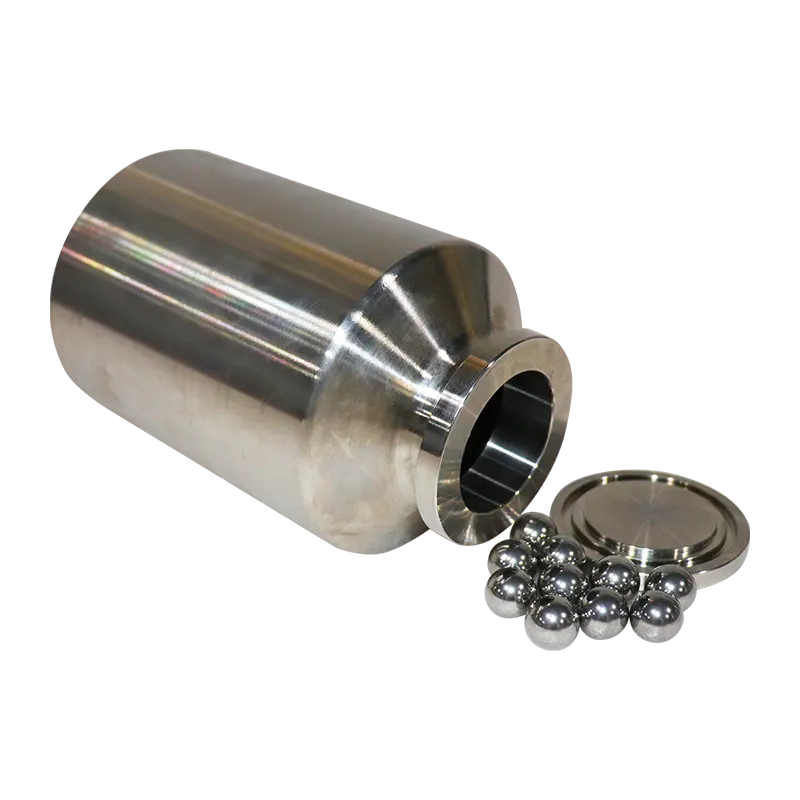
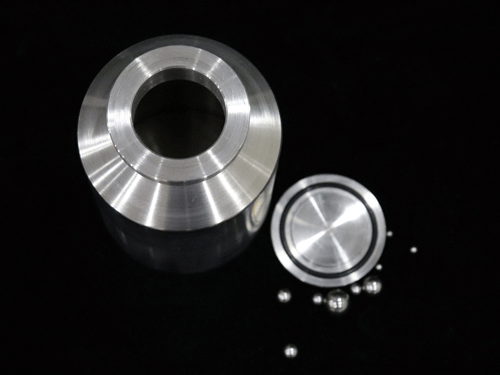
In the card stainless steel grinding drum on the website TENCAN the drum itself is presented; specific dimensions, steel grade, wall thickness and type of seal should be checked against the specific delivery data sheet. This is not a formality. The drum is the boundary between the sample and the environment, so its geometry and surface condition affect grinding reproducibility more than it seems when choosing from a photograph.
Practical analysis begins with the question: what exactly should remain unchanged in the sample after grinding. For geochemistry, trace elements are important, for ceramics - the absence of metallic inclusions, for pharmaceuticals and food materials - the possibility of purification and validation. The same drum may not be optimal for all of these applications, even if it is made of stainless steel.
Why a drum is not just a container
The drum performs several functions simultaneously: it holds the sample and grinding media, transmits motion, limits dust, and participates in heat removal. In a roller mill, rotation is usually transmitted through the outer surface of the drum, so cylindricity, outer diameter, weight and shell condition are important. In a planetary mill, the glass is fixed in a socket and rotated along a complex trajectory; There, the decisive factors are the fitting dimensions, the cover, the seal and the permissible load. These are different conditions, although both devices are called ball mills.
The internal geometry of the drum sets the trajectory of the grinding media. The smooth wall, edges, transition to the lid and the presence of dead spots affect how much material remains stagnant and how quickly it is released after unloading. A profile that is too complex may improve mixing but make cleaning more difficult. A surface that is too smooth is convenient for cleaning, but does not eliminate abrasive wear and does not guarantee equal impact energy along the entire length.
The drum is also a consumable item. Its edges, threads, seals and internal surfaces wear out. Therefore, when choosing, they look not only at the nominal volume, but also at maintainability: whether the seal can be replaced, whether the cover and fasteners are accessible, how to control wear. For serial laboratory work, this is more important than it seems: an imperceptibly changed lid geometry can cause leaks during wet grinding or dust infiltration during dry grinding.
Finally, the drum does not mix or grind on its own. The result is determined jointly by: drum, grinding media, medium, loading ratio, speed and time. An assessment based only on drum material is not sufficient. But it is the drum that is the first to contact the sample and the first to accumulate signs of wear, so its condition must be recorded before and after a series of experiments.
When choosing, it is important to distinguish between particle destruction and disagglomeration. In the first case, the very size of the primary particles changes, in the second, only loose aggregates are destroyed. The drum and grinding media can improve disagglomeration without producing the expected grinding. Therefore, the grinding goal is formulated before selecting equipment, and not after the first unsuccessful experience.
Stainless steel: properties that are important for testing
Stainless steel is a group of materials, not one formulation. Different brands differ in chromium, nickel, molybdenum, carbon content, structure and hardness. For a grinding drum, corrosion resistance in the selected environment, resistance to abrasive wear, weldability and the ability to obtain a smooth surface without pores and burrs are important. Therefore, the phrase “stainless steel drum” by itself does not describe acid resistance, sticking tendency, or the level of metal transfer into the sample.
Steel grade and surface condition
The passport must indicate the steel grade, manufacturing method, heat treatment, condition of the internal surface and type of welds. For laboratory practice, not only the grade is important, but also the cleanliness of the processing: roughness retains residues, polishing facilitates cleaning, but too aggressive machining can leave embedded abrasive particles. If the drum is welded, the heat-affected zone differs in structure and corrosion resistance from the base metal. This does not make the seam unusable, but requires control and proper passivation.
Stainless steel owes its durability to a passivating layer on the surface. This layer can be damaged by abrasive cleaning, contact with chlorides, acids and some process fluids. In dry grinding there are one risks, in wet grinding there are different risks: water and dissolved salts increase the likelihood of corrosion, especially in gaps and under the seal. Therefore, the grinding medium must be matched to the drum material, and not selected solely for convenience.
What steel doesn't guarantee
Stainless steel does not mean "zero pollution". During abrasive wear, iron, chromium, nickel and other elements can pass into the sample; their quantity depends on the hardness and size of the particles, time, speed and material of the grinding media. For iron-sensitive methods, even a small carryover can be significant. Ferromagnetic particles are dangerous for magnetic materials, foreign metals are dangerous for catalysis, and matrix changes are dangerous for spectral analysis.
In addition, steel can stick to wet or plastic materials, and wear debris can accumulate in micro-irregularities. This is not always visible to the eye. Therefore, comparisons with other materials are carried out not according to promises, but according to control experiments: blank grinding, surface analysis, comparison of the initial and final samples. This is the only way to understand whether the transfer is acceptable for a specific task.
Stainless steel is inferior in hardness to some ceramic and carbide materials, but is superior in toughness and maintainability. The choice is a compromise between wear resistance, corrosion resistance, cost and contamination tolerance. There is no material that at the same time does not wear out, does not react with the environment and is suitable for any grinding media.
Mill compatibility: what to check before ordering
The compatibility of the drum with the mill is checked by mechanical and geometric parameters, and not by external similarity. For a roller mill, the outer diameter, length, weight, condition of the shell and method of fixation are important. For a planetary mill - the seat size of the glass, cover, seal, permissible speed and load. Planetary Ball Mill (Semicircular Model) — an example of another class of equipment; a link to her card alone does not confirm that a particular drum is suitable for her.
The error occurs when the drum is selected only by its internal volume. The outer diameter may not match the rollers, the height may not match the casing, and the weight may not match the permissible load of the drive. If the drum is too heavy, the motor is overloaded; if too light, the contact with the rollers becomes poor and the rotation becomes uneven. For a planetary mill, the most dangerous thing is incorrect fixation: even a small play at high speed causes runout, heating and wear of the seal.
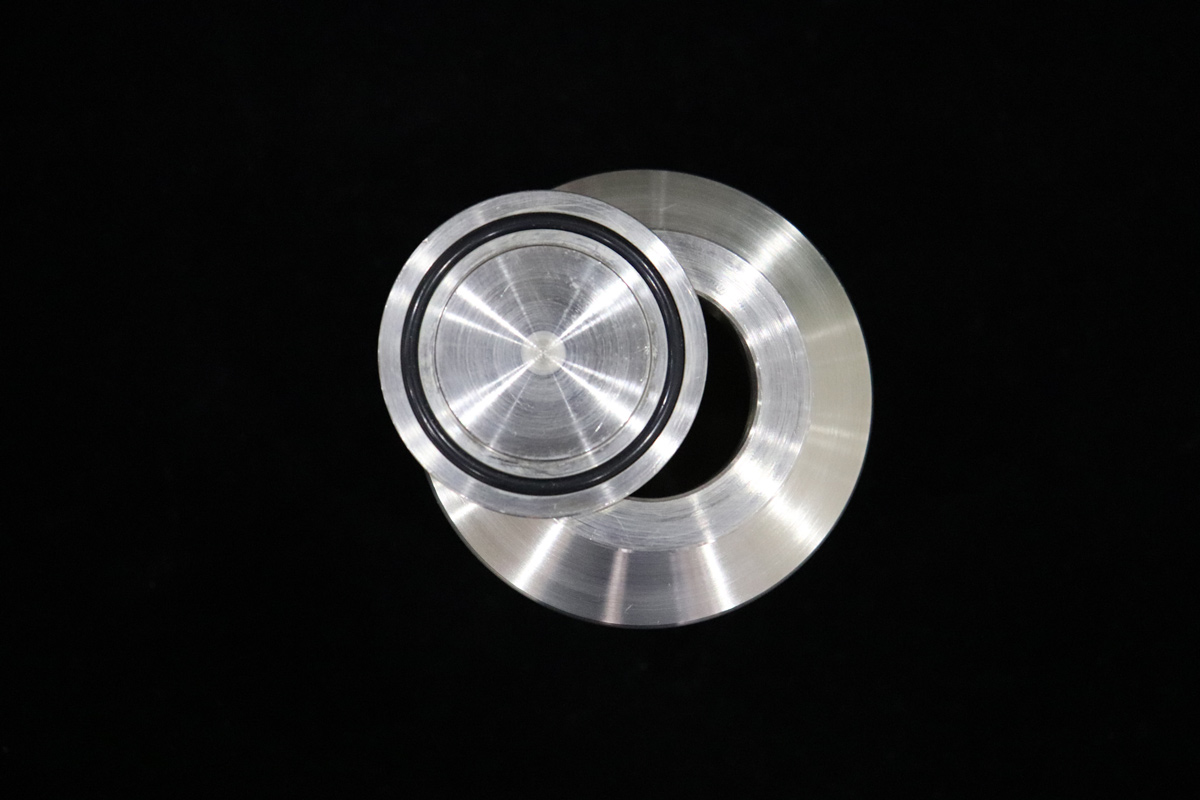
Check the lid and seal separately. With dry grinding, dust resistance is important, with wet grinding, tightness and chemical resistance of the seal to the environment are important. The threads must allow repeated assembly without seizing. Quick-release covers are convenient, but require pressure control. If the card does not indicate the type of seal and permissible pressure, this does not mean that they do not exist; this means that the parameter must be requested before ordering.
For a drum that is supposed to be used in different mills, it is useful to keep a compatibility certificate: mill model, mounting dimensions, weight, maximum load, permitted speed, cover type. This list reduces the risk of accidental installation. This is especially important in a laboratory where roller, planetary and vibration mills are located nearby: their equipment is not automatically interchangeable.
You cannot transfer a mode from one machine to another just because the drums are similar in volume. The rotation speed, energy transfer and heat removal are different. If the manufacturer has not confirmed the maximum speed and load, it is safer to consider the unit unconfirmed and ask for data than to test it at high speed with a real sample.
Volume, dimensions and loading: where errors begin
Nominal volume, useful volume and sample mass are different values. The nominal volume refers to the drum geometry; The useful volume is smaller because part of the space is occupied by the grinding media and the lid. The mass of the sample depends on the bulk density, and the productivity over time depends on the mode and properties of the material. If you mix these concepts, it is easy to get overload or, conversely, underload.
The degree of filling affects the movement of the grinding media. If there is an excess of material, the impact energy is extinguished and grinding slows down; with a deficiency, the relative proportion of friction and wear of the wall increases. Specific limits depend on the design of the drum and mill, so they are taken from the manual rather than transferred from another apparatus. Be especially careful with wet grinding: the liquid takes up volume, changes viscosity and can foam.
Reel sizes are related to scaling. A small-volume laboratory drum is convenient for fast series, but edge effects and unloading losses are relatively higher. When moving to a larger batch, you cannot simply increase the volume: the ratio of grinding media and material, heat removal and time change. First, reproducibility is checked at low load, then the regime is transferred to a geometry-corrected mode.
The final coarseness is not just a function of the drum. It depends on the initial size, hardness, fragility, medium, grinding media, time and method of measurement. The typical catalog minimum is not guaranteed for any sample. For plastic materials, grinding may be accompanied by sticking; for aggregates, by disagglomeration without true destruction of the primary particles. Therefore, the target size is confirmed by analysis rather than by guesswork.
Wear, cleaning and transfer of impurities
Drum wear occurs according to several scenarios. Abrasive particles scratch the wall, edges and cover; the impact load from the grinding media compacts and chips the surface; corrosion under the influence of the environment weakens the passivation layer. Residue can accumulate in gaps and under seals and is difficult to remove. Over time, the geometry changes, and with it the hydrodynamics of wet grinding and the trajectory of the balls.
The transfer of impurities depends on the sample material and mode. Quartz, corundum and other hard abrasives accelerate wear; acidic environments increase the risk of corrosion; Chlorides are dangerous for stainless steel, especially in stagnant zones. If the analysis is sensitive to iron, chromium or nickel, the acceptable level must be assessed in advance and a control experiment must be provided. The promise of “no pollution” is inappropriate here: it is more correct to talk about controlled and measurable transfer.
Grinding media are part of the same system. Steel balls in a steel drum give one wear profile, ceramic balls another. You cannot select grinding media based on hardness alone: density, size, chemical resistance and compatibility with the drum are important. Random balls can accelerate wear or introduce elements that are not present in the base material. If the manufacturer has not confirmed compatibility, it is checked by trial grinding.
Cleaning between samples
Cleaning begins with disassembly and removal of residues without damaging the surface. Harsh abrasive pads and wire brushes can leave scratches that then trap material. Chloride-containing cleaning products require special care: residues on the surface can cause corrosion. After wet cleaning, the drum is thoroughly dried and the seals and threads are checked separately.
It's not just visual shine that's important for cross-contamination. Residues may be found in threads, under the cap edge, in welds, and in pores. If the laboratory works with traces of metals, a control procedure is introduced: control washing, washout analysis or blank grinding with an inert sample. This procedure does not guarantee absolute purity, but indicates whether it is sufficient for a particular method.
How to plan trial grinding and acceptance
The grinding trial is planned as a measurable experiment and not as a demonstration. First, the source material is fixed: batch, size, humidity, bulk density, chemical composition. Then the target parameter is set: median size, upper limit, degree of disagglomeration or absence of metal inclusions. Each goal needs its own method of control, otherwise the result will seem better or worse only because of the method of measurement.
The sample uses a small sample and the same drum that is supposed to be purchased, or a representative sample of it. Compare the source and final material, control temperature, time, speed and load. If the problem is sensitive to impurities, a blank experiment is performed without a sample or with an inert medium to evaluate the contribution of the drum and grinding media. After the experiment, the surface is inspected: ring marks, corrosion spots, adhesion, edge wear.
| What to check | Why is this important | What to request |
|---|---|---|
| Landing dimensions | Risk of runout, play and misalignment with the drive | Drawing or main external and internal dimensions |
| Empty Drum Weight | Drive load and rotational stability | Weight value and tolerance |
| Steel grade and surface | Corrosion, wear, cleaning and transfer of impurities | Material passport, processing status |
| Seal type | Tightness during dry and wet grinding | Seal material and media resistance |
| Useful volume and loading | Overload, grinding energy, sample loss | Recommendations for sample weight and grinding media |
| Compatible grinding media | Drum wear and sample contamination | Material, dimensions and permissible combinations |
| Cleaning method | Cross contamination between samples | Limitations on detergents and drying |
Acceptance includes more than just dimensions. Check the markings, completeness, condition of the seal, cleanliness of the internal surface, absence of burrs and damage. If the drum comes with a cover, check that the threads match and that assembly is easy to assemble. For a series of identical drums, it is useful to record the mass and basic dimensions: this helps to notice variations between batches.
One successful grind should not be considered proof for the entire range. The sample material, initial particle size, and analytical method change the instrumentation requirements. A more reliable protocol is one that records the experimental conditions, the condition of the drum before and after, the method of measuring particle size, and the result of controlling impurities.
What to tell the supplier and what to include in the order
For selection and trial grinding, the supplier is informed of the type and model of the mill, rotation mode, external and internal dimensions, required volume, sample material, medium, permissible impurities and intended grinding media. It is useful to indicate whether the grinding will be dry or wet, how the drum is intended to be cleaned, and what analytical method monitors the result. The more specific the initial data, the less likely it is that the part will fit geometrically, but will be unsuitable in terms of material or seal.
The order specifies the steel grade, surface condition, type of seal, completeness, permissible load and marking requirements. If a parameter is not indicated on the card, it cannot be considered standard. This is especially important for drums that will operate in abrasive or chemically active environments: “stainless steel” is a general description, not an endorsement of durability in every environment.
The practical conclusion is simple: a stainless steel grinding drum is selected based on a combination of tasks - compatibility with the drive, geometry, material, wear, cleaning and acceptable transfer of impurities. TENCAN, Changsha Tianchuang Powder Technology Co., Ltd., supplies laboratory equipment and fixtures; the specific configuration is confirmed by the passport and trial grinding. If doubt remains, it is better to test one drum on a real sample than to transfer characteristics from another product.