
Preparation of a sample from lump raw materials rarely comes down to one step. First, the material must be presented in the form of a sample that retains the composition of the original batch, then the particle size must be reduced without losing the fine fraction, and the sample must be transferred to the next stage. It is at the first stage that dust, losses and cleaning issues often arise. Stainless dustless crusher TENCAN (equipment card) refers to equipment for such tasks: it is positioned as a solution for grinding materials in designs where dust must remain in the working circuit. However, the product name describes the purpose and performance and does not guarantee the same result for any sample. Therefore, the choice begins not with the desired size “in general”, but with the material, sample weight and cleanliness requirements.
The article discusses a practical question: how to select a mode and test a dust-free crusher on a specific sample, so as not to get a hidden loss of fine fraction, overheating or transfer of impurities. We will talk about stainless steel, which is important for cleaning and corrosion resistance, but does not eliminate wear. Let us separately mark the boundary between crushing and fine grinding: these are different operations, and they cannot be assessed according to the same criteria.
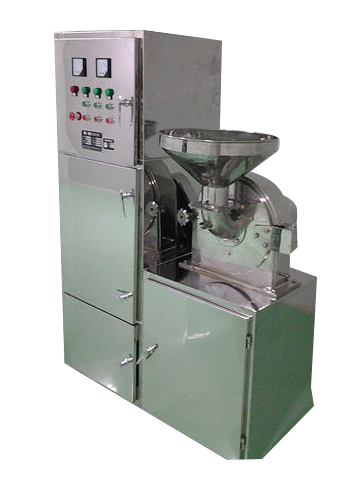
Why dust-freeness is important for sample representativeness
Dust in sample preparation is not only a matter of sanitary conditions. The fine fraction usually differs from the coarse fraction in composition, especially if the material is heterogeneous: oxides, minerals, fillers and inclusions can be distributed differently. If some of the dust goes into the air or settles on the walls, the mass of the sample changes and the composition of the transferred sample shifts. For the researcher, this means the risk of obtaining a result that applies not to the original batch, but to the part that remains in the crusher. Dust-free execution is therefore valuable primarily as a way to reduce losses and make the material balance verifiable.
The name “dust-free” implies the task of keeping dust in the operating circuit, and not a promise of complete absence of dust in any mode. Even a closed machine has unloading, seals, a receiving container and service points; This is where the main questions arise. It is necessary to clarify how loading and unloading are organized, whether there is a collection container, how the filter or compartment is cleaned, and what happens when it overflows. If the card does not contain these details, they cannot be invented: for a specific configuration they are confirmed by a passport or test.
Stainless steel serves two different functions in this context. Firstly, the surface is easier to clean and control residues. Second, steel resists corrosion better than regular carbon steel, but is not universally inert. Abrasive material wears out working parts, acids and salts can cause local corrosion, and soft metals can stick. The word “stainless” does not mean “wear-free” and does not replace the compatibility test with a specific sample.
The practical criterion is simple: after crushing, the balance must be reconciled. The mass of the loaded material, the mass of the sample obtained, and the mass of residues in the chamber and receiver must be comparable to the expected loss. If the discrepancy is large, the reason may be not only dust, but also build-up, incomplete unloading or overloading. This balance is more useful than a visual assessment of “less dust”: it shows whether the sample has been preserved as a whole.
Crushing and grinding: where one operation ends
A crusher reduces large pieces into smaller pieces, but does not replace a ball mill. These operations have different objectives and different limitations. For crushing, the size of the initial piece, the strength of the material, the shape of the working element and the ability to unload the product without loss are important. For fine grinding, the decisive factors are the medium, grinding media, time, speed, temperature and particle size distribution. Therefore, the requirements of fine grinding cannot be transferred to the crusher and vice versa.
If grinding is planned after crushing, this is a separate stage. Its equipment is selected for the material and target size, and the grinding media are selected for acceptable wear and contamination. For example, tungsten carbide balls belong to the grinding equipment of ball mills, and not to the consumable elements of a crusher. This distinction is important: the random coincidence of the words “grinding” and “grinding bodies” does not prove the compatibility of the units. For a crusher, you need to check its own working parts and receiving path.
In practice, it is useful to describe the chain in advance: initial piece → crushing → sample reduction → fine grinding, if necessary. At each transition, the mass, size and losses are recorded. Then an error at one stage is not masked by the result of another. For example, if a sample is reduced by quartering after crushing, the loss of dust before reduction may distort the composition more than the inaccuracy of subsequent grinding.
The term "sample preparation" is broader than "crushing". It includes selection, averaging, division, drying, purification and storage. The dust-free crusher has a specific place in this chain - reducing the size of pieces with dust control - and should not be described as a universal unit for any powder processing.
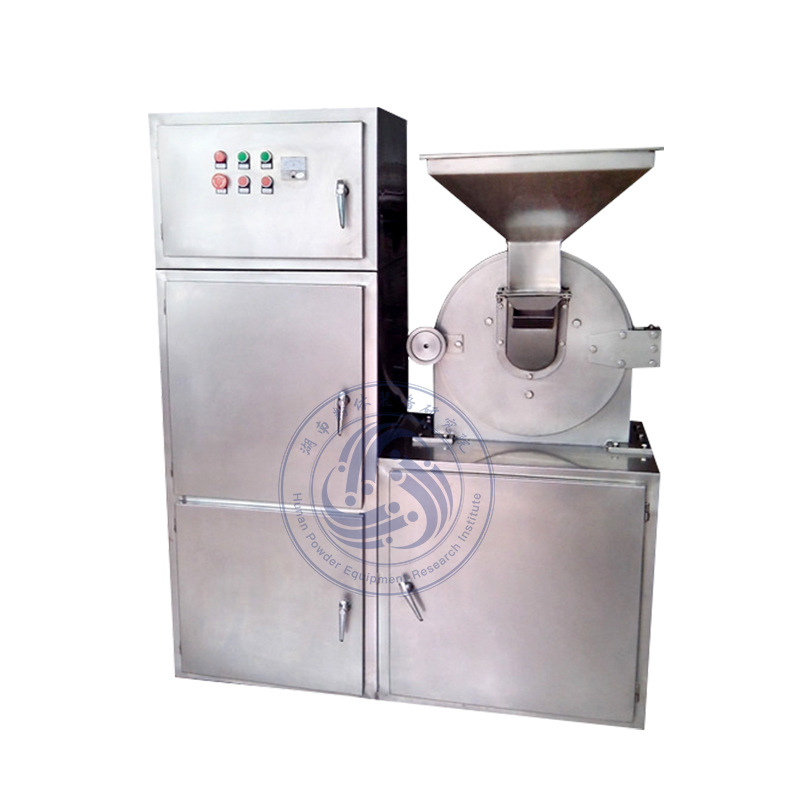
Construction and stainless steel: what to check
When choosing a dust-free crusher, it is useful to divide the issues into four groups: loading, implement, unloading and cleaning. Loading determines how convenient it is to feed pieces without scattering and how the coarseness is controlled. The working body specifies the permissible material and shape of the product. Unloading affects losses and dust at the time of unloading. Cleaning determines the risk of carryover from a previous sample. Neither group replaces the other: the machine may be closed but difficult to clean, or easy to clean but not suitable for abrasive materials.
The type of working element - jaws, rollers, knives or other mechanism - must be specified for a specific model. It is not the “best” indicators in general that depend on this, but the nature of the effect on the material. For brittle materials, the risk of overgrinding and the formation of fine fractions is important. For viscous ones - sticking and the need for more thorough cleaning. For layered or fibrous materials, the result may be less predictable than for mineral raw materials. If the card does not reveal the type of organ, this is not a reason to guess it by name.
Stainless steel contact surfaces make wet cleaning and visual inspection easier, but the grade of steel matters. Different steels differ in their resistance to chlorides, acids and abrasives. You can't promise "zero pollution" just because it has the word "stainless" in the name. The sample may contain wear particles, residues from the previous sample, and substances used for cleaning. This is critical for trace analysis, so the compatibility of materials is checked separately.
What does “dust-free” mean in practice?
Dust-freeness is a performance characteristic that must be confirmed during operation. They check not only the presence of a closed casing, but also the path of the material: loading point, joints, receiving container, unloading tray and air filtration, if provided. It is important to understand where the excess pressure goes during loading and what happens when opening after work. If there is a filter in the design, you need to know how it is maintained and whether it becomes a source of cross-contamination.
A separate issue is behavior during overflow. Any closed system has a limit on mass and volume. If you load more, dust can flow through leaks or unloading, and the material can become compacted in the chamber. Therefore, dust-free design does not cancel the loading norm, but makes compliance with it especially important. In the documentation or during testing, the working mass for a specific material should be recorded, and not transferred from another model.
Sample properties that change the setting
The first factor is strength and fragility. Brittle material is crushed to form a small fraction, viscous material is deformed, sticks and requires more time or a different geometry of the working body. If the material contains inclusions of different hardness, the product turns out to be heterogeneous: soft components are crushed faster, hard components may remain large. This is not necessarily a machine defect, but it must be taken into account when selecting a representative sample.
The second factor is humidity. Wet material passes through the working gaps less easily and can stick to the walls and clog the discharge. Sometimes pre-drying helps, but it changes the sample and is not always acceptable. You cannot assign drying to all materials without taking into account their properties: some substances lose volatile components or change composition. If the humidity is high, this must be indicated during selection, and not compensated for by overloading.
The third factor is temperature. Crushing is associated with deformation and friction, so local heating is possible. For heat-sensitive materials, it is important to monitor whether the sample changes or softens. Air cooling and liquid nitrogen cooling are different solutions; a regular car doesn't become cryogenic just because the description mentions refrigeration. If cryogenic mode is required, it is confirmed separately for a specific configuration.
The fourth factor is abrasiveness and corrosiveness. Abrasive powder accelerates wear, and salts and acids require evaluation of the resistance of materials. Stainless steel is not a universal protection against any reagents. The fifth factor is acceptable pollution. For routine mineralogical analysis and for trace metal determination, the requirements are different. The tighter the tolerance, the more important it is to know the material of the working element, receiver and seals.
The sixth factor is the size of the original piece. If a piece is too large for the feed opening, it should not be “squeezed in” as this creates the risk of jamming and damage. If the piece is too small, another operation such as cutting or fine grinding may be required. The crusher does not have to be universal across the entire size range. To select, it is important to indicate the maximum and typical size of the piece, as well as the proportion of fines in the source material.
Size, loading and performance: the boundaries of passport data
In the characteristics of equipment, different quantities are often mixed: chamber volume, single load, productivity per hour and product size. This is especially noticeable for a crusher. Single sample weight does not equal productivity: unloading, cleaning and monitoring are required between batches. Productivity depends on the material, the initial size, the desired product and the permissible proportion of fines. Therefore, you cannot compare cars based on just one number.
Product size is not a fixed property of the model. It depends on the original size, strength, humidity, type of implement, gap setting and number of passes. Even if the data sheet indicates a typical range, it requires verification for a specific sample. It cannot be promised that any sample will come out finer than a given limit. It is more correct to formulate the requirement as follows: what proportion of the material must pass through the control sieve and what size is considered unacceptable.
Loading affects dusting and heating. If the mass is too large, the material moves worse, the load on the working element increases and the risk of incomplete unloading increases. If the mass is too small, losses on the walls can become noticeable relative to the sample. The optimal load is usually determined by testing, and not just by the maximum figure from the description. For small samples it is useful to check whether the losses are comparable to the sample weight.
If you need to process a large batch, you should not automatically transfer the result of a single crushing to a batch. Wear, cleaning and service times vary between batches. Sometimes a laboratory machine is suitable for small samples but not for continuous operation; sometimes it's the other way around. To move to a larger batch, the operating mode, permissible duration, requirements for unloading and the possibility of repeatability from batch to batch are clarified.
Contamination, cleaning and moving to a larger batch
Contamination in a crusher can be of three types: remnants of a previous sample, wear particles from working parts, and substances introduced during cleaning. All three are important for credibility. A stainless steel surface is visually cleaner, but small particles can become trapped in seals, gaps and discharge channels. Therefore, the cleaning procedure must be specific: what surfaces are accessible, what tools are acceptable, whether water or solvent can be used, how the absence of residue is checked.
To change materials, it is useful to have a control sample or carry out flush crushing with inert material, if this is acceptable. But the washing material can also leave traces. Cleanup validation depends on the analytical method: what is not visible visually may be significant for trace analysis. Therefore, requirements for purity are formulated in advance, and not after obtaining a questionable result.
Wear and tear is not just a breakdown. A gradual change in the geometry of the working body changes the size of the product and the thermal regime. When working with abrasive materials, inspection intervals and replacement criteria must be established. It cannot be said that stainless steel is wear-free; it only changes its character and durability depending on the brand and conditions.
As you move to a larger batch, cleaning becomes more labor-intensive and losses become more noticeable. If cleanup takes minutes in a lab, it can become a bottleneck in a batch. Therefore, when choosing equipment, it is useful to evaluate not only the crushing speed, but also the time for disassembly, cleaning and control. For serial work, accessibility of nodes and reproducibility of the procedure are important.
What to check during test crushing
Test crushing should answer application questions, not just show that the machine is turning on. It is useful to determine in advance what is considered success: mass conservation, no visible dust, achievement of target size, no overheating, acceptable cleaning, or a combination of these criteria. One indicator does not replace the others. If there is no dust, but the sample has lost the fine fraction, the result cannot be considered good.
Before testing, prepare a description of the sample: name, origin, approximate composition, hardness, moisture content, maximum piece size, batch weight and required sample weight. It is important to indicate which components are volatile, toxic, flammable or temperature sensitive. For hazardous materials, a regime cannot be assigned under the article; instructions and risk assessment are needed. The technical article helps you select questions, but does not replace the instruction manual.
The test report records:
- loading mass and unloading mass;
- losses on the walls, in the receiver and in the cleaning unit;
- visual dusting and condition of seals;
- product size according to control sieves;
- signs of heating, sticking and jamming;
- crushing time and cleaning time;
- signs of wear or foreign particles.
If the result does not meet expectations, you should not immediately change the model. Possible causes: starting piece too large, overloading, high humidity, unsuitable material, incomplete unloading or selection error. Each cause requires a separate sign. For example, sticking is visible on the walls, and overgrinding is visible in the excess of fine fraction. Without such data, it is impossible to say that a specific node is to blame.
It is useful to carry out at least two modes if the design allows adjustment. What is being compared is not the “best” result, but the balance between size, time, heat and losses. For one task, speed is more important, for another - minimal overgrinding, for a third - ease of cleaning. There is no universal optimum, so the criterion is chosen before testing.
What data to prepare for a selection request
For a meaningful answer, the manufacturer or supplier needs not the general words “you need to grind the powder,” but the parameters of the task. They indicate the material and its hazardous properties, the initial and desired size, the mass of a single sample and batch, the permissible proportion of fine fractions, requirements for purity and the possibility of wet cleaning. It is useful to add information about temperature, humidity, abrasiveness and corrosivity. If there is an analytical method for which the sample is being prepared, this helps to understand acceptable contamination.
You also need to inform how the work will be organized: one-time samples or repeating batches, whether a quick change of material is required, whether there are restrictions on noise and dust, what room is used. These conditions are no less important than size. A machine that is convenient for one sample per day may not be suitable for a batch; and vice versa.
Final selection conditions
Stainless dustless crusher TENCAN — This is not a promise of a “perfect sample” and is not a replacement for the entire preparation cycle. Its value in a specific operation: reduce the size of pieces, keep dust in the work circuit and provide controlled unloading in a stainless design. For this benefit to be realized, proper loading, compatible material, clear cleaning and testing on a real sample are required. If at least one of these elements is not verified, the name of the equipment itself does not guarantee anything.
It is convenient to make the choice from sample to machine, rather than from machine to sample. First, the properties of the material and the requirements for the sample are recorded, then they check which units and modes correspond to them, and only after that the designs are compared. For a dust-free crusher, it is especially important to check the mass balance, discharge behavior and cleaning. These three points often say more about suitability than the general wording “for grinding materials.”
Additional information about equipment and directions TENCAN can be found at company website, and the card of the crusher in question is available at direct link. Before ordering a specific configuration, you should check the current specifications, equipment and test conditions: they must apply specifically to the model that will be supplied.