
An unstable emulsion or lumpy dispersion is often perceived as a reason to immediately look for a device with more power. In practice, the reason may be the recipe, the order in which the components are added, the temperature, or the processing time is too short. Shear emulsifier TENCAN — equipment for intensive mechanical action on the mixture, but its capabilities must be correlated with a specific task, and not just with the desired “degree of homogenization.” In this article, we’ll look at what exactly shear action does, what parameters to discuss when selecting, and what issues should be checked during a trial run. The description refers to the equipment category; the exact characteristics of a particular design should be taken from the card shear emulsifier TENCAN and accompanying documentation.
What exactly does a shear emulsifier do?
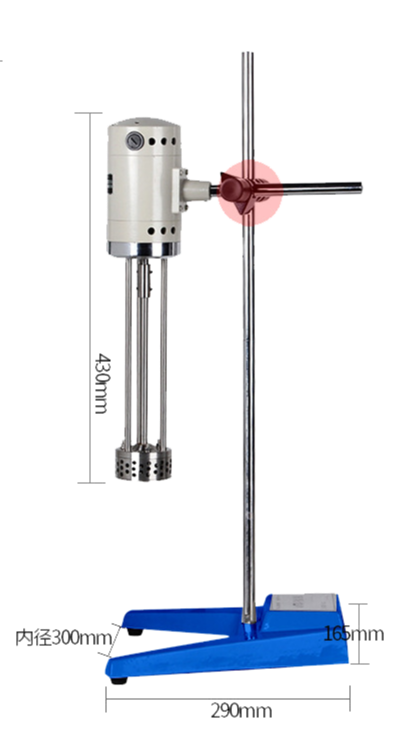
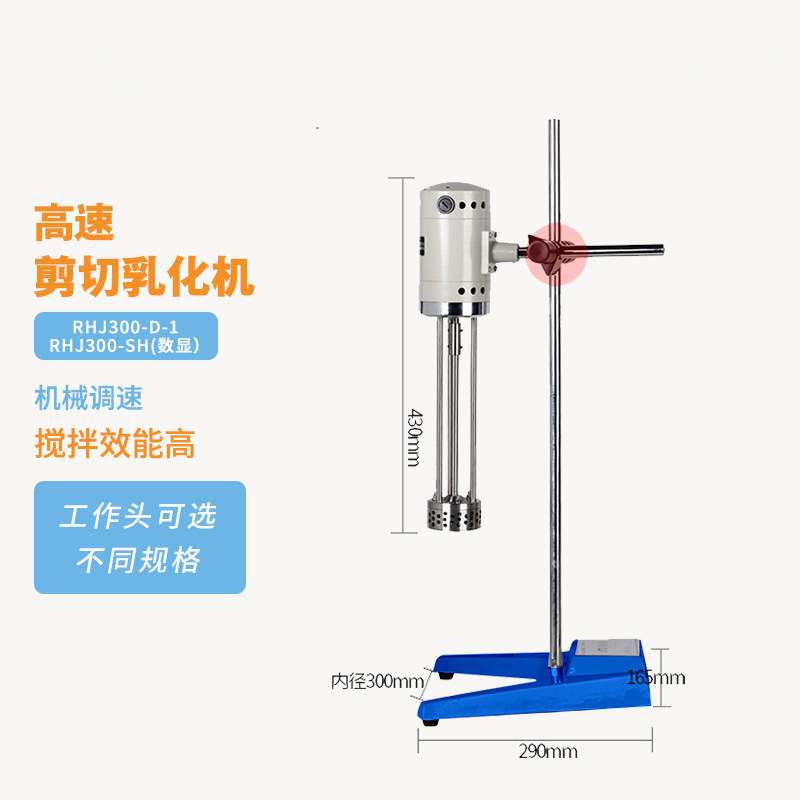
The shear emulsifier is designed for creating and processing emulsions, suspensions and paste mixtures where intensive mixing with high local shear is required. Devices of this class usually use a rotor-stator type working unit: a rotating element creates a flow, and a stationary element forms narrow zones in which the mixture is repeatedly accelerated, decelerated and reoriented. This effect helps to crush droplets, destroy large agglomerates and distribute components throughout the volume. The specific geometry of the unit, materials and range of modes TENCAN are specified on the product card.
It is important to separate three similar but not identical tasks. Emulsification is the formation of droplets of one liquid in another with the participation of surfactants or other stabilizers. Dispersion is the distribution of a solid phase or insoluble liquid in a medium with the destruction of aggregates. Simple mixing only evens out the composition, without necessarily reducing the size of the droplets or agglomerates. A shear emulsifier can support all three processes, but the result depends on what task is set and how the readiness of the product is measured.
Emulsification, dispersing and mixing
In emulsification, mechanical energy helps overcome interfacial resistance and reduce droplets, but the stability of the system is determined by the interfacial film, the viscosity of the continuous phase, the density of the components and storage conditions. If there is not enough stabilizer or the wrong emulsifier is selected, intensive processing can produce a visually homogeneous mixture that will quickly separate. Therefore, selecting a mode on a shear emulsifier TENCAN It makes sense to conduct it in conjunction with recipe testing, and not instead of it.
When dispersing solid powders, the main focus is wetting the particles, breaking up large agglomerates and preventing re-aggregation. High shear can speed up these steps, but it does not replace primary particle size reduction. If the goal is to reduce crystals or particulates to the micron and submicron level, other equipment such as ball or bead mills are usually considered. Shear emulsifier TENCAN in such a situation may be a slurry preparation step, but should not be described as a general purpose mill.
Work unit and speed: why “faster” does not mean “better”
In shear emulsifiers, the result depends not only on the rotation speed, but also on the geometry of the rotor and stator, the size of the gap, the number of passes through the working area and the residence time of the mixture. Devices similar in name may have different hydrodynamics. Therefore, when choosing, it is not enough to compare only the maximum speed: you need to understand what kind of flow is created, how long the material is in the processing zone and what restrictions arise in terms of viscosity, heating and air entrainment.
The peripheral speed at the rotor tip is related to its diameter and rotational speed. Two devices with the same rotation speed, but different diameters of the working bodies can create different local shear. In addition, a gap that is too narrow does not always mean the best result: it increases the risk of overheating, increased wear and clogging if large particles are present. For a specific shear emulsifier TENCAN these questions should be determined by documentation and trial grinding or emulsification results rather than by general assumptions.
Gap, Geometry and Mix Path
The work area can be designed so that the mixture passes repeatedly through slots or channels. The more complex the path, the greater the local acceleration and braking, but the higher the hydraulic resistance and heating. If the product contains abrasive particles, increased tool wear can change clearance more quickly and affect repeatability. For abrasive and highly viscous compounds, it is important to discuss materials, acceptable inclusion size, and cleanability in advance.
You should not transfer the geometry of one device to the entire model range. Even within the same category, designs may differ in drive type, seals, supply system and heat dissipation method. In the product card, you need to look for exactly the information that relates to the selected model, and not to the category as a whole.
Processing time and processing
Increasing the processing time may initially improve uniformity, but then leads to overheating, excessive air dispersion and changes in rheological properties. For emulsions, excessive shear sometimes causes re-coalescence or breakdown of sensitive components. Therefore, in the test report it is important to record not only the “optimal mode”, but also the boundaries beyond which the quality deteriorates. For shear emulsifier TENCAN It is useful to plot the dependence of the indicator on the processing time, and not to evaluate only the final type of the mixture.
Parameters that are matched to the task
When selecting a shear emulsifier TENCAN It is convenient to go from the properties of the product to the requirements for the machine. Below are general questions to help you stay on top of important restrictions. They do not replace the passport of a specific product and do not set universal values.
| What to check | Why is this important | What to clarify |
|---|---|---|
| Volume and loading | The mixture must circulate, and the working unit must be loaded or filled according to the execution rules. | Working volume, minimum and maximum load, permissible level. |
| Viscosity and density | The flow, load on the drive, air entrainment and pumping capability depend on them. | Viscosity range, shear behavior, presence of abrasive particles. |
| Speed and time | The local shift and the amount of energy transferred to the product are determined. | Adjustment range, stability under load, recommended processing time. |
| Temperature | Heating changes the viscosity, stability of the emulsion and the properties of sensitive components. | Heating during operation, presence of cooling, method of temperature measurement. |
| Contact materials | Affects compatibility, wear, cleaning and contaminant transport. | Material of the working unit, seals and containers; solvent restrictions. |
| Size and control method | Visual uniformity does not equal droplet or particle size distribution. | Measurement method, initial state, target value and acceptable dispersion. |
Separately, it is necessary to distinguish between the volume of one vessel, the total volume of the system and the payload. If the volume is indicated in the description, this does not mean that the same amount of product can be loaded into it: part of the volume is occupied by the working unit, and free space may be required for stable circulation. Also, do not confuse time performance with one serving. For batch and continuous execution, these quantities are described differently and cannot be mechanically recalculated without taking processing time into account.
Powder in liquid: dispersion without false expectations
For a site dedicated to powder materials, it is important to clearly define the boundary between dispersing and grinding. Shear emulsifier TENCAN can help introduce powder into liquid, break up soft agglomerates and produce a more uniform suspension. However, primary particles, especially crystalline or mineral ones, are usually not crushed to a fundamentally smaller size in this way. If grinding is what is needed, consider mill equipment with grinding media, and not just high-speed mixing.
Several problems that often arise when introducing powder include clumping, fish eyes, dusting, uneven wetting, and air entrapment. Input speed and order of addition may have a greater effect on the result than increasing the rotation speed further. Sometimes it is useful to pre-wet the powder or introduce it into a liquid stream, but the specific method depends on the formulation and must be tested experimentally. There is no one mode suitable for all powders.
Wetting and disagglomeration
Wetting is the first stage in which the liquid displaces air from the surface of the particles. If the powder is hydrophobic or has a developed surface, air may remain in the agglomerates, and the mixture may appear ready only externally. Shear emulsifier TENCAN is able to intensify the contact between liquid and powder, but with strong foaming, part of the energy is spent on creating bubbles. In such cases, it may be necessary to adjust the injection order, evacuation, or other equipment design, if provided.
Disagglomeration is not equal to the fragmentation of primary particles. An agglomerate is a collection of particles that are weaker connected than the particles themselves. It can be destroyed by mechanical action, while the primary particle remains the same. Therefore, when setting a task, it is useful to separate “you need to remove lumps” and “you need to reduce d50.” For the first case, a shear emulsifier may be appropriate, for the second - not.
When a different type of equipment is needed
If the target product requires a narrow particle size distribution and a high degree of fineness, a shear emulsifier TENCAN should not be considered a replacement for a planetary or bead mill. Also, don't call it a "mill" just because it mixes intensely. Different devices transfer energy in different ways: in mills the main role is played by the impact and abrasion effect of the grinding media, and in a shear emulsifier - hydrodynamic shear and turbulence. Confusing these concepts leads to the wrong choice and disappointment after testing.
Overheating, foam and aeration
Mechanical energy in a shear emulsifier is converted into heat. The higher the speed, viscosity and processing time, the more noticeable the heating may be. This affects emulsions with low-melting components, polymer solutions and temperature-sensitive systems. If cooling is provided in the design, its effectiveness still needs to be checked on a real product: the temperature of the wall or jacket is not equal to the temperature of the entire mixture, especially at high viscosity.
Foam and air entrainment are another practical problem. Vigorous mixing can entrain air, and stabilized foam takes up volume and distorts dosing. Sometimes it helps to reduce the speed at the insertion stage, change the position of the working unit, or pre-remove air. However, we cannot promise that one technique will work for all formulations. For shear emulsifier TENCAN It is important to clarify which modes are permissible for a product prone to foaming, and what measures are provided for in the design.
What to record in the protocol
- the temperature of the mixture before, during and after processing, as well as the method of measuring it;
- rotation speed or set control level and actual load;
- processing time and sampling points;
- visual signs: lumps, film, separation, foam, sediment;
- viscosity, droplet or particle size measurements, if applicable;
- storage conditions of the sample and the period through which stability was checked.
This protocol helps separate equipment effects from formulation effects. Without it, it is too easy to mistake a temporary increase in uniformity for a sustainable result.
Materials, purification and impurity transfer
When changing products, the material of the contact parts, the design of the seals and the accessibility of areas where residues may be retained are important. Even a smooth-looking surface can have cracks, threads and dead spots. When working with abrasive powders, wear of the working parts can not only change the gap, but also become a source of impurities. Therefore, the question “what material to choose” is solved together with the question “how often to check the condition of the unit and how to clean it.”
You should not promise complete absence of contamination just by the name of the material. Ceramic, stainless steel or polymer coatings have different environmental, temperature and mechanical wear limitations. For a specific shear emulsifier TENCAN You need to check what materials are available, what solvents are acceptable, and what seals are compatible with the product. If the documentation does not contain the required combination, it cannot be added by guessing.
Product change and reproducibility
After changing the recipe, it is useful to carry out a control run on a simple medium and compare it with previous data. If the time to achieve visible uniformity has changed, wear, gap changes, contamination or changes in raw material properties may occur. You shouldn’t immediately attribute this to “insufficient power”: the reason may be cleaning or preparation of the components. Keeping a log of modes and maintenance helps to notice gradual deterioration before a defect appears.
Trial run and transition to larger volume
It's best to plan a trial run as a series of experiences rather than as a single show. Start with a small representative sample of the same composition you will be processing and record the initial conditions: temperature, viscosity, presence of lumps, distribution of particles or droplets. Then change one factor at a time—time, speed, or input order. If you change everything at the same time, it is difficult to understand what exactly influenced the result. For shear emulsifier TENCAN This approach allows you to quickly reach a reproducible mode and understand the limits of its application.
When moving to a larger volume, you cannot simply multiply the processing time. A large container may have different hydrodynamics, heat dissipation and circulation path. In some cases, they focus on maintaining the peripheral speed, in others - on specific energy or residence time. There is no universal rule: the history of droplets is important for emulsions, and the distribution of agglomerates and thermal conditions are important for suspensions. Therefore, scaling is checked step by step, comparing not only the appearance, but also the measured indicators.
What to tell the supplier
To select equipment, it is useful to prepare a brief technical description of the task: type of product, phase ratio, presence of solid phase, initial and target size, viscosity at operating temperatures, aggressiveness of the environment, acceptable materials, required batch size and operating mode. You also need to indicate what has already been tested and what results were obtained. If there is no data on viscosity or fineness, it is better to indicate this directly than to substitute approximate values without a basis.
Additionally, the requirements for cleaning, the ability to work with volatile components, the tendency to foam and the need for temperature control are clarified. For food, pharmaceutical or other regulated applications, find out in advance what documents and executions are available. Do not assume a certification, option, or material unless listed in the product specific materials.
Selection criteria without unnecessary promises
Practical choice of shear emulsifier TENCAN is based on three groups of criteria. The first is technological: can the device process a product with a given viscosity and solid phase content, is the required homogeneity achieved and do the properties deteriorate when heated. The second is operational: ease of loading, cleaning, maintenance and parameter control. The third is large-scale: is it possible to reproduce the mode when increasing the batch and what parameters will have to be revised.
If the application involves fine grinding rather than emulsification or disagglomeration, a shear emulsifier should not replace the mill. If you need to quickly and reproducibly distribute components, destroy soft agglomerates and obtain an emulsion with a controlled regime, such a device may be appropriate. The final decision is made based on the results of tests on a real composition, and not on one advertising description.
It’s convenient to start your selection by studying the card TENCAN and clarifying the characteristics of the selected design. For a test run, prepare a representative sample, a measurement protocol and a list of restrictions on temperature, viscosity and materials. This data set allows you to discuss the mode in detail and not turn the choice of equipment into a guess.