
The grinding bowl for a planetary mill seems like a simple accessory: a container, a lid and space for the grinding media. In practice, the material of the glass sets the boundaries of the entire process. It is in contact with the sample, absorbs shock and friction, and affects losses, heating and sample purity. Therefore, the choice of a polyurethane glass begins not with the question of whether polyurethane is suitable at all, but with a description of the specific task: what kind of material, what is the initial size, what result is needed, what impurities are unacceptable and how the glass will be cleaned.
In the catalog TENCAN presented polyurethane grinding bowl for planetary mill. This product refers to grinding consumables and not the grinding equipment itself. Its specific dimensions, volumes and compatible models are determined by the product card and technical documentation, and not by the name of the material. Below are practical criteria that will help you prepare a meaningful request and not mistake what you want for a confirmed characteristic.
It is immediately worth separating the general properties of polymers from the parameters of a specific product. A polyurethane cup does not become universal just because polyurethane is elastic and abrasion-resistant. For one sample, chemical resistance is important, for another, the absence of metal contamination, for a third, the ability to quickly clean the surface. These requirements may conflict with each other.
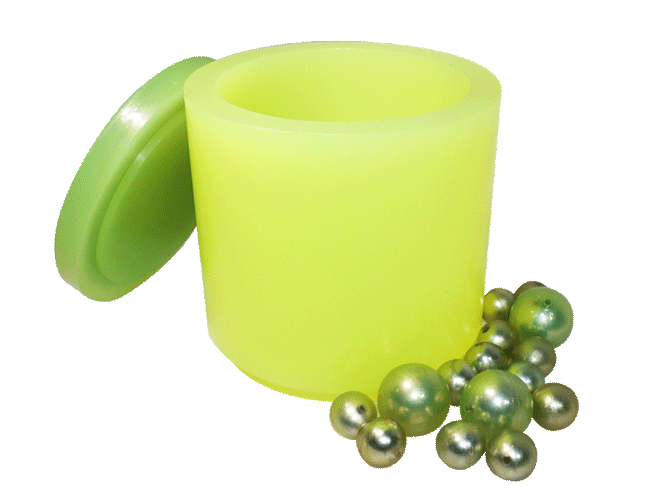
Before choosing, it is useful to write down the initial conditions: weight of the sample, its hardness, abrasiveness, tendency to stick, presence of solvent, permissible heating and analysis requirements. Such a recording takes a few minutes, but it helps not to confuse the geometric volume of the glass with the workload and not to buy an accessory based only on appearance.
The glass is part of the grinding system, not a passive container
In a planetary mill, the glass rotates around a common axis and at the same time around its own axis. The grinding bodies inside the glass receive a complex movement: they collide with the walls, rub against each other and against the material. Grinding occurs due to impact, abrasion and shear, and the ratio of these mechanisms depends on the geometry of the glass, the size and density of the grinding media, loading and rotation mode. Therefore, the wall of the glass is an active part of the process, and not a neutral container.
If the wall material is elastic, part of the impact energy can be transferred to the deformation of the polymer rather than to the destruction of particles. For brittle or soft samples this is sometimes useful, but for hard abrasive powder it can mean less efficiency and increased wear. It cannot be stated in advance that polyurethane always reduces heating or always increases sample safety. You need to look at a specific system: sample, grinding media, medium, time and permissible level of contamination.
The second feature is the contact surfaces. In addition to the beaker itself, the sample is interacted with by the lid, the seal, the grinding media, the unloading tool, and even the sieve material if the sample is then sifted. The polyurethane cup does not negate the control of other components. If metal is unacceptable in the sample, it is not enough to choose a polymer container: you need to check the grinding media, the cleaning method, and the storage conditions.
The third feature is scale. A laboratory beaker is selected for a specific planetary mill and a specific task. The transition to a larger load does not come down to replacing the glass with a larger one: the thermal regime, the path of the grinding media, the efficiency of collisions and the grinding time change. Therefore, data from one model cannot be transferred to the entire range. Even the same wall material does not make two glasses interchangeable.
The practical conclusion is simple: the glass is selected together with the mill, grinding media and control method. If at least one element is not supported by documentation, it cannot be considered compatible by analogy alone.
What does polyurethane mean in practice?
Polyurethanes are not one material, but a group of polymers. Their rigidity, elasticity, abrasion resistance, behavior when heated and resistance to media depend on the formulation and manufacturing method. Therefore, the properties of one polyurethane product cannot be automatically transferred to another glass. The name of the material is useful for initial selection, but does not replace the product passport.
In the context of grinding, polyurethane is usually discussed where a flexible work surface is needed and the likelihood of metal contamination from the steel lining is desired. There is a downside to this logic: the polymer itself can wear out, leave particles, swell, change color or lose elasticity under the influence of the environment and temperature. A polyurethane cup is not inert by definition. The phrase about the absence of contamination without analysis has no technical meaning.
Three issues are particularly important for polymers. The first is temperature: grinding produces heat, and the polymer has limitations that cannot be determined by appearance. The second is chemical compatibility: solvent, water, acid or alkali may act differently, and the aqueous environment also needs to be checked. The third is mechanical wear: abrasive powder, large or heavy grinding media and long-term operation accelerate surface wear. Specific acceptable values should be documented or confirmed by the supplier.
Separately, it is necessary to distinguish between the operating temperature of the beaker and the temperature of the sample. Even if the plant is air cooled, this does not make the process cryogenic. Conventional cooling and liquid nitrogen cooling are different solutions with different material and safety requirements. If a task requires cryogenic mode, it should not be attributed to the polyurethane cup without direct confirmation.
Practical recommendation: do not assign maximum temperatures, speeds and chemical environments according to general reference books. The supplier should be asked about the range of operating conditions, resistance to the intended environment, acceptable cleaning agents and load restrictions. If the answer is ambiguous, it is better to exclude the questionable value from the test design rather than insert a guess.
| What to clarify | Why is this important | What to request |
|---|---|---|
| Size and geometry | Nominal volume does not describe mill fit, height or wall thickness | Dimensions, drawing or confirmation for specific mill model |
| Seal material | The cap and seal also come into contact with the sample and may wear out. | Seal composition, resistance to media, replacement procedure |
| Workload | The geometric volume is larger than the payload; overflow changes the movement of the grinding media | Permissible sample weight and filling restrictions |
| Grinding media | Their material, size and condition affect wear, heat and contamination | Compatible materials and glass configuration |
| Cleaning | Residues of medium or sample may be carried over into the next sample | Permitted products, restrictions and drying procedures |
Wear and introduction of impurities: where is the border?
The wear of a polyurethane cup is not limited to gradual abrasion. Fatigue microcracks, cuts, particle indentation, local discoloration, loss of elasticity and material adhesion are possible. For a soft sample, substance transfer and incomplete cleaning are more dangerous; for a hard abrasive sample, abrasive wear of the surface is more dangerous. The same glass behaves differently in different tasks, so observations need to be tied to grinding conditions.
Sources of contamination should be listed in full: cup material, lid, seal, grinding media, residues from previous samples, dust, unloading tool and cleaning medium. If the analysis is sensitive to one element, you cannot limit yourself to checking only the glass. For example, replacing a glass with a polymer one does not prevent the ingress of material from grinding media or a metal spatula.
A realistic goal is not the promise of zero pollution, but understanding the contribution of each contact and controlling that contribution. For sensitive analytics, a blank experiment is useful: the same beaker, the same grinding media and the same medium, but without the test sample or with a suitable inert matrix. Such testing does not prove suitability for all samples, but indicates whether impurities appear in a particular procedure.
Visual inspection is important but does not replace analytical control. Dullness, abrasion, dark spots, stickiness or deformation are reasons to check the glass and process conditions, but not a ready-made diagnosis. It is not possible to determine from appearance whether the acceptable level of impurities for a particular analysis has been exceeded. You should not “treat” a questionable glass with polishing or solvent, unless the manufacturer has confirmed such an operation.
For repeatability of work, it is useful to record the condition of the glass before and after a series of grindings: date, mode, sample, medium, signs of wear and cleaning result. This does not replace a passport, but it helps to notice a gradual change and replace the consumable item in time.
Compatible with mill, cover and grinding media
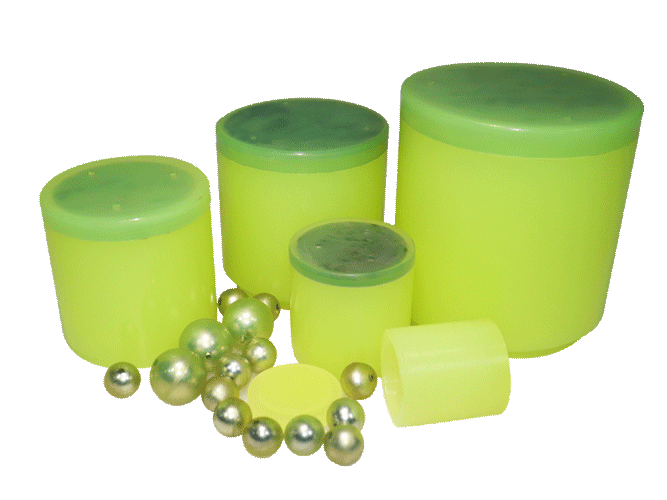
Compatibility starts with geometry. You need to check the outer diameter, height, seat, fixation method, lid and weight of the glass. A close nominal volume does not guarantee that the glass will fit into the holder or that the lid will provide the desired seal. If the product card does not contain dimensions for a specific mill, this data should be requested and not inferred from the series name.
Balancing is also important for a planetary mill. Glasses in working positions must comply with the manufacturer's requirements for weight and geometry. You cannot arbitrarily place different glasses, add adapters, or compensate for imbalances with improvised means. This is a question not only of grinding accuracy, but also of the load on the drive and the safe operation of the installation.
Cover and seal
The cap seems like a minor part until the sample starts to get lost or come into contact with the seal material. Find out what the seal is made of, whether it is compatible with the sample and solvent, how the seal is tested, and how often it needs to be replaced. The seal may swell, crack, or retain powder residue. Its condition affects losses and the transfer of contaminants between samples.
If wet grinding is planned, sealing is especially important, but a tight lid alone is not enough. The environment can affect the polymer and seal, and when heated, the pressure inside the cup changes. Specific environmental and temperature limits must be verified for the product. Do not assume that a standard cap is automatically suitable for any solvent.
Grinding media
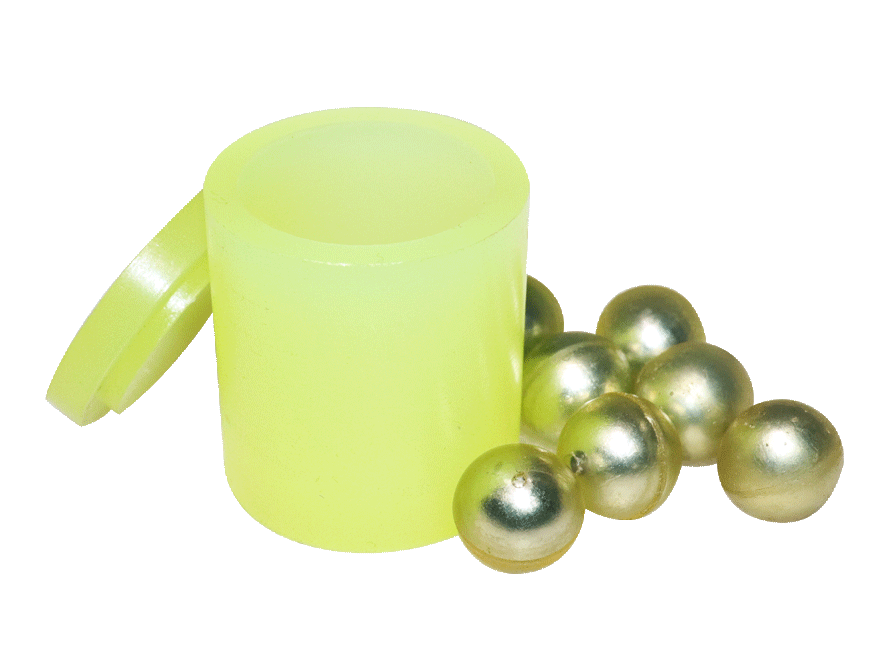
Grinding media are not chosen according to the principle “the harder, the better.” It is necessary to take into account the material of the bodies, their diameter, density, quantity, chemical compatibility with the sample and glass, as well as their contribution to wear. Large and heavy bodies increase impact energy, but can increase heating and damage the polymer surface. Small bodies provide more contacts, but their separation from the powder and cleaning can be more difficult.
The complete set must be checked separately: the presence of a glass in the catalog does not mean that specific grinding media are included in the supply or are confirmed for all modes. If grinding media are selected independently, their material and condition become an additional source of pollution. For a sensitive sample, it is better to discuss the beaker, lid, and bodies as a single contact system.
Dry and wet grinding: different risks for the polymer
When dry grinding, the main problems are dusting, sticking, aggregation and heating. A polyurethane surface can reduce impact loads on individual particles, but it is not indefinitely resistant to hard abrasive materials. If the powder tends to form aggregates, it is important to distinguish between primary particle comminution and disagglomeration. An outwardly similar result can be achieved by different mechanisms, and the glass material alone does not explain this.
With wet grinding, the chemical influence of the environment is added to the mechanical loads. The solvent can remove components of the polymer, cause swelling or change the surface. Water is also not automatically neutral for any polyurethane. Before starting work, you need to confirm the resistance of a particular product to the selected environment and temperature, as well as the possibility of subsequent cleaning.
Heat is a common risk for both modes. The higher the energy and the longer the grind, the more noticeable the heat generation. Air cooling helps remove heat from the setup, but does not make the process cryogenic and does not guarantee the desired sample temperature. If a polymer cup has temperature restrictions, they must be taken into account when choosing a mode. If necessary, it is better to reduce the load, pause or change the configuration, but only within the limits of the operating instructions.
Loading the glass also requires discipline. The working load is always less than the geometric volume, because the grinding bodies need free space to move. Overfilling reduces impact efficiency, increases friction against the lid, and can impair sealing. Specific limits must be set by the manufacturer for a particular model; You cannot transfer values from another glass.
Cleaning and transition between samples
Cleaning is part of the technique, not a final formality. First, remove the bulk of the powder using a dry method, then apply the approved cleaning procedure, rinse and dry. A universal solvent should not be prescribed: it may be aggressive to the polyurethane, the seal, or the sample itself. Abrasive sponges and sharp tools can leave scratches that trap particles.
Particular attention should be paid to the corners, threads, cover and seal. If the manufacturer allows disassembly, it is carried out according to the instructions; if not, there is no need to use force. After wet cleaning, the glass must be completely dried under conditions that do not cause deformation. Remains of the cleaning medium are the same source of contamination as the remains of the previous sample.
For trace analysis, it is wise to assign a separate glass to sensitive work or, if this is not possible, to include a blank experiment in each series. Recording the cleaning procedure helps distinguish sample contamination from gradual wear and tear of the glass. Cleaning should not be described as guaranteed to be complete unless it has been verified by a control analysis.
Storage also affects the condition of the product. A clean, dry glass is stored free of powder residue and without deformation, following the manufacturer's instructions. Unknown solvents, prolonged soaking and unnecessary heating increase the risk of damage. If cracks, stickiness, persistent odor or persistent discoloration appear, it is best to remove the product from sensitive work before consulting with the supplier.
What to check with trial grinding and what data to request
Test grinding is not needed to get the “perfect” result the first time, but to check compatibility. First, the source material and the target are recorded: size, particle distribution, acceptable impurities, losses and temperature. Then select the glass, lid, grinding media and media that the manufacturer allows. You should not change all the parameters at the same time: then it is unknown what exactly influenced the result.
In the test report, it is useful to record the identification of the glass, its condition before operation, the material and size of the grinding media, the mass of the sample, the medium, the mode, pauses, signs of heating, the method of unloading and cleaning. If the result is not achieved, you should not immediately attribute it to “bad material.” The reasons may be insufficient energy, overfilling, agglomeration, incorrect grinding media or the fact that the fineness is not achieved at all by the selected method.
Minimum list of questions for the supplier
- What sizes of polyurethane cup are available and which planetary mills are they approved for?
- What are the internal and external dimensions, weight and permissible working load?
- What material are the cap and seal made of, and how do they fit into the sample and medium?
- What grinding media are recommended or allowed, and are they included in the package?
- What are the temperature, speed, duration and chemical limitations?
- What cleaning agents are allowed and how to check for wear before further use?
On the main page TENCAN You can check the general direction of the product, but the specific characteristics of the glass must be taken from its current card and accompanying documentation. If the supplier does not confirm mill compatibility, size or media, it is not a gap that can be filled with guesswork. For a sensitive sample, it is better to change the test design than to obtain a result with an unknown contribution of impurities.
The polyurethane grinding bowl is not a universal replacement for other Materialiens and does not guarantee cleanliness. Its meaning lies in a specific combination of properties: an elastic polymer surface, the ability to select a compatible configuration and control wear. The decision should be made based on the task, documentation and trial grinding, and not just on the name of the material. Then the choice of glass becomes part of a controlled process, rather than a source of hidden assumptions.