
Preparing tissue for analysis rarely comes down to one movement: the sample is heterogeneous, containing connective tissue, lipids, cellular fragments and extracellular matrix. The result of subsequent analysis depends on how reproducibly it was possible to destroy the structure and obtain a homogeneous suspension. Portable Fabric Mill TENCAN — a laboratory instrument that is considered for applications where compactness, handling small samples, and the ability to quickly process one or more samples are important. Below are practical criteria for choosing a mode and checking the result. Specific characteristics of the model are given in portable fabric mill card; The article does not replace the instruction manual.
Why fabric preparation requires a separate approach
Fabric is different from loose powder: it contains bound water, lipids, proteins and structural elements that have different resistance to breakdown. Some techniques require rough disintegration, while others require a sufficiently fine and stable suspension for isolation of nucleic acids, protein analysis, or histological studies. Therefore, the concepts of “grinding” and “homogenization” are close, but not identical. When grinding, the particle size decreases, and when homogenizing, the uniform distribution of components throughout the entire volume of the sample is more important. For fabrics, both processes often occur simultaneously, but they should be assessed by different criteria.
Soft tissue, such as the liver or brain, is more easily destroyed, but can quickly heat up and foam. Fibrous tissues with a high connective tissue content require longer or more intensive processing, but this is where the risk of overheating and wear of the working unit increases. Adipose tissue does not mix well with aqueous media and is prone to separation, so mechanical treatment alone may not be enough without a properly selected medium. These differences mean that what is acceptable for one sample may not automatically transfer to another.
The weight of the sample also influences the result. In laboratory practice, it is often small, and losses on the walls of the container or working body become noticeable. The smaller the sample, the more careful you need to be in choosing the chamber volume and minimum load. Portable Fabric Mill TENCAN in this sense, it is interesting as a tool for small series and spot samples, but its capabilities need to be checked on a specific fabric, and not just by the name of the category.
Do not confuse a portable fabric mill with a ball, bead or drum mill. These are different devices in terms of purpose and nature of impact. The ball mill crushes the material with grinding media, the bead mill works with fine media, and the roll crusher crushes the material between the rolls. For tissues, other conditions are important: preservation of the analyte, absence of excessive heating, cleanability, and reproducibility with low sample mass. Therefore, modes and consumables from another type of equipment cannot be transferred without confirmation from the manufacturer.
What does the card of the portable fabric mill prove? TENCAN
The materials provided confirm the product name, fabric use, and portable design. The pictures show the product; other information - drive type, speed range, working chamber volume, material of contact parts, presence of cooling, cleaning and sterilization method - should be taken from the current card and manual. If a parameter is not specified, it cannot be restored by analogy with another model or by appearance. This is especially important for biological applications, where an unconfirmed characterization can lead to method error.
The "portable" in the name can mean a compact tabletop device that is easy to carry, and not necessarily battery powered. Therefore, the first step is to clarify whether autonomy is needed or whether a small mass and ease of movement between laboratory areas are sufficient. For serial work, stability on the table, fixation of the container, access to controls and the ability to quickly replace consumables are important. If the device is intended to be used in different rooms, the requirements for power supply and environmental conditions are also checked.
The principle of operation also needs to be confirmed: this could be tissue destruction in a closed container, homogenization by a rotating working element, abrasion, or another scheme. This affects sample preparation, cleanup, and the risk of carryover of contaminants. Do not transfer the modes of a ball or bead mill to a portable fabric mill: these are different devices in terms of purpose and the nature of the effect on the material. If the description mentions replacement elements, specify which ones are intended specifically for fabrics and which materials come into contact with the sample.
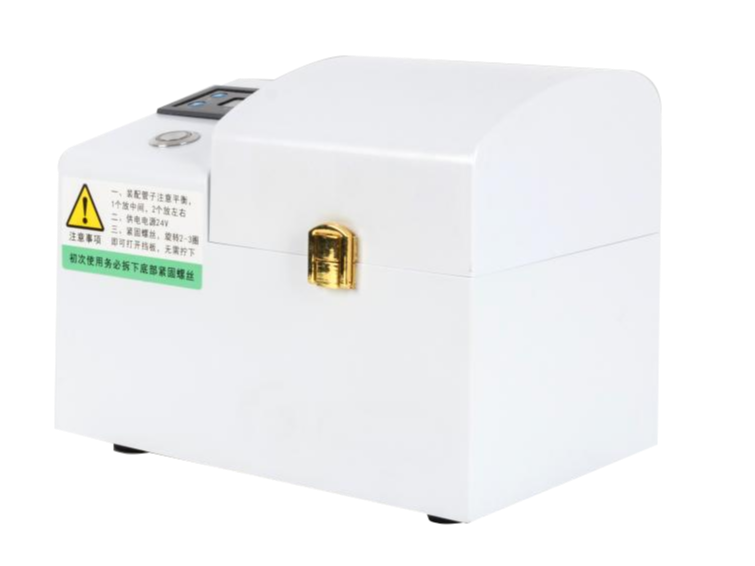
Brand TENCAN (Changsha Tianchuang Powder Technology Co., Ltd.) представлен на manufacturer's website; in the Russian version of the article, it is appropriate to rely on confirmed Russian-language addresses and cards, without mechanically substituting English analogues. If only the main unit is indicated on the product card, and consumable items are described separately, their compatibility should be checked by documentation, and not by external similarity.
Parameters that determine the result
Sample volume and payload
Distinguish between nominal chamber volume, working volume, tissue weight and liquid volume. The nominal volume tells you the size of the chamber, but not how much fabric can be loaded without losing quality. The workload is usually smaller and depends on the type of tissue, the desired degree of homogenization and the design of the working element. If the load is too large, part of the sample may remain unprocessed and the load on the drive will increase. If it is too low, wall losses and variation between replicates will become more noticeable.
For small samples, it is important to specify the minimum mass with which the instrument can handle reproducibly. This is not the same as a minimum volume of liquid: the tissue takes up the volume, swells and changes the viscosity of the suspension. Just because the card says volume doesn't mean that much fabric can be loaded. The optimal load is selected by trial grinding, starting with a conservative amount and assessing uniformity, heating and losses.
Speed, time and intermittent mode
Higher speed does not always give better results. It may accelerate tissue breakdown, but it also increases heat, foaming and aerosol generation. For thermolabile analytes, short cycles with pauses are often preferable to a single long exposure. If a guideline calls for intermittent operation, it should be used as a way to reduce heat load rather than as a blanket recommendation for all fabrics.
Processing time depends on the initial degree of grinding of the piece, the type of fabric and the medium. A large fragment requires more time or preliminary reduction in size, but the detailed procedure should be in accordance with the technique and manual. If the instrument does not support programming, do not add steps that are not included in the instructions; changing the sequence may affect reproducibility. Record the actual speed, time, number of cycles and pauses so you can repeat the routine consciously.
Working chamber material and wear
The material of the contact parts affects sample compatibility, cleanability, and possible transfer of contaminants. Stainless steel, ceramic, zirconia and plastic have different compromises regarding wear, resistance to cleaning agents and sorption of components. Tungsten carbide, ceramic or zirconia do not mean "zero contamination": any surface may wear or retain traces of a previous test. For trace analyses, this must be checked separately.
Wear manifests itself not only in changes in the geometry of the working body, but also in the appearance of microparticles that can get into the suspension. If the technique is sensitive to metals or ceramics, check in advance the composition of the contact materials and the possibility of using disposable or specially cleanable elements. Do not conclude the suitability of a material based on its name alone: processing conditions, medium and duration of contact are important.
Temperature and Cooling
Distinguish between air cooling and liquid nitrogen cooling. Conventional air cooling does not make the process cryogenic. The temperature of the working space of the installation is also not equal to the measured temperature of the sample: heating depends on the energy transferred to the suspension, processing time and heat removal. For thermolabile analytes, not only the presence of cooling is important, but also how it is organized and confirmed for a particular model.
If the manufacturer does not endorse cryogenic mode, do not call it as such. Sample pre-cooling, short cycles and pauses are common techniques to reduce thermal load, but are not a substitute for a qualified cryogenic system. For sensitive techniques, the temperature and stability of the analyte are checked experimentally, since even short-term overheating can degrade the result.
Purity and impurity transfer
When working with tissues, the risk of cross-contamination is particularly significant due to the small quantities of analyte and the high sensitivity of some methods. Reusable chambers and end devices require validated cleaning between samples. Disposable consumables reduce the risk of carryover, but their compatibility with the instrument and sample must be confirmed. It is not enough to wipe the surface: it is important that cleaning is reproducible and does not damage the material.
Don't promise zero contamination. Purification validation includes control samples, blanks, and evaluation of residual signal after treatment. If the laboratory uses different types of tissue, it is worth checking whether fat, protein or nucleic acids remain on the surface after a standard procedure. This is especially important when moving from one series to another.
Dry, wet and cryogenic regimes: where is the boundary?
For tissues, wet homogenization in a suitable environment is more commonly discussed since water and buffers help to obtain a stable suspension and reduce local overheating. Dry grinding is also possible for some materials, but it is not always convenient for soft fabrics: the sample may stick, and without a medium it is more difficult to control the temperature. The choice of medium is part of the technique, not a universal mill setting. The buffer affects the viscosity, foaming and stability of the analyte, so it is selected for a specific analysis.
Cryogenic mode requires special confirmation. Frozen tissue may be more fragile, but this does not make any grind cryogenic. If liquid nitrogen is used, safety precautions, compatible materials, and an understanding of how the sample is cooled are required. Do not replace a proven cryogenic procedure with household refrigeration or describe a laboratory instrument as cryogenic unless specifically stated in the documentation.
Mixing and grinding should also not be equated. In some problems, it is enough to evenly distribute the tissue in the medium without achieving fine destruction of the particles. In others, on the contrary, deep disintegration is needed. Portable Fabric Mill TENCAN can be considered as a sample preparation tool, but the specific degree of exposure must be appropriate to the analytical task. Excessive processing does not always improve the result: it can increase heating and fragmentation of the analyte.
Observed problems: what to check before changing equipment
If the result is inconsistent, it is helpful to first describe the observation and then test several likely causes. One unsuccessful grind does not prove the device is faulty. Below is an indicative table for analyzing the situation; it does not replace manual diagnosis.
| Observation | Possible reasons | What to check |
|---|---|---|
| Incomplete homogenization | The source fragment is too large, the time is short, the speed is insufficient, the load or environment is not suitable | Sample preparation, actual mode, sample volume, tissue type |
| Overheat | Long cycle, high speed, few pauses, warm chamber | Cooling capabilities, intermittent operation, pre-cooling |
| Foam | High speed, unsuitable environment, low volume | Medium composition, speed, tissue-liquid ratio |
| Loss of analyte | Heating, oxidation, pH shift, too long processing | Temperature, time, analyte stability, control samples |
| Pollution | Insufficient cleaning, wear, carryover from previous sample | Cleaning procedure, blanks, condition of contact parts |
| Vibration or noise | Poor fit, imbalance, wear, incorrect installation | Installation on the table, securing the container, instructions from the manual |
If the problem persists, change only one variable at a time. This makes it easier to understand what exactly influenced the result: speed, time, load, environment or cleaning. Do not try to compensate for incomplete homogenization by endlessly increasing the time; this may increase heating and impair the preservation of the analyte. For each tissue it is useful to have a short operating protocol with acceptable treatment limits.
From one sample to a series: reproducibility and scaling
When moving from a single sample to a series, it is important to record not only the speed and time, but also all the conditions that can affect the result: type of tissue, weight, degree of pre-grinding, volume of medium, temperature, number of cycles, pauses, container position and cleaning procedure. The more detailed the recording, the easier it is for another employee to reproduce the mode. If there are multiple operators in the laboratory, it is worth checking that they prepare the sample and set up the container in the same way.
Control samples and replicates are useful for series. They help to separate biological from technical variation. If a portable fabric mill is used for small batches, it can become a time bottleneck, especially with long cleanups between samples. Assess in advance how many samples can be processed per shift without loss of quality and how to organize the storage of already prepared suspensions.
The transition to a larger party is not linear. Increasing the load can change thermal conditions, uniformity and losses. If scaling is required, first test multiple loading levels on the same tissue and compare the result to the original protocol. Do not promise time performance unless it is proven for a specific technique: preparation, cleanup, and analytical evaluation affect the outcome.
What to check during test grinding
Before trial grinding, it is worth formulating the task: what fabric is used, what is the mass of the sample, what medium is suitable, what degree of homogenization is considered sufficient and what analytes cannot be lost. This information helps you choose a mode and avoid unnecessary experiments. If you plan to work with sensitive methods, discuss cleaning and possible carryover of contaminants in advance.
- Check that the minimum and maximum loads match your sample weight.
- Determine which materials come into contact with the sample and how they will withstand the chosen cleaning.
- Find out if the appliance supports intermittent operation and how heat is controlled.
- Compare multiple modes on the same fabric, changing only one variable.
- Assess not only visual uniformity, but also analyte integrity, loss, and reproducibility.
- Check cleaning with reference samples and blanks, especially when switching between different fabrics.
For a test grind, prepare a small supply of fabric to repeat the experiment. Start conservatively, then increase time or speed as needed, but keep an eye on temperature and foaming. If the result is unsatisfactory, first check the sample preparation and media, and then check the instrument settings. For detailed specifications and available options, see portable fabric mill card TENCAN; It is better to ask questions about the compatibility of consumables to the manufacturer.
Practical conclusion
Portable Fabric Mill TENCAN — This is a tool for preparing small tissue samples and is not a general purpose replacement for a ball or bead mill. Its result depends on the type of tissue, sample weight, medium, temperature, cleaning and the selected mode. Start with proven performance, test minimum loading and cooling in practice, document protocol, and validate cleaning. If a parameter is not indicated in the card or manual, you should not speculate on it: it is better to check with the manufacturer and check it during trial grinding. This approach helps achieve reproducible sample preparation and reduces the risk of errors due to overheating, incomplete homogenization, or carryover of impurities.