
The nylon grinding bowl for a planetary mill is perceived as a consumable container, but in sample preparation it affects grinding energy, heating, sample purity and reproducibility. The nylon version is chosen when it is important to reduce abrasive wear from the hard lining and work with moderate loads. However, the polymer does not guarantee “zero contamination” and does not replace testing of compatibility with a specific mill. Practical selection begins with planting, then moves to volume, load weight, media material and cleaning.
What to choose with the glass: fit, volume and mode
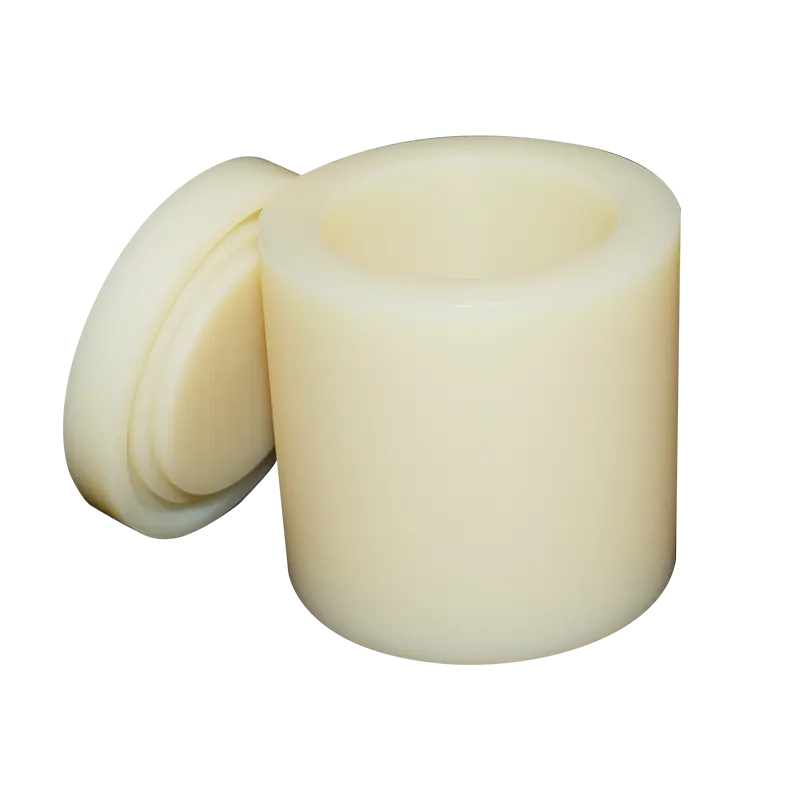
The grinding bowl works in conjunction with the planetary mill, lid, mount and grinding media. An error in the fit dimensions makes even a short start dangerous, and an incorrect workload changes not only performance, but also wear. Therefore, they first check compatibility with a specific model, and only then discuss the material and grinding fineness. It is convenient to check product information in nylon grinding bowl card; dimensions, volume and configuration are confirmed by it and the mill manual.
First of all, the volume of one glass, the total volume of the set, the useful workload, the mass of the sample and the productivity over time are distinguished. These quantities are not interchangeable. Filling to the brim does not increase yield, but rather deprives the balls of free space to move and can increase heat. If the specification indicates the volume, it does not mean that the same amount can be loaded with powder and balls. The working fraction is determined according to the mill documentation and checked by test grinding.
The landing unit includes not only the diameter, but also the height, bottom shape, fixation method, lid and seal. You cannot transfer dimensions from one model to another: the same name “planetary mill” does not mean the same standard size. Separately check whether the manufacturer allows heating, cooling and wet grinding in this design. Availability in the catalog TENCAN different mills, including the basket bead mill, also does not prove the compatibility of the glass with them: this is a different class of equipment.
The material of the glass does not negate the checking of the lid and lock. Before work, inspect the edges, threads and sealing belt, clean them from dust and make sure that the lid fits without distortion. A small particle on a seal can compromise the seal more than it appears from its appearance. If the fastening requires force that was not there before, the reason is found out before start-up, and not compensated with additional pressure.
Nylon as a material: mechanical role and limitations
Nylon is a group of polymers, and not a single material with the same properties. In the context of a grinding bowl, hardness, elasticity, abrasion resistance, heat resistance and behavior in contact with the sample and medium are important. Compared to metal or ceramic linings, nylon is generally softer and can reduce abrasive wear, but is also less capable of transmitting impact energy. Therefore, it should not be considered as a universal replacement for harder materials.
The mechanical role of the glass is reflected in the way the balls transfer energy to the sample. The soft wall absorbs some of the impact, so harder and larger particles may require more time or a different material. For samples that are soft, prone to agglomeration, or sensitive to metal contamination, a nylon design may be practical, but this is judged on a case-by-case basis. It is impossible to promise in advance a narrow distribution of particles or a certain size: the result depends on the starting material, balls, medium, speed and time.
Temperature conditions require special caution. During grinding, energy turns into heat, and the polymer wall less effectively removes it from the contact zone. Air cooling and liquid nitrogen cooling are different solutions; the second is permissible only if the durability of the glass is confirmed and the procedure is followed. Conventional blowing cannot be called a cryogenic process. Also, resistance to any solvents, autoclaving, or prolonged heating should not be attributed to nylon without specifications from the manufacturer.
Dry and wet grinding have different effects on the glass. The liquid contains less dust and heat generation, but swelling, sorption of the medium and difficult cleaning are possible. After wet grinding, it is important to remove any remaining liquid and ensure that it does not interfere with the next sample. If the environment is aggressive or contains surfactants, compatibility with a specific brand of nylon is checked before starting work, and not by the appearance of the glass.
Wear and contamination: what to check, not assume
There is no such thing as “zero contamination” with any grinding material. Sources of impurities include wear of the glass, grinding media, remnants of the previous sample, cleaning agents and dust. The nylon cup may produce polymer particles that are not visible to the eye, but are significant for sensitive techniques. The risk depends on the hardness and abrasiveness of the sample, the mass of the balls, grinding time and surface condition. Therefore, it is more correct to talk not about the absence of pollution, but about its acceptable level for a specific analysis.
For elemental analysis, thermogravimetry, IR spectroscopy or other methods, polymer particles can be an interference. This does not mean that nylon is unsuitable: first, perform a blank experiment and evaluate the contribution of the glass to the signal of interest. It is also useful to briefly pre-grind a small portion and discard it if the technique allows it. This technique reduces the impact of residues, but does not replace cleanliness control or eliminate wear.
During inspection, pay attention to color changes, matte belts, scratches, inclusions, edge deformation and the condition of the lid. You cannot make a diagnosis based on one sign. Below is an approximate connection between observations and possible causes; The final conclusion is made based on the working conditions and documentation.
Indicative signs upon examination
| Observation | Possible reason | What to check |
|---|---|---|
| Matte belt and marks on the inner wall | Abrasive wear, large or hard balls | Material and mass of balls, mode, cup resource |
| Dark inclusions | Chafing, sample residue, insufficient cleaning | Blank experiment, cleaning procedure, surface inspection |
| Odor and softening | Overheating or chemical exposure | Temperature, environment, manufacturer’s tolerances |
| The lid does not fit tightly | Deformation, seal wear, thread contamination | Geometry, cleanliness, fixation method |
If dark spots or odor appear, work is stopped and the cause is determined. Continuing to grind may increase contamination and damage the glass. For critical samples, a log is useful: date, material, mode, time, cleaning method and the result of visual control. It helps you differentiate normal wear and tear from a one-time mistake and help you plan replacements without the guesswork.
Compatible with grinding media and mill components
Grinding media are selected separately from the glass. The package may contain balls of the same material, but this does not mean that any other material is acceptable. Hard balls can scratch nylon, and too much weight increases the load on the walls and lid. Compatibility cannot be inferred simply from the fact that items are sold in the same catalogue. We need confirmation from the manufacturer, checking the dimensions and understanding which ball material will not introduce unacceptable impurities.
The lid and seal are just as important as the wall. A tight seal retains powder and media, but excessive force or trapped particles can distort the lip. After each cycle, check the cleanliness of the threads, sealing belt and lock. If the lid seats with a force that was not there before, this is a reason to inspect the geometry rather than apply additional pressure.
Before the first run, a short run with no sample and no balls is useful - just to check fit and rotation if permitted by mill management. Then you can check the bowl with grinding media without valuable material. Such steps do not replace training and do not cancel the manufacturer's restrictions, but they do help to quickly notice size mismatches, runout or poor fixation.
Cleaning, storage and protection against sample transfer
It is better to assign the glass to a certain type of material or, at a minimum, keep clear markings. One universal cup saves space but increases the risk of trace amounts being carried over. For trace analysis, a separate container that has not been in contact with colored, oily, or particularly abrasive samples is useful. If this is not possible, cleaning should be validated by a blank test and not by visual assessment alone.
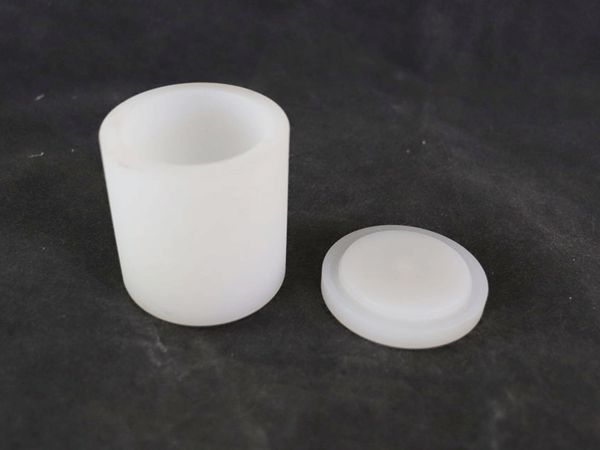
Dry cleaning begins by removing the bulk of the powder with a soft brush or vacuum cleaner with a suitable filter. Metal scrapers and abrasive pads leave scratches that trap material. Water and detergents are allowed only within the limits specified by the manufacturer; after them you need a thorough rinse and dry. You cannot use an aggressive solvent “just in case”: it can change the surface or leave its own mark.
For wet cleaning, it is important that the liquid does not linger in the pores and microcracks. Rinsing is carried out in a clear sequence, and drying is carried out until a stable mass or until visible traces of moisture disappear. Ultrasonic bath, steam, autoclave and oven are only applicable if confirmed by the manufacturer. Too high a temperature can deform the polymer, and intense processing can accelerate wear on the edge and seal.
Store the glass closed, in a clean, dry place, away from sources of dust and chemicals. Gaskets and covers should not be kept under load, which creates permanent deformation. Before an important test, it is useful to do a test cleaning and check if there is any smell, stickiness or particles on the napkin. These are simple signs, but they help prevent the problem from being carried over into the next experiment.
Loading, heating and transition from sample to batch
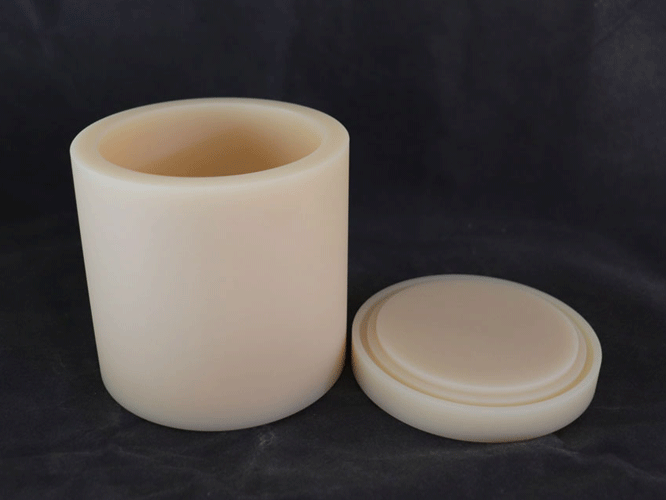
Cup loading is a balance between sample mass, ball mass, and free volume. Loading too tightly restricts ball movement and increases heat; too low can reduce efficiency and increase the proportion of impacts on the wall. Exact limits vary by mill and beaker model, so they are taken from the manual rather than general recommendations. The mass of the sample and the mass of the balls are different protocol lines and cannot be mixed.
Speed and time change not only the size, but also temperature, wear and the proportion of impurities. The polymer wall dissipates heat less well, so long-term continuous operation requires pauses or cooling, if provided. You cannot compensate for overheating by endlessly increasing speed. If there is a smell, softening or deformation, the process is stopped: this is not “normal wear”, but a signal of non-compliance with the regime.
The transition from a laboratory sample to a larger batch is not a matter of multiplying the mass. With a different beaker or mill, the energy per unit mass, heat dissipation, ball-to-powder ratio, and wear contribution change. Several small beakers and one large beaker can produce different particle distributions. It is more correct to repeat the regime on a representative sample, check a blank experiment and compare the particle size distribution, and not just the visual fineness.
For trial grinding, fix:
- model of the mill and glass, fit and method of fastening;
- material, initial size, mass and density of the sample;
- material, size and weight of grinding media;
- medium, phase relationship and admissibility of wet grinding;
- speed, time, pauses and temperature;
- purification method and the result of the blank experiment;
- particle size measurement method and sampling.
This protocol makes it possible to separate the influence of the glass from the influence of the mode. Without recording the conditions, the conclusion “the glass is not suitable” appears too early, and the conclusion “the mode is good” appears without evidence.
What to check before ordering and trial grinding
Before ordering, it is worth preparing a short technical request: mill model, mounting dimensions, required volume, type of lid, expected sample weight, material and initial size, target result, environment, temperature limits, analysis method and permissible contamination. For a nylon glass, resistance to cleaning and media, as well as acceptable grinding media, are specified separately. This is not bureaucracy: it is this data that determines whether the configuration can be considered compatible.
If the task involves trace analysis, the blank and the cleaning procedure are discussed in advance. If the material is abrasive, check the service life and signs of replacement. If wet grinding is planned, not only chemical resistance is checked, but also the completeness of liquid removal. The supplier does not need to transfer closed recipes; There are enough material classes and restrictions to select performance without false promises.
Latest product information and other equipment trends TENCAN are given on company website; The specific equipment is verified against the card and passport. The nylon grinding bowl is not a “zero-pollution” or a universal vessel, but a tool with a clear application. Its correct choice is confirmed by planting, trial grinding, blank testing and reproducibility of the result.