
Preparing a sample for analysis or subsequent grinding rarely begins with the choice of mill. First you need to understand what the material is, how heterogeneous it is, what piece goes into the laboratory and what size is required at the output. Multifunction crusher TENCAN refers to crushing equipment, but even a successful design will not correct an error made during sampling. If one large piece of another composition gets into the sample, subsequent analysis will describe not the material, but a random inclusion. Therefore, choosing a crusher begins with sample questions, and not with a list of features.
Sample, not crusher: where does the choice begin?
It is not only strength and fragility that are important for sample preparation. The behavior of the material in the crusher is influenced by the maximum piece size, particle size distribution, humidity, temperature, tendency to stick, abrasiveness and the presence of inclusions. The same powder after drying and after storage in a humid atmosphere can behave differently: dry material is free-flowing, while wet material forms lumps and clogs the discharge zone. Therefore, the initial conditions must be recorded before selecting equipment, and not used to explain the result after unsuccessful crushing.
Another common source of discrepancy is sample heterogeneity. The crusher reduces the particle size, but does not automatically homogenize the material. If large and small pieces were mixed unevenly before crushing, after the operation different portions may differ noticeably in composition. Sample reduction, mixing and sampling of a representative sample remain separate tasks. In laboratory practice, it is useful to decide in advance at what stage the averaging is performed and how much material should be retained for reanalysis.
The practical conclusion is simple: before choosing a multifunctional crusher, you should determine the largest permissible piece, the required size after crushing, the mass of a single portion and the permissible contact with the working parts. If the task is limited to pre-crushing before grinding, it is not worth making demands on the first stage that actually apply to the mill. Conversely, one cannot count on a crusher to replace fine grinding: these are different operations with different mechanisms of action on particles.
What does versatility mean in sample preparation?
The name “multifunctional crusher” indicates the ability to solve several problems in one device, but it cannot be assumed that any configuration includes all possible working parts and modes. In the catalog TENCAN equipment is divided by purpose, and the specific version must be checked on the product card. It is useful to separately find out which operations are performed regularly, which require replaceable elements, and which belong to additional equipment. This affects not only the price, but also the training of personnel, the space occupied and the cleaning procedure.
For sample preparation, multifunctionality only makes sense if it does not compromise reproducibility. If changeover is required to change from coarse crushing to finer crushing, it must be described and feasible in the laboratory. It is important to understand which units come into contact with the material, how they are removed and how they are cleaned. Otherwise, the advantage of one installation will result in lengthy readjustment and the risk of transfer of particles from the previous sample. In the catalog TENCAN Different types of equipment are presented, so the comparison should be made not by name, but by specific configuration.
Loading and unloading
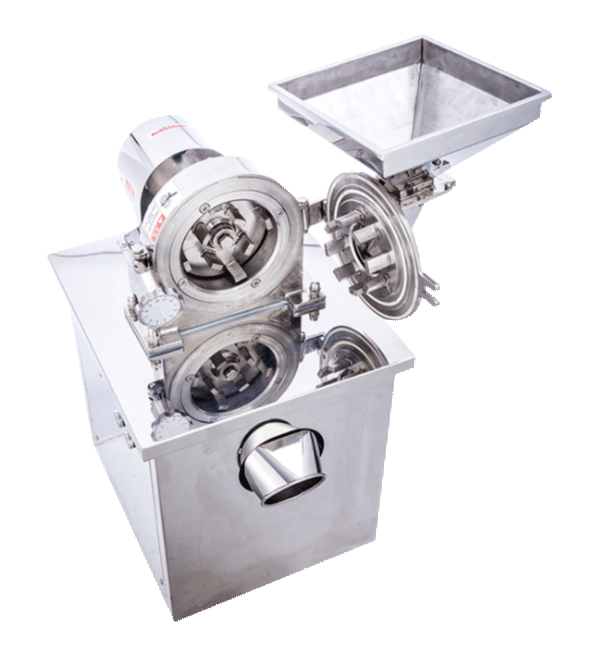
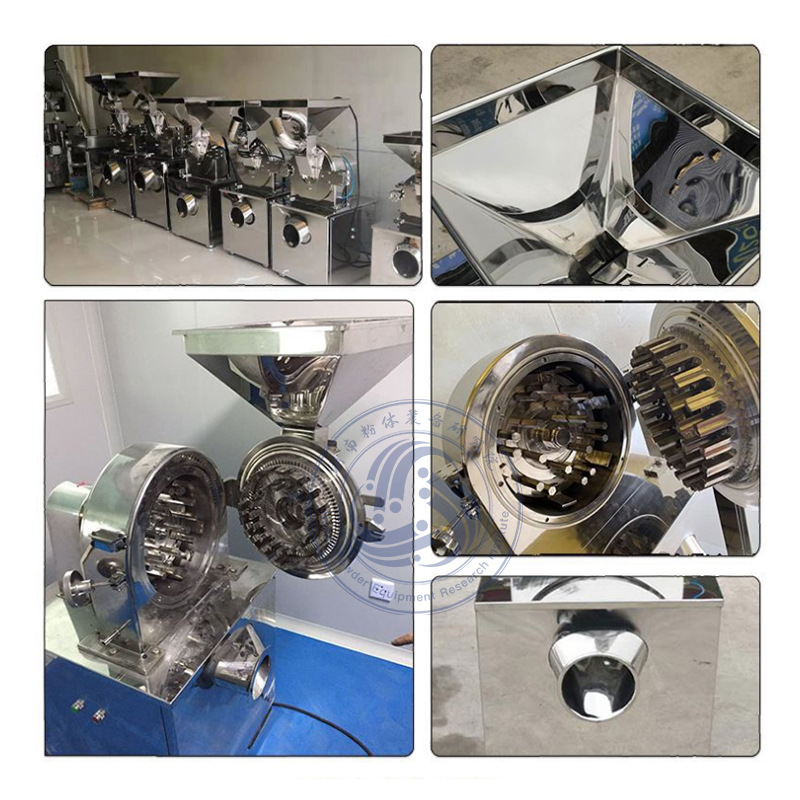
The loading unit determines how convenient it is to feed the material and whether the portion size can be maintained. A piece that is too large and has to be removed manually already disrupts the planned selection. The unloading zone should not retain material and create stagnant areas where small fractions accumulate. If the design provides for adjustment, its position must be recorded in the protocol, otherwise the result of the next sample will be difficult to reproduce.
Changeover and cleaning
Changing materials is a critical moment for a multifunctional installation. After abrasive or colored powder, it is not enough to blow off visible surfaces: residues can remain in joints, under seals and in the discharge chute. Before starting work, it is worth clarifying which elements can be removed without tools, which are available for wet cleaning and which cannot be treated with water. It is more convenient for the laboratory to have a documented cleaning procedure than to rely on visual inspection.
- Which operations are performed on one configuration, and which require replacement of nodes.
- Is there access to the chamber and unloading area for cleaning between samples.
- How the position of the adjustable elements is fixed.
- What materials come into contact with the sample and how they wear out.
- Are dust removal and protection against material spillage provided?
- What are the power, space and ventilation requirements for the selected design?
Size, load and output: three different values
When discussing crushing, it is easy to mix up maximum feed size, product size, feed weight, and time throughput. These options are related but not interchangeable. The factory specification may relate to a specific material, humidity and adjustment position; it cannot be transferred to any sample without verification. Below are questions that help separate concepts when selecting.
| Parameter | What does it describe? | What to clarify |
|---|---|---|
| Maximum input piece | Restriction on the size of an individual piece, and not on the weight of the portion | For what material and what shape of the piece is the limitation indicated? |
| Size after crushing | Actual particle distribution, not just nominal setting | How was it measured and what is the proportion of fine fraction |
| One-time download | Weight of material in one operation | Is the mass of the working parts included and is incomplete loading acceptable? |
| Performance | The amount of material in a time depending on the mode and properties of the sample | Is it specified for continuous or intermittent operation? |
| Bulk density and moisture content | Properties Affecting Feeding, Plugging and Exit | Is pre-drying or special feeding required? |
The maximum inlet cut should not be confused with the recommended cut for the downstream mill. The crusher can accept a piece of a certain size, but this does not mean that all the material after the operation will be the same. The result depends on the initial distribution, the strength of the material and the number of passes. If a narrow fraction is required for analysis, reduction or sieving may be required after crushing rather than just rerunning.
Performance also requires careful reading. For a batch laboratory operation, time per load, unloading losses, and cleaning time are more important than the maximum hourly figure. For a series of samples, downtime for material changes and reproducibility of settings are essential. If the card states values for a particular performance, they should be taken as a guideline for verification and not as a guarantee for any sample.
Material, wear and contamination risk
Crushing is accompanied by wear of the working surfaces. Even strong steel gradually releases material into the sample, and abrasive powder speeds up this process. Therefore, the question “will the crusher contaminate the sample” does not have a universal answer: it all depends on the combination of sample material, working parts, duration of contact and analysis requirements. The phrase “zero pollution” should not be accepted as a technical specification without confirmation for a specific pair of materials.
In the product card, you need to look not only at the general appearance, but also at what elements form the crushing chamber and the discharge path. If the working parts are made of a material that contains the element being determined, there is a risk of overestimating the result. This is especially important for trace analysis, powder purity studies and batch comparisons. For routine size control, such a risk may be less significant, but the decision is made before testing begins, and not after receiving a questionable result.
Cleaning between samples affects the transfer of impurities as much as the wear itself. The fine fraction sticks to the walls, settles in the corners and remains on the unloading tray. If cleanup takes too long after one sample, staff will begin to shorten the procedure and reproducibility will drop. Therefore, when choosing a multifunctional crusher, it is useful to evaluate not only the crushing speed, but also the accessibility of surfaces, the presence of removable elements and the ability to control cleanliness.
To clarify, you should request information from the supplier about the material of the contact surfaces, acceptable cleaning methods and replacement units. If you plan to work with several materials, you need to describe in advance the order of transition between them. One setup without a specific procedure should not be assumed to be suitable for cross-contaminating samples. In laboratory practice, pure-to-contaminated ordering and control blanks are often more useful than the promise of universality.
Overheating, humidity and dust: what changes in practice
During crushing, mechanical energy is partially converted into heat. Heating depends on the material, duration of the operation, intensity of exposure and cooling of the units. For thermally sensitive samples, even a slight increase in temperature can change the properties, so the mode is selected with a margin of time and load weight. You cannot judge the temperature of a sample only by the temperature of the case or working space: these are different quantities, and there may be a noticeable difference between them.
Temperature and cooling
Air cooling helps remove heat from the components, but does not convert conventional crushing into a cryogenic process. If a specific design does not list a cryogenic option, do not assume it is available. For sensitive materials, it is better to reduce continuous contact, pause and check the condition of the sample, rather than attribute properties to the installation that are not in the documentation. When working with materials prone to softening, the regime is coordinated with safety requirements and analysis methods.
Humidity and sticking
Wet sample can clog the feed area, form lumps and produce an uneven product. Sometimes pre-drying helps, but it changes the composition and properties of the sample, so it is not a neutral operation. If drying is unacceptable, you need to choose a feed and a load that does not cause the material to cake. The question about humidity should be asked before testing: it is difficult to predict the behavior of a wet sample from a dry sample.
Dust and aerosol
Dust is not only a hygiene factor, but also a source of waste and cross-contamination. The fine fraction is more easily carried away by the air, settles on the equipment and can change the composition of the sample. If dust removal is provided, its effectiveness is checked on a specific material. For toxic, radioactive or flammable powders, discussion of equipment selection is not a substitute for risk assessment and operating instructions. In such cases, acceptable conditions are first determined, and then a performance that meets them is sought.
From laboratory sample to batch: what changes when scaling up
Moving from a few hundred grams to a larger batch does not result in a proportional increase in time. The result is affected by feed, loading uniformity, heating, clogging and cleaning time. If the laboratory sample was crushed in small portions, increasing the mass can result in a different particle size distribution. Therefore, scaling is checked in stages: first on a representative subsample, then on an intermediate mass and only after that on a full batch.
Representativeness after fragmentation is no less important than before it. Large and small particles may be distributed unevenly, especially if unloading occurs at one point. The sample reduction must be carried out so as not to select only the small or only the large fraction. For control purposes, it is useful to compare several samples from one batch and evaluate the scatter in size or in the component being determined. This provides more information than just one lucky result.
Test crushing should be planned as a small series rather than as a single display. The mass of each portion, initial size, settings, operation time, temperature, cleaning losses and method of sampling after crushing are recorded. If the material is prone to sticking, check it too. The results are recorded so that another employee can repeat the regimen without verbal explanation.
| What to record | Why is this necessary? |
|---|---|
| Weight of initial and received samples | Shows losses and actual load |
| Initial and final size | Allows you to separate expectation from result |
| Position of adjustable elements | Ensures repeatability |
| Operation and pause time | Helps evaluate heating and performance |
| Cleaning method between servings | Reduces the risk of contaminant carryover |
What to report for test crushing and what to check
A request for selection of a multifunctional crusher becomes useful when it contains not only the name of the material, but also the operating conditions. The more accurate the description, the less likely it is that the proposed design will be convenient on paper and inconvenient in the laboratory.
- Chemical or mineralogical composition of the sample and elements that cannot be added.
- Maximum lump size, lump shape and expected initial grain size distribution.
- Required size after crushing and method of its control.
- The mass of a single portion, the number of portions in a batch and the total mass of the batch.
- Humidity, storage temperature and drying tolerance.
- Hardness, brittleness, viscosity and abrasiveness of the material.
- Tendency to sticking, dust formation and electrification.
- Cleaning requirements between samples and acceptable carryover levels.
- Available space, power, ventilation and noise levels in the workplace.
- Hazardous material properties and limitations established by internal procedure.
The test should check not only the output, but also the ease of operation. It is important to see how loading is performed, how quickly the unloading area is dismantled, whether material remains in hard-to-reach areas, and whether the setup can be repeated. If the test is carried out in several modes, the results must be compared at the same initial size and weight. Otherwise, the difference will not reflect the operation of the crusher, but the difference in samples.
- Perform a cleanliness check before the first batch.
- Compare the size after crushing using sieve analysis or the laboratory method.
- Estimate losses during unloading and cleaning.
- Check heat after a series of servings.
- Compare two or three replicates, not just the best result.
- Record the cleaning procedure and the order in which you change to another material.
Selecting a Multi-Function Crusher TENCAN for the preparation of samples is based on a specific task: the size of the initial piece, the required size, the mass of the portion, the properties of the material and the permissible contact with the working parts. If these conditions are stated before testing, it becomes clear which features are truly needed and which will remain unused. You can check the current version and its features in multifunctional crusher card, and the final mode is confirmed by trial crushing on real material.