
Multichannel tissue homogenization begins with a question that is rarely asked in advertising descriptions: how similar samples processed in parallel will be, and how to prove this before the start of the series. If different channels produce different protein yields, different degrees of cell destruction, or markedly different fragment size variations, the advantage of parallel operation disappears. Speeding up sample preparation results in repeated preparations, additional material consumption, and difficulties in comparing groups.
Practical mode selection for a multi-channel tissue homogenizer TENCAN It is convenient to build not around one “best” speed, but around reproducibility: uniform loading, understandable processing time, temperature control, and verifiable lack of carryover between samples. Below are the conditions that determine the result and a way to test the configuration on a pilot series. Specific parameters of channels, volume, drive and cooling should be checked with the current product card, and not transferred from another model.
Why channel spread is more important than maximum speed
A multichannel device is purchased for throughput, but in laboratory practice the value is determined not by the number of simultaneously processed test tubes, but by the proportion of samples that can be compared with each other. If one channel systematically produces a coarser suspension and the other produces overheating, the batch is formally completed, but the statistical power of the comparison drops. This effect is especially noticeable in small samples, where each sample is unique and cannot be resampled.
Sources of scatter are rarely traceable to the instrument. Differences in sample weight, pre-shredding ratio, buffer volume, container packing density, and time from prep to launch add up faster than you think. The position of the channel in the block can also affect heating and aerosol formation. Therefore, a comparison of “channel 1 versus channel 8” without taking these factors into account does not prove the unevenness of the device.
Maximum speed is not a universal indicator of quality. For some fabrics it reduces processing time, for others it increases foaming, local heating and destruction of labile components. In addition, the same value on the display does not mean the same effective load on the sample: it depends on the geometry of the container, the volume of the suspension, the properties of the tissue and the condition of the working element.
Therefore, the first task when choosing a mode is to determine the acceptable spread between channels for a particular analysis. For biochemical determination, the stability of protein yield may be important, for microscopy - the degree of disaggregation, for subsequent isolation of nucleic acids - the absence of transfer and overheating. The acceptance criterion is formulated before the experiment, otherwise the result is easy to adjust to expectations.
What happens in the channel of a multichannel tissue homogenizer
In the channel, the sample is subjected to mechanical stress: shear, mixing, and, depending on the design, shock loads. Energy is transferred not only to the tissue, but also to the liquid, the walls of the container and the working organ. Part of it turns into heat, part is spent on foaming and movement of the suspension. The smaller the sample volume and the higher the intensity, the more noticeable the contribution of local conditions.
Homogenizing fabric is not the same as finely grinding powder. In a biological sample, it is important to destroy the cell membranes and obtain a homogeneous suspension, preserving or, conversely, deliberately destroying certain structures. For powder materials, the main factors would be particle size distribution and degree of aggregation, while for fabric, temperature, enzymatic activity and molecular integrity are equally important. These differences determine the choice of mode and method of control.
Multichannel means parallel processing of several positions, but in itself does not guarantee an equal dose of exposure. Different channels may have slight differences in geometry, drive distance, heat dissipation, and aerosol insulation. The manufacturer can compensate for this by design, but it is still the user's job to verify reproducibility. Especially if the work is carried out at extreme conditions or with non-standard consumables.
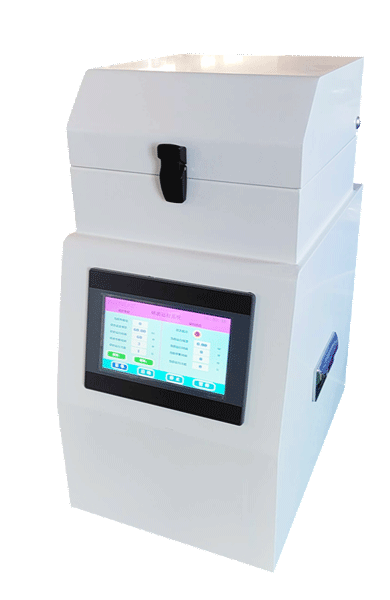
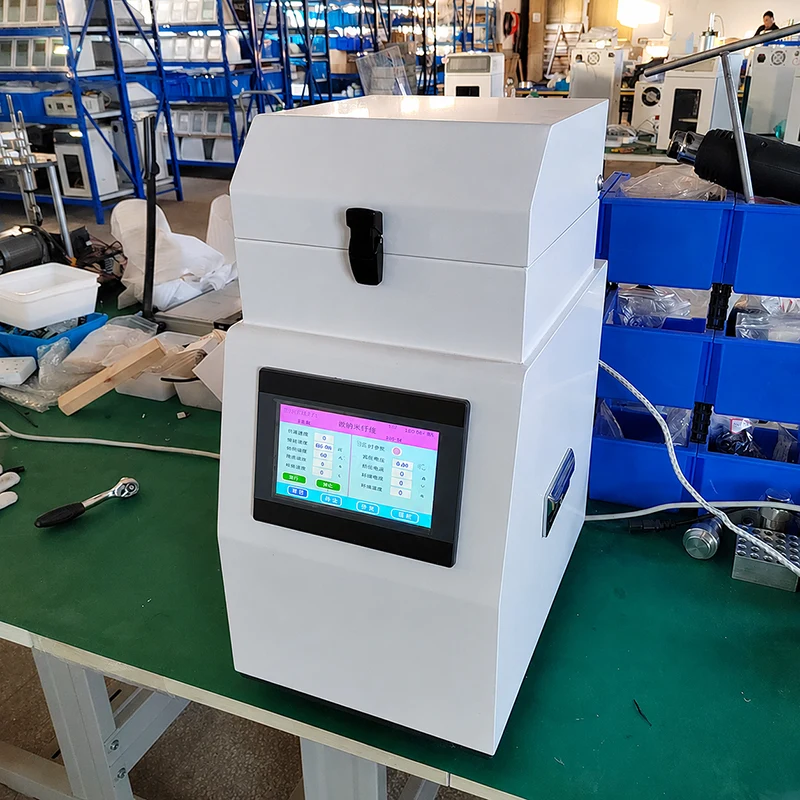
In the card TENCAN presented multi-channel tissue homogenizer; Specific data on the number of channels, capacity volumes, speed range and cooling should be taken from the current card and manual. You cannot transfer the characteristics of one modification to the entire range. If a parameter is not specified or the units are in doubt, it is better not to use it in the calculation, but to check with the supplier.
Fabric preparation and loading: what determines uniformity
The tissue is heterogeneous in composition, even within the same organ: connective tissue, fat, blood vessels and areas with different densities resist destruction differently. If samples are cut from different zones without taking this into account, differences between channels may reflect the biology of the sample rather than the performance of the instrument. To compare regimes, it is useful to use a pre-homogenized pool or a thoroughly mixed sample, as far as the technique allows.
The load must be equal in mass and volume, but equality alone is not enough. It is important that the container is filled within acceptable limits: too small a volume may have poor contact with the working body, too large a volume may limit movement and increase heating. The working range of volume and mass for a particular model is checked according to the manual, and not selected only by the appearance of the tubes.
Preliminary grinding of tissues should be comparable in size of pieces and time. A large fragment requires more energy, a small fragment disperses faster, but may lose its structure during prolonged preparation. If the sample has been stored or thawed, this will also affect the result. The protocol records the homogenization method, medium temperature, buffer composition, and tissue-to-liquid ratio.
For fibrous and fatty tissues, it is especially important not to mix the preparation steps with the evaluation of the device. Foaming, slurry separation and wall sticking can occur with any equipment in good working order. Observed discontinuity does not always indicate a channel failure; sometimes it is due to inappropriate loading or insufficient stabilization of the sample before processing.
Speed, time and number of cycles: how to choose a mode
Speed determines the intensity of the impact, but does not determine the result alone. The duration of treatment and the number of repeated cycles can give the same effect as a higher speed, with a different heating and a different nature of destruction. A short, intense cycle is sometimes preferable to a long, soft cycle if you need to quickly break down dense tissue, but it also increases the risk of foaming and local overheating.
For reproducibility, it is not the absolute maximum that is important, but the stability of the chosen combination of speed, time and pause. A pause is needed not only for cooling: it allows the suspension to return to the affected area and reduces the formation of stagnant areas. If the instrument supports intermittent operation, its parameters should be recorded in the same detail as the main speed.
The number of cycles cannot be increased indefinitely for the sake of “better” uniformity. After a certain point, additional energy can degrade the quality: proteins degrade, fragments stick together, foam makes selection difficult. The optimum depends on the tissue and subsequent analysis. For some purposes, visual uniformity is sufficient; for others, quantitative verification of particle yield or distribution is required.
One factor per experience
When selecting a mode, it is useful to change only one parameter per series: first fix the time and number of cycles, varying the speed, then select the duration at the selected speed. If you change everything at the same time, the reason for the differences remains unknown. For each combination, repetitions are needed in at least several channels and, preferably, on different days in order to separate random scatter from systematic scatter.
Separately, extreme values are checked: the minimum speed at which the fabric is still destroyed, and the maximum at which heating and foaming remain acceptable. The operating mode is chosen not at the border, but with a margin of stability. This is especially important when moving from single samples to series, where long-term operation and heat accumulation are more pronounced.
Temperature and cooling: limits of applicability
Mechanical energy inevitably turns into heat. The more intensive and longer the treatment, the higher the risk of heating the suspension, even if the body of the device remains cool. The temperature of the working area or the air around the installation is not equal to the temperature of the sample. For thermolabile materials, this is a fundamental difference: you need to measure the suspension or use a control sample under the same conditions.
Air cooling and liquid nitrogen cooling are different solutions with different capabilities. The air flow removes heat from the device and can slow down the heating, but does not make the process cryogenic. Liquid nitrogen requires different organization of work, materials and safety measures; its presence cannot be assumed without confirmation in the documentation. Conventional case cooling should not be called cryogenic.
If preliminary holding of containers at a low temperature is provided, it should be the same for all channels. Otherwise, different samples start at different temperatures, and comparison of modes becomes meaningless. It is also important to consider that cooling can change the viscosity of the suspension and the nature of tissue degradation, and not only slow down degradation.
For thermolabile samples, the criterion is selected based on two dimensions: a sufficient degree of homogenization and the absence of unacceptable heating. If it is not possible to combine them, reduce the duration of continuous exposure, add pauses or revise the load. Specific temperature limits depend on the technique and cannot be assigned only according to the device passport.
Transfer between samples, cleaning and channel ordering
With parallel processing, the risk of carryover is associated not only with the contact of the working element with the walls. Aerosols, splashes, condensation and insufficiently cleaned seals can transfer material between positions. If the assay is sensitive to trace amounts, visual purity alone is not sufficient. A verifiable cleaning method and, if necessary, disposable inserts or separate containers are needed.
The order in which samples are loaded also affects interpretation. If control and then heavily soiled tissue is treated first, residual carryover may appear in subsequent channels. It is wise to determine the sequence in advance, include blank samples, and not place critical samples next to the most difficult ones unless the plan calls for it.
Purification is checked not by appearance, but by a selected marker: residual protein, nucleic acids, optical probe or other suitable indicator. Efficacy may vary between tissues and buffers. There is no need to promise “zero contamination”: any procedure has a detection limit, and transfer depends on the material, design and operator skill.
Container and seal materials must be compatible with the sample and reagents used. Wear, scratches and residual films will reduce cleaning performance over time. Regular checks of consumables and replacement of worn parts are part of the preparation and are not a minor formality. If compatibility is not confirmed, an aggressive reagent or non-standard container can damage not only the sample, but also the device.
How to check reproducibility before serialization
The pilot test begins with one homogeneous pool of tissue divided into equal portions. The portions are distributed randomly across channels and repeated several times to isolate the channel effect from the block position effect. If there is such a possibility, the plan is repeated on another day and with a new batch of buffer. This helps to see not only the random scatter, but also the systematic component.
The metric must correspond to the purpose of the analysis. For biochemistry, this may be the concentration of protein or enzyme activity; for microscopy, the proportion of destroyed cells and the presence of large fragments; for molecular methods, the integrity of nucleic acids and the absence of inhibition. There is no universal indicator; It is important that the method is sufficiently sensitive to those differences that are noticeable in further work.
It is convenient to summarize the results in a table where the average, spread and outliers are indicated for each channel. One average is not enough: two channels can have similar averages but different variability. The suitability decision is made based on a predetermined criterion, such as the acceptable coefficient of variation for a particular assay. If no criterion is specified, it is easy to declare the spread to be “normal” without justification.
| What to clarify | Why does this affect choice? | How to check in practice |
|---|---|---|
| Number of channels and permissible volume of each | Determines productivity and minimum weight | Check the manual and test boot |
| Speed range and stability | Affects impact energy and heating | Carry out a series with a fixed time and different speeds |
| Cooling type and temperature control | Determines suitability for heat-labile fabrics | Measure the temperature of the suspension, not just the body |
| Container materials and cleaning | Related to transfer, wear and compatibility | Check with blank samples and selected marker |
| Supported Consumables | Non-standard capacity may change the mode | Use only confirmed combinations |
Before trial grinding or homogenization, the supplier is informed of the type of fabric, sample weight range, suspension volume, buffer composition, required degree of degradation, allowable heating, number of samples in the batch and the selected analytical method. It is helpful to indicate whether sterility is required, how cleaning will be done, and what materials are not acceptable. The more specific the initial conditions, the less likely it is that the configuration will be formally suitable, but inconvenient in operation.
For multi-channel tissue homogenizer TENCAN The key outcome is not the maximum advertised speed, but proven channel uniformity and controlled transfer. Current equipment directions and product cards are shown on website TENCAN. Testing on a pilot batch, recording load and temperature, and a pre-selected acceptance criterion provide a more reliable basis for selection than a single trial on one sample.